
Freelance cheesemongers have to find something to do on the long Winter nights, or at any other time when, with apologies to Michael Roberts, ‘the spirit of life contracts’. Personally I like a bit of extreme cheesing, which is when you set down the restrained and balanced offerings of the cheesemaker’s art and find something more berserk. Extreme cheeses will burst up into the sinus cavity with the same sensation you get from being dumped by a big wave, they will make you do that cartoon head-steaming ear-clanging thing that cartoon characters do when they bite into a hot chilli, they will burn your palate and made you consider your life choices. And then afterwards, when the first wave of sensations have abated, there is calm. It’s a simple pastime, requiring no experience or knowledge at all, merely the will to go out and find the gnarliest cheese you can, and bite into it. Why? In the words of the late, great George Mallory, ‘because it is there.’
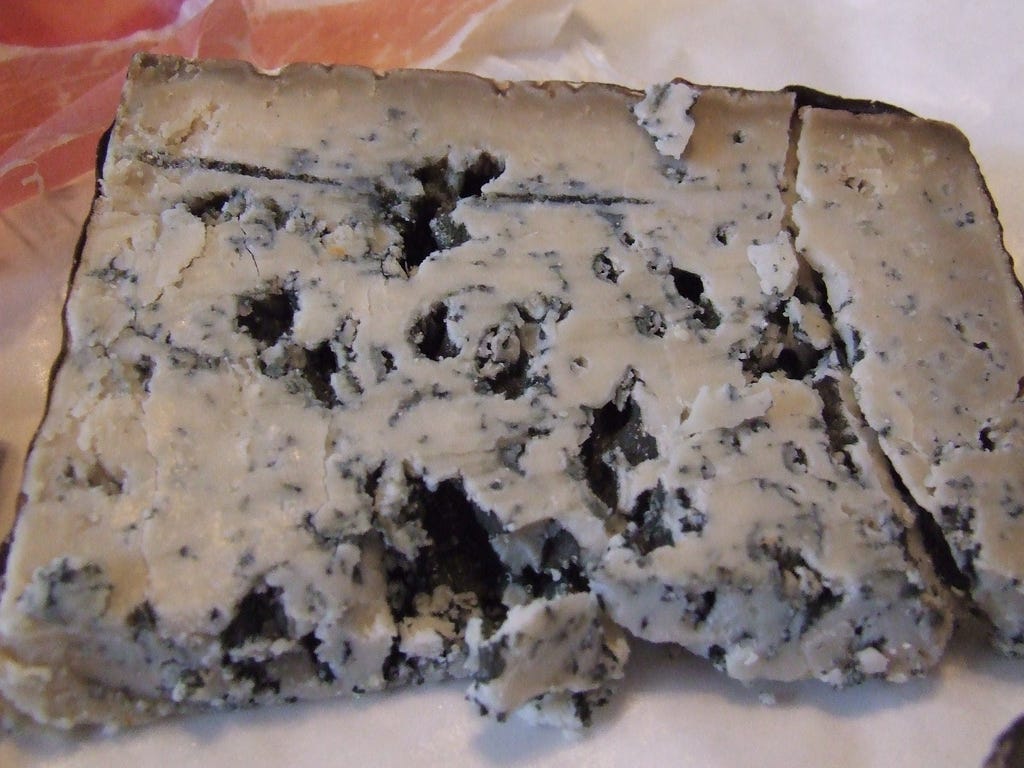
Some cheeses are born extreme, like Cabrales, made up in the high pastures of the Picos de Europa mountains in Northern Spain. It’s made from cows’ milk with some goat and sheeps’ in the mix, and while the Oxford Companion to cheese ascribes its piquancy to the goaty note, with the sheep adding sweetness, I would argue that volatile short chain fatty acids in sheep’s milk, released by the action of the blue mould, can also add an eye-watering heat to a cheese. The cheeses are matured for up to two months in the mountain caves, whose cool moist conditions and natural ventilation through fissures in the rock are perfect for the comprehensive development of the blue. Cabrales is riddled with it, so much so that the paste around the veining has a blueish tinge, presenting a daunting appearance even to the hardcore extreme cheeser. The texture is moist, crumbly, a little grainy, and the flavour is sweet and malty, often with an estery fruity note. Then the heat comes, spicy, sinus-clearing, with the paradoxically numbing effect of Szechuan pepper.
The fun thing about extreme cheeses is that they will stand up to spirits, and the locals pair Cabrales with the local firewater Orujo, distilled from the skins, seeds and stalks left over from wine making. Depending where you’ve been, you might recognise this as Marc, Grappa or Rakia, and your first sight of it was probably someone’s uncle walking toward you determinedly, brandishing an unmarked bottle in which a clear liquid swirls with an ominous heft. Back home, if I feel I’ve been lacking stimulation I might have some on toast melted over anchovies and accompanied by an aggressively smokey Isla whisky.
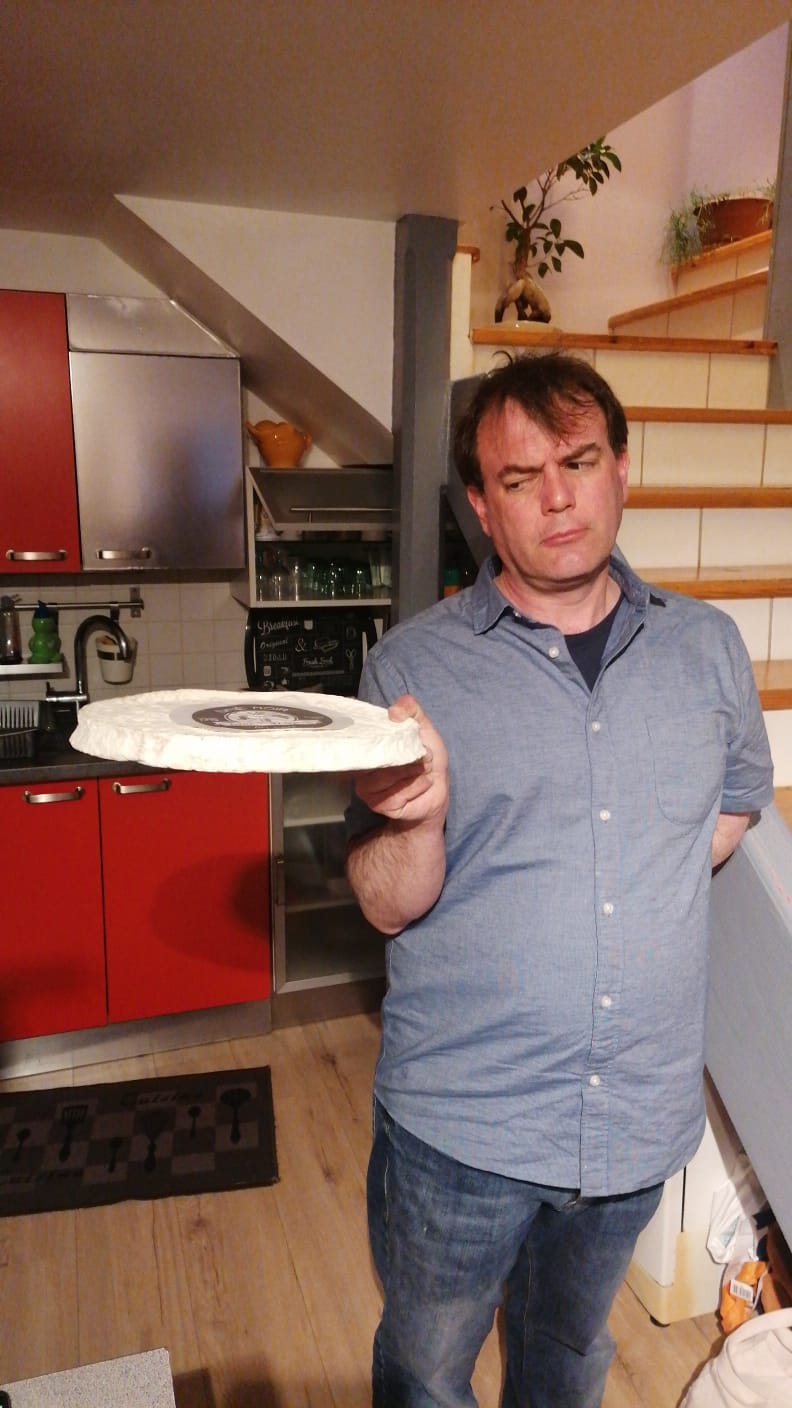
Some cheeses achieve extremity, and one example is Brie Noir, in that even a fully mature conventional Brie with intense flavours of steamed cabbage, pepper and a hint of the barnyard, still stays within fairly normal parameters. Not so for Brie Noir, which is aged until it becomes rock hard and shrunken, the paste a deep caramel brown - ‘Noir’ seems to be more for dramatic effect. This is a local specialty of Brie country, in Isle de France just east of Paris and you are unlikely to have come across it if you haven’t been there. It might be a thing that only its compatriots could love, and then more by the older generations who were acclimated to it in their childhoods. One Brie producer told me that they really only make the Noir for the older Briards, who would be cross if they didn’t. I understood this viscerally - or perhaps nasally - when we went into the Noir store. He warned me not to breathe too deeply, and as the door opened a wave of eye-stinging nose burning ammonia blew over me; apparently it is not uncommon for the unwary affineur to be rendered briefly unconscious by the atmosphere. I felt then that this was a really niche product, and that I wouldn’t want to annoy anyone hardy enough to eat it for their breakfast - some Briards like to soften a chunk in their coffee to get the morning going with a bang. When I left the farm with a generous portion of their luscious pillowy Brie de Meaux, I was also carrying under one arm, as a gift pressed on to me by the cheesemaker, an entire wheel of Brie Noir. I was a bit shy of it, although given its hardness and sharp edges I thought that I could always use it as a throwing cheese to bring down some of the local fauna for my dinner instead.
My first experience with the Noir was not overwhelmingly positive. I didn’t really know what to do with the stuff, so being quite impulsive, I just hacked off a decent chunk and bit down on it. This was by far the toughest cheese I’d ever bitten into - it would do as a chew toy for a pit bull - and it took a while to get through. The flavour was mostly ammonia with a musty edge and burnt my mouth so intensely and for so long after I’d finished it that I worried I’d done my tastebuds permanent damage.
It turns out though that not all Noirs are created equal. The first producer I’d visited picked their lowest quality cheeses from any given batch to age on, and apart from a bit of brushing, pretty much left them to get on by themselves. Jean-Michel Dongé, third-generation maker of one of the world’s finest Bries, selects ten of his best wheels from each batch and his affineurs look after them with the love and care they give all the Dongé cheeses. The paste of their Brie Noir is still supple, a deep gold colour rather than brown, looking much more inviting. Also, it turns out that just cramming a chunk into your mouth is not the way to eat this cheese; the Dongés recommend shaving it into a salad or over pasta. With that in mind I let a sliver of theirs dissolve on my tongue. There was no burn, no potentially career-ending taste bud damage, the ammonia was present as a hint of spice, enlivening flavours of caramel and hazelnut. This was a delicious, complex cheese, that aside from its singular age barely merited the description ‘extreme.’
Some cheeses have extremity thrust upon them through the exigencies of circumstance. In 2005 a Quebecois cheesemaker sank some barrels of cheese fifty metres deep in the dark waters of the Saguenay fjord, having heard that cheese ripens faster at high pressures. Tragically he lost the barrels and, unless I have any rich subscribers who wish to fund a cheese treasure hunt, we will never know what that tastes like. In 2012 a Wisconsin cheesemaker found a forty-year old block of Cheddar in the back of his store but he’d sold it all before I could fly out and try some. Apparently it was ‘crunchy and sharp’, a paltry description which makes one weep for the lack of trained cheese writers. In 2016 a group of divers found a tin of cheese on a 340 year-old Swedish shipwreck, which expedition leader Lars Einarsson described more helpfully as ‘…like a mixture of yeast and Roquefort, a sort of really ripe, unpasteurised cheese…’ They were too scared to try it in case they died, to which I say, ‘where’s your spirit of adventure? Prep an ICU bed and get me a knife and some crackers.’
I have tasted a four year old Cheddar which came out of a Parmesan store in the north Italian town of Bra, near Turin. Just for calibration, proper clothbound Cheddar is usually ready at around twelve months, might get to eighteen and in very rare cases, two years. The Cheddar was Pitchfork, a traditional cloth-bound style made in Somerset by Todd and Maughan Trethowan, whose traditional Caerphilly was responsible for my conversion to cheesemongering. Todd and Maugs are not afraid of pushing the envelope when it comes to cheese, and in fact in all aspects of their lives. In 2019 when the brothers came over for the biannual international cheese festival they dropped one of their Cheddars off at the Cravero maturing house; the plan being to come back for the next festival in 2021 with a cheese that they had aged back home and compare the two. Giorgio Cravero would apply all the skill and craft of someone whose family have aged cheese for a hundred and seventy one years; Todd and Maugs were going to use their native cunning, ie stick theirs on a shelf in their barn and wing it. Then, if you will recall, something happened such that they didn’t make it to the 2021 festival, which was a quiet affair, and the cheeses sat in silent majesty until everyone got back together in 2023 for the next Bra Cheese.
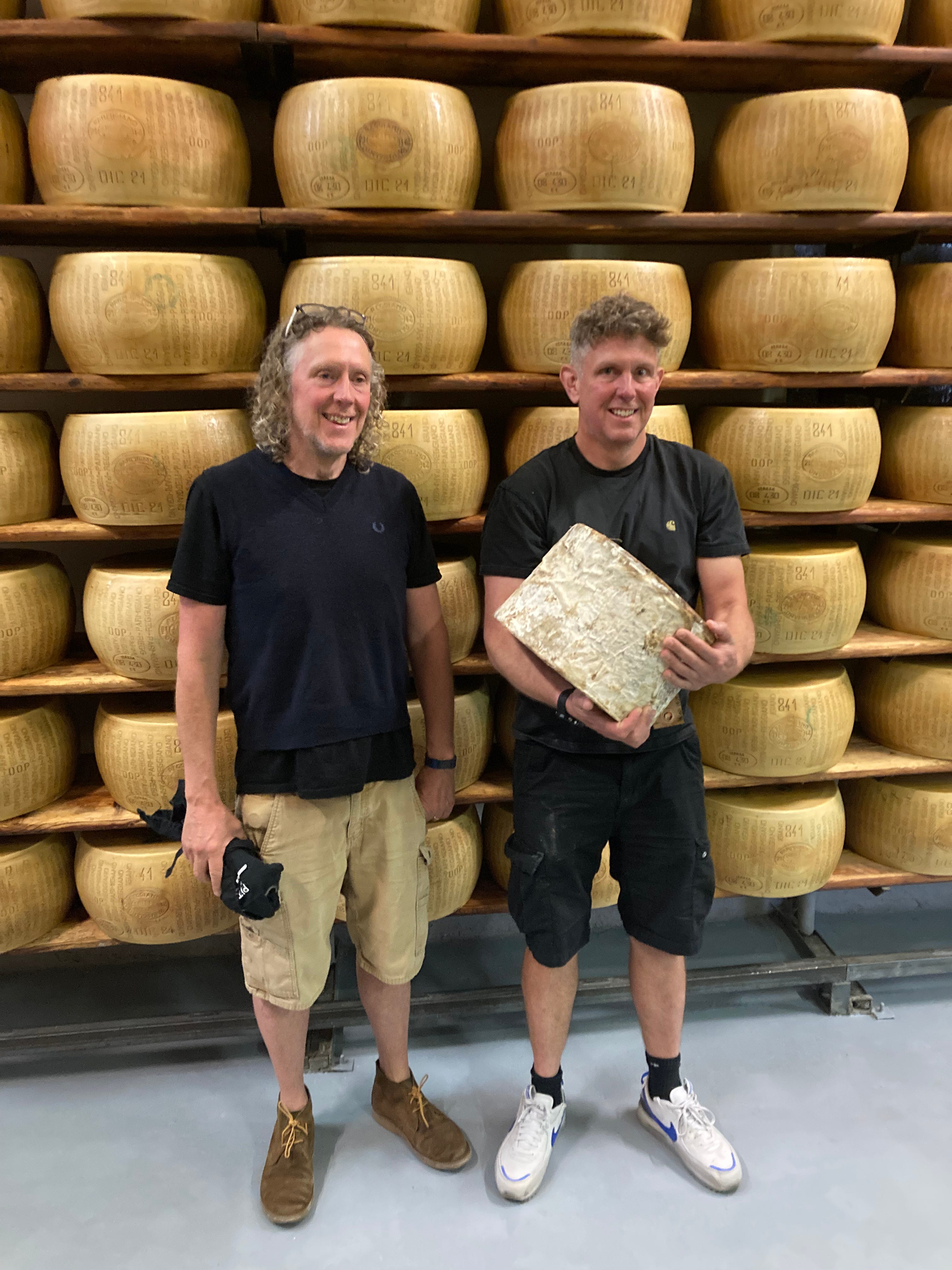
Todd freely submits that their one was ‘vile, it turned to brown sludge,’ but that Giorgio’s, lovingly shepherded through the years with all the craft and skill he could muster was ‘parmesanesque.’ It was indeed, and I tasted it when I was hanging out at their stall on the last day of the festival - sweet, with boozy fermented fruit flavours and a tingling heat like pop-rocks coated in powdered Scotch Bonnet, and I ate as much as I could before they sold it all to some very avid Italians - a nation of natural extreme cheesers.
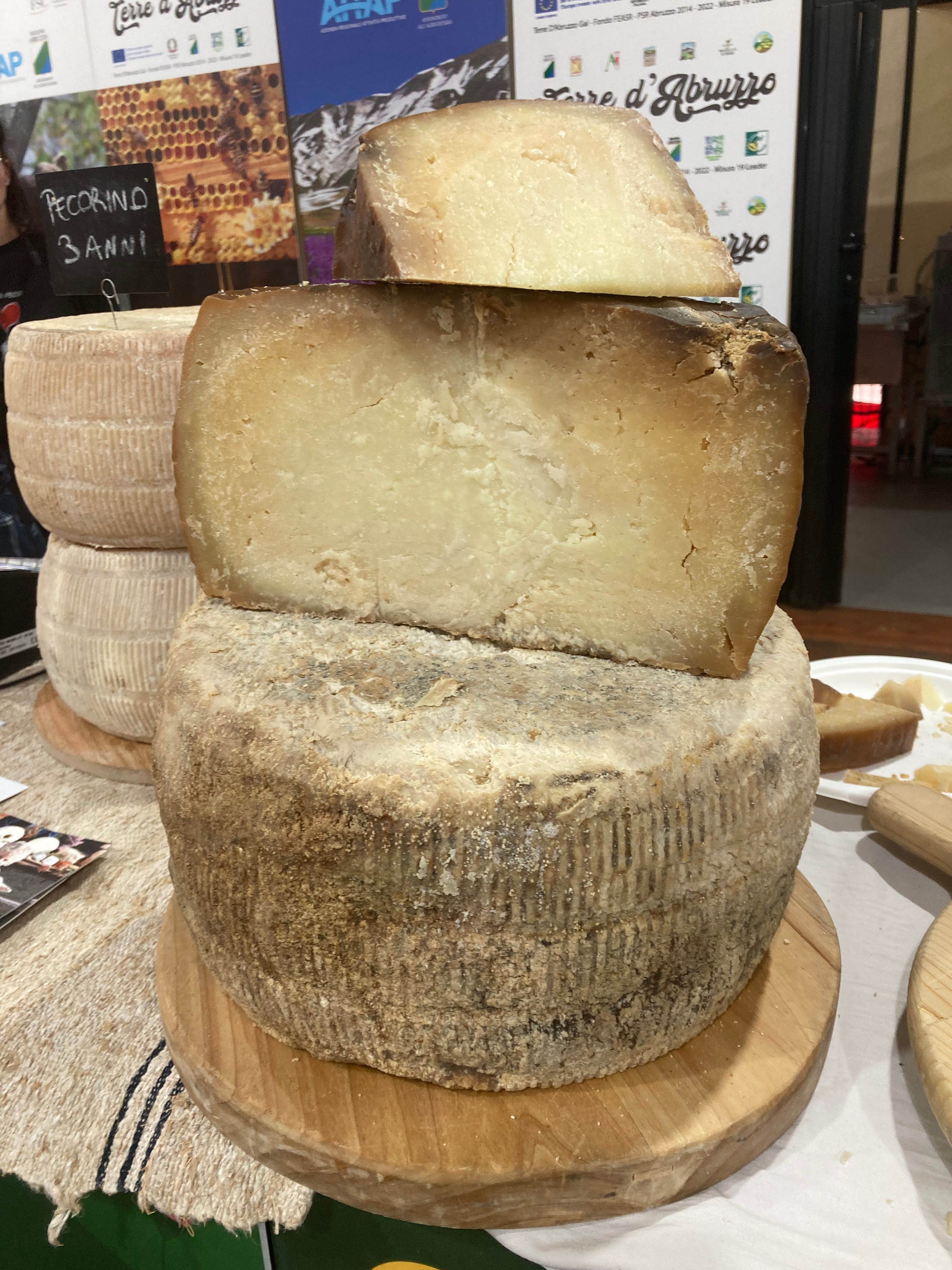
So there you have it. Extreme cheesing. Vastly less dangerous than base jumping, cheaper, tastier, and in my view much more fun. Give it a go.
This week’s recommendations:
Substack: Up There The Last - Traditional production methods, plenty of transhumance, lovely man.
Book: The Discovery of France, by Graham Robb, one of the inspirations for my Cheesemonger’s Tour de France.
Poem: The Assault of Angels, by Michael Roberts.This be the verse.
Thanks for reading! This post is public so feel free to share it.
Comments
Nothing yet. Say the first thing.
Sign in to join the conversation.