
Last month, Connecticut’s Democrats held their nominating conventions for the state’s five congressional districts. Though held in different locations, allegations of intimidation, procedural rigging, and vote flipping emerged across the conventions, according to attendees. These alleged misdeeds came as incumbents were challenged by progressive insurgents, and were intended to deny left-leaning candidates the ability to contest races against the incumbents.
The allegations include conventions that appeared to have already been decided, the failure to follow the rules as outlined to the detriment of challengers, candidate and delegate intimidation, and, in some cases, outright vote manipulation.
While some of these allegations have been reported on, no reporting has tied together this alleged pattern of behavior across multiple of the state’s nominating conventions.
How Connecticut’s Ballot Access Rules Stifle Competition
As The Beacon has previously reported, Connecticut’s ballot access rules have been designed to prevent incumbents from facing challengers. Connecticut’s system requires that those seeking a spot on the ballot receive either 15% of the votes of delegates at a nominating convention or the signatures of 2% of registered Democratic voters in the district over a relatively short 42-day period.
Both pathways are designed to inhibit challengers’ progress. The first pathway requires challenging established candidates through structures that are biased in favor of the incumbents. The second pathway, by contrast, requires a large volunteer effort or a substantial amount of money — something rarely available to new candidates.
These rules were so effective that, until last month, only one challenger had ever managed to get onto the ballot.
This year, Connecticut saw a groundswell of grassroots challengers, seeking to topple some of the nation’s longest-serving incumbents. This included a number of younger, progressive challengers, arguing for generational and ideological change. However, almost all of them failed to qualify for the ballot due to these arcane rules.
The House Always Wins
On Monday, May 11, delegates gathered across the state at five different locations. At West Haven High School, the nominating convention for Connecticut’s 3rd Congressional District quickly deviated from the outlined agenda.
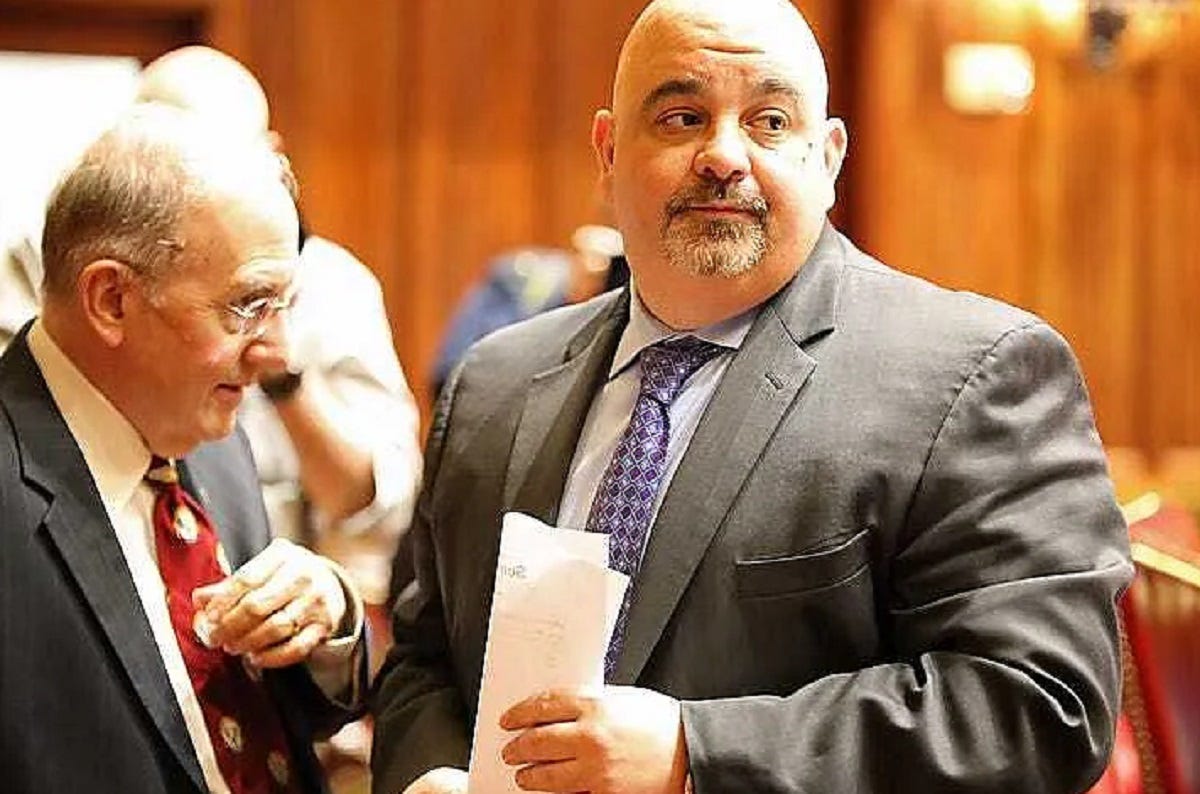
Vin Mauro, the chairman of the New Haven Democratic Town Committee (DTC), neglected to appoint a parliamentarian. Additionally, he failed to call for the convention to adopt a rules package. As a result, there were no formal rules that needed to be followed nor any individual whose duty it was to advise the convention on said rules.
In the unadopted rules package, speeches to nominate and second a candidate were “not to exceed eight (8) minutes.” Yet, Representative Rosa DeLauro’s (D-CT 3) nominator and seconder spoke for almost 13 combined minutes. By contrast, an aide to the convention cut off the speeches in favor of DeLauro’s challenger, Andrew Rice, just before the eight minute mark.
This selective enforcement of the rules set the stage for what was to come. Upon announcing that Rice had received 13% of the vote, just shy of the 15% threshold, Mauro sternly announced “we have a nominee” despite a chorus of boos erupting from the audience.
The reason for the boos? Mauro failed to follow one of the most valuable rules to challengers outlined in the unadopted rules package: “At the conclusion of the roll call, the Chair shall provide delegations with a 10-minute period to change their votes, which may be extended at the Chair’s discretion for good cause.”
Andrew Rice was six delegates shy of making it onto the ballot. With the 10 minute period, it is entirely possible his team would have been able to whip enough votes to breach the 15% threshold and earn a spot on the ballot to challenge DeLauro.
Perhaps this omission was a result of ignorance on Mauro’s part. However, that is difficult to square with the fact that Mauro has been the chair of the New Haven DTC for 12 years — meaning he most likely knows the rules and procedures well.
Mauro then commanded “play the video,” and a prepared campaign video from Rep. DeLauro began to play from a projector in the background. Apparently, there was some coordination between the DeLauro campaign and the convention in order to ensure this video was ready to go. While this does not necessarily mean the convention’s outcome was pre-ordained, it is difficult to square this with the convention’s purpose of allowing for the party to pick a nominee in a competitive manner.
The DeLauro campaign did not respond to requests for comment by The Beacon.
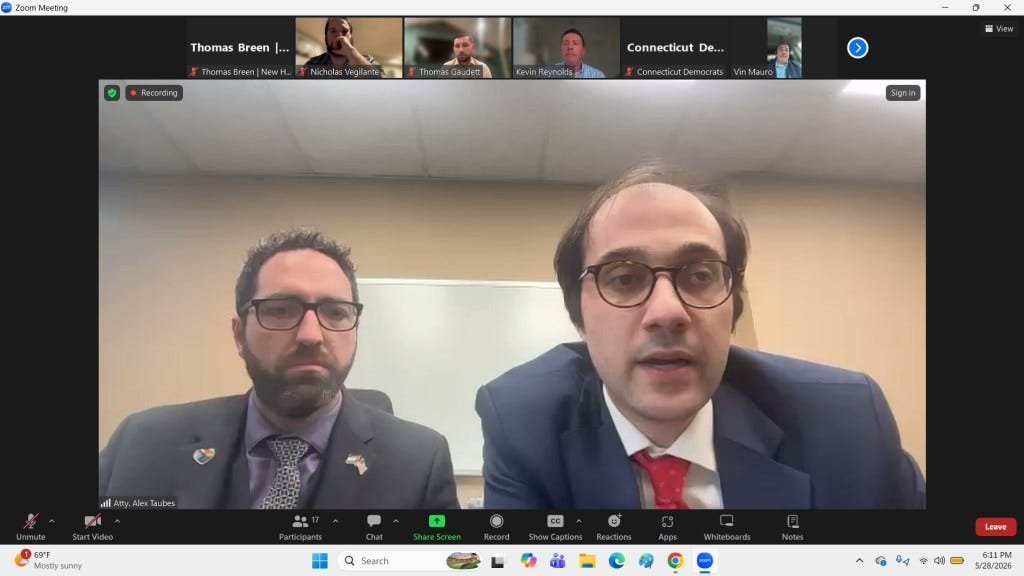
It is worth noting that, in a May 28th hearing where Mr. Rice raised his concerns to a tribunal assembled by the Connecticut Democratic State Central Committee, the tribunal found that Mr. Mauro was not necessarily required to announce that this ten minute period had commenced nor concluded. The tribunal, it should be noted, consisted of individuals from the Democratic Party and at multiple instances the document appears to put the onus of knowing the rules onto the candidate and delegates, not the convention chair nor the nonexistent parliamentarian.
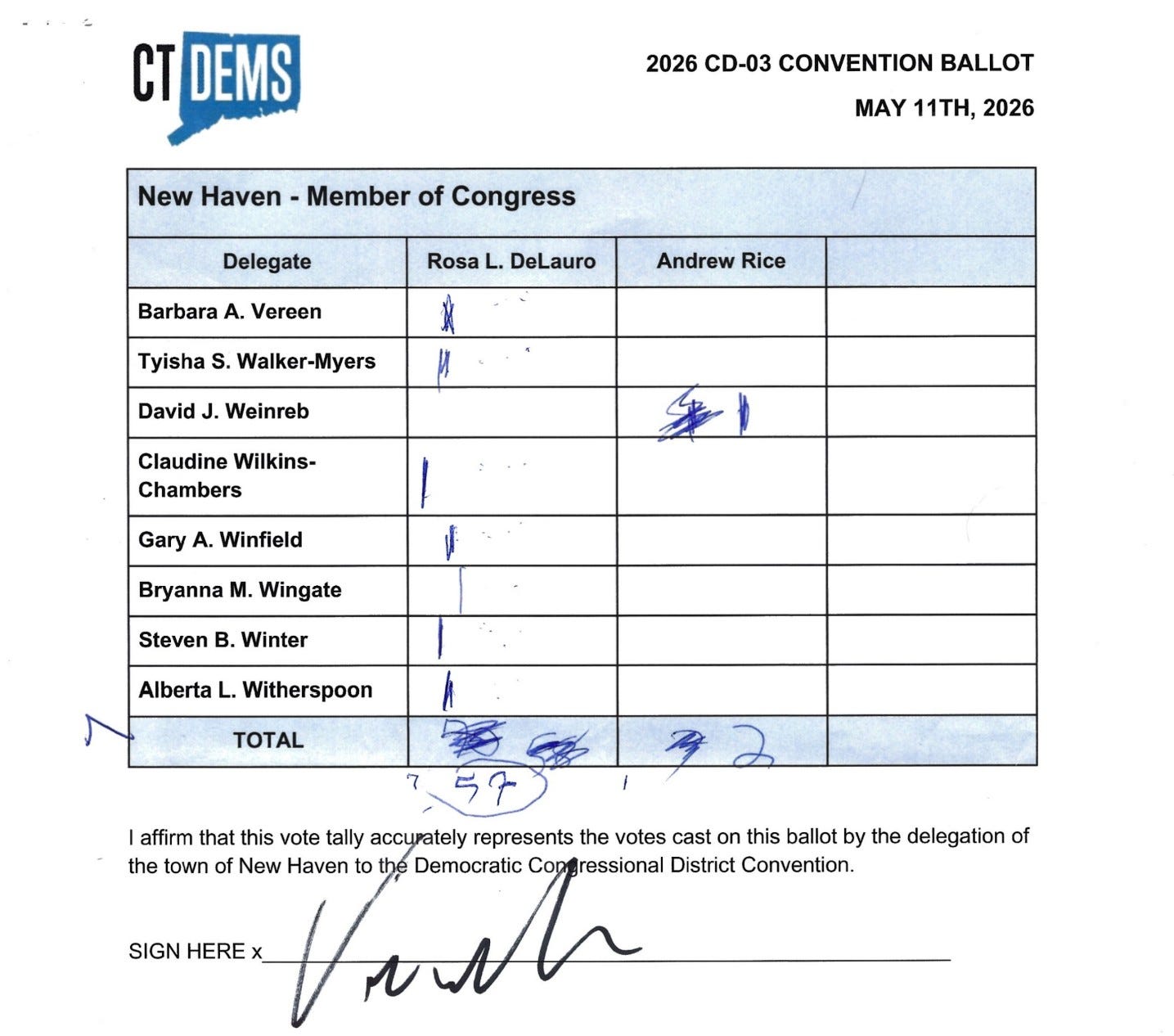
Reading through the tally of delegates’ votes does not inspire much confidence, either. Delegates’ names are crossed out all across the document — likely indicating their absence at the convention. Votes are swapped back and forth from DeLauro to Rice, and vice versa.
The final tallies are not even certain. In Rep. DeLauro’s hometown of New Haven, the final tally of 57 delegates for DeLauro is punctuated by a question mark at the end, indicating that the chair of the New Haven DTC who signed off on the document — ironically, Vin Mauro — was not himself sure of the final count.
The document is so poorly constructed and annotated that it is impossible to independently assess how many delegates each candidate received, meaning outsiders must trust that the count of the state convention and DTC chairs is accurate.
Rice also claims that Mauro called him the morning of convention to pressure him to withdraw his nomination, claiming that he “didn’t want Andrew to be humiliated” if he failed to reach the 15% threshold. While a phone call did take place, The Beacon cannot independently verify the content of this discussion.
Mauro did not respond to requests for comment by The Beacon.
Meanwhile, the nominating convention for Connecticut’s 2nd Congressional District was shaping up to be a tense battle between incumbent Joe Courtney (D-CT 2) and insurgent Kyle Gauck — or so Gauck thought.
“We walked into convention thinking, conservatively, that we had one hundred and twenty delegates. We needed 50, 51…and we were super confident we were there,” Gauck told The Beacon. “So then they’re tallying up the votes and we’re like, ‘What the hell is happening? We got no votes.’”
The final vote tally showed Gauck with 34 votes to Courtney’s 322. However, Gauck’s supporters contested that number. According to Gauck, at least one delegate was astonished when her town’s votes were unanimously awarded to Joe Courtney: “A delegate goes, ‘whoa, that doesn’t make any sense. I’m in Glastonbury. I’m a delegate for Glastonbury. I voted for Kyle Gauck. How can we be unanimously for Joe Courtney?’”
In a statement to The Beacon, Adam Richardson, the campaign manager for Congressman Courtney asserted that “no claims of improper conduct [had] been presented to our campaign” and that “all established rules and procedures were adhered to” during the convention.
That delegate’s vote, and another from Glastonbury, were eventually flipped back into the Gauck column. However, the fact that such an error happened raises questions about if other votes were flipped, accidentally or otherwise, and whether or not those potential errors were realized during the convention.
In the months prior to the convention, Mr. Richardson was in communication with DTC chairs across the 2nd Congressional District. In one such correspondence, obtained by The Beacon, Richardson provided DTC chairs with what he described as “talking points” for DTC members to ask Kyle Gauck.
In one such talking point, Mr. Richardson states condescendingly that Kyle “uses the term ‘bill’ and ‘resolution’ interchangeably - the pettiness in me wonders if he knows the difference.” He also calls Mr. Gauck’s support for term limits and Medicare for All “litmus tests for the left,” claiming that he does not “need to explain why [they] are unrealistic policy goals.”

This is in spite of the fact that Medicare for All has a 65% approval rating among all voters, while term limits garner an even-higher 83% approval rating.
Mr. Richardson argued to The Beacon that such communication is a “normal part of campaigning.”
The Fine Print of Democracy
For Joseph Perez-Caputo, a challenger to Representative Jim Himes (D-CT 4) in Connecticut’s 4th Congressional District, the delegate process is primarily an issue of democracy.
Even in a delegate system that favors incumbents, Perez-Caputo argued that competitive primaries sharpen incumbents in the face of a changing electorate: “I believe [restricting challengers’ access] doesn’t benefit an incumbent, because I believe incumbents benefit from having primary challengers.”
Perez-Caputo did not win enough delegates to make the ballot. But even making it into the room was a victory, despite running a serious campaign with a strong ground operation. The progressive challenger told The Beacon that a minor procedural change, requiring candidates to submit a pre-written acceptance of the nomination, almost left him unable to participate in the delegate process at convention. Only after extensive consultation with party insiders was he able to obtain the necessary document to submit to the convention.

Perez-Caputo, a current law school student, caught the change while poring over his district’s updated convention rulebook. The candidate examined “each line with a fine-toothed comb” contending that, had he not done so, “my name would have not been read. The delegates could not vote on me.”
Perez-Caputo does not believe this rule change was malicious, but, he argued, it is representative of a lack of transparency within the Connecticut Democratic Party.
It was not only the candidate who was confused, either. Perez-Caputo stated that he was present in group chats with delegates who asked lawyers in the chat to explain the new rules, as they were incomprehensible to most people. “If you mire things in bureaucracy, then you’re limiting things to a certain level of expertise.”
The progressive said he had entered the convention expecting he had 41 delegates — 31 of whom were “solid.” He left with six. The confusing delegate rules, he argued, likely contributed to some of this discrepancy.
Perez-Caputo argues that “the only person that benefits from this system is a donor, because they know their investments into the campaign [are] secure.”
A System Built by Insiders, for Insiders
This seems to match the experience of Ed McKeon, a delegate for Middletown, Connecticut. The Beacon spoke to one delegate for the 1st Congressional District. Out of more than one dozen delegates contacted for interviews, only one was willing to speak on the record, perhaps indicating the culture of non-disclosure and insularity among Democratic operatives.
Mr. McKeon’s take was simple: “The rules are made by the people who benefit from the rules.”
The delegates themselves are complicit in upholding establishment systems, according to McKeon, due to their insider status. Delegates are often local town officials or politically engaged citizens, who have different incentives than that of average voters.
Those inside of the system are incentivized to uphold it: “People are appointed based on who they’re going to vote for at the convention,” McKeon said. “And they’re pretty faithful in terms of voting for those folks.”
McKeon recalls that his local DTC withheld the names of the selected delegates and which conventions they were slated to attend (each district has a convention plus a statewide convention). Members of his DTC started to ask “‘Can we see the slate? Who’s on the slates?’ We want[ed] to know who got selected to go to which conventions…[but] they didn’t share that.”
Not only is this maneuver unusual, according to McKeon, but it interfered with the typical process to whip votes, since candidates would not know to whom they should reach out in order to sway their vote.
McKeon notes that, after much pressure, the Middletown DTC finally released the full list just “two hours before convention.”
After deep frustration with the process, McKeon and some of his activist colleagues spent those two hours forming an “alternate list” to be put to a vote by Middletown DTC members. To his surprise, this list was approved by DTC members, who were similarly outraged by the seemingly-deliberate lack of transparency in the delegate selection process. The original slate, McKeon contends, was “comprised of people who were supporting the incumbents.” McKeon, it is worth noting, did not vote for incumbent Rep. John Larson.
This aligns with Ruth Fortune’s own experience at the 1st Congressional District convention. While she did not allege vote flipping, a lack of adherence to the convention rules, or a lack of transparency seen at other conventions, she was deeply frustrated by the system itself.
Fortune, a lawyer, took time off from her private practice last fall in order to be a full-time candidate. Despite that, going into the convention she recognized that she “likely would not reach the 15 percent threshold.”
Her criticism, similar to Perez-Caputo, is of a system that appears to be relatively insular and which forces conformity. She argues that, at times, “[delegates’] careers or their own aspirations are tied to why they do serve as delegates…so when you have that group of people serving as delegates at a convention, it is not a representative sample of the [average] Democratic voter.”
Further, she argues that if peoples’ “ability to put food on the table and pay [their] mortgage” depends on how they vote, then it would be impossible to “move [them], no matter how much you agree with me or how alike we might be.”
Fortune believes that they are “rational actors in a flawed system.”
Fortune, it is worth noting, was the only progressive challenger who submitted a sufficient number of signatures to make it onto the ballot. Connecticut’s progressive groundswell appears to have been smothered by the “strongest incumbent-protection state’s” bureaucratic barriers.
Perez-Caputo’s summary of the situation in Connecticut appears to describe the state’s woes best: “The chief nefariousness of this kind of stuff — it stops voters from being able to be free Americans and actually have really valuable conversations with each other that grow the party, that strengthen the state, and that solve problems among the greater nation.”
Éamon Ó Cearúil is the Co-Editor-in-Chief of The New England Beacon. To contact him with tips and information, please email here. To support our mission, please click here.
Chris Brady is a Regional Correspondent for The New England Beacon. To contact him with tips and information, please email here. To support our mission, please click here.
Eshaan Vakil is the Co-Editor-in-Chief of The New England Beacon. To contact them with tips and information, please email here. To support our mission, please click here.
No posts
Comments
Nothing yet. Say the first thing.
Sign in to join the conversation.