QMSR QuickTake #38: "Documented" Does Not Mean Paper-Only
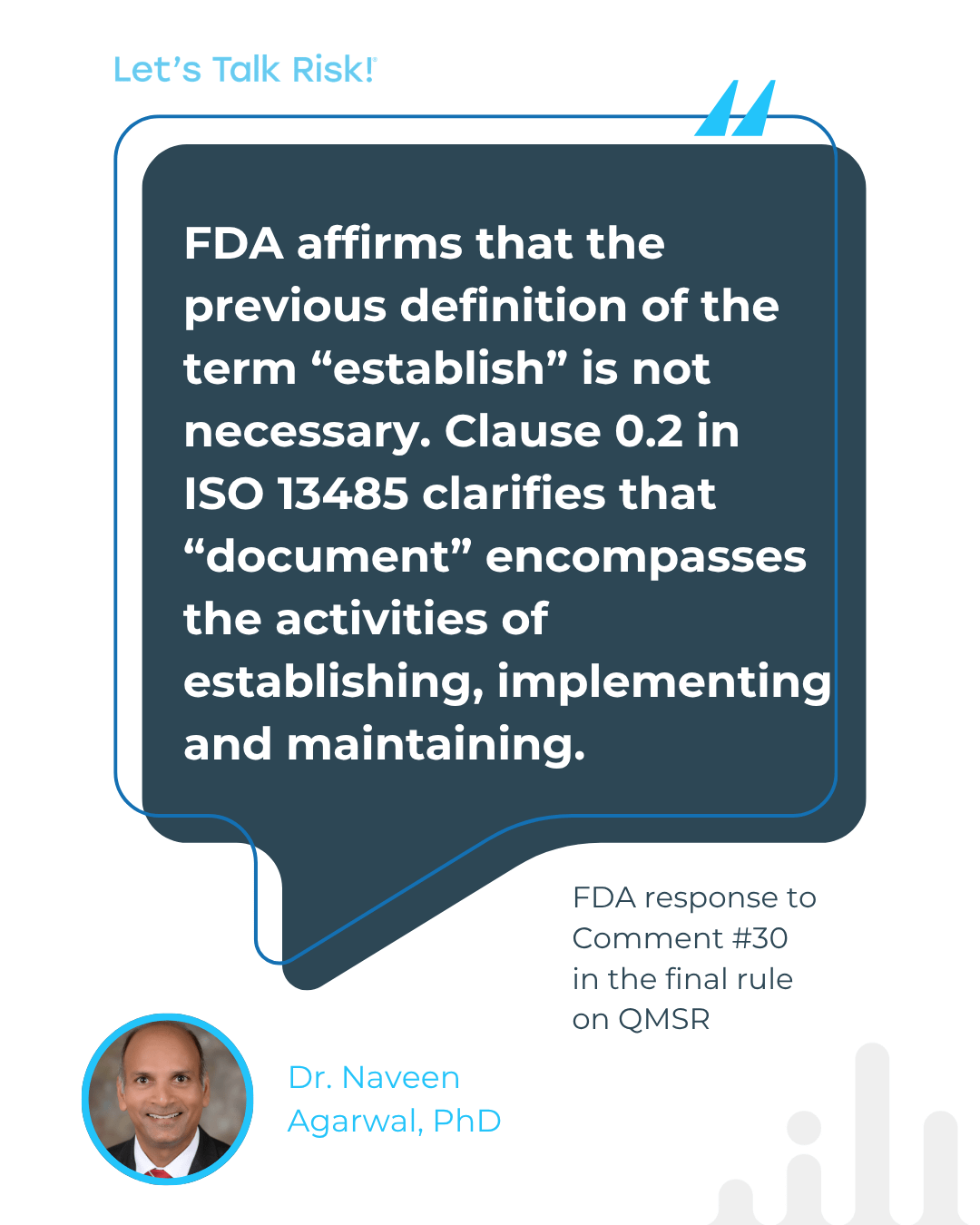
Under QMSR, a documented QMS processes must be more than written; it must be established, implemented, and maintained.

Where MedTech professionals gain clarity and confidence to navigate complex risk, quality, and leadership challenges.
Subscribe:.rss.atom.json.md.m3u.pls
Live Last read · last published · next check
Saves to your Listen queue, to pick up on another day or another device.
Under QMSR, a documented QMS processes must be more than written; it must be established, implemented, and maintained.
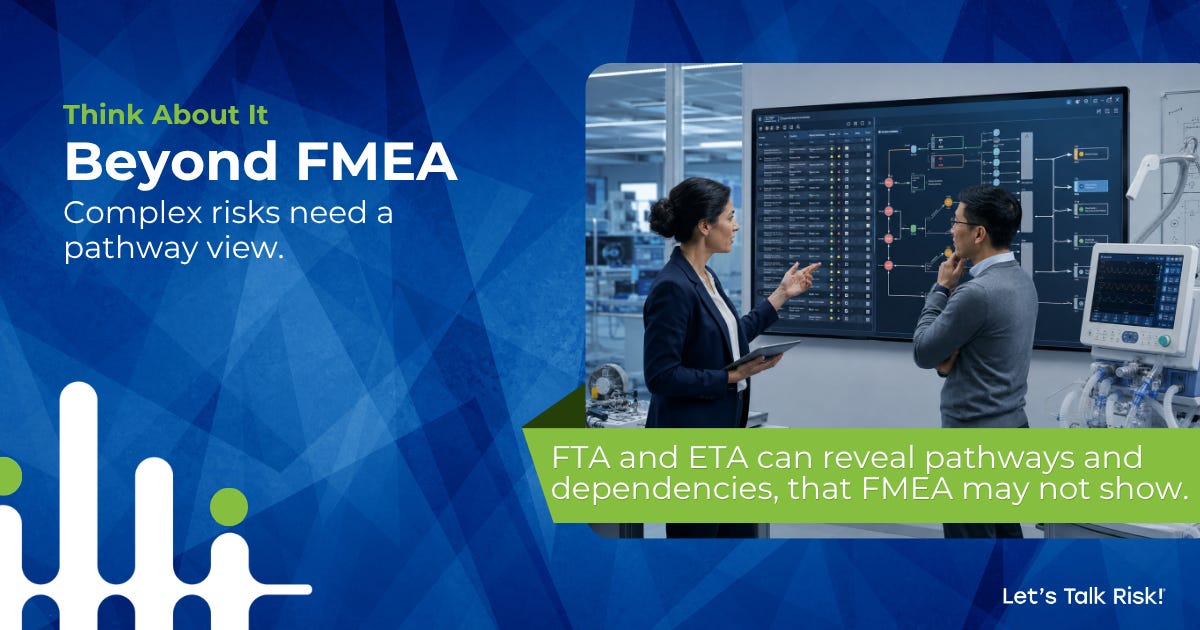
FMEA is valuable, but complex risks of harm may require pathway-based analysis to understand how events combine and controls interact.
Allyson Mullen examines how QMSR is changing FDA’s approach to risk, inspections, quality agreements, and accountability across the quality system.
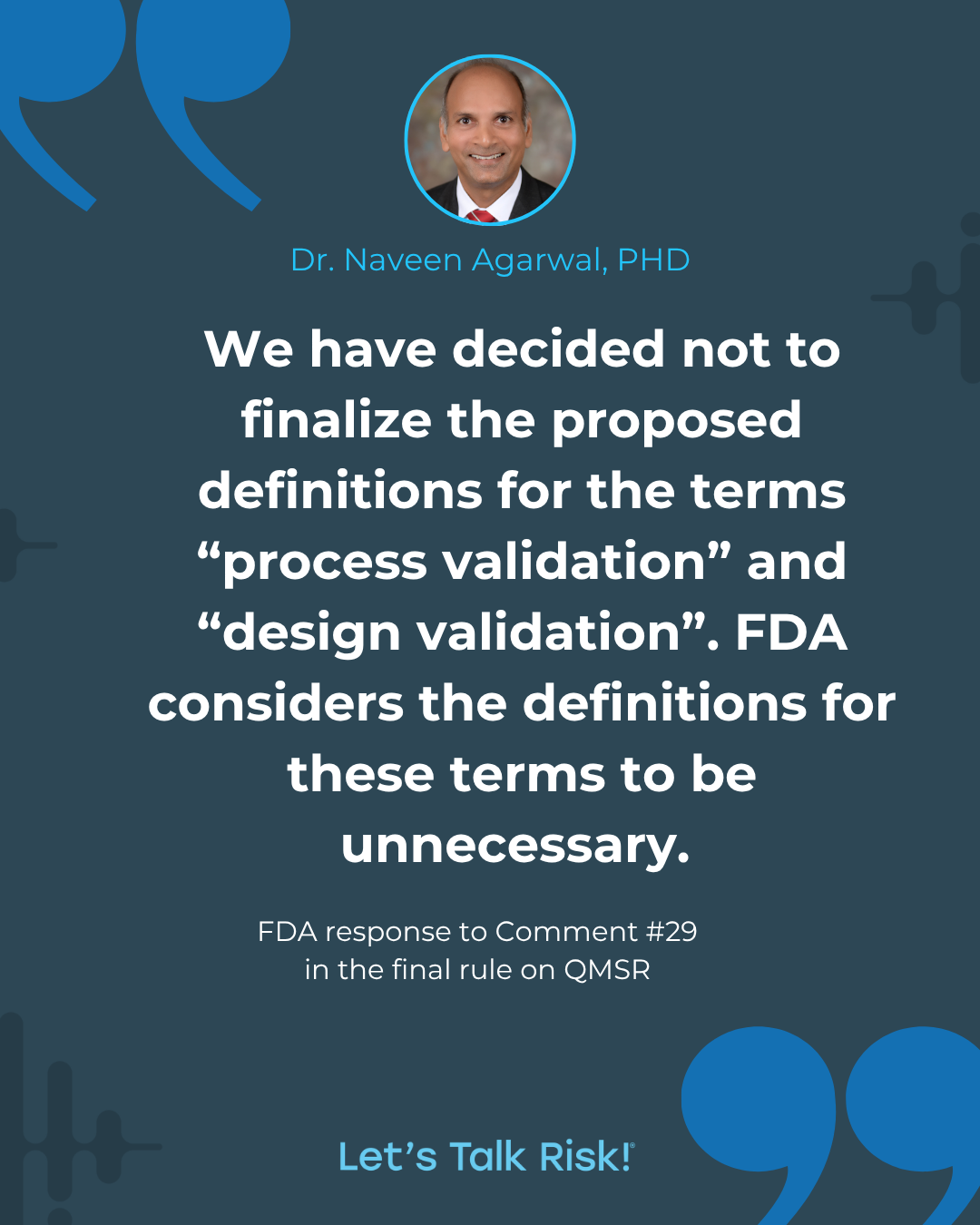
QMSR removes explicit definitions for process and design validation, but not the underlying validation obligations.
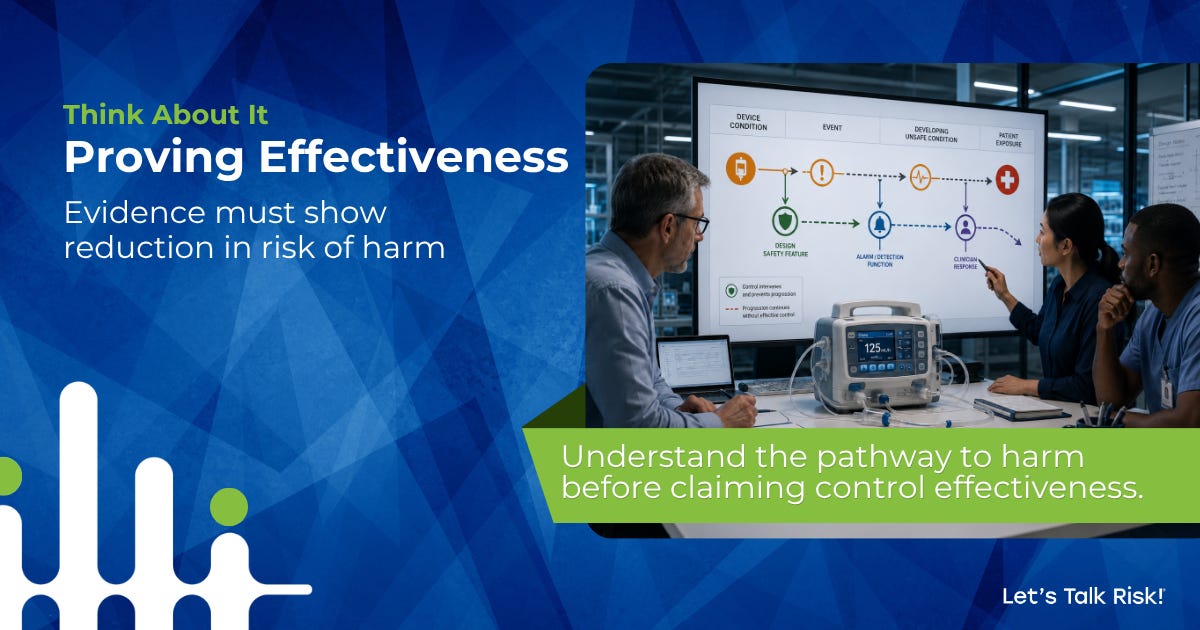
If we cannot explain how controls change the pathway to harm, we cannot confidently define, measure, or monitor their effectiveness.
What the Linemaster warning letter reveals about FDA’s emerging inspection and enforcement approach.
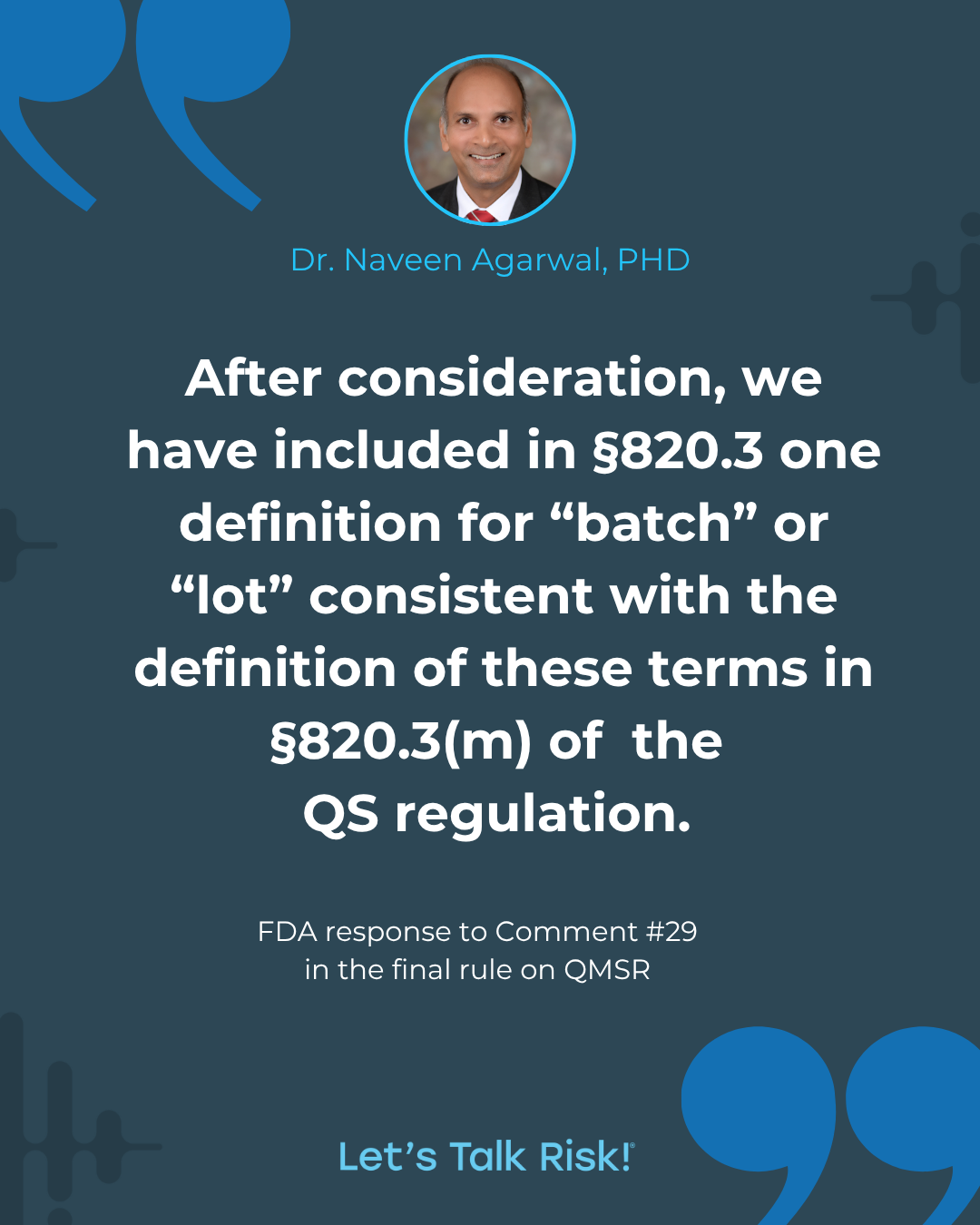
FDA retained the batch/lot definition because QMSR needs clarity around the affected product population when manufacturers evaluate nonconformity, correction, CAPA, traceability, and risk.
A device may appear safe and effective overall while vulnerable patient subgroups experience a meaningfully less favorable benefit-risk balance.
Kerry Flecknoe explains how ISO 14971 can turn Health Hazard Evaluations into consistent, defensible postmarket risk decisions.
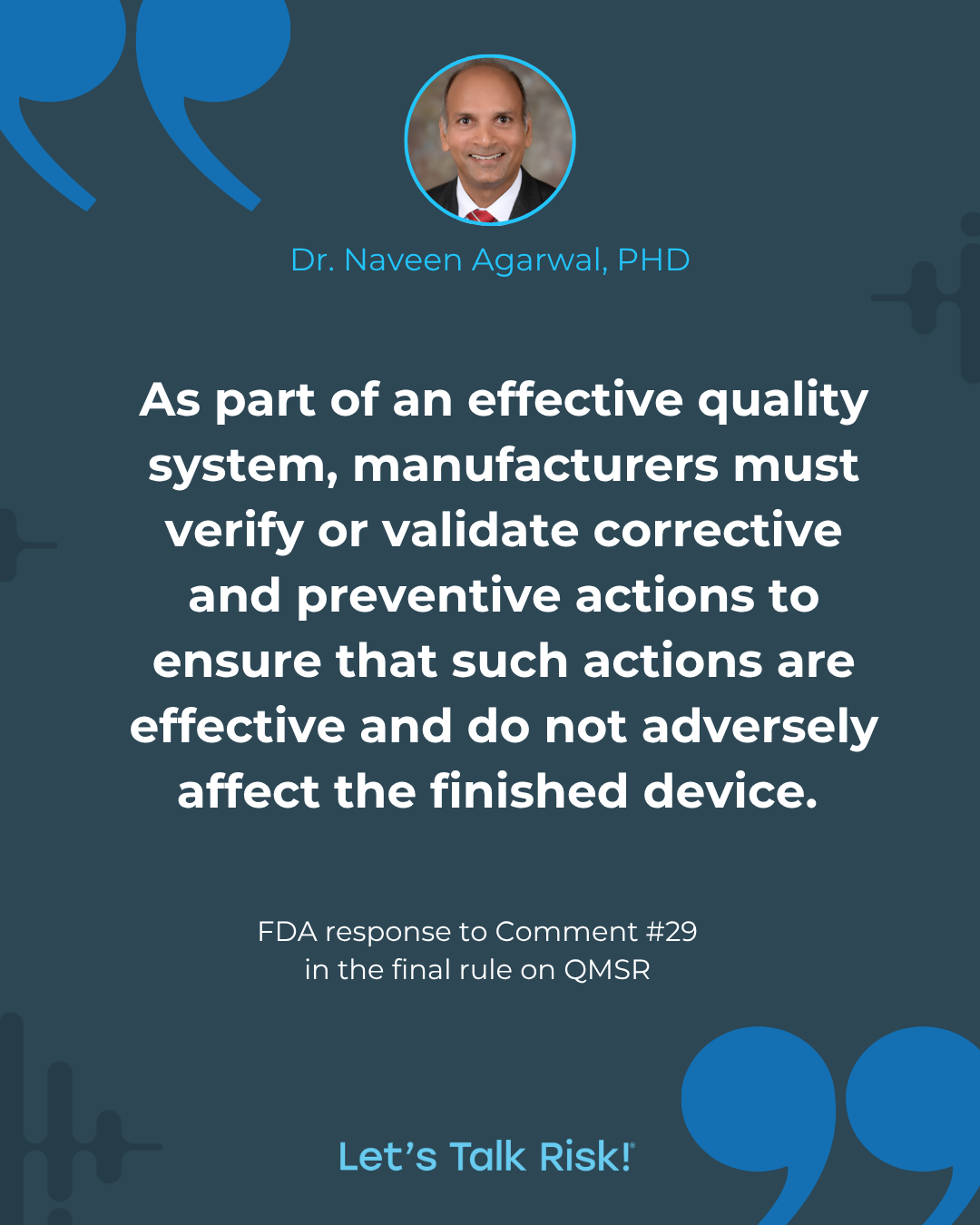
CAPA effectiveness is not proven by completion alone; it requires predefined criteria and evidence scaled to the underlying risk.