
I never connected with the book “The Body Keeps the Score.” I understand it helped a large audience understand things and have new language around trauma, but each time I attempted to move my way through the book, I felt, for me, it didn’t allow breathing room to digest the magnitude of what the score was.
I appreciate that this book opened the door for many conversations that helped hurting people find relief. I resent that when someone who has carried complex trauma for years attempts to share they’re suffering, they are now often met with, “Well, the body keeps the score.”
But he’s right. The body definitely keeps the score. And one of the ways I have seen that in my life was every early May, when the Mother’s Day ads would start playing, reminding me how abnormal and out of place I am.
Can you imagine if estrangement from an abusive mother were mainstream and Hallmark tried to capitalize on it? They start offering cards that say, “Your mother may not have done the best she could.” And then you open the card, and it says, “But you can. Happy no-Mother’s Day.” And the card is $8.99, but the envelope is an extra .99 but if you want adhesive ON the envelope where it actually seals all the way, that’s another .39.
“Anyway, we’re praying for you unless you’re also doing the non-religious thing, and in that case we are sending love, light, and positivity.”
Sincerely,
Hallmark.
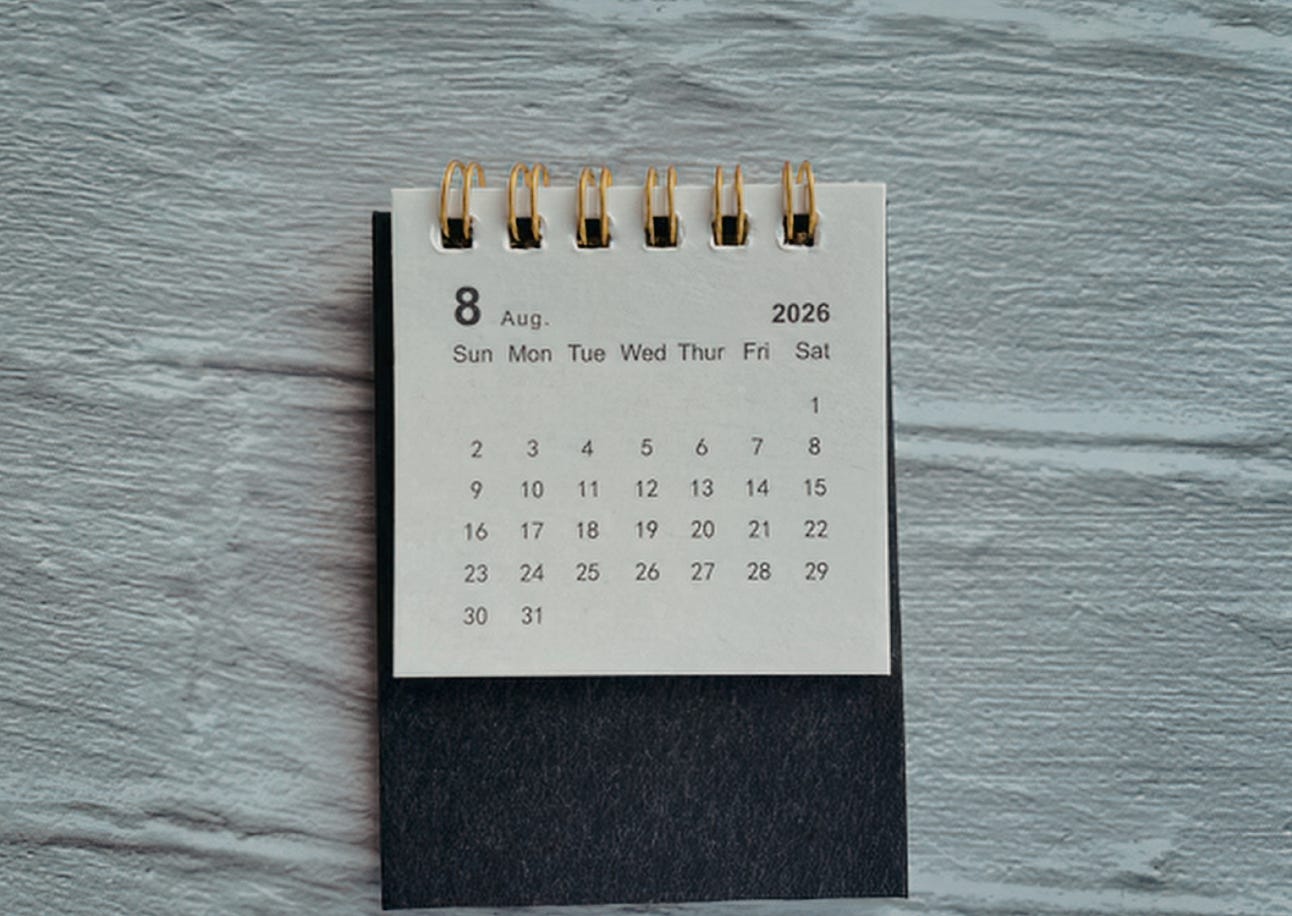
No sooner than I clinch my jaw to get through Mother’s Day, is it over, and within a couple of weeks, my dad’s birthday arrives. The sting doesn’t feel as strong as the Mother’s Day aches. Mostly it’s because there isn’t a holiday called “Nate’s estranged dad’s birthday,” where everyone is talking about how great a day it is and how to make sure I was responsible to make him feel special. But still, the calendar shows me the date in May, and there is always a stir, at least awareness, that my story, our story, does not coincide with how birthdays for a father are meant to feel.
When his birthday ends, the countdown to Father’s Day quickly follows. It usually lands 2-3 weeks behind, and again, it does not feel as heavy or commercialized as the pressure to embrace Mother’s Day, but it is another day that my body reacts to because there is a social norm attached to it that I am unable to adapt to.
Mother’s Day, his birthday, and Father’s Day are all capped off with my mother’s birthday trailing the other three. These four events happen in about 7 weeks’ time, and each year I’ve felt like someone had a magnifying glass on my shame showing the world how small I felt by being a person who wanted these days and dates to go away. Stupid, stupid score.
From the perspective of abuse recovery, the context I think that is often missing is the depth and width needed to hold the stories of people who carry complex trauma. It feels to me that there is often little room to allow that person to breathe out their truths in order for them to experience an energy that tells them, by sharing that truth, they are now beginning a new journey towards restoration. If anything, it’s as if they identify something in them that feels like a fully loaded scoresheet, and when they attempt to reveal that scoresheet, they are told to learn to accept the score, embrace the score, turn the score into a great memory for other people, or use the score to get stronger.
By the way, I am no longer referencing the book but just the term “score” based on my experience (professional and personal) in healing spaces.
These memories, these anniversaries, these things we’re meant to somehow know how to make better, have a gritty complexity in how they show up in our minds and bodies.
Imagine if someone is coming to terms with being a survivor of abuse from a parent. They have spent their adulthood returning to that parent trying to make them see their worth, because they believed there may have been something about them that deserved that abuse. They’ve established a life based on this identity. Oftentimes, they become an overachiever to outpace the shame or an underachiever because they think that keeps them hidden—under the radar. And they are freshly coming to terms with words they have never heard like “trauma,” “scapegoat,” and “neglect.”
And no sooner than they say those words, then a regular date on the calendar that happens every year feels different after they’ve shared their scoresheet. The random event, holiday, or routine is requiring a little more from them in order for it to remain regular.
The score is often revealed to people when they are going through big life change–divorce, loss, addiction, rock bottom, burnout, depression, and the many other paths to people learning they have a body and it has a score. This is when life is giving them much of that gritty complexity. If drinking from a firehouse is the analogy of getting too much information too fast, then the beginning of healing is drinking from a firehouse but only being given a straw (the paper ones, that collapse).
When you begin to understand what the score is, it is imperative to begin building a relationship with your body that allows it to speak about how it perceives your thoughts of it, your movement in it, and your view of the things that impact it most.
Acknowledging that score, with or without those who made the score, is critical in learning to embrace those gritty stories and begin to take their sting away.
I want to tell you two things I wish every person heard the moment they hear the words like “Do the work” or “That is Trauma” or even “You have cPTSD.”
1). Your relationship with your body is going to confuse the fuck out of you. When people tell you that “Your gut doesn’t lie,” they are not understanding how much you’ve had to do to appease people who were hurting you. It’s not that your gut is trying to lie or confuse you, but that it is tied to a nervous system that needed to survive in an environment that did not make sense to them.
Your gut may be buried under layers of hypervigilance and fear, and if you can’t hear it or don’t trust it, that makes sense. But, if you can take on the role of director of what messages help your body release vs. which messages shut it down, you will be able to see, much quicker, what healing in real time looks like for a body with complex trauma. You will see the impacts of certain people, environments, and energies that may have been family, community, or your norm and realize that your body is attempting to find a way to release the gritty complexity that it was not prepared for.
This will lead to your body feeling more like home. This will take time. This will be foreign if you’ve experienced trauma. This is doable and does not need to be on someone else’s terms.
2). Believing you need to change, alter, or improve your body before you can embrace it fully is, in itself, another belief that can feel as turbulent as a trauma anniversary. This belief slaps another label on it, without seeing the width and depth needed for it to find relief. This does not mean you can’t work towards goals, but if those goals are set with the assumption that it makes your body more worthy, you are on a slippery slope of treating it like a checklist item rather than the sacred resource it is.
If this made you bristle, consider next time your body asking for a pause or rest, that you pushing it further, is the equivalent of saying, “Just be more positive.”
I wish I was sharing these ideas from a place of expertise. This is coming from someone who has swung the pendulum from eating discorders to smoking a pack a day to excessive exercising until injury.
And while I am not an expert in this part of my life, I can assure you I am really proud of what I have learned to do with my body. Slowing down included.
I will turn 49 on Tuesday. As you know, these dates are complex too. The life I continue to build increases its peace year after year. That path has been unexpected and curvy, had steep drop-offs, but continues to bring me back to my body.
I have a couple close friends whose birthdays are the week before mine. I often put extra calendar alerts for myself while gathering memes, quotes, or ideas that I want to send to them. To make them feel seen. To make sure they know how much they matter.
This year, there was a disconnect. A bit of a panic. I felt off and kept revisiting my calendar, assuming I had done something wrong. I would look at my phone and then my laptop, wondering why I kept putting this pressure on myself when their birthdays aren’t here yet.
Again and again, last week I had this pang of something, a nudge asking me to take inventory. Asking me to look at the score sheet.
One more pause. One much-needed glance to appease my body. What is this? What is it trying to say? I had not forgotten my friends’ birthdays. I had forgotten my trauma anniversaries.
I remembered Mother’s Day, and I taught a class about it. Father’s Day too. I saw those words on the calendar, and I noticed the numbers for their birthdays in real time. I didn’t neglect the trauma anniversaries because I was afraid of what was to come. My body and I were busy. Specifically, I was writing. I was reading. I was cooking one of three delicious meals those days, as I do each day. I went for a walk. I texted with friends. I fell asleep with a book cracked open.
I didn’t try not to remember what has continually made me feel out of place. I stopped fighting those external voices that told me how I was supposed to feel and started having more conversations with my body. In the beginning, I treated it like a circus animal that needed to be tamed. As if I would allow it to take center stage if it proved its prowess.
That led to more time loss. When the dates would pop up, my body was not only reminding me of the painful reminders but also how much more painful those reminders are when I am not giving it room to speak.
I didn’t forget the trauma anniversaries because I am lying to myself. I forgot them because there is no longer loss for me on those days. Walk at the park. Breakfast. Book. Writing. Gentle breeze through soft white drapes.
The score has been erased. Not because I did it right or well, but because I surrendered to my body and gave it the time and attention it deserved.
May we all heal.
I’m glad you’re here.
Nate
My online group meets weekly. This week we are doing a deep dive on Healing From The Scapegoat Role. You can register for the group here.
I have a few spots left for private (1:1) life mapping calls in September (and one timeslot left in August). You can schedule that here.
Truly, truly. I’m glad you’re here.
Nate
No posts
Comments
Nothing yet. Say the first thing.
Sign in to join the conversation.