

© Natalie Bennett (Gel plate print)
Looking forward to talking Green Thinking at the wonderful Owl Bookshop in Kentish Town, North London, on Wednesday. Tickets here.
The following week my diary secretary (ie me) has got really out of control. I am at the lovely Verey Books in the Lake District on Wednesday and on Thursday at the magnificent Five Leaves in Nottingham, and yes I have to go to London in between to chair an AMR event. Yes, I believe in a work/life balance, I just don’t have one.
One of this week’s books is the handily small but richly informative The Global Casino: How Wall Street Gambles with People and the Planet by Ann Pettifor. Timely for me, as I joined with the All-Party Parliamentary Group on Investment Fraud and Fairer Financial Services to launch a survey on the future of the City of London Corporation. Please do take a minute to fill it out - we want a wide range of perspectives. The City, and its role in promoting the financial sector, has impacts on all of our lives!
As I told journalist Ben Lynch, “the constitutional anachronism is one element of the financial sector’s excessive political influence, so evident in policies of successive governments, which cannot be allowed to continue. Too much finance in our economy is a major threat to our security, as we saw in 2007-8.”
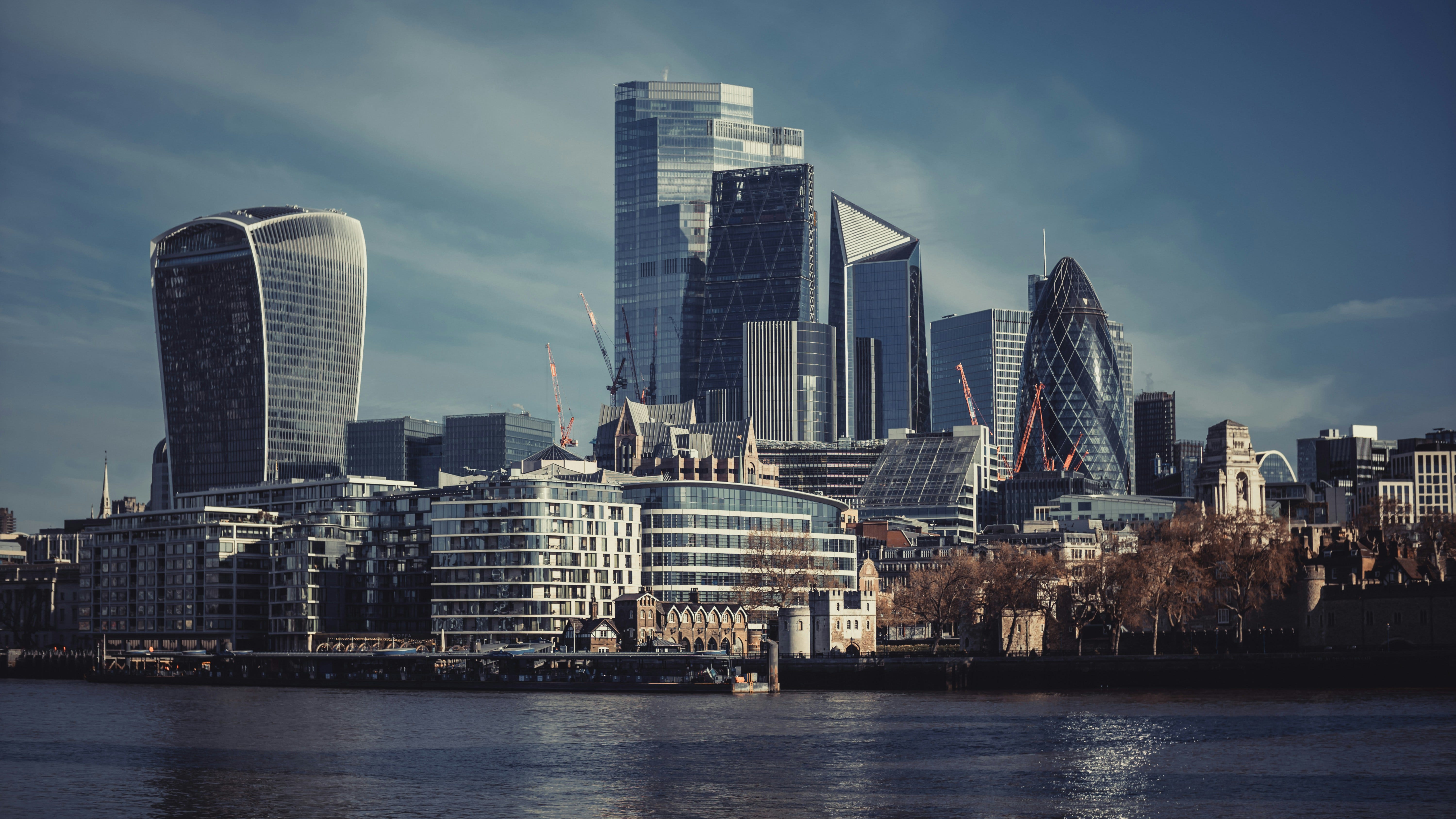
Multiple layers of ugliness. Photo by Tadas Petrokas on Unsplash
The financial sector has long had far too much influence over our politics, the waves of its dominance rising and (sometimes) retreating. Pettifor quotes President Roosevelt as saying in 1936: “business and financial monopoly, specualtion, reckless banking…had begun to consider the Government of the United States as a mere appendage to their own affairs. We now know that Government by organized money is just as dangerous as Government by organized mob.” (p. 6)
But now, we’re back, globally, with one system of capitalism based on wild inequality and collapsing trust (as I argue in Green Thinking). As Pettifor notes, in 1971, as Nixon dismantled the Bretton-Woods order, US workers shared 51 per cent of GDP. By 2023, that had collapsed to 42.6 per cent. Meanwhile in apparent rival China:
“The top 10 per cent of the population hold approximately 67% of China’s wealth. The top 0.001% own 5.8% of China’s total wealth, roughly equaivalent to that of the bottom 50%. The share of China’s national income earned by the top 10% of the population increased from 27% in 1978 to 41% in 2015, while the share earned by the bottom 50% (a group that includes 536 million adults) dropped from 27 to 15%.” (p. 13)
Is it any wonder Presidents Trump and Xi appear to get on surprisingly well?
And all of this is based on financialised assets, and that is founded on money, “something ephemeral, a social construst… all money is credit - an obligation, a ‘promise to pay’: a series of human obligations and claims on both present and future human and ecological resources.”
“Credit money in turn is based on trust, upheld by regulation and law. The grave danger posed by the globalised financial system is that it is largely lawless and unregulated. Lawlessness undermines trust - the very thing that gives money obligations value.” (p. 15)
And the US has demonstrated that it cannot be trusted, something the world would do well to remember long pre-dates President Trump.
“By pegging the world’s reserve currency, the US dollar, to a finite supply of gold in Fort Knox, both the American delegation at Bretton Woods and their friends in the orthodox economics profession presaged the collapse of the system under President Nixon. By 1971 and the Nixon TV announcement, the costs of both the Vietnam War and the building of ‘The Great Society’ had caused the United States to build up a deficit in trade and to empty Fort Knox of its holdings…. In the 1960s, well before the Nixon Shock, French President de Gaulle knew the US had insufficient gold to uphold its promise to convert paper dollars to gold,… in 1971, France’s President Pompidou sent a battleship to repatriate gold stored in the vaults of the New York Fed. These accelerating outflows of gold and follars … prompted Nixon to suspend gold convertability… the biggest-ever such sovereign default, although it is seldom defined as such by economic historians. If the IMF had been called in, the US would have had to adopt a ‘structural adjustment’ programme … Given American power and dominance, that was out of the question.” (p. 25)
But it is this snap imposition by Nixon - not really so long ago - and contingent on US military power and global aquiescence - that led to the financial world we have today:
“He and his successors presided over the removal of the global financial system’s guard rails, the increasing mobility of capital (1974), the creation of large, opaque and unbalanced global markets in goods, services and money; and a global export-led growth model that resulted in the largest, most-persistent trade deficits in history. Not to mention the environmental impact of that growth model… the Nixon Shock catalysed changes to the way Wall Street did business… thus began the slow but inevitable construction of the Global Casino.” (p. 37)
It’s not that there was much to praise about the Gold Standard, as Pettifor explains.
“Governments were expected to increase the nation’s holdings of gold by neglecting the domestic economy and reorientating economies towards international markets in money, goods and services. Then, as now, the export orientation of economies is necessary to ensure countries earn hard currency … for the purpose of repaying private and public foreign bankers and creditors and for purchasing vital imports like medicines and oil…. the central aim of the gold standard was to wrest power away from the state over the issuance of paper money, the pricing of money (interest rates) and the valuation of the currency and to transfer those powers to private financiers.” (p.57)
And now we’ve added technology to speed up their accumulation, so that the world in 2021 lost $144.8 billion in tax revenues to tax abuse related to offshore financial wealth, while the amount of undeclared offshore wealth was was in 2024 around $13 trillion (about 9% of global GDP).
“The ability to move capital across the world at lightning speed is largely thanks to technology that, as Susan Strange explained in 1998, had changed the world’s structures of power … by shifting power over trade and production from governments to firms. …According to Strange ‘ in the post-war decades and for much of the Cold War, technology was led and directed by states. By the 1990s, it was led and directed form the private sector.” (p. 65)
Pettifor gives us a useful explanation of the oft-heard term shadow banking.
“The unregulated $239 trillion market in money - a system of banking known as market’based finance’. This globalised market exists, metaphorically speaking, in the dark space that is the mesophere - the layer of atmosphere above the stratosphere…made up of ‘the whole alphabet soup of levered up non-bank investment conduits, venicles and structures’ to quote McCulley… the creation of money, the pricing of money (interest), the lending and borrowing of money - undertaken outside the scope of regulatory supervision… also tethered to the world’s ‘main street’ (that is, local) banks and, in that way, pose risks to us all… in 2023, traditional banks in their sample [Levin and Malfroy-Camine] had extended £300 billion, or 14% of their total lending, to those funds… big US banks have raised their lending to private capital firms approximately 30 times over, from about $10 billion in 2013 to $300 billion in 2023.” (p. 67)
And the threat is not just to finance, but very much grounded in the real world. Pettifor talks of the “hunger of 2005-8”, when over three years “global food prices rose by a whopping 83% as speculation in financial markets accelerated. Between January 2005 and June 2008, maize prives almost tripled, wheat prices increased 127% and rice 170%…. at the same time, demand for food was falling as the global economy weakened and then collapsed from August 2007 onwards… caused by the greater participation of financial speculators in food deriveratives markts. That in turn was a direct result of the Clinton administration’s 2000 change to the Roosevelt administrations 1936 Commodity Exchange Act, changes which removed quantitative restrictions on speculative positions in agricultural futures contracts.”(pp. 111-12)
These, under the Commodities Futures Modernization Act of 2000, were devised, Pettifor explains, by Alan Greenspan and Lawrence Summers. (p. 115) (Yep, same villains keep reappearing.) If you are looking for opposition names at the time - and yes there were plenty, Professor Stout and Brooksley Born, chair of the Commodity Futures Trading Commission (CFTC). Both women. Somehow not surprising.
A few did very nicely from the change.
“According to analysis by Societe Generale, the speculative strategies by a group of hedge funds active on the CME [Chicago Mercantile Exchange - where most speculation takes place] were able to make a profit of $1.9 billion based on the price spike in wheat, mazine and soybeans following the start of the war in Ukraine… When a wall of speculative money is aimed at limited supplies of an asset like grain, prices rocket upwards.” (p. 118-9)
So also with oil.
“The economists Carlotta Brennan and Servaas Storm have set about trying to show just how influential speculators are in the market for ‘black gold’ - and how much that speculation impacted on inflation in the US… speculators… acitivity has raised the volume of oil transactions far above the volume warranted by ordinary commercial transactions… they concluded… that excessive speculation in the crude oil market was responsible for 24 to 48% of the increase in the WTI (West Texas Intermediate) crude price from October 2020 to June 2022… increase of around $18 to $36 a barrel and an increase in the US inflation rate of 0.7 to 1.5 percentage points in that same period.” (p. 129)
Then Pettifor turns to housing, noting “just as in the 1930s, the world’s people clamour for protection from the ruthless governance of markets. Their appeals for, among other things, a safe and affordable roof over their heads are frequently dismissed as ‘populism’.” (p. 138-9) She turns to the work of Ian Milheirn, now chief economist at the Department of Transport.
“He has challenged the commonly held claim that Britain has failed to build enough houses to meet the demand for places to live… since the 1996 nadir of house prices, the English housing stock has grown by 168,000 units per year on average, while growth in the number of households averaged 147,000 per year… there were 660,000 more dwellings than households in England in 1996, this surplus grew to over 1.1 million by 2018. … even in London and the South East, the number of houses has grown faster than the household count… The increase in housing stock has had a minimal impact on prices. .. When the fuel of the Global Casino’s mobile private capital is matched by easy if costly mortgage credit and money from both commercial banks and the Bank of Mum and Dad - and in turn supplemented by government subsidies and tax breaks - house prices rise.” (p. 142)
What to do? Among Pettifor’s recommendations are a Tobin Tax, a property speculation tax and/or land value tax, incentivising banks to lend into the productive economy rather than property. “It is possible to decommodify land.” (p.146)
And she says “restraints on capital movements must be used by states to tax all citizens fairly… Above all, taxation must be applied to the super-rich… unlike wages, which are taxed when they are sold, or ‘realised’…. The rich, therefore, do not sell their assets. Instead they use their assets as collateral for additional leverage or borrowing. The loans are not considered income … so they are not taxed.” (p. 181
As I do in Green Thinking, Pettifor finishes with a return to the inspiration of nature. "
“Decentralisation is vital for building the resilience of societies and economies faced with climate breakdown and eocsystem collapse. As Phila Back argues, all life is a unity - a fundamental concept of ecology. Fungi, part of the wood-wide web, are entirely decentralized and essentially unbounded branching threads that intertwine and bond with other organisms to exchange and transmit substances as well as information across extensive underground networks.’ … they can detoxify contamination, accelerate regeneration of devastated landscapes and sequester atmospheric carbon on a pontentially very large scale.’ The economics profession has a lot to learn from fungi.” (pp. 191-2)
To finish, I’ll note how Pettifor quotes Keynes: “Practical men, who believe themselves to be quite exempt from any intellectual influences, are usually slaves to some defunct economist.” (p. 62) What we might just do is throw out all of the orthodox economists - a whole defunct field, and start with heterodox approaches like those of Pettifor.
I don’t read a lot of fiction, have been thinking I should read more, but I find it hard to get engaged in novels. But I loved The Goblin Emperor by Katherine Addison. It has a fantasy, steampunkish kind of setting, nicely done, and in many ways is a traditional coming-of-age story, but what makes it for me is the politics - a person learning to do politics in the most desperate (for him anyway, but perhaps also for his society) circumstances of being made emperor without any real preparation, or any allies but those he can make as he goes along, in a highly dysfunctional, corrupt polis.
Given the chaotic state of our politics today, it has an odd timeliness, but it also is an exploration of what has been a surprisingly common event in history. I was at the same time listening to the latest Byzantium and Friends podcast about the emperor we know as Julian the Apostate, who got dumped with the junior emperorship, and military command in Gaul, without any preparation at all, because all of his other relatives had been killed off in internecine struggles in the imperial family.
There’s a brilliant, shocking twist moment at the end of The Goblin Emperor, when the Emperor meets one of the men who killed off his father and brothers, which I won’t give away. But a really gut punch moment.
The brilliant Gastropod podcast is nothing like a cooking show. It’s about the politics of food, and this episode, about the long-term white/brown bread debate, demonstrates what a highly political argument that has been over centuries. From racist arguments for white bread, to the way in which brown bread can be exclusionary (and not just for financial reasons). The latter is why there’s now an “approachable bread” movement in the US. (Which reminded me of a recent discussion with a French activist, who said that there is a political reaction against organic food there, because it is seen similarly.)
Also staying on the food side, I have just discovered the very varied The Delicious Legacy podcast, with archaeological and contemporary food stories with politics as more than a condiment. Particularly enjoyed the accounts of artisanal production of Asin tibuok (whole salt) in the Philippines, a reminder of the sophistication of so many traditional technologies, and cultures’ capacity to use all resources (coconut husks are used to soak up the salt, then burnt during the process of extraction). It is, sadly no surprise, listed on the UNESCO List of Intangible Cultural Heritage in Need of Urgent Safeguarding.
It isn’t easy reading, but an article written by Zoë Sofia in 2000 in the feminist journal Hypatia has produced much subsequent fertile discussion about what she called the “philosophy of container technologies”. Among those is a book, handily freely available online, titled Containment: Technologies of Holding, Filtering, Leaking edited by Marie-Luise Angerer, Ingrid Richardson, Hannah Schmedes and Zoë Sofoulis.
It seeks to look more broadly at “containment”. The editors note that this is not “going beyond” the container, but incites readers “to situate the container-as-object as part of a broader set of containment techniques and functions…. "the ‘holding’ performed by a container, which usually means ‘holding within’ but can also mean ‘holding together’ is the primary technology of containment that comes to mind, but it is not the only one. ‘Filtering’ is another kind of containment, where the emphasis is on discriminating between what is let in and what is excluded, and the container functions as a permeable membrane, a fence, or a gateway. ‘Leaking’ implies a movement from inside (a container) to outside of it… may be a constitutive and essential - though often hidden and denied - operating feature of systems and protocols that are ostensibly designed to contain and hold.” (p 9)
One of the examples cited is “failure of containment protocols to prevent non-native ocean farmed salmon from escaping into wild rivers, where they compete and/or hybridize with native species”. (p. 11) One of the many reasons for concern about factory fish farming.
We should surely assume that no containment will every be perfect, whether due to temporal changes or pressures it was not designed for. (See this week’s Russian bombing of a facility at Chernobyl used to store spent nuclear fuel - luckily not in use at the time.)
This is work drawing on feminist understandings - I think of my mother’s Tupperware parties, containers have traditionally been a chiefly female concern - although you might see the shift to ultraprocessed products as one more male (corporate) takeover of a traditional female concern and skillset. The academic base is also the history of technology approaches, as well as Heidigger’s philosophy.
But as I wrestled on the train this afternoon with a nearly unopenable small plastic container of guacamole, while wondering just how much microplastics and non-plastics it was shedding into the food and air, it is a useful reminder to look around us and think systemically, about how containers and containment are not dull and technical issues, but something about which we need to think critically and systemically in all areas of life.
If you’re a regular on this Substack, you’ll know that I find microbes, and microbiomes, absolutely fascinating. Four billion years (more or less) of continual evolution, a degree of sophistication that we’re just starting to glimpse, and a central place in our world that it is essential we come to terms with, (see The Probiotic Planet).
Yet more evidence of that in fascinating research about ecologically essential processes in fish.
“Symbiotic gut microbes may work in tandem with marine fish to produce a form of calcium carbonate that influences overall ocean health and serves as a key carbon sink. This process, long attributed primarily to fish physiology, may in fact depend on a previously unrecognized microbial partnership.”
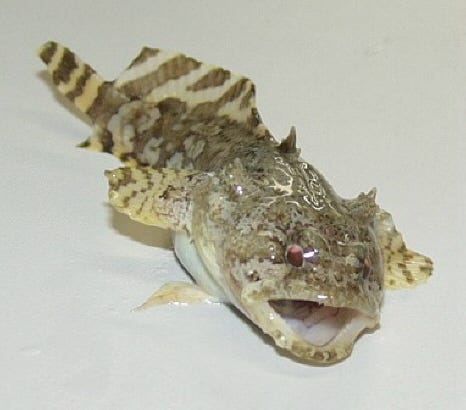
Source (Also to note that the males of these fish “sing”, using their swim bladder)
No, the videogame and HBO series The Last of Us is not - exactly - a realistic scenario; Cordyceps is unlikely to be able to switch from arthropods to humans.
But fungal diseases are a real, serious and under-considered danger, and resistance to the relatively few drugs we have available to treat them a fast-growing problem. So I was pleased to contribute to this academic article calling for stronger policy measures:
1. a cross-government fAMR body, 2. mandatory environmental and clinical surveillance, and 3. for fungicide approvals to look beyond crop pathogens and integrate risk assessments for potential hotspots of resistance selection in human fungal pathogens.
You can find a more accessible summary of the article here.
What did you think?
You can also find me on Bluesky, Instagram, Facebook, LinkedIn, TikTok and X.
Comments
Nothing yet. Say the first thing.
Sign in to join the conversation.