
Ever since I left my executive leadership career, I began exploring the invisible aspects of concepts like success, leadership, and happiness, and all that lies beyond reductionist lists such as “Ten Ways to…”
Sixteen years later, I can say that nothing has impacted me more profoundly than understanding what Systems Thinking truly means. The deeper journey into practices such as Systemic Constellations opened a path toward understanding consciousness and awareness for a very first time.
In a previous article, Beyond Words, I explored some aspects of these ideas. Here, I would like to revisit them from another angle.
Systematic thinking is organized, structured, and procedural thinking. It breaks down a complex concept into simpler and easier-to-understand units in order to better comprehend its complexity. This is how an engineer approaches a machine: by separating it into parts to understand how it functions. It is also how management consultants apply frameworks and models to analyze organizations.
AI excels at that.
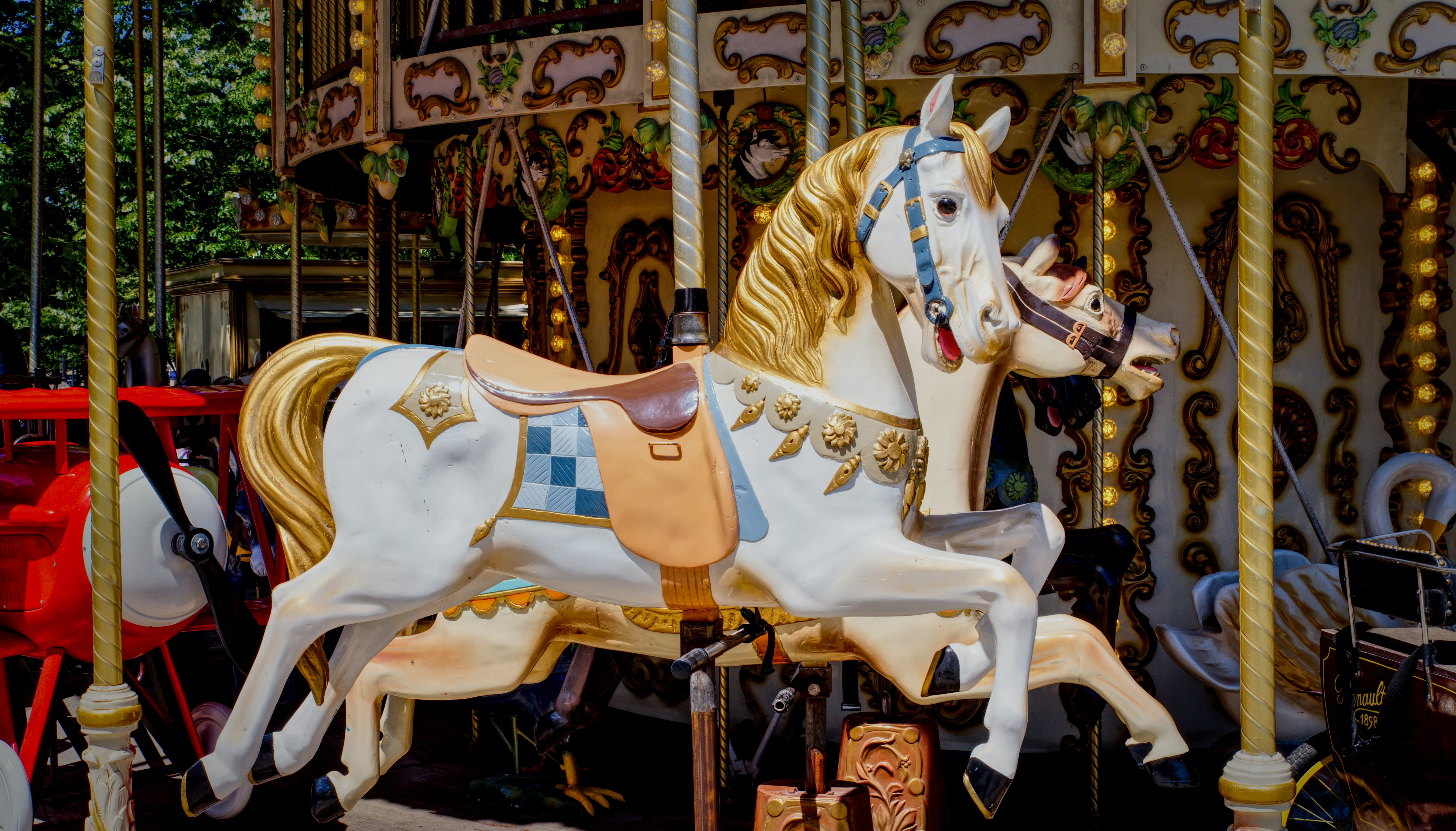
This approach helps process large amounts of data. It allows to design sophisticated algorithms capable of governing immense numbers of activities through predetermined structures and rules. Something like a very large and complex carousel — one that allows for far more movements than the horse in the picture can make. Yet every movement still remains confined within predetermined boundaries.
AI already surpasses humans in this type of data processing and can mimic understanding living systems — mimic being a key word.
With the exponential growth of data centers, it may soon be capable of running an unimaginably vast carousel. Perhaps even one involving billions of carousel figures.
Systems Thinking, or a systemic view, is fundamentally different. By definition, it includes what is emerging in the present moment within a complex and unpredictable living system like a human being, a group of people, or an ecosystem. The focus is not merely on structure, but on living relationships unfolding in real time: visible patterns, hidden dynamics, and the subtle order that emerges organically within life itself. Systems Thinking, in its deepest sense, is a consciousness-based awareness practice. It invites us into a state of presence where we can tune into what is emerging through the interaction of living elements. It is an invitation to perceive wholes rather than fragments, patterns rather than isolated events, and the dynamic interconnectedness of all parts within a living system.
This way of being does not seek merely to analyze life.
It seeks to experience it.
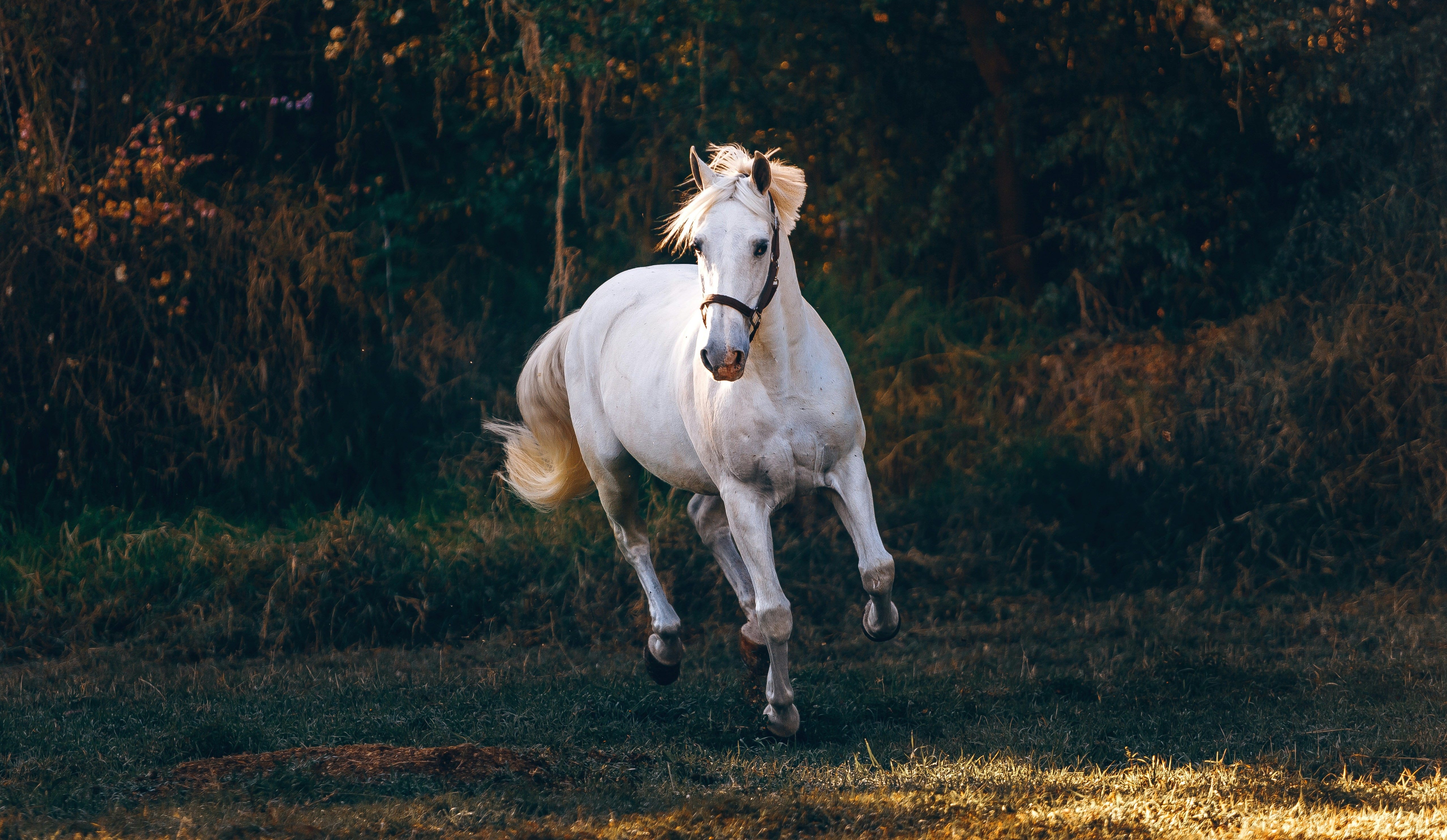
No one can determine where the horse below will go next. Every movement emerges from the interaction between the horse’s senses, awareness, past experiences, instincts, and the living environment. That environment itself consists of countless living beings whose next movements are equally unpredictable.
The horse’s next step is shaped by the softness of the earth beneath it, the wind, the sunlight, the birds nearby, the movements of the other horses, the strength of its body, its thirst, its sense of danger and the love of movement. The list is endless, and every next movement is mysterious, alive, and impossible to fully predict.
When comparing ourselves to AI and machines, we often fail to see the distinction as clearly. We have fallen in love with the predictable, the knowable, and the efficient — the carousel. And we have become afraid of the unpredictable, the unknowable, and the seemingly inefficient — living systems.
We are like a horse attached to a carousel that has fallen in love with the algorithm running it, and is therefore incapable of truly experiencing life as the wild horse does.
And so the real question is not whether AI will become human — or alive.
It will not.
Are we willing to acknowledge how deeply we are shaped by programming, and to admit how comforting the carousel-like predictability of our lives often feels?
Are we willing to confront the fact that many of the structures we once considered stable, like our concepts of space, time, power, identity, and even truth, seem to be dissolving before our eyes?
And are we willing to trade the comfort of the knowable carousel for the discomfort and mystery of admitting not knowing?
Are we willing to loosen our attachment to rigid identities and open ourselves to entirely new dimensions of being?
I know that “but” very well. It is far more practical, and far more comfortable, to remain on the carousel.
Predictability gives us safety.
Identity gives us acknowledgement.
Control gives us the illusion of certainty.
And yet, every time I step outside the carousel, even briefly, a new sense of aliveness emerges.
If I were to explain my experiences, and why all this matters to those who value knowledge, I would say this:
There is no greater form of knowing than accessing consciousness itself. Consciousness can be described as a field of integrated and ever-present awareness - a kind of universal intelligence always available to us. When we access it, we call that intuition, and we experience new and deeper forms of knowing, creativity, and wisdom.
If I were to explain why this matters to those who value relationships, compassion and love, I would say this:
There is no greater experience of love than the direct experience of our interconnectedness with one another beyond space and time, and therefore with life itself.
This is what AI will never be capable of.
Because life is not about processing power.
Life is about having the senses and capacities to experience living systems and living relationships unfolding in real time, and to participate in the living mystery of existence itself.
In that sense, AI will always remain one step behind, trying to analyse and make sense of what some human has already experienced.
I periodically host online events which are a playground for the collective exploration and evolving of The Human Advantage - the unique human qualities that set us apart in an age dominated by AI. If you are interested, get in touch.
Consider subscribing also to The Human Advantage Commons©: A new publication which will an open-source commons repository of humanness, along with cultural transmissions and rituals of the human economy- supporting humans in reclaiming, cherishing, and advancing the sacred gifts no AI or other technology can ever replicate.
Comments
Nothing yet. Say the first thing.
Sign in to join the conversation.