The National Astronomical Observatory of Japan (NAOJ), the national center of astronomical research in Japan, has the most advanced observing facilities in the world. As an Inter-University Research Institute, we promote the open use of these facilities among researchers throughout Japan, as well as encourage flexible international cooperation. NAOJ aims to promote the development of astronomy, astrophysics, and the related fields of science.
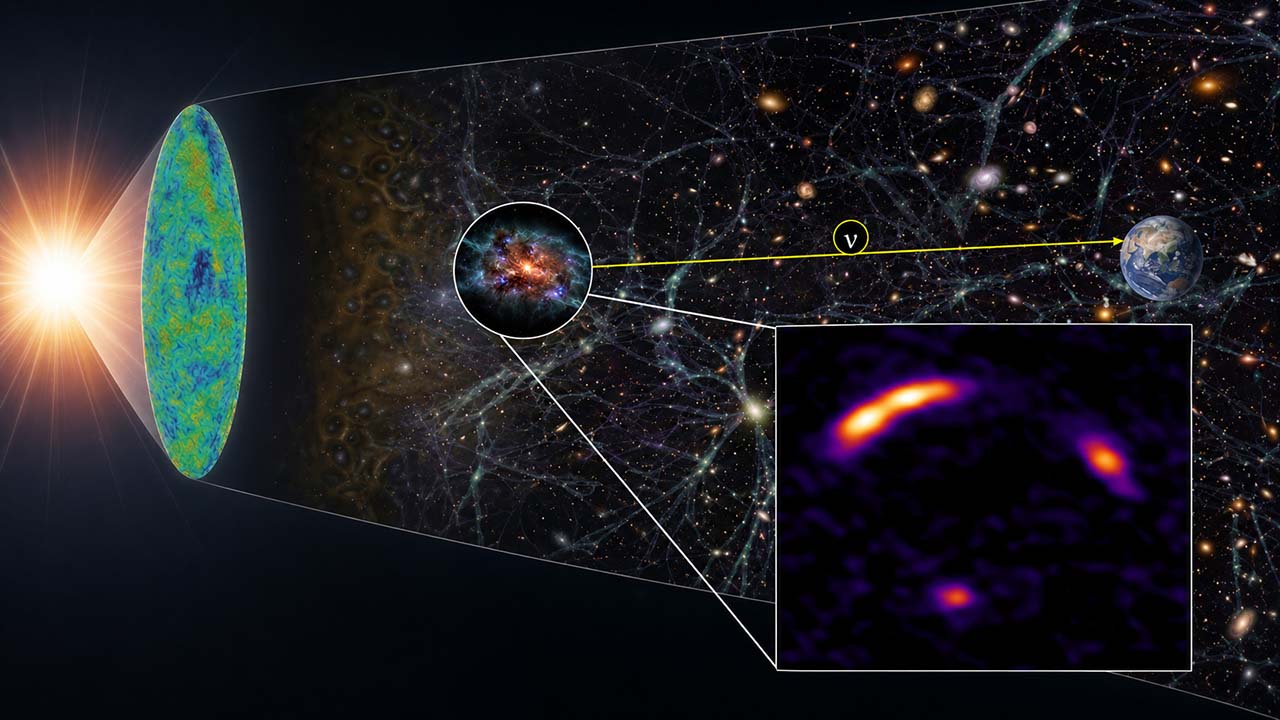
Astronomers using the Atacama Large Millimeter/submillimeter Array (ALMA), with help from a ‘natural telescope’ formed by gravity, have identified the source of a neutrino burst. The team expected a supermassive black hole to be the engine driving the remarkably bright galaxy. Instead, the team found that the galaxy was driven by vigorous star formation. This result provides important…
New simulations show that interactions with a magnetic field can work to decrease the distance between still forming binary protostars. These results can help explain the characteristics of the binary star systems observed in the Milky Way. These results can also be extrapolated to binary black holes, giving insights into how super massive black holes evolve.
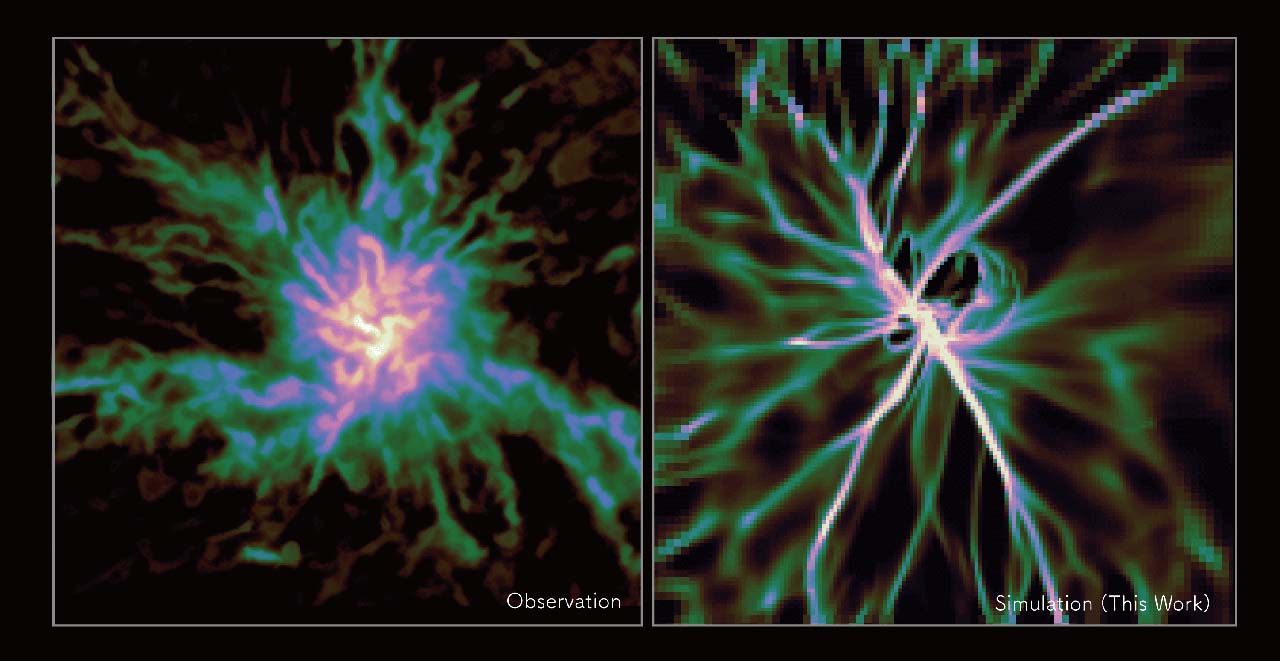
Research using multiple supercomputers, including ATERUI III at the National Astronomical Observatory of Japan, has found a possible explanation for the hub-and-spoke pattern seen in some molecular clouds where baby stars are forming. According to the new numerical simulations, if an external shock interacts with magnetic fields which have been warped by the motion of the clouds, gas can be…
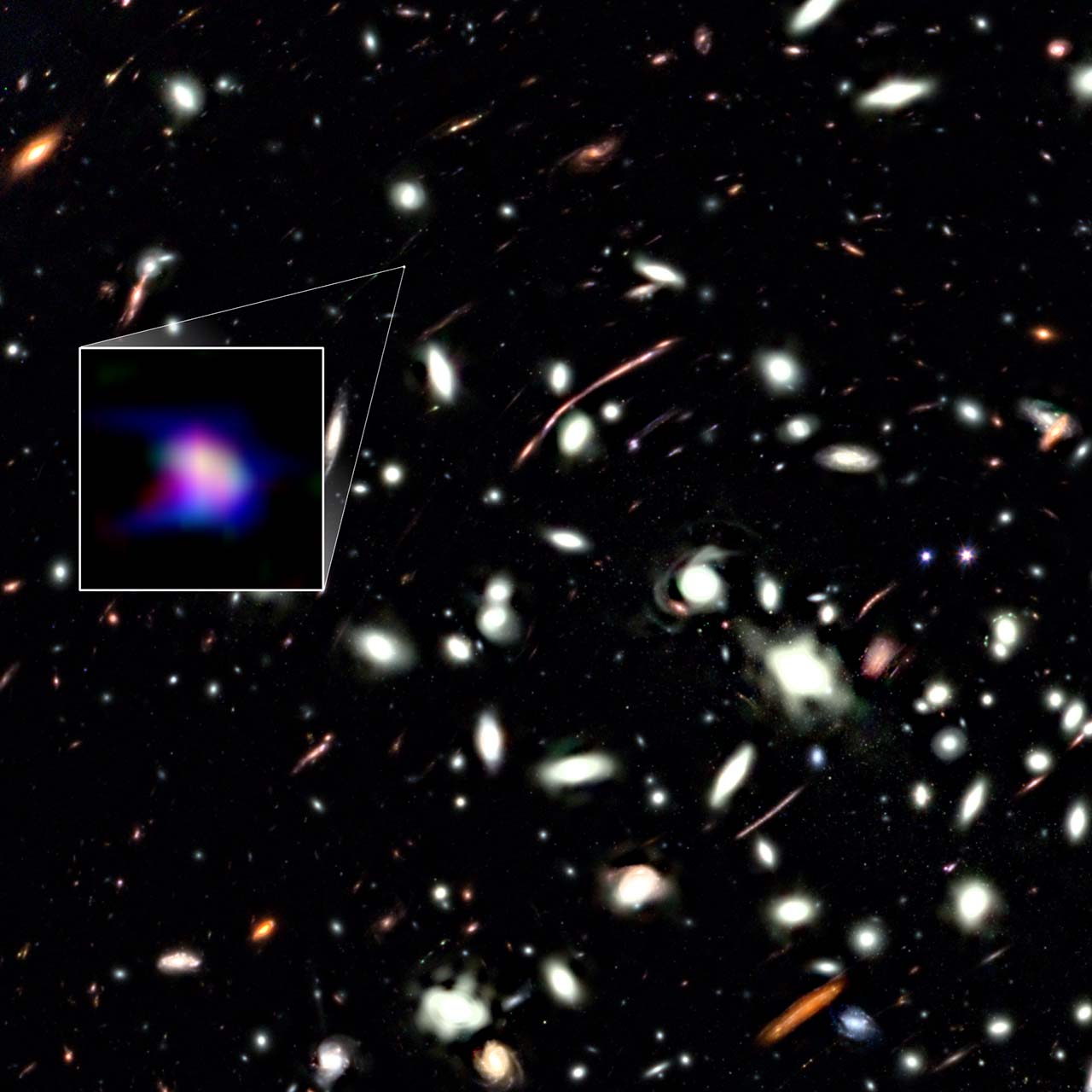
An international team of astronomers has used the James Webb Space Telescope (JWST) and a natural phenomenon known as gravitational lensing to achieve a definitive characterization of LAP1-B, an ultra-faint galaxy from 13 billion years ago. Expanding upon initial detections, this new study revealed a record-breaking low oxygen abundance -- merely 1/240th that of the Sun. This chemically primitive…
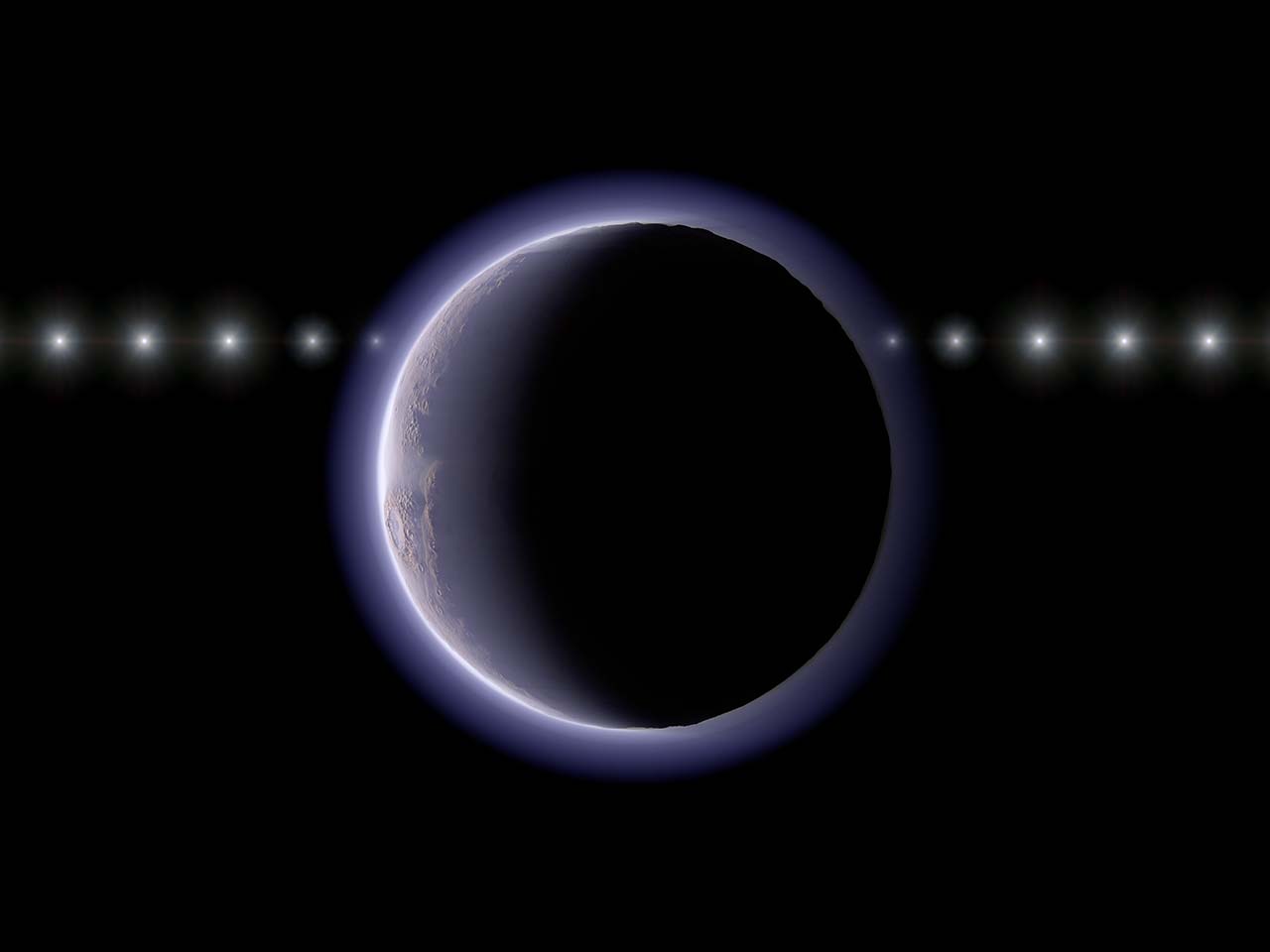
A team of professional and amateur Japanese astronomers found evidence for a thin atmosphere around a small body in the outer Solar System. The object is so small that it should not have a sustainable atmosphere, raising questions about when and how the atmosphere formed. Future observations to better characterize the atmosphere will help solve these mysteries.
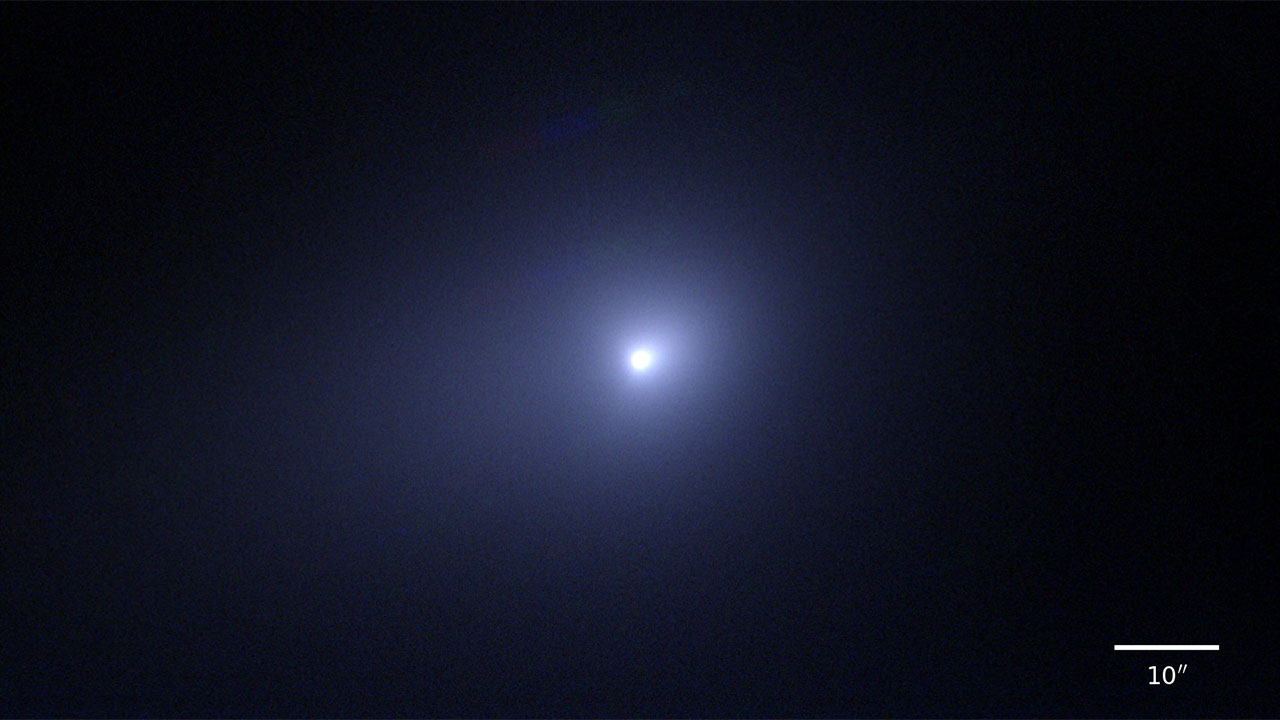
The Subaru Telescope observed the interstellar comet 3I/ATLAS on January 7, 2026 (UT), after it made its closest approach to the Sun. By observing colors in the coma around the comet, astronomers could estimate the ratio of carbon dioxide to water. This ratio is much lower than that inferred from earlier observations by space telescopes. These findings suggest that the chemistry of the coma is…
The Solar System’s two largest gas giant planets, Jupiter and Saturn, have extensive but very different families of moons orbiting them. New simulations conducted on the PC cluster at the Center for Computational Astrophysics (CfCA), National Astronomical Observatory of Japan (NAOJ) showed that the planet’s magnetic field plays a role in creating an environment where the new moons can survive and…
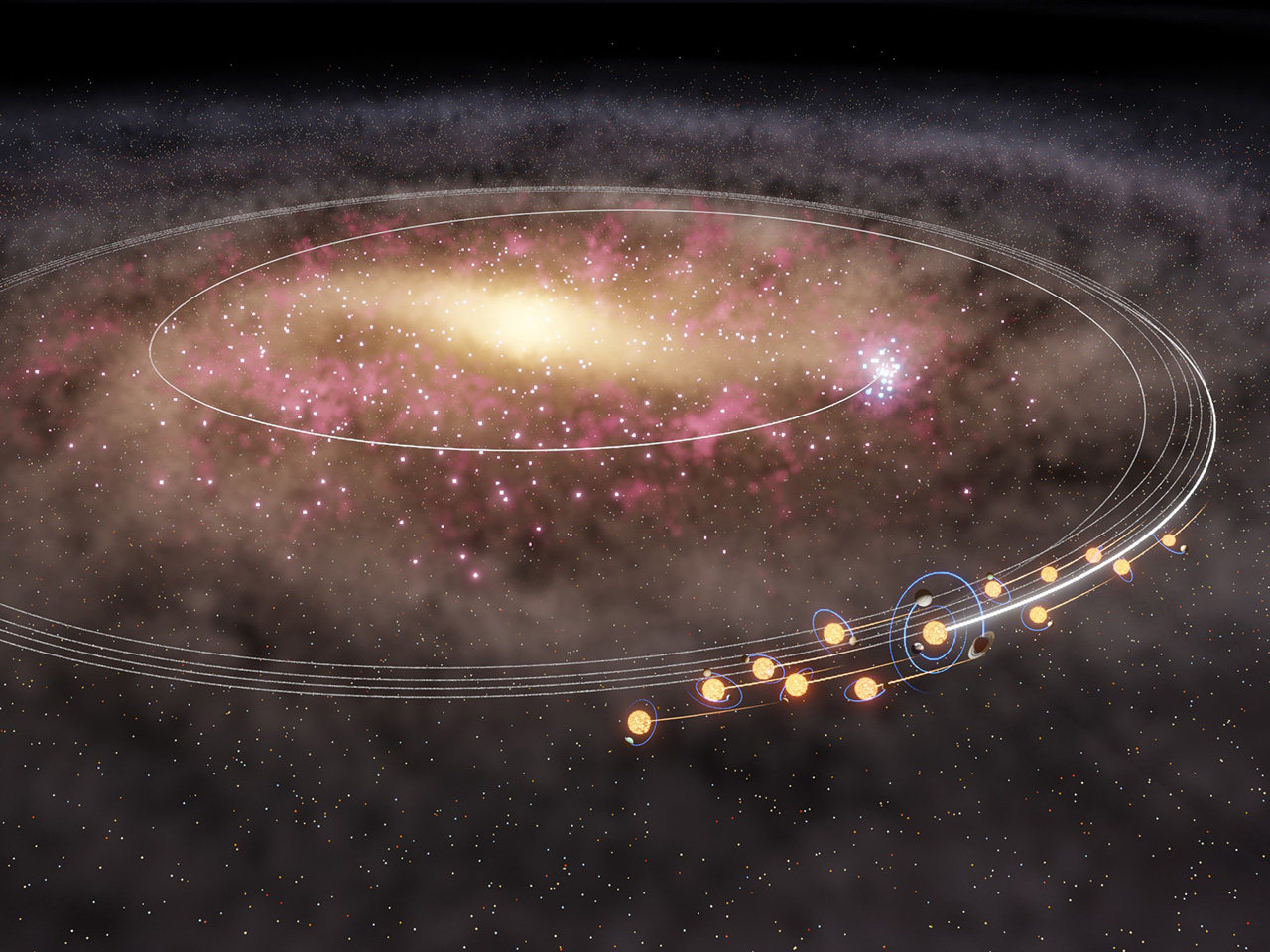
Researchers have uncovered evidence that our Sun was part of a mass migration of similar “twins” leaving the core regions of our Galaxy, 4 to 6 billion years ago. The team created and studied an unprecedentedly accurate catalogue of stars and their properties using data from the European Space Agency’s Gaia satellite. This discovery sheds light on the evolution of our Galaxy, particularly the…
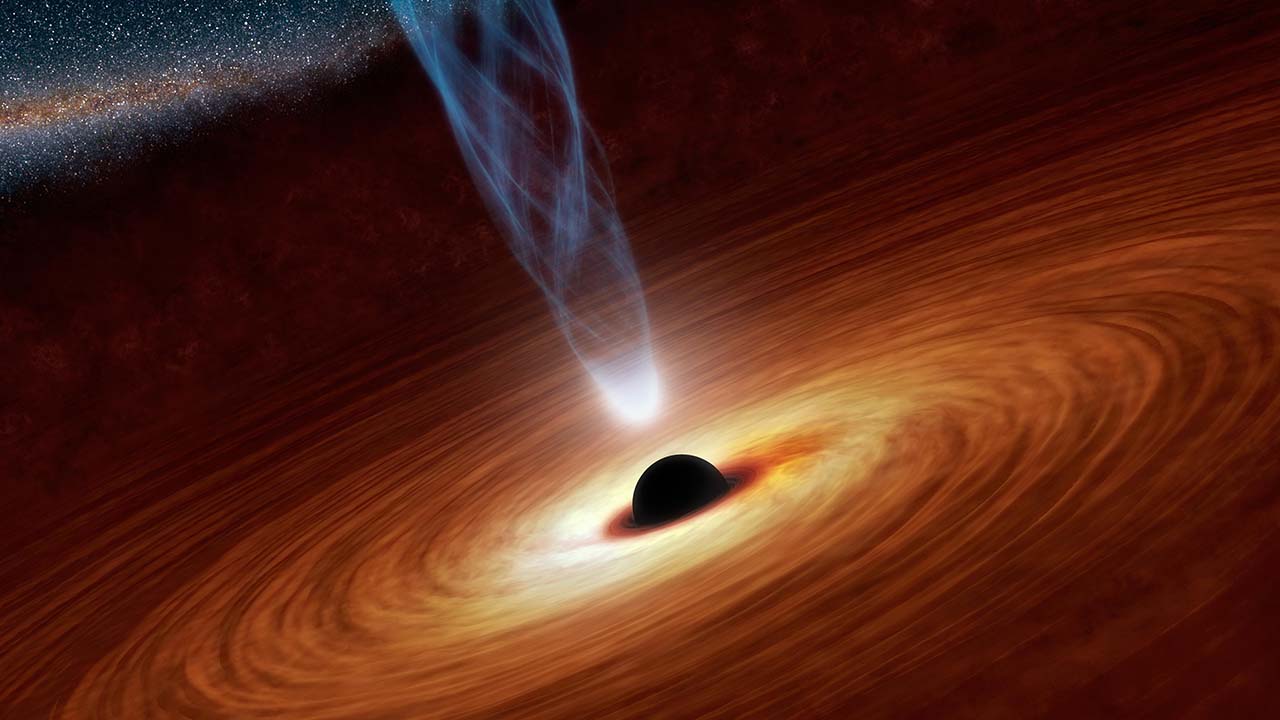
An international research team has discovered a supermassive black hole growing rapidly while radiating bright X-rays and radio waves. This combination of features contradicts the current models of black hole growth, requiring astronomers to look for a new explanation.