

I dream of “a sunny pleasure dome with caves of ice,” the legendary summer palace of Kubla Khan as depicted by the English poet Samuel Coleridge in his 1797 poem. Yes, sun and ice sound nice when you’re sweltering beneath a heat dome and temperatures are over 100° in the shade.
I’m getting tired of this, really tired. I have a vision of myself in 1987, now almost forty years ago. It was late June and I had just arrived in France to stay. I got off the plane with one suitcase, but my other belongings were somewhere between the United States and France, my books packed in canvas postal bags riding a slow boat to the European continent. I was moving to the hills above Nice, not far from the Italian border. Days were hot but evenings were cool and when I walked through fields at night, my feet kicked up the scent of wild thyme. I made an August trip to Paris, I met with friends. In a forest at the edge of the city, we sat on a bench by the side of a lake. It was dusk. The air was cool. I shivered and pulled my jacket tighter around my shoulders.
That’s the way summertime in Paris used to be.
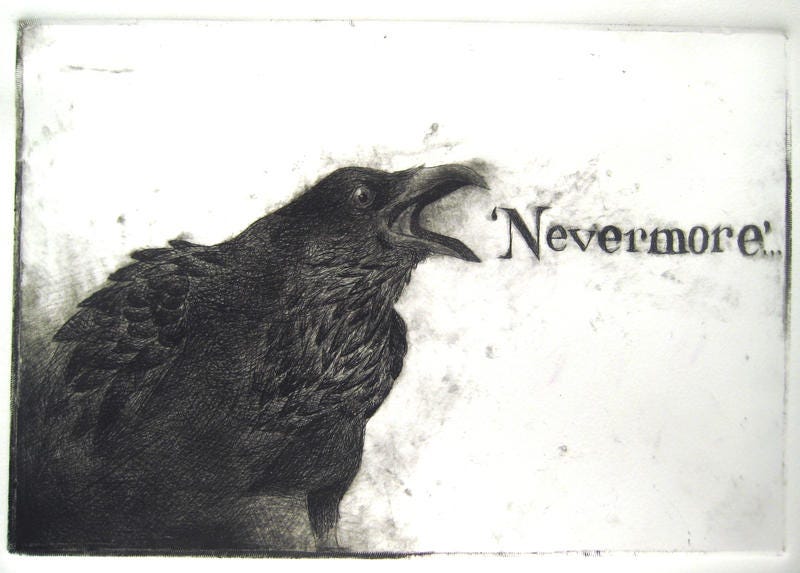
“Nevermore!” I now inhabit a “desert land” where, “with throats unslaked, with black lips baked,” we wait for rain. In the Paris region, since early May, hardly a drop. I turn to Coleridge and to Poe, calling upon their genius in my attempts to convince you just how serious this is. Parts of France are without water. Rationing has been put in place everywhere yet, until the spigot runs dry, how hard it is to imagine that our water supply may truly dry up. Without water, there is no life.
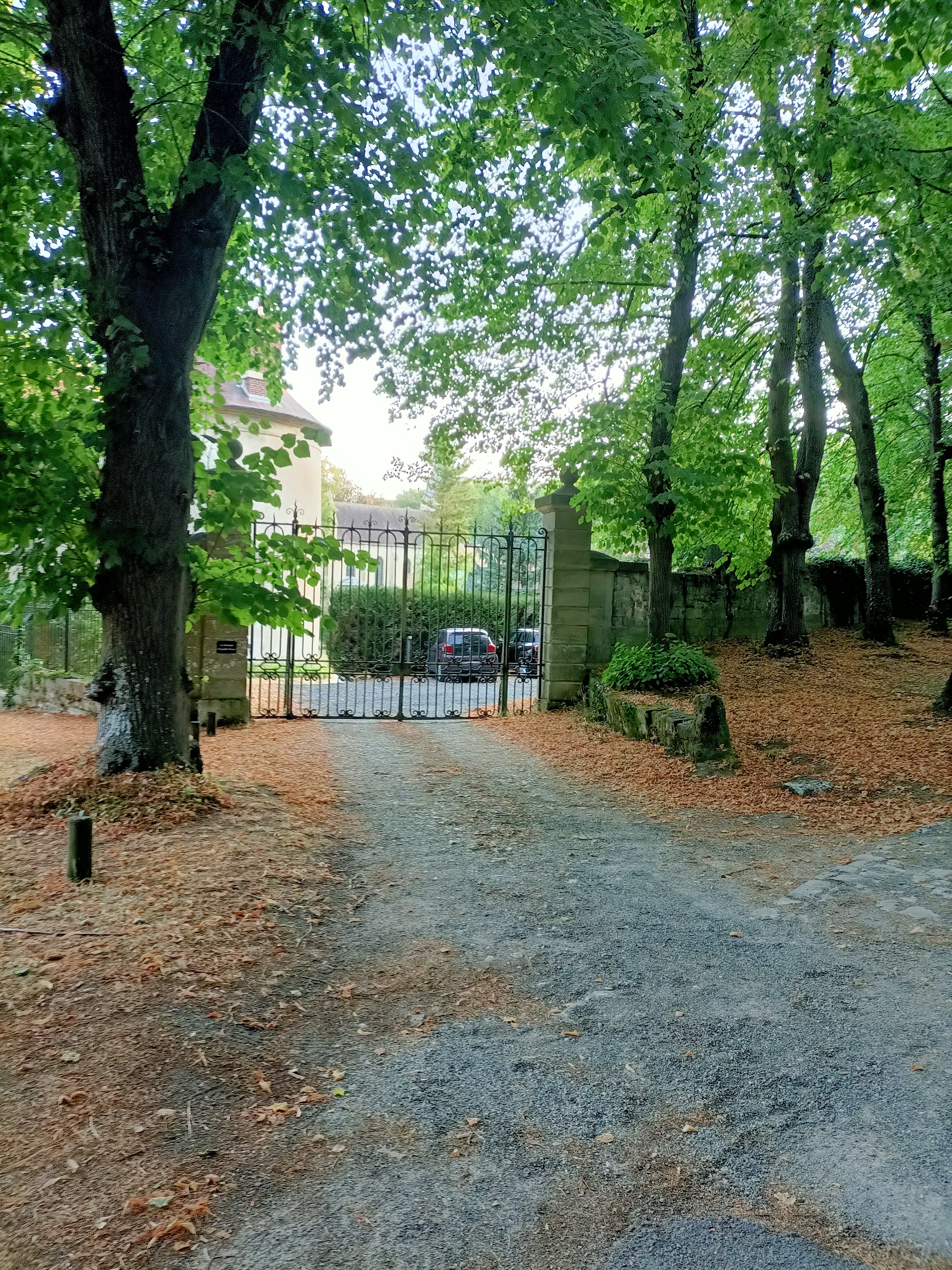
In many ways, I am more fortunate than most. I live in a beautiful 19th century manor converted into apartments, with a park wreathed by linden trees and, only a few steps away, what was once a royal forest whose breezes bring us some relief. The manor is what the French call a “co-property,” and we are all responsible for its care and upkeep.
Most “co-properties” have their president and officers. Ours, faithful to the tradition of la vie de château, has its châtelaine and a pair of overseers. The châtelaine’s apartment, worthy of a duchess—or even a princess, is the biggest in the place. That’s why she gets to set the tone and the rules. The overseers, régisseurs in French, make sure they are enforced—like keeping the two high entrance gates closed at all times. The châtelaine’s most ardent desire is to protect “le Domaine,” the name of our manor, from contemporary plagues.
Peine perdue. Mission impossible. There’s no keeping out the heat. The stone walls heat up. The sweeping lawn withers. If it were not for peons like myself, the plants and shrubs would die too.
I rise early, around six. I descend into the bowels of the manor, where the walls are eaten away by saltpeter, damp to the touch, where the mold bites the throat, where a cool underground spring bubbles up from below (hey, wait a minute! This sounds like the “sunny pleasure dome with caves of ice,” but if I stayed down here, I’d surely catch something nasty, and there are rats). From the spring, I draw enough water to fill two 12-liter watering cans. Then I lug them back to the light, having made the first of many trips till, literally, the well runs dry. In ten or twelve hours it will have filled back up again, at least for the moment. The other peons and I are not sure where the water comes from.
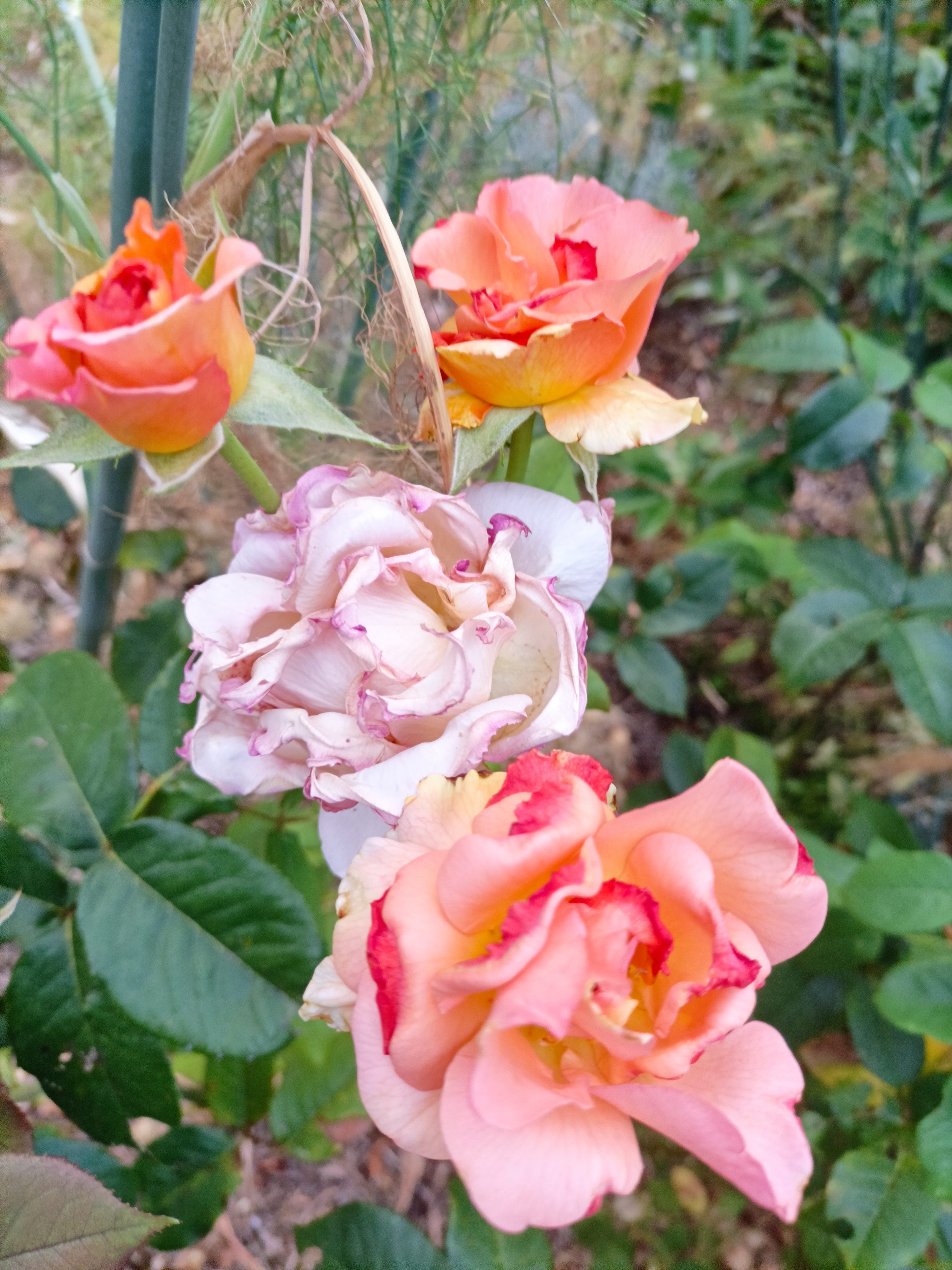
While the châtelaine sleeps (a late riser), while the married couple of régisseurs sleep (later risers as well), I travel up and down, back and forth, between well and flower beds. I water “my creations,” the shrubs I’ve lovingly planted and nurtured (though, to be honest, they have “created” themselves), a lilac bush that I uprooted before I sold and left my country home (an entirely different chapter of my life, lived in some of the deepest parts of la France profonde), rose bushes, one with pale orange flowers blushing red, thriving despite the heat; red-tipped photinia, shrubby veronica, and plain old forsythia. There are also four hollyhocks bought at an outdoor market in Normandy, carried home, and planted against the garden wall. It’s not been an easy summer for these seedlings, yet I hope I’ll see their first flowering next year.
I certainly did not “create” these plants but, like a landscaper, I created the space where they grow. Upon my arrival at le Domaine, this space was overgrown with nettles that rose as high as my chest. I like nettles. I use their leaves to make a vitamin-and-mineral-packed soup, but an entire expanse of nettles out front makes a stately manor look like a haunted house. I plunged into their midst and ripped them up, turned the earth, and began planting back in 2023. This year, for the first time, I’d call it a garden. Besides the shrubs, there are, planted lovingly by me, day lilies, lavender, rosemary and sage, plus lots of nigella that, after a first flowering, seeds itself and returns each year with blue, white and lavender blossoms.
The châtelaine said it could never be done, that it was impossible to eliminate the nettles, that my efforts would be in vain. Others had tried and failed. No reason why it would be any different for me.
Since I’ve been regularly pulling out the nettles, since I’ve applied my very stubborn streak to getting the job done, the châtelaine ignores the garden. Never once has she deigned mention that the nettles have disappeared and plants and shrubs appeared in their place. But don’t be surprised. C’est normal. Such boorish behavior befits a châtelaine, born to rule, not to stoop to the level of a peon like me. A nod in my direction constitutes a serious breach of cast. A couple of paces behind her, the caretakers fall in step, their eyes fixed on the back of the châtelaine’s head, refusing to glance my way as I, on my knees, humbly scratch the earth.
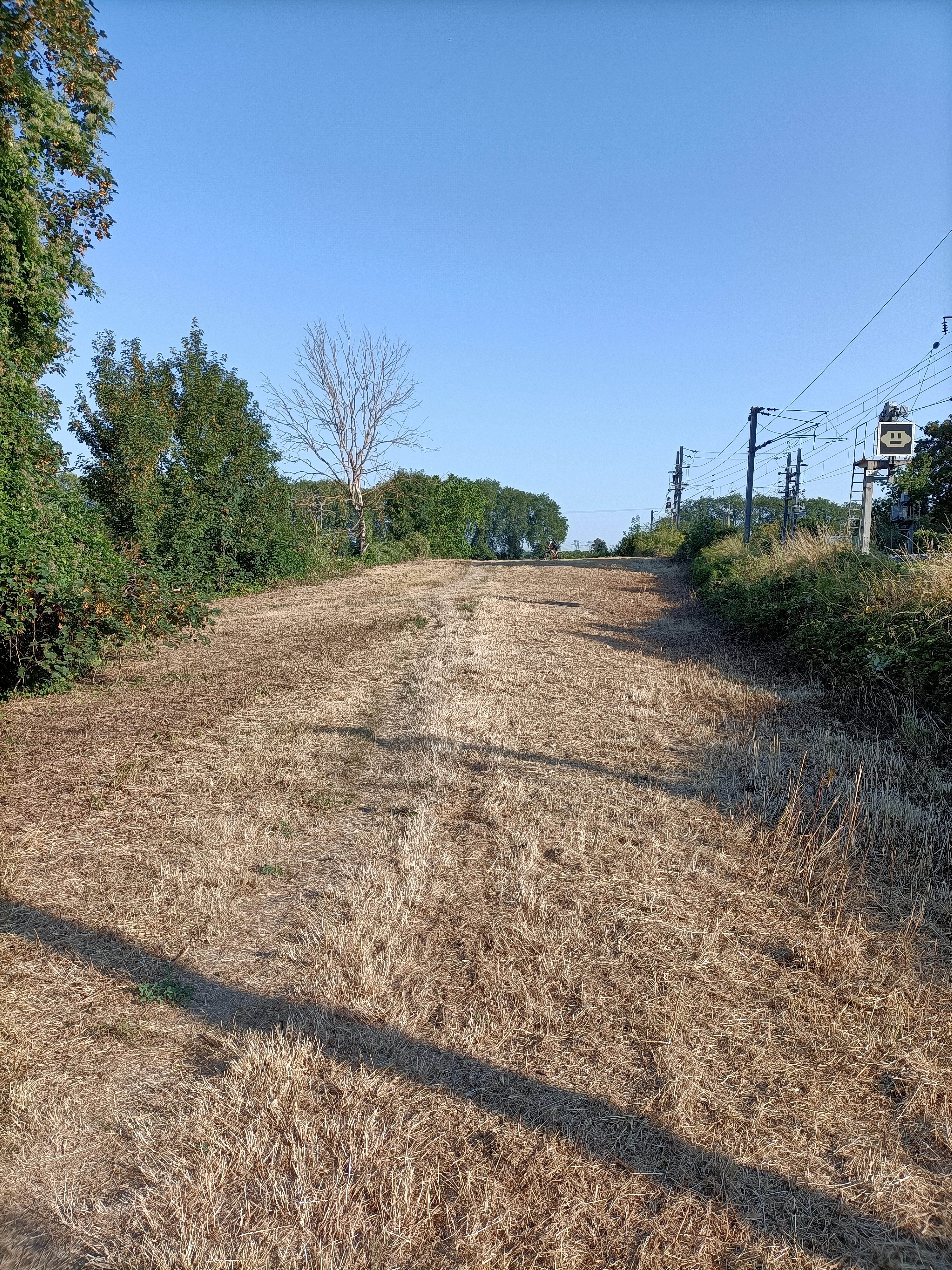
Still, the yellow lawn, the dying plants, the raspberry patch by our parking lot, reduced to withered canes, we peons can’t water it all. Two of my fellow workers have kept a vegetable patch going. The tomatoes ripen slowly, the zucchini are stunted, but we manage to keep the plants alive. Today, temperatures are expected to rise above 100°. Poor plants, poor earth, poor us.
And poor wild boar! The forest rustles with them at dusk as they forage for food along paths worn by their cloven hooves. They travel in packs, entire families together. They have their bogs and find their food throughout the forest, which in the past provided abundance. This summer, the ground is hard, their watering places, dry. The wild boar have had to come out of hiding and root for food where humans live.
Please, don’t tell the châtelaine. Don’t tell the overseers. They mistakenly believe they are fighting a battle against dogs! Day and night, they keep the entrance gates closed against what they take for the pets of churlish dog-owners who let their animals run free on the village green (now woefully yellow), despite the village ordinance to keep them on a leash. Nor do these louts stoop to scoop, an act the French have long resisted. And, le comble, worst of all, these dogs have taken to straying onto the grounds of le Domaine!
The overseers photograph the proof: piles of crotte, dogshit, or so they think, placed strategically on the lawn in spots where unwitting residents are sure to step, and step they do, dirtying perfectly white sneakers or dragging crotte into the regal entrance hall.
Only yesterday, making a quick run to the supermarket, opening the gates (and leaving them open—I’d only be gone for twenty minutes), I spotted a big pile of crotte right in the middle of the dirt road leading out of our parking lot (tastefully hidden from view by a tall cedar hedge). I took a close look. Indeed it was impressive, but I knew this crotte did not belong to a dog. In cooler times, I’ve often walked in the forest and I know a wild-boar turd when I see one. The berries were a dead giveaway.
When I returned from the supermarket twenty minutes later, someone had already closed the gate and, mysteriously, the pile of crotte had disappeared. Surely it was the manly overseer, seeking to spare the châtelaine’s delicate sensibilities.
Well, keeping an eye out for crotte keeps them busy and in this heat, there’s not much to do. They spend the late afternoon on the terrace, surveying le Domaine, always on the lookout for dogs. There have even been some crottes in the unenclosed part of the cellarway (the wild boar are searching for water). To stop such hostile incursions, the chatelaine has taped two signs to her cellar door: Un maître responsable ramasse les crottes de son chien! A responsible master cleans up after his dog.
Except in this case, we’re dealing with wild boar and wild boar can’t read.
Friends have advised me to shut up about the real culprits in this affair. The next step will be shotguns and traps if the others find out.
And it’s hot. And in the heat tempers flare. And I wouldn’t want to be mistaken for a wild boar and end up with some buckshot in my derrière.
As a bonus, a song from an album by Taj Mahal, “The Natch’l Blues,” that I’ve loved since I first picked it up at Pomeroy’s in the late 1960’s!
The great Taj Mahal singing "You Don't Miss your Water (till your well runs dry)"
Comments
Nothing yet. Say the first thing.
Sign in to join the conversation.