
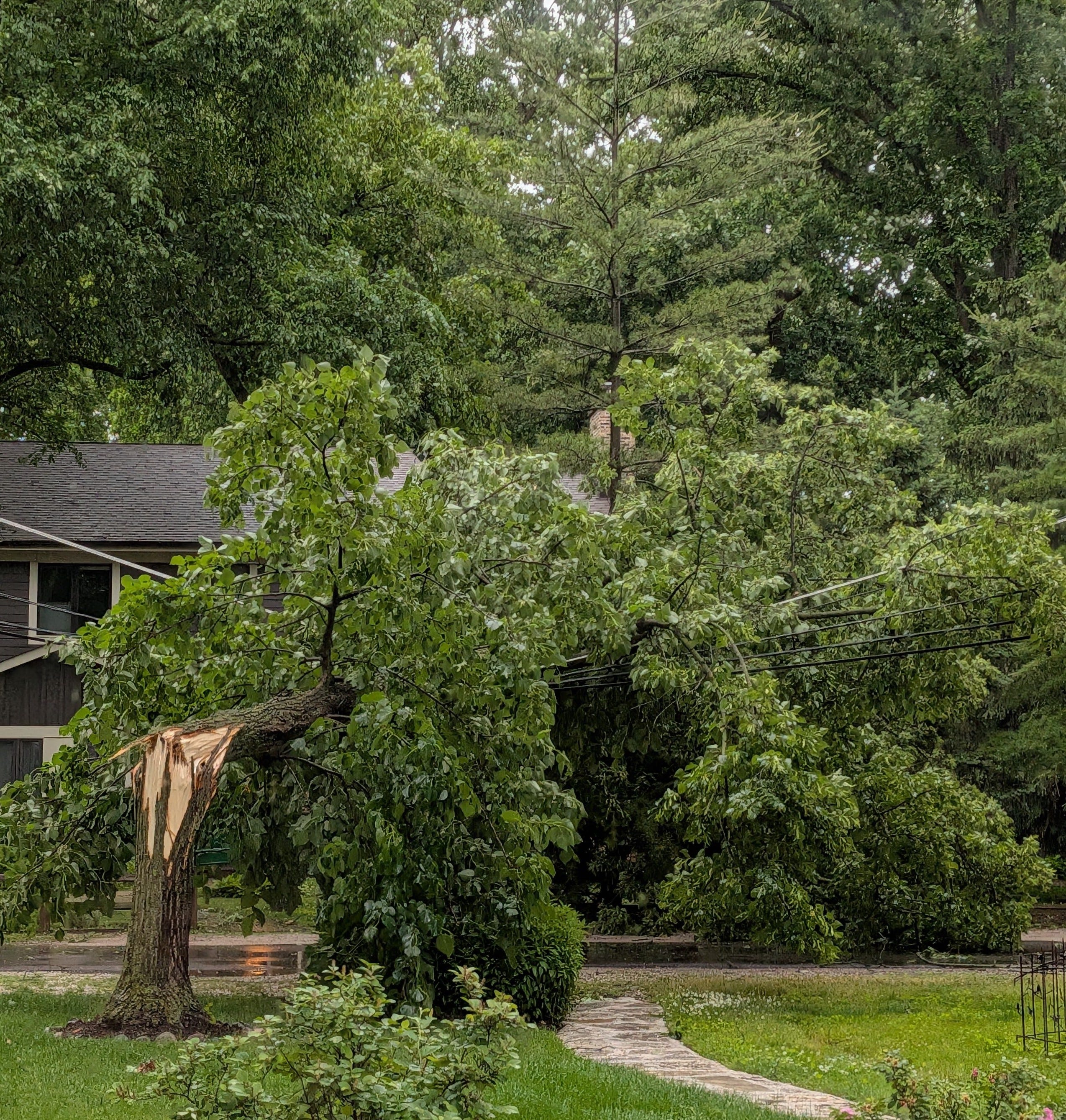
It was the ninth tree to be felled over the years. It recently happened minutes before we lost power, just after a storm unleashed more wind than rain, and minutes before the winds had finally tumbled away.
She had grown large over her time, filling her body with limbs and leaves packed so tight they filled the white space of daylight. She was old, but had many years left in her. Until her core weakened to decay, a secret only she would know, and snapped her in two.
I was surprised to see one of my favorite trees (actually, they’re all my favorites) snap. The tree was seemingly healthy, its canopy poking the sky with its height, and strong for decades, even before my house was built in 1947; their thick torsos revealing their age.
Trees are being felled more quickly, more often, because of our extreme weather, resulting in tornadoes and hurricane-force winds. Illinois, my state, now leads the nation with 147 confirmed tornadoes this year.
But I’m not telling you something you already know: the spiraling, domino effect of extreme weather on our natural world, fueled by the warming of our climate.
Instead, there’s something that can’t be measured.
Peter Wohlleben, author of The Secret Life of Trees, gives us this nugget of tree knowledge:
“Trees are much more like us than we ever imagined.”
Suffice to say that each of us, in our own ways, has connections to trees. The strongest one perhaps can’t be seen, but it can be felt. Trees are carbon dioxide vacuums, consuming the tainted air we breathe and expelling clean air we need. It’s a silent bond that is loud in mutual rewards.
I thought about my tree that broke. It wasn’t just one tree, it was a member of an entire bonded tree community that interacts with one another.
Wohlleben says trees thrive through community rather than competition. It’s the relationship among trees that shows us how they function as a society. It mirrors our social networks much in the same way we communicate, share our resources and depend on one another.
From Suzanne Simard’s book, Finding the Mother Tree:
“The older trees are able to discern which seedlings are their own kin. The old trees nurture the young ones and provide them food and water just as we do with our own children.”
Large, old trees transfer carbon and nutrients to younger seedlings through the tree’s root system where a fungal network lurks. Often referred to as the “wood wide web,” roots draw water and nutrients from deep in the soil then fan out to share their wealth.
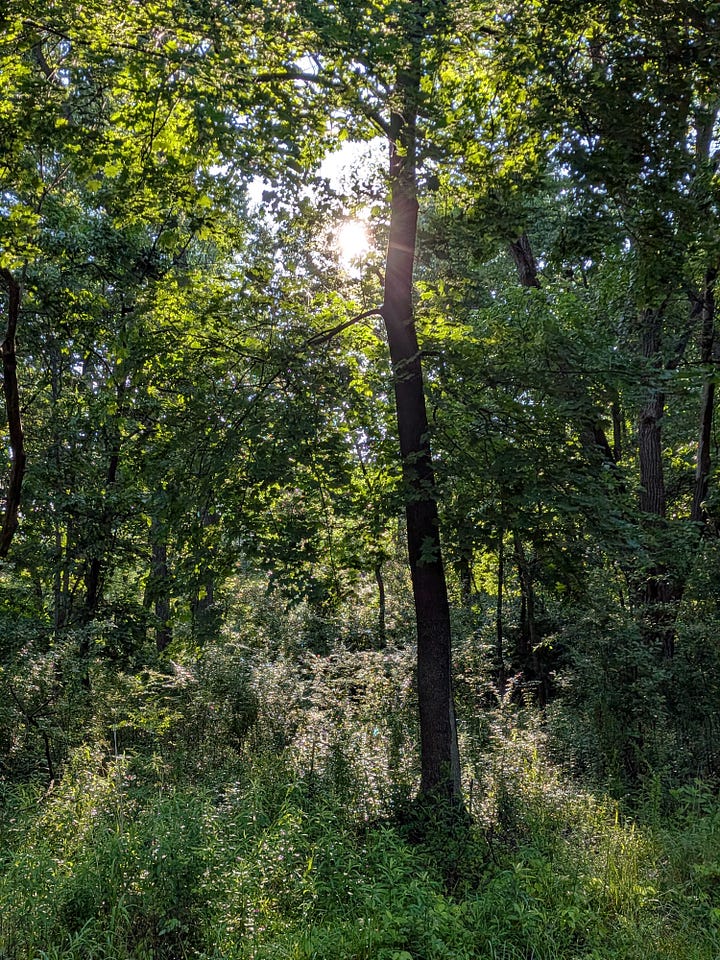
Trees appear to thrive when together in a forest, a shared environment that protects, nourishes, and influences all the members. Their health depends on relationships with other species, just as we depend on one another to work together in cooperation.
And that sounds a bit like what we experience, too—our family and neighborhood, and social networks shaping us.
Just as we seek connection, belonging, and support, trees have their version underground through their networks and beyond to what we don’t see. As much as they thrive on their sociology, we have our own version and depend on it.
Forests and our societies take their strength not just from one another, but from relationships, interdependence, and belonging.
The recently felled tree had the sun all to herself, with not another tree overshadowing or crowding her for light to photosynthesize. But she was still part of a tree family, connected through the depths in the earth.
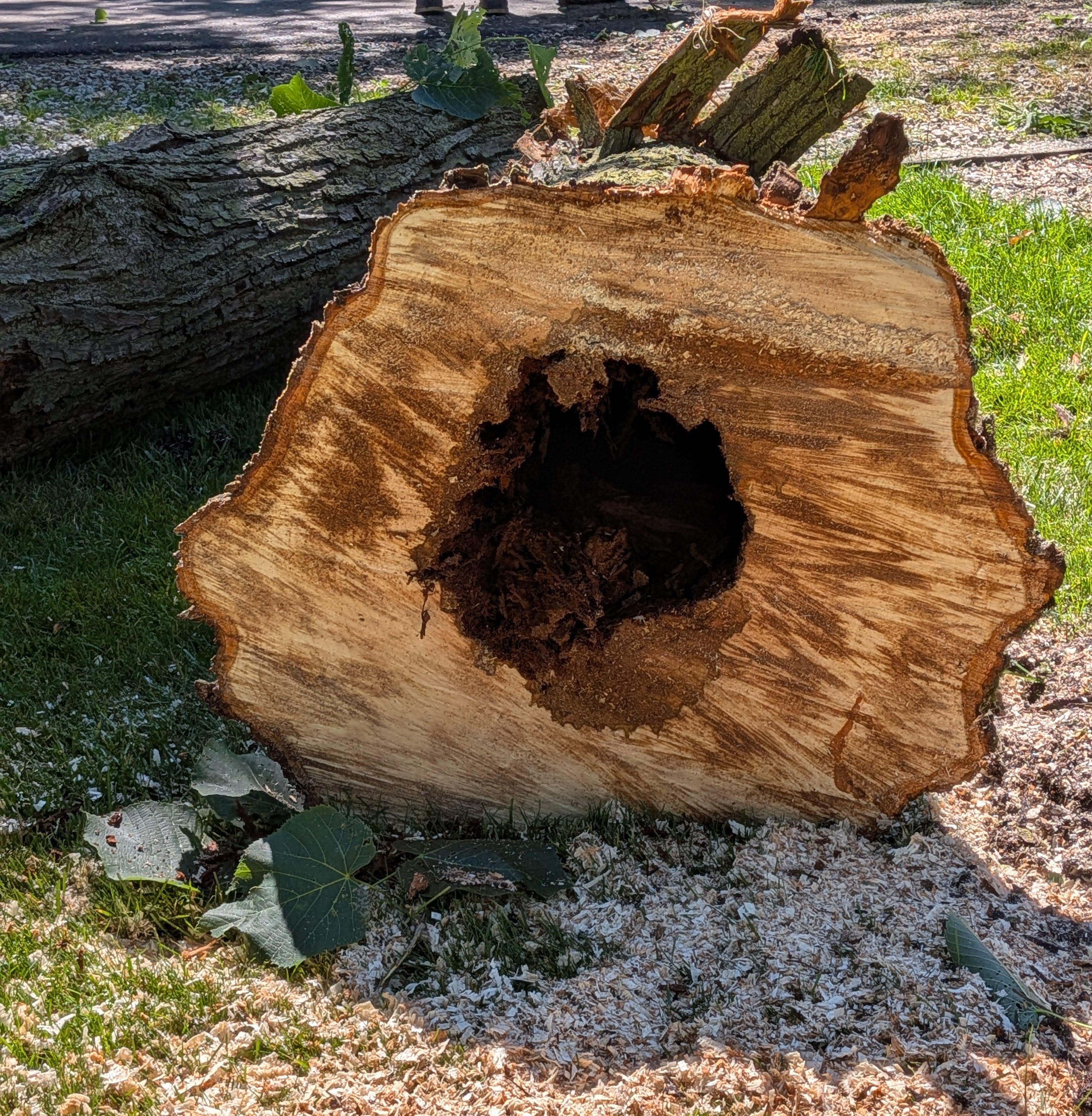
I thought about her demise when looking into her inner core. Decay. As her broken body lay open, I was reminded that I would always have a connection with trees and they with me, and that a tree family can teach us a thing or two about our own human families.

Comments
Nothing yet. Say the first thing.
Sign in to join the conversation.