
Hi, how are you doing?
0:00
-16:29
Welcome to the August edition of Witness Marks. If you’re a new subscriber you might want to start by reading this post here, which gives you a tour of the Suffolk village I write about and its surrounding area. Or you could just dive right in.
If you missed it, you can catch up on my recent piece about taking action for nature hyperlocally below. It seems to have really struck a chord; if you’re one of the people who reposted it or linked to it, thank you so much. It’s good to see word getting out.
Witness Marks goes out on or around the 15th of each month; in between times you can find me chatting away in Substack Notes. The first part is free, while the second part, the Village News, sits below a paywall. A subscription to that costs £3.50 a month if you pay via Substack Desktop (Apple and Google add a bit on top if you pay via the app). Subscribers can also access all the back issues of Witness Marks, AND they can listen to me read out and discuss my first novel, Clay.
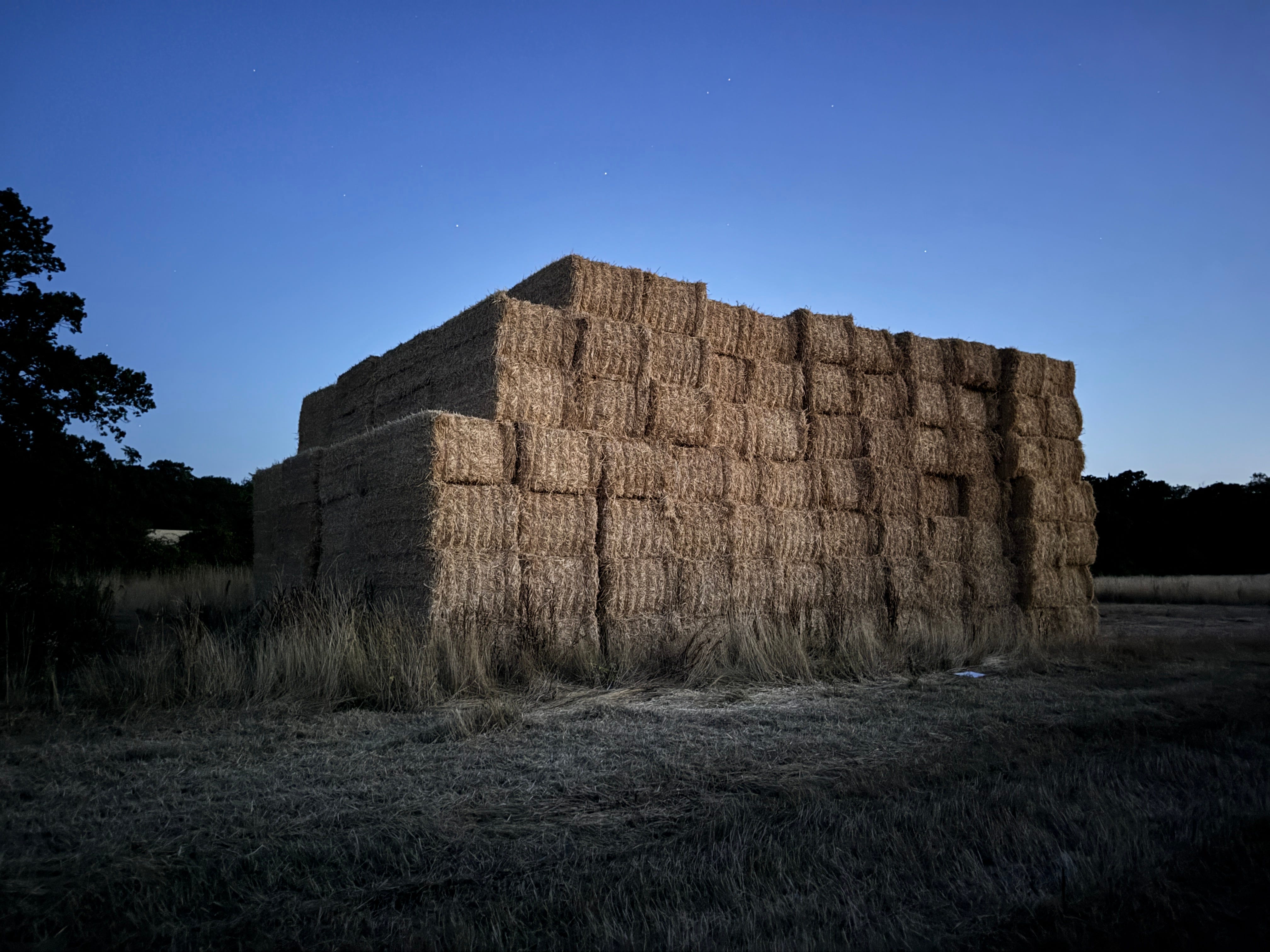
I’ve been walking at dusk and after dark – even more than I usually do. The landscape seems less parched, less desperate, than in the full glare of the relentless sun. It isn’t, of course, but I can see less of its detail – and I suppose that helps me pretend. I’m fully aware of the denial I’m indulging in, but it’s better than not walking at all.
There’s no dew at night but the air is cooler, and there’s the green smell of plants breathing out: fainter than it should be, but it’s there. A tawny owl hoots from somewhere, a shivering note that isn’t repeated. Passing a huge straw stack near the Owl Barn, storeys high, I think of Norman McCaig’s much anthologised poem ‘Summer Farm’ and its perfect opening lines, ‘Straw like tame lightnings lie about the grass / And hang zigzag on hedges’ – though sadly we have none of the ‘cool, soft grass’ he mentions left.
Across a field of sharp stubble a roe buck and doe pause and stare at me for a long moment before the doe hurries away towards a shadowed copse, the buck in close pursuit. It is their rut, and I have intruded. The bucks will often forget to eat or drink during the 36–48 hours that a doe is in oestrus; they are so intent on mating that they will sometimes collapse from exhaustion. I hope that this one’s chosen territory gives him access to what’s left of our little river, as the farmland ponds are empty. I hope he remembers to drink.
I miss loving high summer. I miss checking the forecast and realising with great joy that it was going to be another cloudless day. I miss saying, ‘Hot enough for you?’ and grinning, and I miss calling it ‘good weather’. I miss making the absolute most of it because it probably wouldn’t last. I miss not being aware of the harm that’s unfolding out of my sight. I miss the habitable and generative and largely self-regulating world that isn’t coming back.
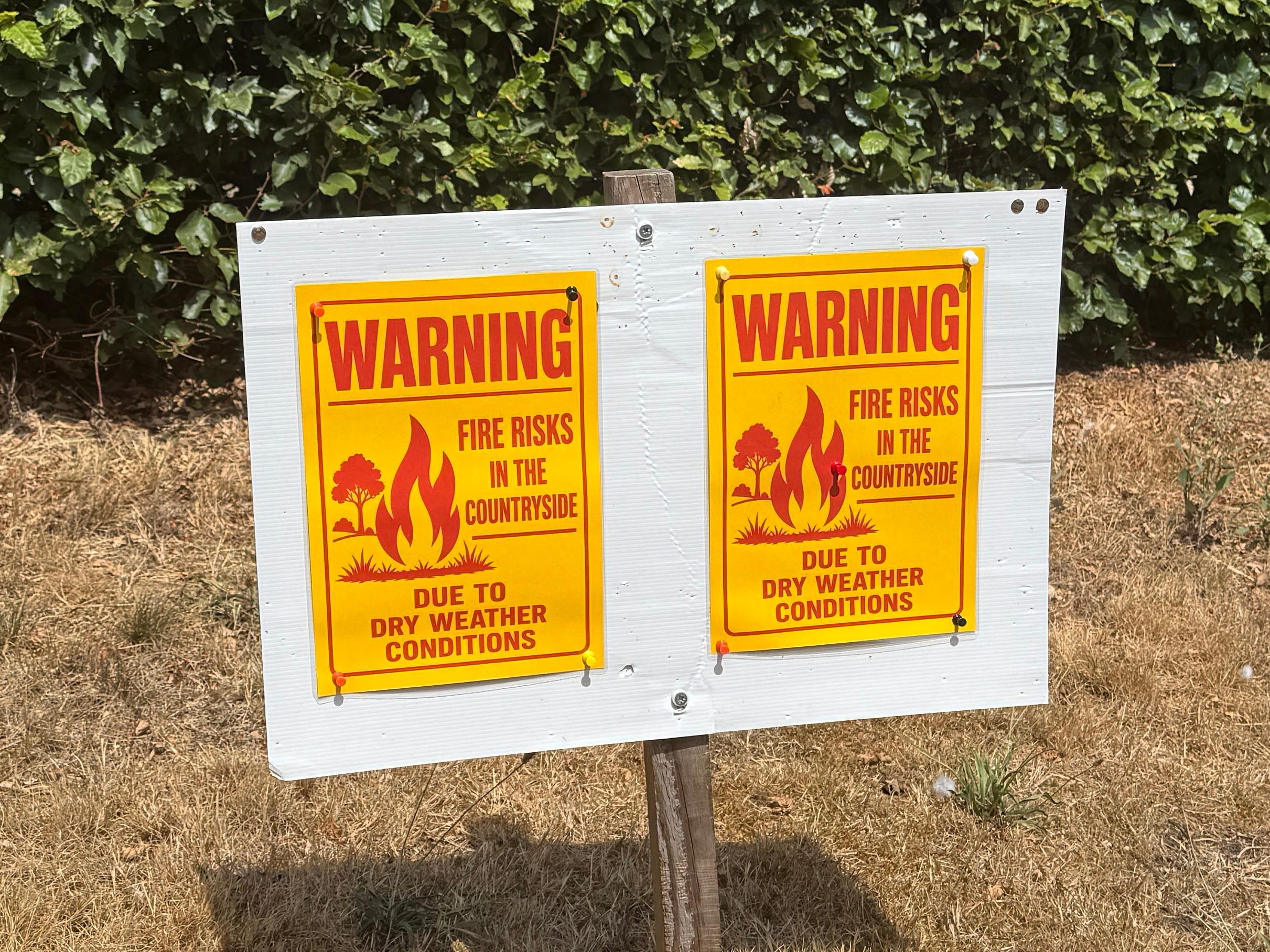
Bravo to whoever’s taken the initiative and put fire warning signs up near where I live. In the village an emergency litter pick was organised: sunlight reflecting off glass and metal can be enough to start a blaze. It feels good to know that people are taking action without waiting for official instructions. It may be that something powerful comes out of this summer. I do think people’s perceptions are shifting at pace.
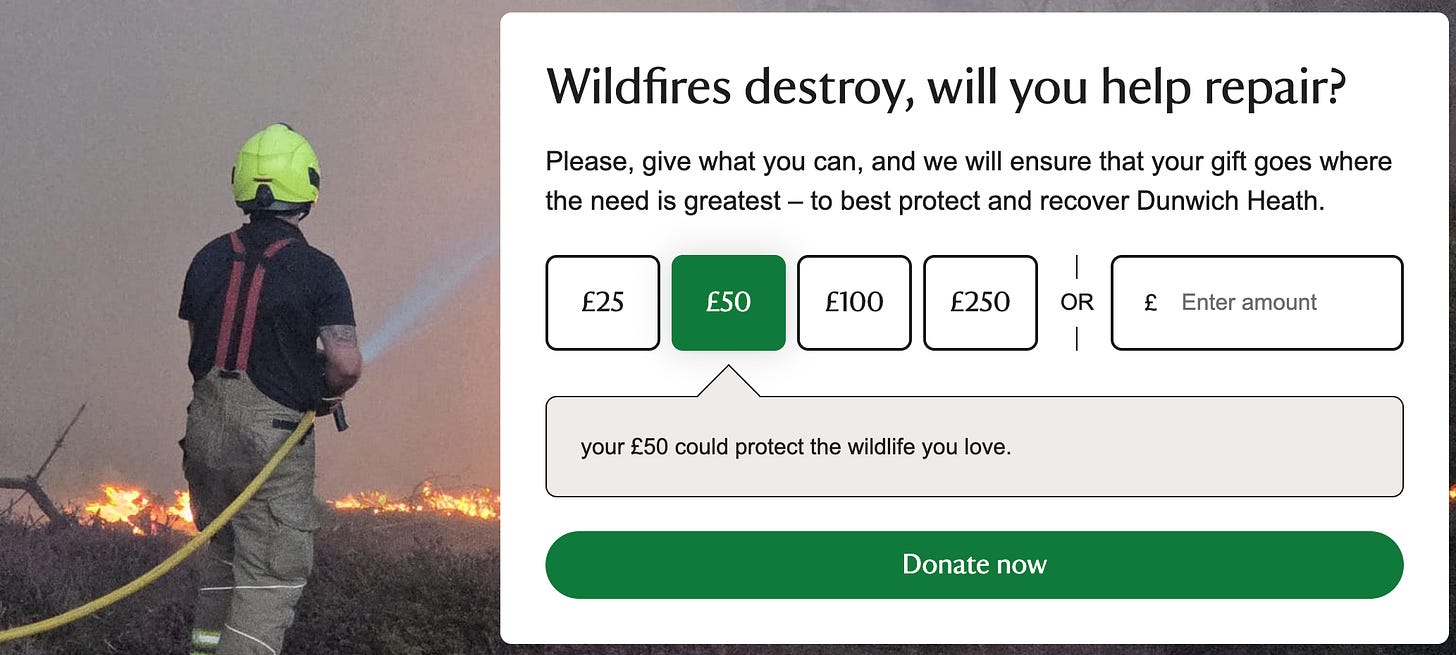
The wildfire at Dunwich Heath may have been a news item to you – or perhaps you haven’t even heard about it – but here we could smell the smoke from our gardens and see the grey pall hanging for days in a relentlessly hard, blue sky. I’ve received permission to visit so I can write about it for my next Times Nature Notebook. I want to counter the dimwitted suggestion that rewilding was to blame.
Northerly regions, I know, have had rain – and yes, we had a brief shower here on August 2nd. It lasted for perhaps 15 minutes after which the sun came back out and beat down anew, a breeze got up, and what little moisture there was evaporated again. It wasn’t enough to make the slightest bit of difference to the dry ponds that dot our sandy landscape, and there’s been nothing more since then. According to my journal the last proper rain here was on June 10th, nearly ten weeks ago. The Met Office says that England had 5.6mm of rainfall in July – just 8% of the average for the month and less than half of the previous record of 13.4mm set in 1911. Now we’re halfway through August and here in East Anglia there’s still been no relief.
I’ve abandoned some of the garden but I’m trying to keep a tall, dense privet hedge alive using grey water from my kitchen sink and bathroom basin. Not only does it provide a vital measure of privacy for my tiny bit of outdoor space, but it’s often chock-full of sparrows. I’m topping up my tiny pond with tap water that I’m leaving in the watering can for 24 hours to make it safer (although I think my local water company uses chloramines rather than chlorine, which means I’m probably wasting my time). I’m refilling three bird baths daily, plus a further three out in the village that I hope hedgehogs and foxes will visit – maybe even muntjac and badgers – but I know that all around me wild creatures are struggling and dying, and with more summers like this forecast, many animal populations won’t bounce back.
There’s a hosepipe ban in place here now, which came far later than in other regions. Because I knew I’d be travelling a lot over the summer I set up an automatic pot-watering system which uses a 4mm pipe, drip feeders and a timer, which technically means it’s exempt from the ban. Hesitating over whether to continue to use it, I caught myself thinking, ‘Well, if they’re not going to fix all the leaks, why should I switch my perfectly legal watering system off?’
It was a perfect example of ‘ethical fading’: a term coined by ethicists Ann Tenbrunsel and David Messick to describe what happens when we allow the moral element of a situation to disappear from our mind, replaced by more easily circumvented constructs like legal or technical compliance, monetary exchange or social values. Instead of holding on to the incontrovertible fact that saving water in a drought is good, I was allowing the small print in the hosepipe ban, and the shortcomings of the water company, to helpfully erode a moral principle in favour of my own self-interest. It’s a bit like leaving all the lights on in your hotel room because you’re not the one paying the bill, or hopping in the car for a short trip because it’s electric, not picking up dog poo because other people haven’t or buying battery chicken because it’s been marked down.
And this is interesting. In one famous study, the introduction of fines at a daycare centre for picking up the children late resulted in more late pick-ups, not less. Previously, parents had tried not to arrive late because they knew it wasn’t fair on the staff members, but with a fine in place they began to see it as a way to purchase extra daycare: the ethical factor driving their behaviour had been replaced, in their minds, by a simple monetary exchange. It’s why I’ve argued against natural capital accounting: putting a value on the ‘ecosystem services’ provided by an oak tree, for example, so that it can be represented on a balance sheet and doesn’t vanish from the decision-making process. I do see the reasoning behind the nat. cap. agenda, but if you price up a tree, that erases the moral argument for protecting it. If someone looks at the price and finds they can afford to fell it, there’s no more that can be said in its defence.

Have you seen The Odyssey? Are you going to? I’ll spare you another review, except to say that I absolutely loved it – I felt carried away by it – and yet I also agree with many of the criticisms levelled at it, especially those pointing out the underwritten female parts and the at-times risible dialogue. Yes, I agree with those things, but what can I say? My experience of watching it was one of enormous pleasure. My busy, analytical, fault-finding mind took a back seat and was replaced instead by a feeling of wonder, something that happens rarely enough for me to be grateful for. Heart, not head, for once. Yet when I read the criticism and realised it was warranted I felt a temptation to tone down my enthusiasm, revising my liking for the film even to myself. And then I thought, What the hell are you doing? You loved it. Come on.
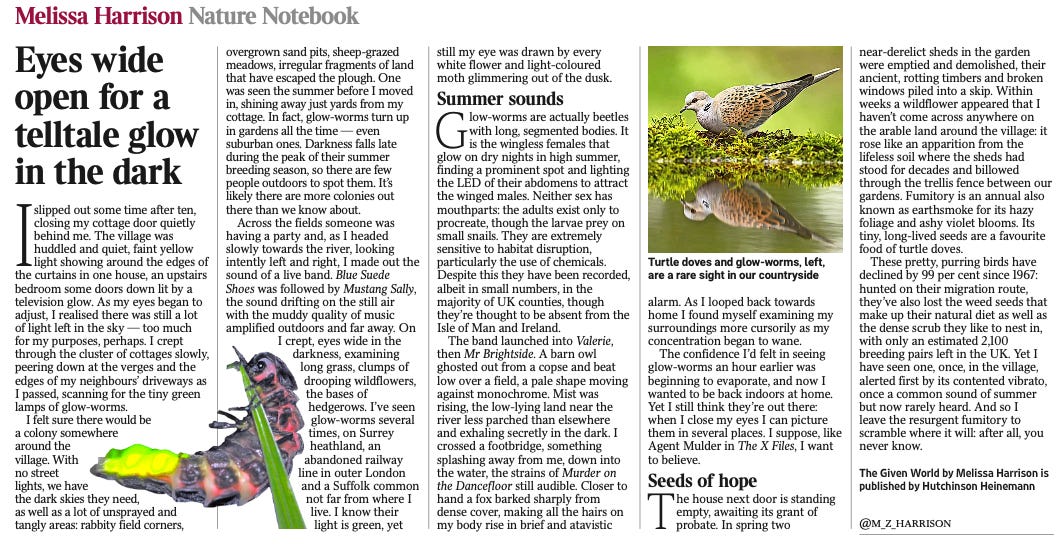
In The Times last month I wrote about going out at night to to look for glow-worms around the village while someone across the fields had a very loud party; and about a plant called fumitory, or ‘earth smoke’, that sprang up after my neighbour’s death and which is a favourite food of turtle doves. You can read it here.
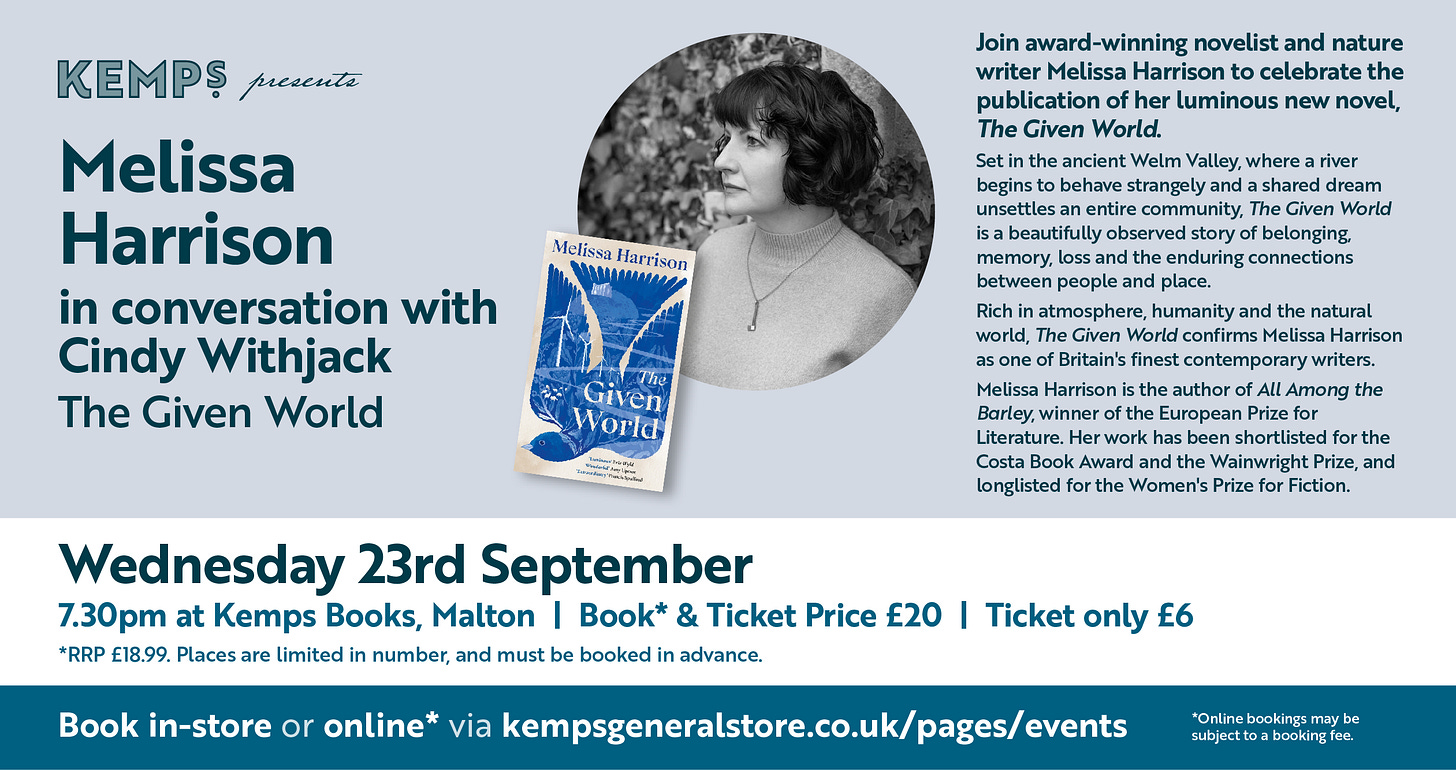
Do come and say hello if you’ll be at Folk East on Friday August 21st: I’ll be in the Librarium, talking to the excellent Richard Hawking, at 11:30am. I’ll be at Blackwells in Oxford on September 14th and at FarmEd in Chipping Norton on September 15th; finally (I think?) there’s Malton in Yorkshire on September 23rd, and tickets for that one are here. And then in October I’ll be off to Canada! 🇨🇦

I know that lots of you order books online from Bookshop.org, which supports local bricks-and-mortar indies. But did you know that you can now buy audiobooks from them too? Their new subscription service costs £12.99 a month, which gets you one audiobook per month to keep (you can purchase extra credits on top if you want). You could get the audiobook of The Given World, read by Alex Jennings! Just a thought.
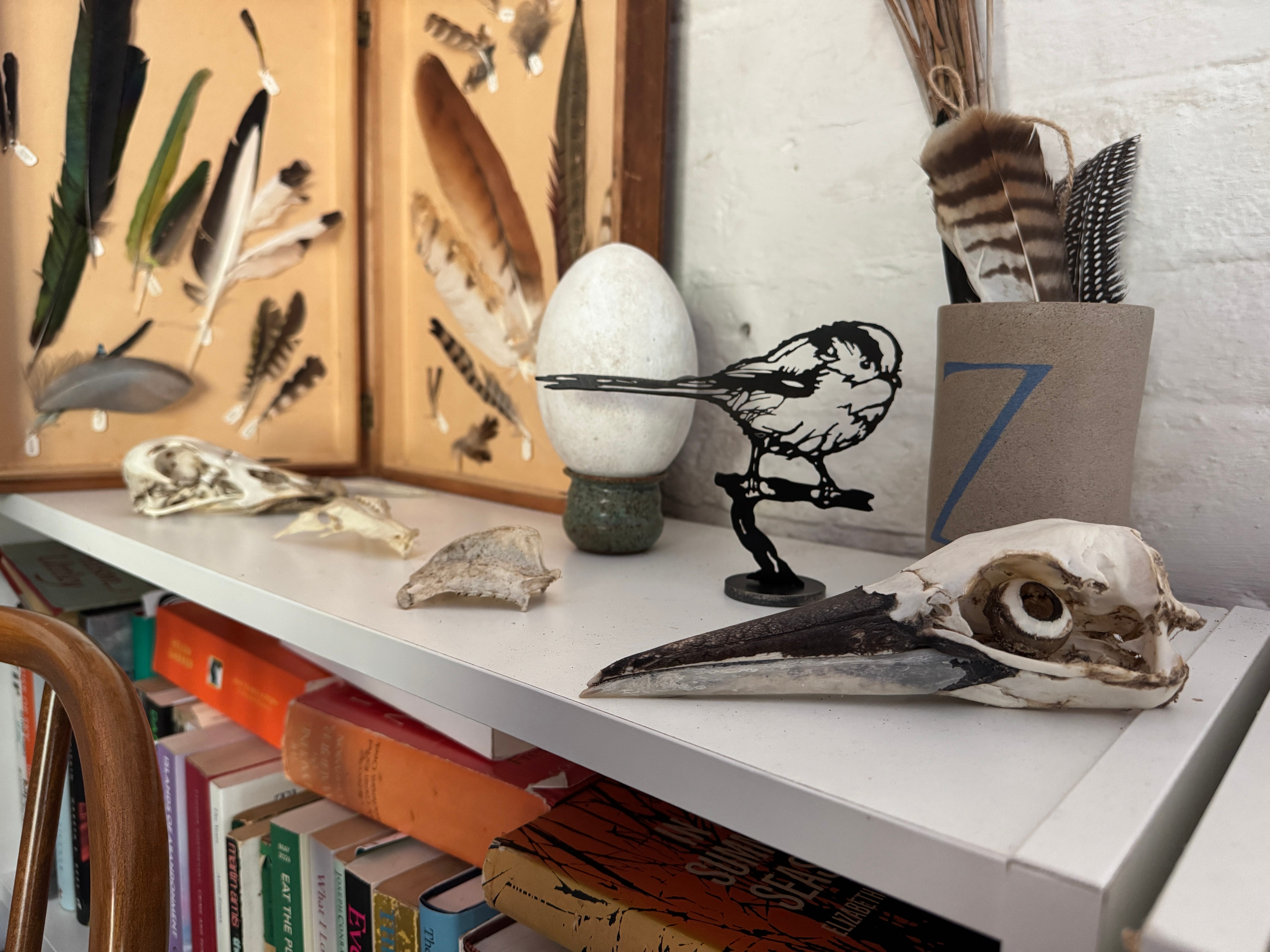
Suffolk artist Spadge Hopkins has taken his metal bird sculptures to Snape Maltings where they have been exhibited very handsomely. They were inspired by my novel All Among the Barley and £50 from the sale of each one will go to Suffolk Wildlife Trust. Here’s mine, a bumbarrel (long-tailed tit) perching among some other bird-related treasures. Spadge has also made corncrakes, nightingales, nightjars and many other species mentioned in the novel, and they cast amazing shadows if you put a candle nearby. You can order your own bird here.
Each month I collect together three things that have interested me, for good or ill, and which can be found in the world beyond your phone or laptop:
👉🏼 A nice thing: The World Record may be awaiting official ratification, but my ex-husband’s nephew Tom Kelsall just achieved the longest road cycle ride of anyone with an intellectual impairment and diabetes, plus the fastest 100km. Tom rode just over 250km in nearly nine hours with an average speed of 28.5km/hr, cycling from Dorking to Canterbury and back IN A DAY, powered in part by 85 jelly babies (very important). Tom is a Special Olympics athlete and already holds a Guinness World Record for being the youngest person with an intellectual impairment to cycle 100 miles. You can find out more about this extraordinary young man here.
👉🏼 An interesting thing: PhD researcher Emma Marshall has been looking into something many of us already know instinctively: that electronic music and repetitive beats have a powerful effect on physiology, including on stress response, nervous system regulation and anxiety. Working with researchers from the London School of Economics and music tech firm AlphaTheta, she designed a biometric field study at London’s Drumsheds examining how things like tempo, volume, FX and breakdown dynamics influence rhythmic entrainment, heart rate variability (HRV) and nervous system resilience, and she’s been explaining the results on Instagram. If you feel loads better after doing ‘big fish litle fish’ to some repetitive donks, Emma can tell you why.
👉🏼 A thing that made me go ‘hmm’: Green Party leader Zack Polanski has admitted that reposting a violent Instagram post featuring Nigel Farage was a ‘mistake’ – but he refuses to apologise. “If I'd done it deliberately I'd be apologising, but because this was a mistake I think the important thing is that I point out this was a mistake,” he said. Wait, what? So he’d tread on someone’s foot and then just… stare them out, because it was a mistake? But he’d apologise for something he’d done on purpose, and therefore presumably believed in? This buffoon will say anything to stay in favour with the more rabid wing of his supporters, which not only puts him on a level with populists on the right but alienates those of us who might otherwise support the only party still objecting to drilling for oil in the North Sea. Bring back Caroline Lucas, I say.

Before I sign off, can I ask that you do one thing for wildlife? If you’re in a drought-hit area of the country – urban or rural – and you’re able-bodied, please put low dishes of water out for birds, hedgehogs, insects, foxes and whatever else might pass by. Put them in shade if that’s possible, sun if not, with a stone in for insects to get out, and top them up/change the water regularly. Leave them in the same spot so that animals get used to them being there, and don’t forget: many visits will take place after nightfall when you won’t see them, so don’t think, ‘Oh, but I don’t get any wildlife where I am’, because you probably do (and will get more over time if you reliably have water available). You could also water a street or park tree every day or two, if you have the wherewithal. We can help: we don’t have to just watch things die.
That’s it for the first, free part of this issue of Witness Marks; below the paywall you’ll find the Village News, including FÊTE REPORT, RETAIL MYSTERY, LOST CHICKEN, and WASP TRAUMA (REDUX). If you’d like to subscribe but £3.50 feels like a stretch, reply to this email (if you’re reading this in your inbox) or send me a private message on the Substack website. And chase me up if you don’t get a reply: I found an email from a subscriber in my junk recently, which wasn’t ideal.
If you don’t want to subscribe but you’d still like to support my various endeavours, you can leave me a tip by going here; or you can donate to support the free Encounter app by going here. Thank you so much!

Comments
Nothing yet. Say the first thing.
Sign in to join the conversation.