
0:00
-15:39
I wait for it at every book event, at every talk and signing, and I’m almost never disappointed: a question, usually towards the end of the evening, about hope: ‘Is there any hope?’ or ‘Where do you find hope?’ or ‘How can we remain hopeful?’ someone in the audience will say. I’m sure everyone who writes or talks about nature is asked this, or something like it. Given what we are currently living through it makes total sense to want something positive to take home.
And yet over the years I’ve grown cautious about the hope question, whether I’m asked it in public or in private, between friends. Because sometimes I realise, from the way the conversation develops, that it didn’t mean, ‘What can I do to make things better?’ but, ‘I can’t bear this feeling. Please say something positive to take it away.’
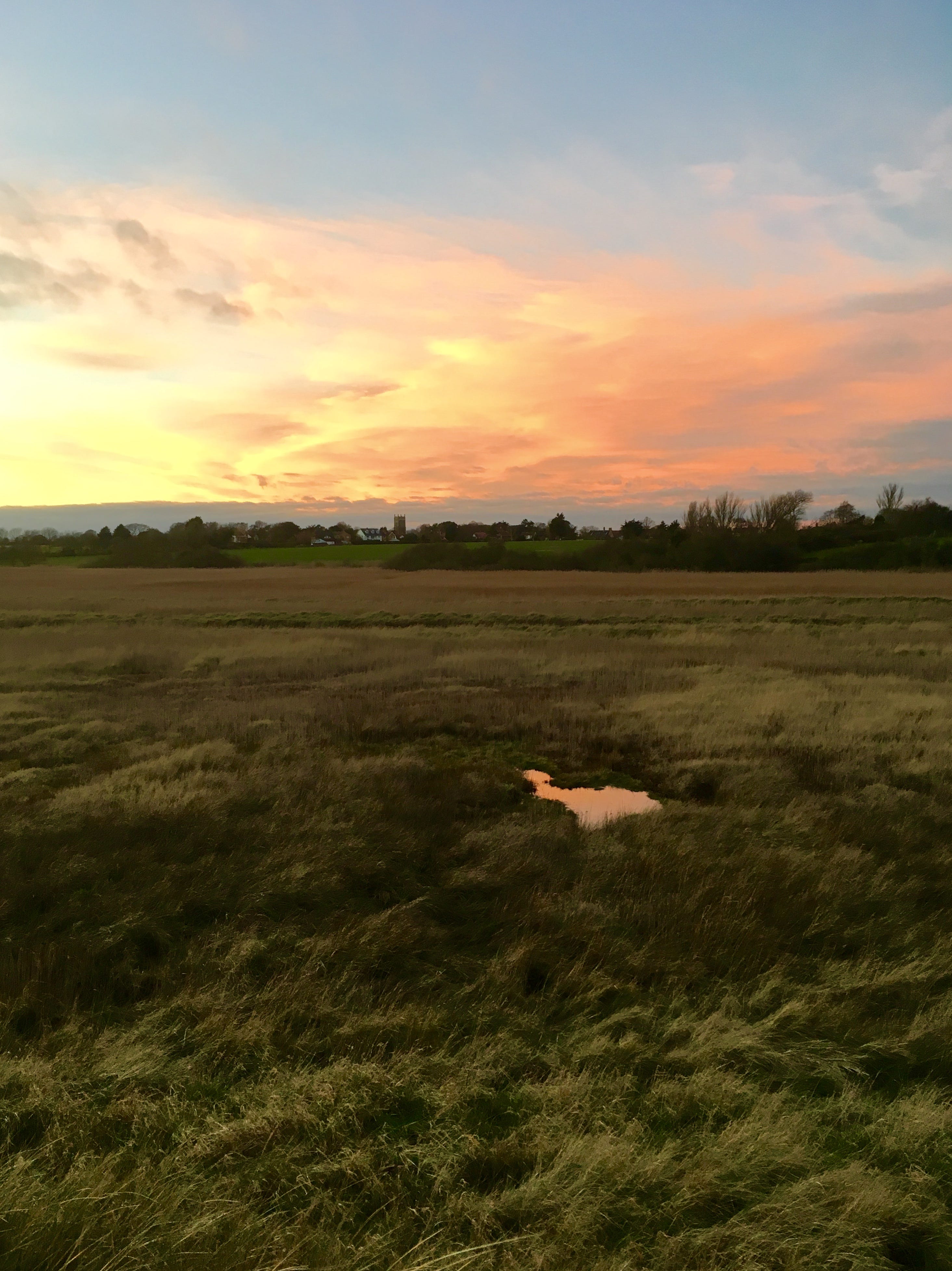
Ecological grief and climate anxiety exceed ordinary human sorrows. They belong to an existential category of distress of which we have little prior experience, and for which we are constitutionally ill-equipped. For me – and perhaps for you, too – the pain becomes unbearably acute during droughts, firewaves, floods and at other times when what is happening draws close and becomes tangible, instead of theoretical. When disaster is unfolding terrifyingly on the news, or worse, on your doorstep, it becomes very hard to ignore.
And the pain only sharpens the more you learn about nature. In A Sand County Almanac the environmentalist and philosopher Aldo Leopold wrote that, ‘One of the penalties of an ecological education is that one lives alone in a world of wounds.’ Nearly 80 years on from Leopold’s classic book the damage is now so stark, so obvious, that one does not have to qualify as an ecologist or a conservationist to become a citizen of that world.
Another thing I notice during conversations about the worsening crisis is an impulse to change the timescale, to zoom out, to see climate emergency and biosphere collapse in planetary terms. From this remote perspective it becomes a passing blip that the planet will heal from in many millennia: comforting, but too far in the future to be something we should work to bring about now. This cosmic standpoint is of no use to the living creatures who are suffering and will continue to suffer under man-made global heating, and whose decline and eventual loss from this once-teeming planet was far from inevitable.
This zooming-out is another means to avoid the necessary pain of the current moment: the sadness, the fear, the helplessness. The grief which is the very least we owe the world.
Often, at a book event, the things that have been spoken in the room by me or by others are weighty: the loss of loved and familiar creatures, the dwindling of natural abundance, fear of the future, distress at seeing the dear, familiar world we grew up in vanishing in front of our eyes. These experiences are invited into the room, and then at the end of the event there is often a wish to banish them again, to end things on a cheerful note: with the hope question. Not to send people out with all that loss weighing on their hearts.
It is completely understandable. I’d want the same, if I was sitting in the audience. But I would be going against my own beliefs and undermining the work I hope my books contribute to if I were to find glib words to allow people to go home cheerful and unchanged. That’s not to say it’s my goal to make people sad or frightened – not at all, in fact I don’t think that’s very helpful – but perhaps what I can do is invite people into a shared moment of honesty about how they already feel.
Such a moment offers us, too, the opportunity to gently recognise the stratagems and ploys by which, at other times, we keep our knowledge of what’s happening at bay. We do that because we are frail and human, and because we still have to live our ordinary lives; but the problem with denial, if it is never challenged, is that we will do less to help the living world than we otherwise might.
I want to say here that everything I have described is natural and forgivable. I do it too, and worse. Every day.
Over the years I’ve found an answer to the hope question, and I’ll share it here. And then I’ll say a little more than I usually have the opportunity to at book events, to point you towards something I have found helpful. Nothing particularly revolutionary, but a framework for taking the feelings and doing something useful with them instead of squashing them back down.
If what’s meant by ‘Is there hope?’ is, ‘Is there still a chance to avoid what’s coming?’, then the answer is no, because it’s already here. Decades ago people all over the world were sounding the alarm in all sorts of ways. Egged on by big business we collectively sidelined them and othered them and carried on as before. We had a chance to do something, and we didn’t, and now it is too late.
But the future isn’t as open-and-shut as ‘disaster vs salvation’. I think of what is coming as a bottleneck whose narrowness and duration are not yet fixed. We are entering it now, and vast numbers of living things have died and are dying around us already. So: abundance collapses; extinctions gather pace. The human impacts are appalling. The impacts on the miraculous, irreplaceable creatures we share the world with – who did not cause this and whose right to life is the equal of ours – are worse.
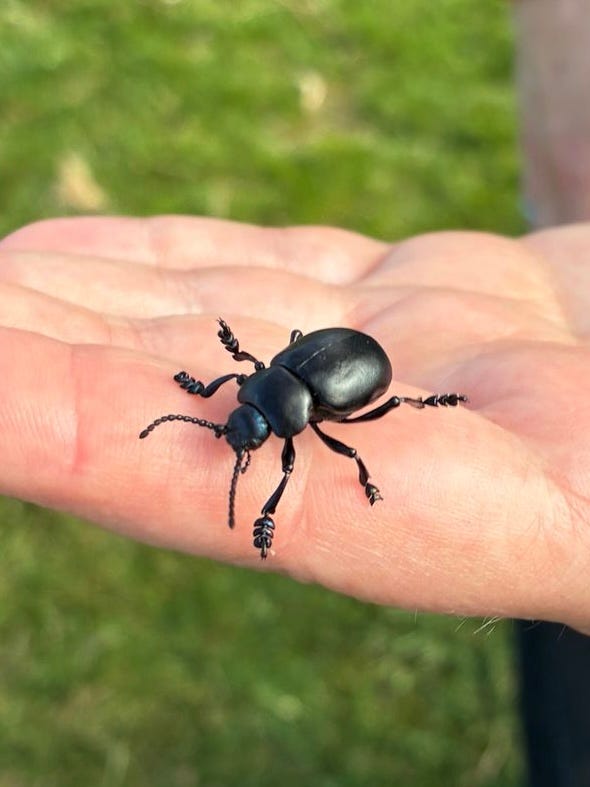
But some things will come through that bottleneck: most likely the abundant, intelligent generalists, and species that can reproduce fast and adapt to new conditions. Humans will come through, I’m sure – for good or ill. Feral pigeons will, most likely. Some types of corvids. Foxes. Brown rats. Cockroaches. Lots of flies.
Now look at the world around you and tell me: what else do you think deserves to come through with us? Hedgehogs? Blackbirds? Red admirals? Hares?
That is the ordinary person’s task right now: to gather up and carry forward with us as many living creatures that are close at hand as we can: our precious cargo. None of us will see the outcome, but while we are alive we can put some of our energy into improving the health and resilience of our local area, and in so doing so we can influence the future. We really can. And it is the best answer I know of to the grief.
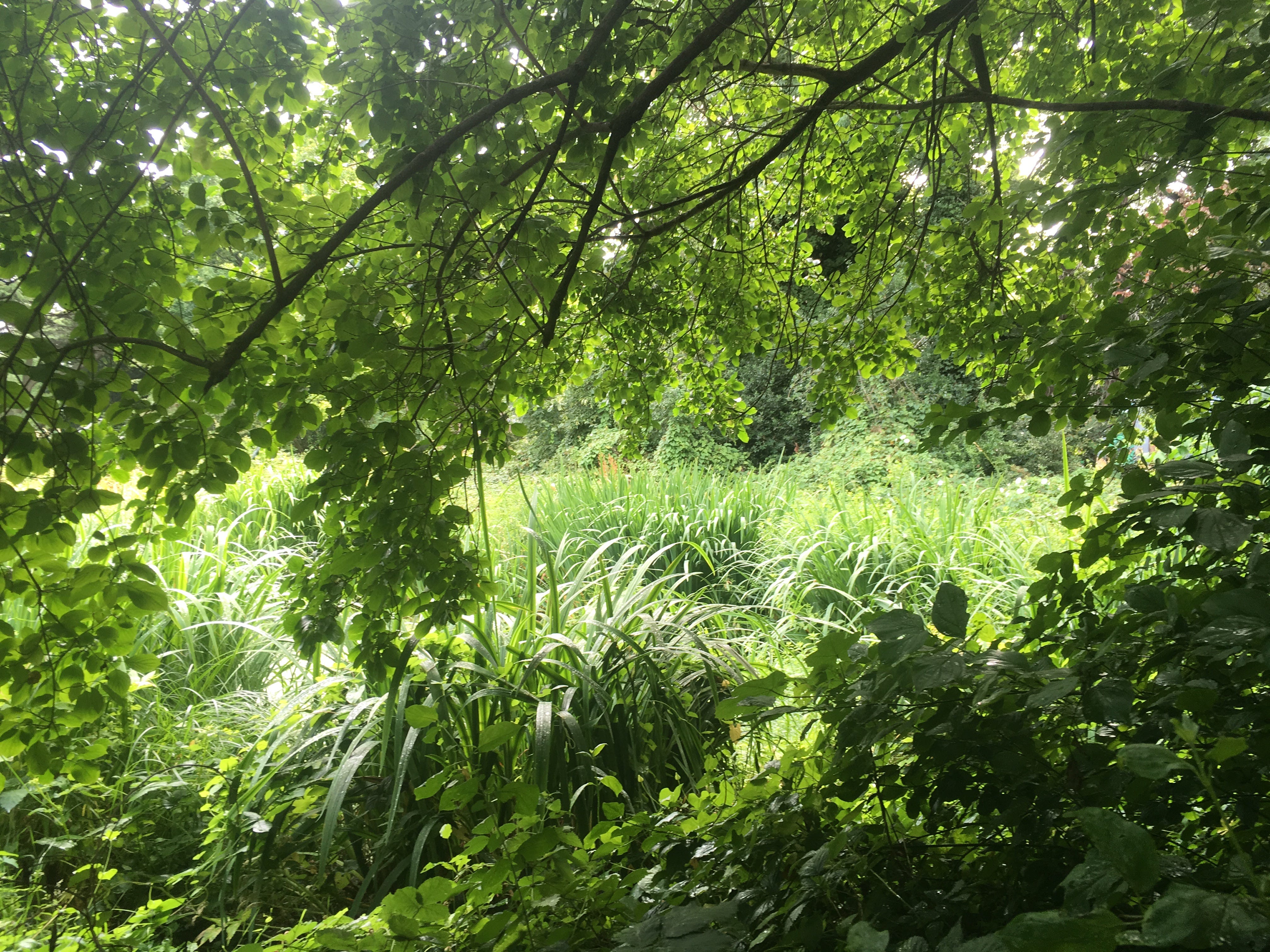
I am not talking about a garden – though it can start with that. If you’re lucky enough to have one, that’s wonderful, but I’d urge you if you can to throw your net a little wider: we need to make up for the people who have paved theirs over, or covered it in decking, or laid down plastic grass. If you don’t have a garden, that’s alright: look around you. It could be a corner of your neighbourhood park, or the local graveyard, or a street tree. It could just be the rough ambit of your days. Choose somewhere you care about. Nothing so big that it’s out of your ordinary ken, nothing that will exhaust you to think about. This is your home patch.
Now, find out what lives in it, and how you can look after it. I don’t mean you need to organise an ecological survey (though you might, if you’re a big landowner). I’m inviting you to do the deeply pleasurable work of watching and listening and looking things up. It shouldn’t feel like a chore: this is a process that can bring enormous richness to your life. Take your time. Enjoy it. Let it change you and bring you joy.
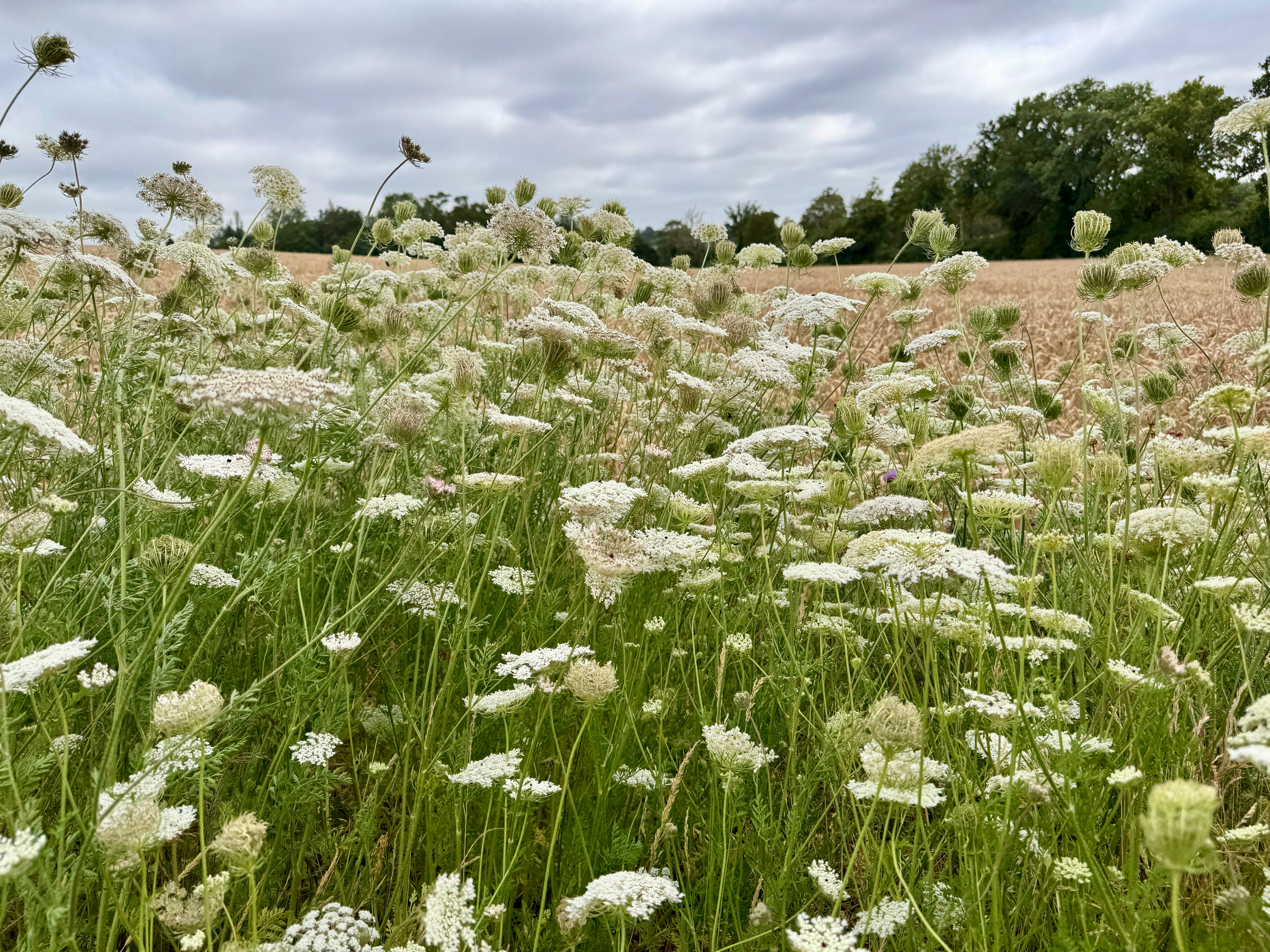
Once you’ve got to know who and what you’re caring for, try to advocate for them in small ways. You can’t fix everything that’s happening in the world, but it is within your gift to help the living things around you, and that matters. Hyperlocal biodiversity matters: it can make populations resilient. A stand of wildflowers dies out but the ground reseeds from a cared-for patch further up the road. Someone fills in their pond but there’s another one nearby for the frogs come spring. One half of a couple persuades the other half not to light their garden, and bats, moths and amphibians benefit. A few houses collaborate to put up swift boxes and after a few years the swift population on that street actually increases. Working together, a group of neighbours prevent the decline of a local hedgehog population by giving them food and water and boxes to nest in. In a drought, someone uses grey water to keep a patch of ox-eye daisies flowering and producing nectar: this nectar keeps a bee colony alive. Someone else re-wets a muddy puddle with a daily bucket of water so that house martins can build their nests, while around the corner, someone waters a street tree until it rains again, which survives against the odds and provides berries for thrushes and blackbirds to eat when winter comes.
Small acts like these can help slow local declines and create the conditions to build back from losses. They create resilience in the face of change.
Now imagine that hyperlocal work replicated up and down the country. In keeping more individual creatures alive for longer, preventing local declines, and even helping some species increase, more of those creatures might get through the narrowest part of the bottleneck, when it comes. With enough people working in small ways to counter the harm that we’re witnessing there could be a more beautiful, more vivid and complex world on the other side than there would be otherwise. And that’s worth doing, even if we’re not there to see it. That is where hope lies.
This isn’t a quick, three-point climate anxiety fix I’m proposing. Instead, it’s a lifelong shift in your relationship with the living world. To maintain your stamina over time, I’ve found a few things to be helpful. Firstly, protect yourself from overwhelm: anything that paralyses you is working against the greater good. It’s OK not to engage with things you can do nothing about if it allows you to expend energy on things you can. Secondly, play the long game and don’t expect immediate results. Some of the things you’re doing may not bear fruit this year, or next year, or the one after that; you might never see the results of some of your work. Let your wins be imperfect: don’t fall into the trap of thinking that anything other than total success is failure. A couple of gardens where the grass grows long may not be as good as the whole street left unmown, but it’ll support more invertebrates than it would have otherwise, and that counts. And finally, talk to people about what you’re doing, and share your reasons for it: humans are easily inspired by seeing other humans do things, and the more visible this kind of custodianship is, the more it shifts the Overton window for what types of behaviours are normal in relation to our nearby wild. Plus, people will often tell you what they’re doing for nature in return, which is immensely cheering.
At the moment I’ve got water out for wildlife – not just in my garden but in other spots around the village, too. In the colder months I feed a small population of sparrows with mealworms scattered on the ground (I don’t use bird feeders any more). I’ve dug a tiny pond in my tiny garden, which birds, insects and small mammals drink from, and I’ve built a log pile which is good for invertebrates and amphibians. I have sparrow boxes (which they ignore in favour of my roof tiles), a robin and great tit box, a swift box, a bat box, and a mason bee hotel. Over the course of four summers I’ve got rid of two stands of Himalayan balsam from places where I regularly walk, potentially preventing erosion of the local riverbanks where water voles live. I’m three years into an alexanders reduction programme (pulling off the flowers before they set seed) that could take five years or even more, depending on the persistence of the seeds in the soil: this will hopefully boost wildflower diversity on the village roadsides, with knock-on effects on insect life. Sure, there are lanes nearby that are still thickly lined with alexanders in spring, and in vast tracts of coastal Norfolk that’s all you’ll see from the car for miles, but if I focused on that I’d end up paralysed and do nothing. Instead, I’ve decided that certain things within a manageable boundary are my problem, and where I can I’m going to take responsibility for them. I can say with some confidence that there is a net biodiversity gain to the village from me being here. And you know what? That feels brilliant.
“I like to envision the whole world as a jigsaw puzzle... If you look at the whole picture, it is overwhelming and terrifying, but if you work on your little part of the jigsaw and know that people all over the world are working on their little bits, that’s what will give you hope.”
There are people far more knowledgeable than me when it comes to caring for your nearby wild, and I urge you to seek them out. You could start with the gardening writer and wildlife expert Kate Bradbury, whose small urban garden is home to hedgehogs, frogs, toads, bats, nesting birds and vast numbers of insects. I think often of how she carefully transported dozens of caterpillars from a stand of nettles that were about to be cleared in a nearby park so she could raise and release the butterflies at home. That’s what I mean by taking responsibility: having a go at helping something thrive instead of walking on. Sure, it won’t fix everything, but that doesn’t mean it’s not worth doing. It matters to those individual creatures – and, I believe, to the eventual outcome of all of this – that we try.
And the best thing? You don’t need to wait for someone to give you permission; in fact, you can start tomorrow. And it will do your soul good.

Thank you for reading, and for sitting with any difficult feelings that this piece brought up. And do tell me in the comments how you’re advocating for the living things around you, big and small.

PS: You can now actually book time with Kate and ask her how to turn your garden into a wildlife haven, even if it’s tiny. Even if it’s just one flowerbed!
Comments
Nothing yet. Say the first thing.
Sign in to join the conversation.