
It began with skylarks: three males in full song flight at London City Airport, pinned to a Delft-blue sky. They hung there, helplessly pouring out their ribbons of notes, above the runways and the cropped grass where it’s not entirely impossible that these small, Red-Listed birds were attempting to breed.
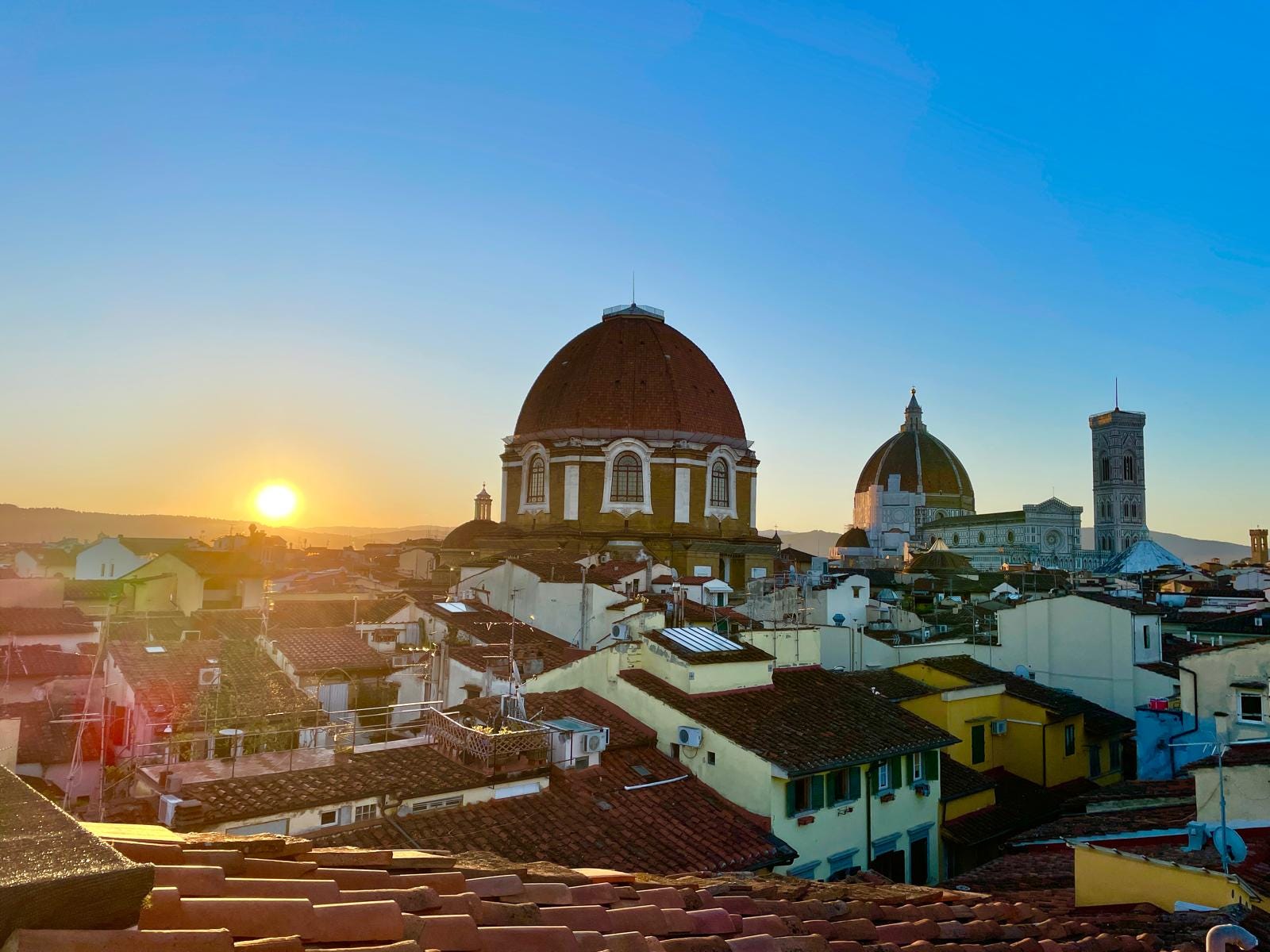
The skies were cloudless and once we were up I watched the Isle of Wight slip away below us. The French coast appeared, we passed over busy Dieppe and then we were above the infinitesimal tesserae of the French countryside. The pilot came on the intercom to tell us to look out of the windows because a day as clear as this one was a rarity – not that I needed reminding. I was transfixed by the land below, the sinuous rivers, the accretions of towns, the dark forests, the gathering mountains, white-tipped in places – and then, as we began to descend, there was Florence with its red-tiled roofs, its towers, belvederes and cupolas and the grand dome of the Duomo at its heart. I have never had a clearer sense of passing over Europe. It was wonderful.
After a night in Florence I took a train heading north, into the foothills of the Apennines. I was there to visit my friend, the writer, teacher and gardener Fiona Melrose, who is setting up Mela Rosa, a writing retreat. I’ve admired Fiona since I read her Women’s Prize-longlisted debut Midwinter, set largely in Suffolk where I live now; since then she’s written two more novels, each one very different, revealing a creative versatility that (if I’m honest), I envy a great deal. During the last few years she’s also been hard at work teaching and mentoring, skills I completely lack. I wanted to find out more about her life in Italy and the place she is pouring all her considerable energies into.
Somewhat unsurprisingly, I fell in love with it.
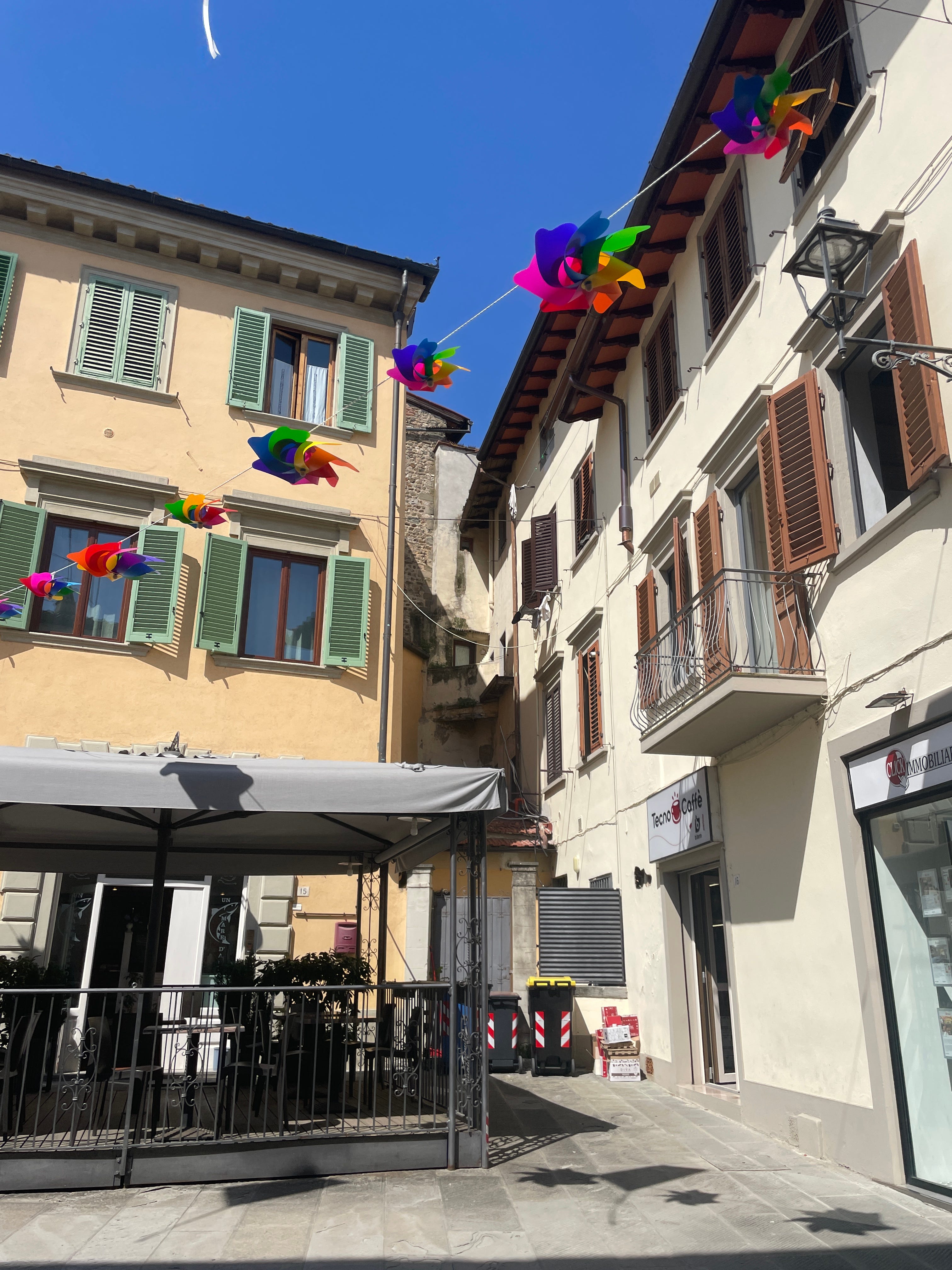
The train stopped at Vicchio, a small market town set on a wide, flat and well-farmed floodplain surrounded by the grey watercolour shapes of the distant Apennines. The Mugello is an intermontane valley formed by alluvial deposits of the Sieve river, and it is astonishingly fertile, Vicchio’s busy weekly mercato full to bursting with fruit and vegetables, mountain herbs (including the fragrant Pebre di l'Appennino I brought home), truffles, honey, dried wild mushrooms and pecorino cheese.
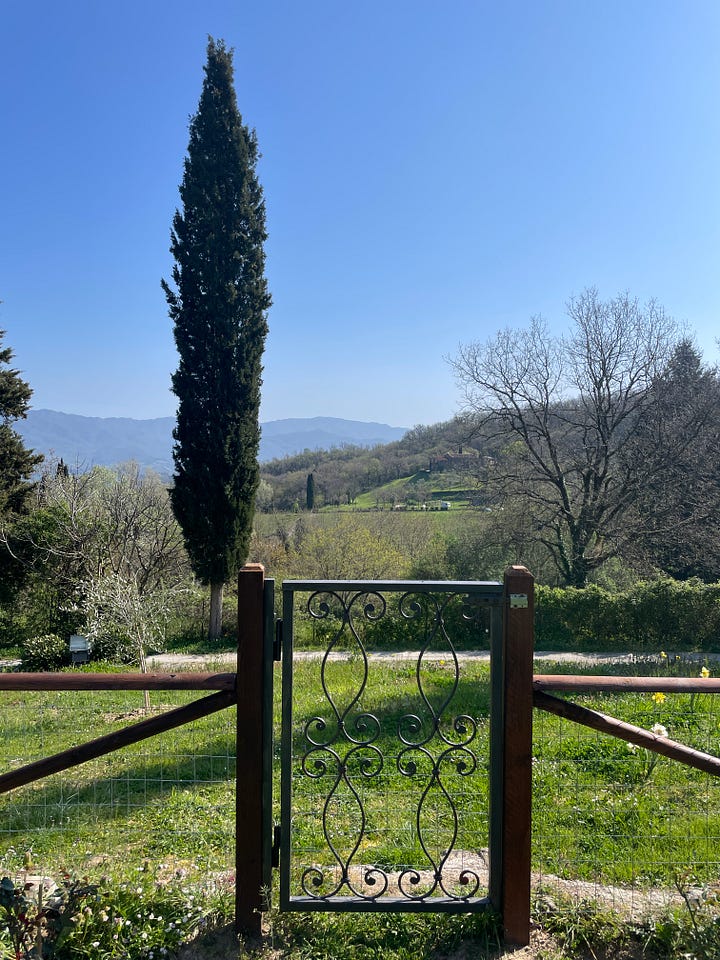
From the table-flat floodplain the road rises by a dramatic 820 feet, first in a series of sinuous curves and then in 12 hairpin bends that had me holding my breath and tucking my elbows in in Fiona’s car. The slopes grew increasingly wooded around us as we wound our way up, ears popping, past stone-built farms and houses, fields, olive groves and terraces opening up here and there and sudden glimpses of mountain vistas between trees. I would discover that on some mornings a sheet of white mist would cloak the valley below, burning off only slowly as the sun rose.
I asked Fiona to tell me in her own words about the setting for her retreats, and the spirit in which she’ll be welcoming people to them:

Tell us about the house and land where Mela Rosa is set. What makes it such a special place to visit, and what changes are you making there?
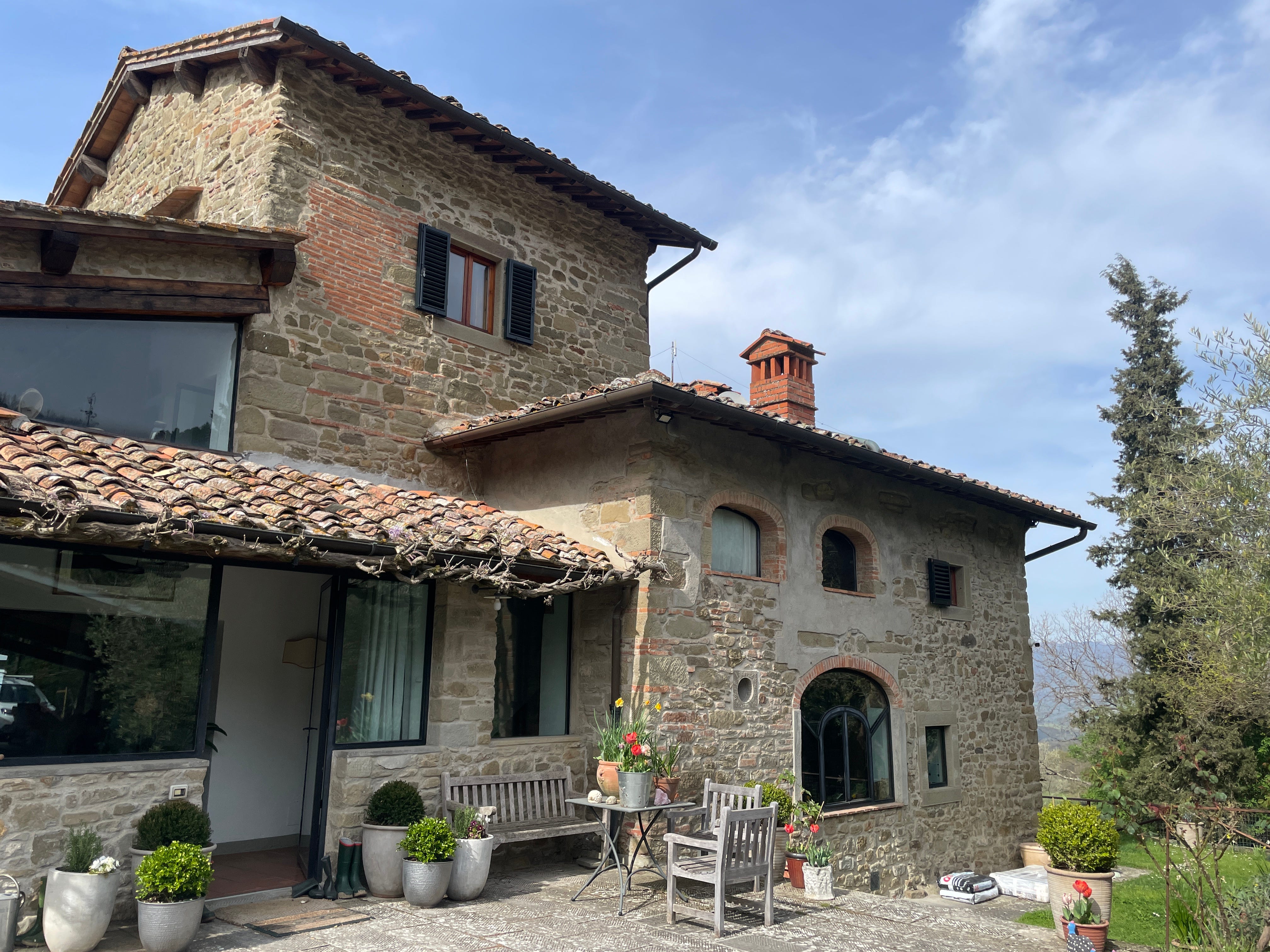
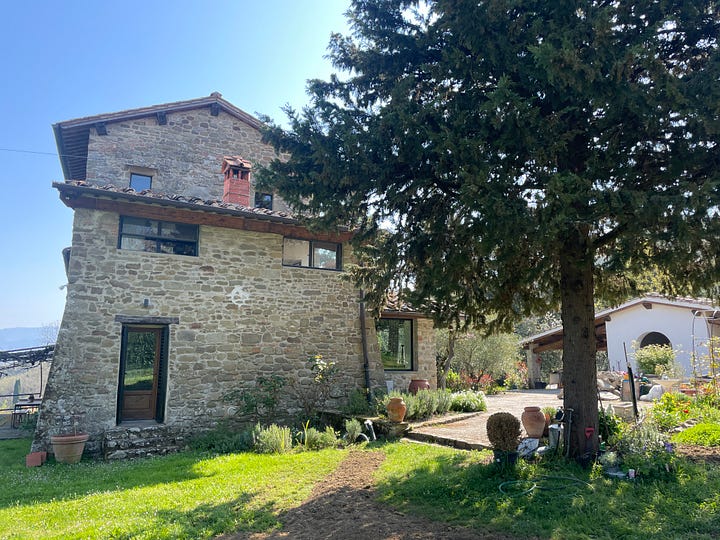
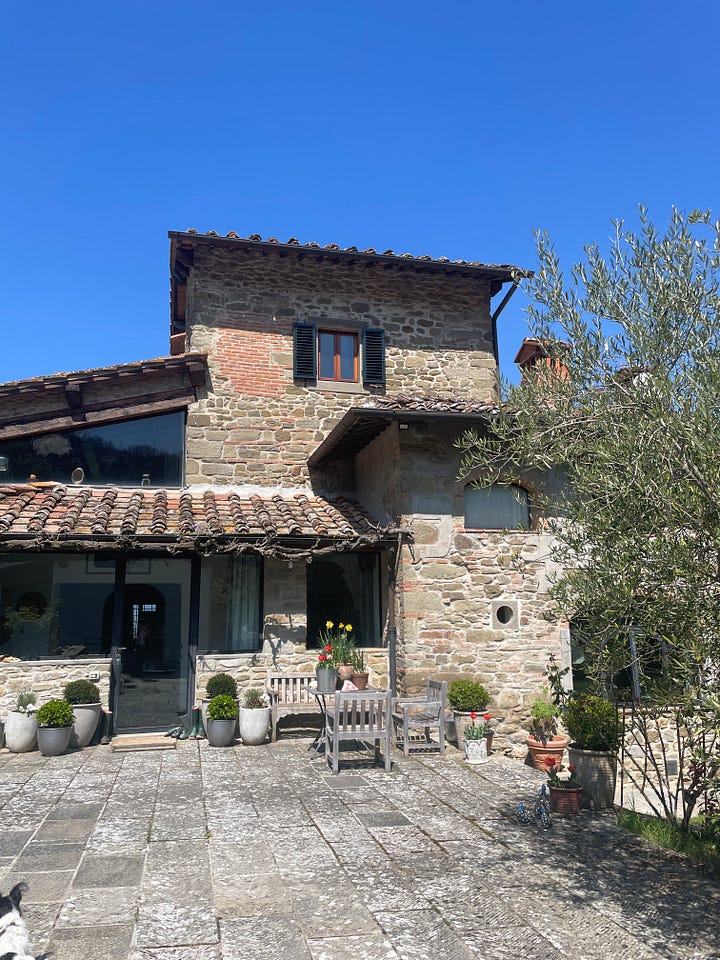
The retreat centre is just 45 minutes north of Florence: 20-something acres of mixed agricultural and forest land in the Tuscan Apennines. The main house, Torre Roti – a medieval tower built of local stone – and the retreat teaching space are 800 years old. Just a couple of minutes’ walk away is a hotel where my guests will stay: Villa Campestri, a Renaissance villa and oleoteca, with a swimming pool and restaurant, surrounded by olive groves.
Tuscany is so much more than the few valleys we tend to think of as ‘Tuscan’. Tuscany is also forested, has a long wild shoreline and an archipelago of islands. This is deep Italy, Italia profonda – what you might call ‘authentic Italy’ in marketing parlance.
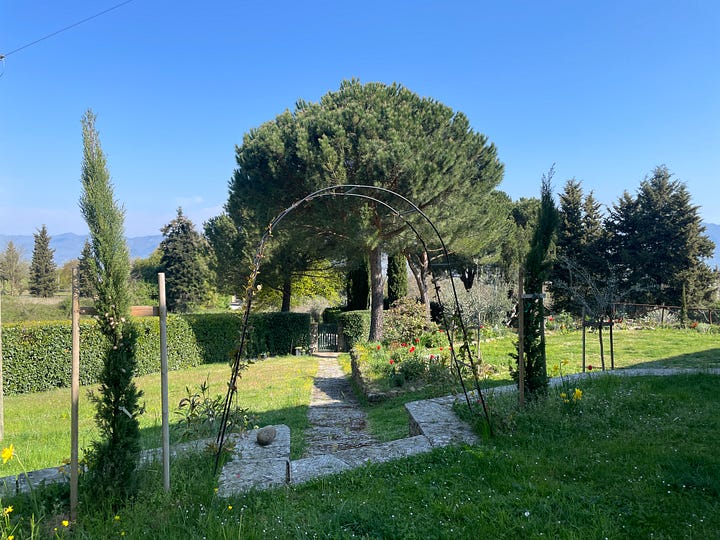
So far, I have merged three fields to create an orchard where I have planted over 70 heritage fruit trees. Some cultivars are Roman, and also include the retreat’s namesake apple, Mela rosa. Over time I will convert this into an agro-forestry food system. As much as possible I feed myself and visitors from the orto (kitchen garden).
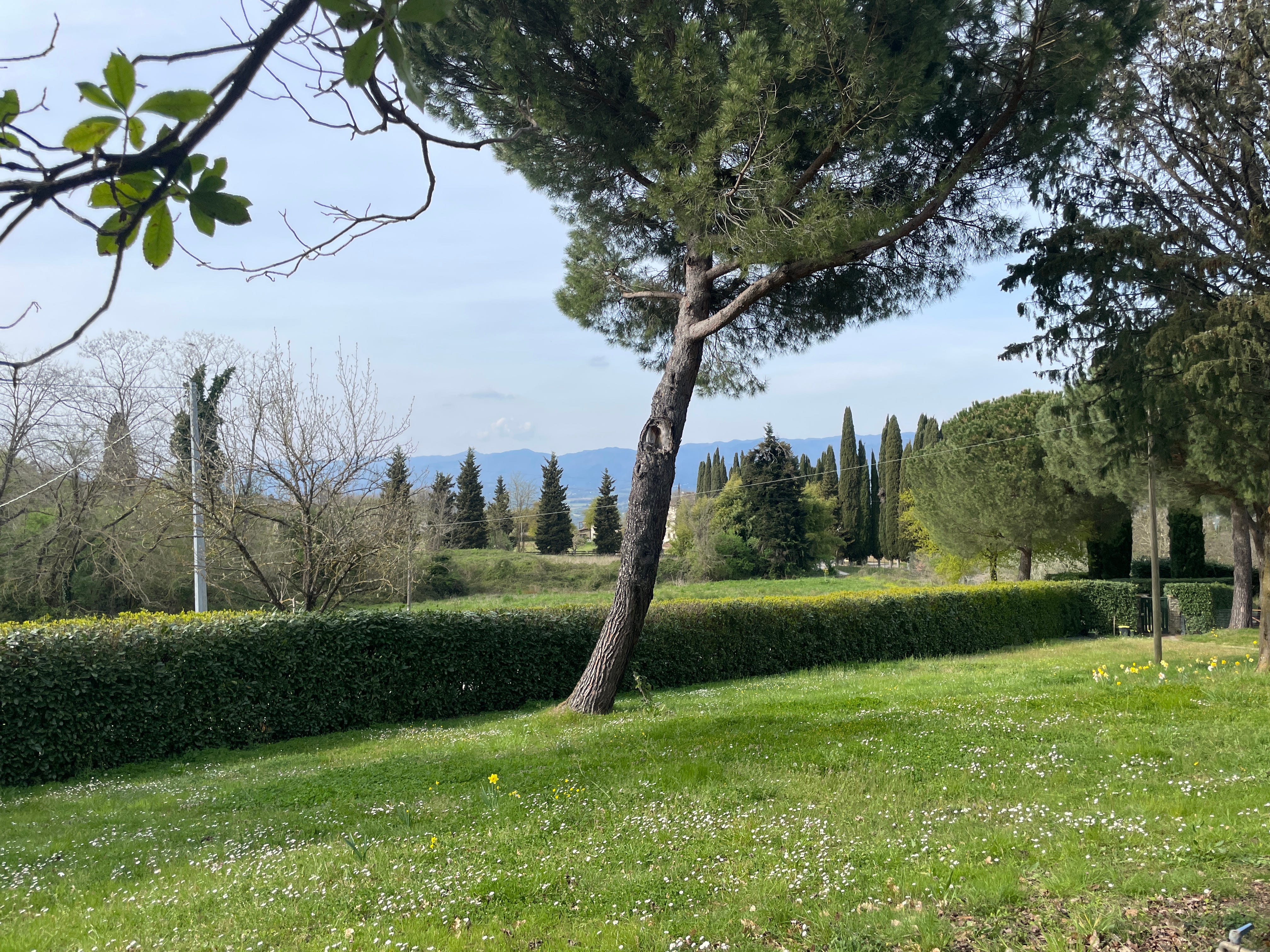
Portions of the land are recovering from overgrazing, aggressive clearing and pesticides; to help them back to health I’m using a mixture of careful seeding and managed abandon. There is a river, and several traditional stone-walled agricultural terraces. They are centuries old, and offer amazing shady recesses during the bleaching heat.
There are endless (good natured) arguments with the local menfolk who cull every last blade of grass and shrub before it has produced a berry or flower. These same men complain about the lack of fireflies. I have constellations of these in June. Also wild boar, deer, foxes, badgers, porcupines, martens and hedgehogs. We even have wolves, further up the mountain!
What is a writing retreat and what can it offer? What’s your approach to creating these spaces for people?
Retreat is a return to the known place inside the writer where creativity is possible. It’s about time and space to read and write, of course, but is also an invitation to think differently. I offer the practical support a writer needs to do that, as well as a scaffold of mentorship that goes beyond the time they spend here.
Many writers can unfold plot-points along a timeline and write a solid sentence (and so can AI). Very few writers actually have something to say. This is true across genres. And yet that’s what readers crave: meaning, connection, resonance. That is what survives.
Retreats here offer a kind of rewilding of the creative, feeling self. There are more than enough courses and workshops that tell someone ‘how to write’. What both I and my teaching partners work towards is to set writers up for a life’s work: to engender a way of being in the world, as opposed to bashing off a ‘how to write a book’ checklist.
Unfashionably, I believe that you either are a writer or you aren’t. I think writing courses sell the idea that if you just spend enough money and do one course after another, anyone can write a novel. I don’t believe that. If you are a writer, it is a way of being, in a very elemental way. Having said that, we are fast losing access to all the conditions that make that way of being possible. There is too much noise: 10-point plans and three easy hacks. The fundamentals behind this kind of content are absolutely necessary. But it’s exhausting. Instead, a retreat initiates the kind of creative archeology that can help writers return to that identity.
Writers already know how to write. But many have lost their confidence because of the hustle that tells them they don’t. Retreats here are a world away from the commerce of publishing. There is a time place for that. In the mean time it should be all about the work. Deep work: a story, voice and perspective that sings; radical attention; a solid draft; sentences that vibrate on the page; a profound nourishment for a life’s work. And generous, active community, ease, gorgeous food, sun-basking, fire-gazing, meadow flowers, candles, fireflies. Beauty.

If all this has you longing for some time in Tuscany you can book your place at Mela Rosa by going here: retreats for 2026 include a week-long intensive novel incubator, and Between The Lines, a writing and attention retreat with Julia Bell. The maximum group size is just eight, and it’s also possible to book a retreat exclusively for your own group. You can find Fiona on Substack here, and follow Mela Rosa on Instagram here.
Me being me, I’m most looking forward to going back and finding out more about the wolves and wild boar that Fiona shares the mountain with. I would like to glimpse a beech marten and a porcupine – oh! and a firefly! – and find out more about the incredibly diverse suite of plants and flowers growing wild on the land around the old stone tower. I want to watch the kitchen-garden develop, and see the newly planted fruit trees grow; in fact, there’s so much I want to see that I’ll need to be strict next time I go there, and make sure that I actually sit down and write!
For now, I commend this magical place to you. It really is something else.

I’ll be back with a proper edition of Witness Marks on June 15th. Until then, do make sure you enjoy these late spring weeks as they turn into early summer. And thanks for reading!

Comments
Nothing yet. Say the first thing.
Sign in to join the conversation.