
Hi, how are you doing?
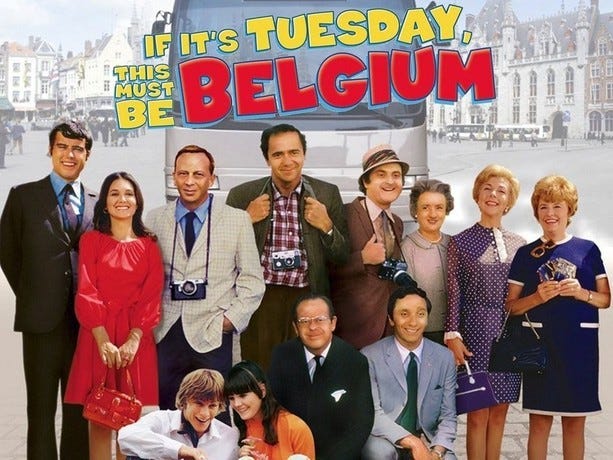
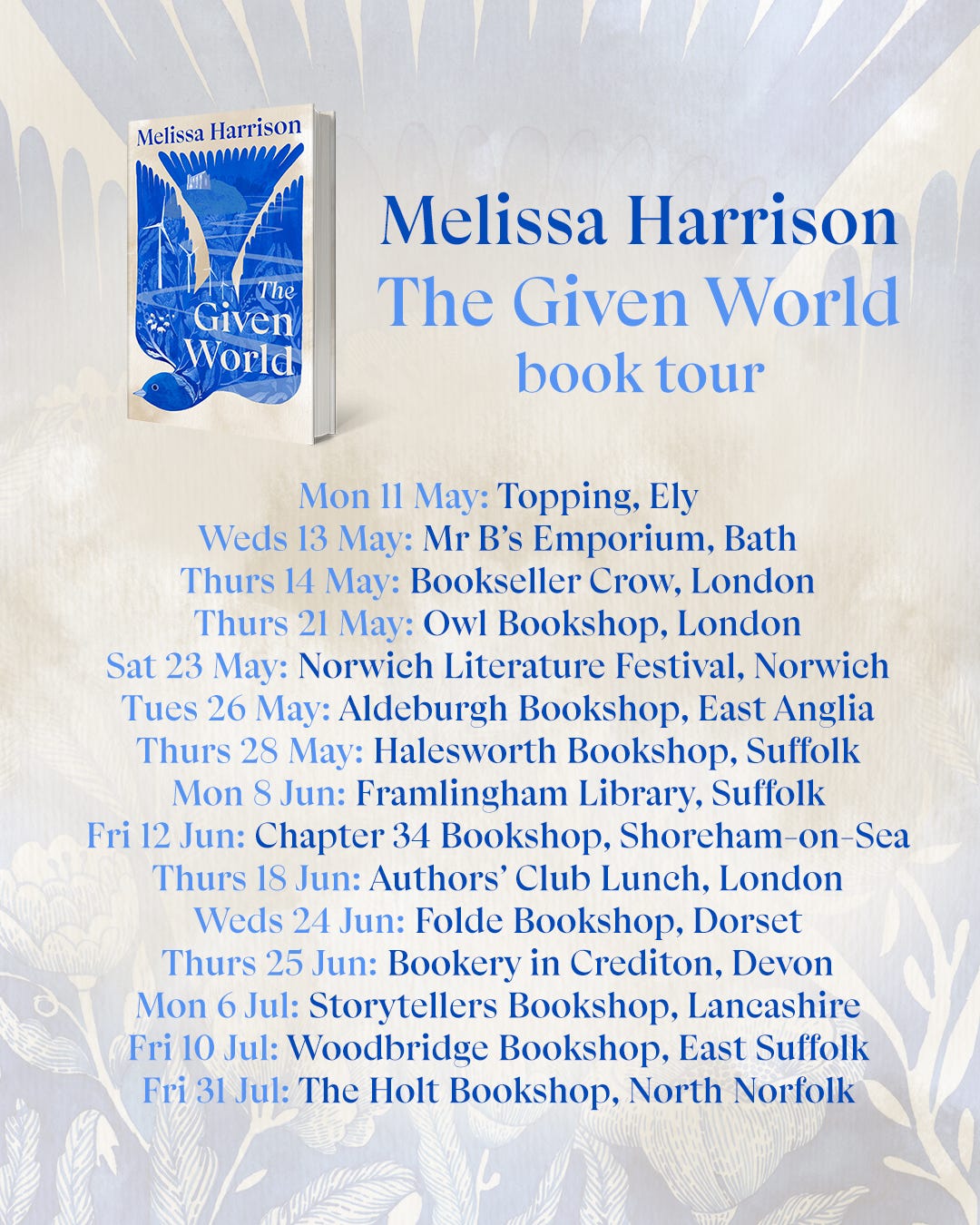
I’m in the absolute thick of it at the moment, turning up at bookshop after bookshop and hoping for a chair rather than a stool, and then talking my head off about The Given World. If I’m honest, it’s all getting a bit ‘If it’s Thursday, this must be Ardleton’ (or Wefford, or Lodeshill). Obviously I’ve caught a cold.
Literary events – particularly at bookshops – are a vital part of the publishing ecosystem. They can drive sales and help create momentum for a book in the early days and weeks after publication, and when a book is seen to have momentum it encourages orders from other bookshops, and creates a tailwind. Signings create income for bricks-and-mortar bookshops, which remain the absolute heart of the book world: events hopefully bring new customers in through their doors. And they give writers a precious opportunity to meet their readers in a friendly environment, to tell them about the thing they’ve been working on for so long, and to find out how it’s being received. If you have a local indie bookshop do keep an eye on their events calendar and show up in support if you can. If there’s an author whose work you love, check their socials and book a ticket to hear them if they’ll be appearing anywhere near you. And if you’re at a festival over the summer, and there’s a literary tent, stick your head in. People who go to book events (not to mention the absolute heroes who run them) are the best people in the world.
Whether they’re held at a bookshop or a library, in a tent at a music festival or on a stage at a literary one, literary events have (like anything else) their own unique rhythm and character, something that becomes very apparent when you’re doing several in a row. But most people will only go to one in a blue moon, which means you might well turn up and not really know what’s going on.
To that end, may I present:
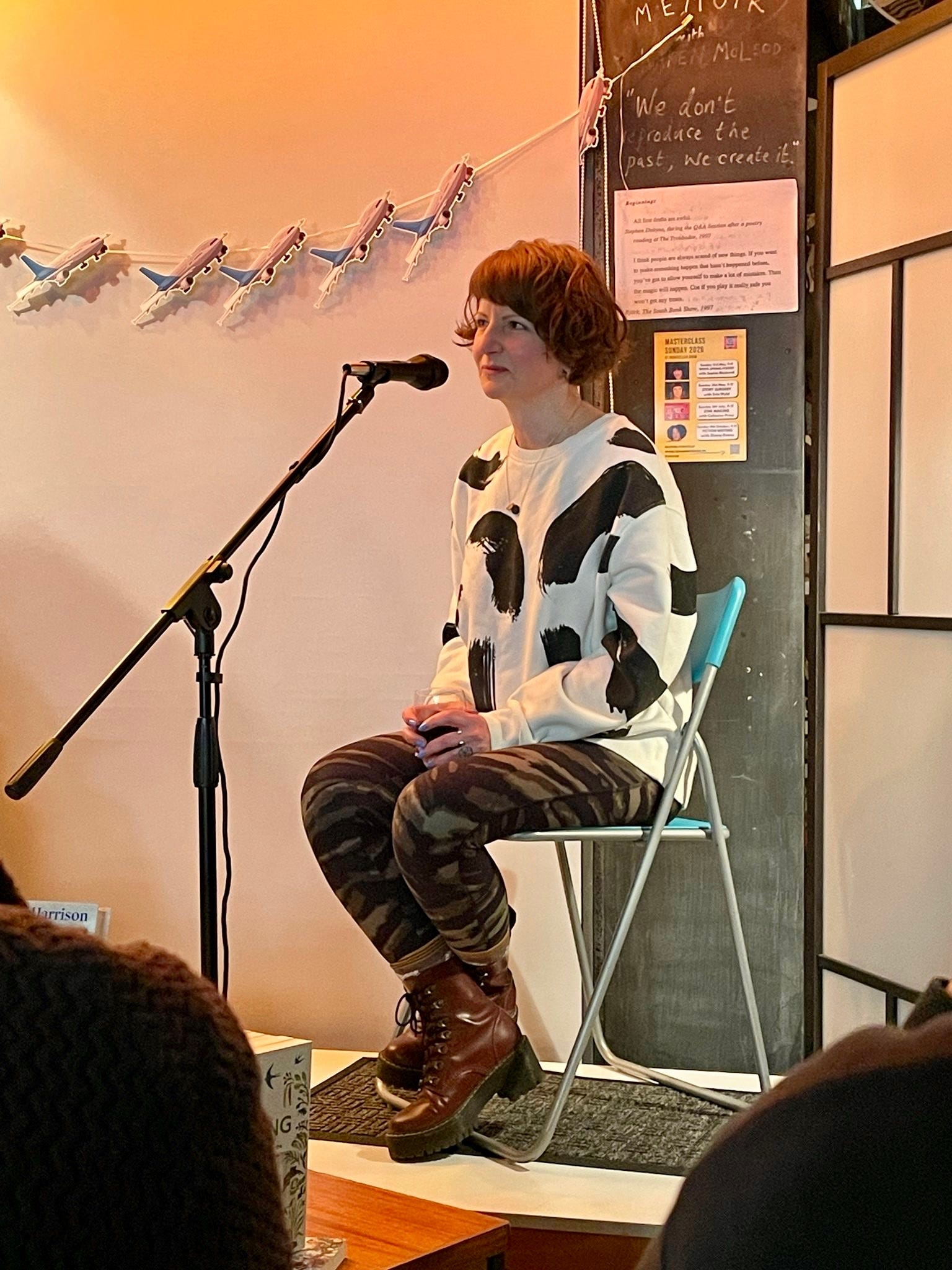
So. The most common format for a literary shindig is 40–45 minutes of either conversation between the author and an interviewer, or (if it’s non-fiction) the author presenting their book. That’s usually followed by 15–20 minutes of audience questions, and then a book signing. Some events are free; some are ticketed; some include a copy of the book in the ticket price. Bookshop events are usually in the evening. Sometimes there’s wine! Usually white, because of spillages, but occasionally red too. Crisps are not unknown. All very civilised.
The presentation/conversation bit often includes a reading by the author: short, if you’re lucky (three minutes is PLENTY, imo). I’m just going to be honest: not all authors should read their own work. And that’s all I’ll say on that subject 👀
Here are some useful things to know:
Sometimes the writer and the interviewer (if there is one) are given microphones, and sometimes they aren’t. If they don’t have mics, and your hearing isn’t the best, please do ask to sit at the front. Most writers aren’t trained actors and can’t project their voices (also, many of us are introverts who started off under the unfortunate misapprehension that the job of a writer was something you could do largely alone). Whatever you do, please don’t sit at the back and then shout CAN YOU SPEAK UP PLEASE DEAR at intervals. It’s rude.
When it’s time for audience questions, nobody wants to be first. There will be people in the audience with a burning desire to ask something, but will they put their hand up first? They absolutely will not. If you have a question, and you want to be helpful, ask it immediately, before silence chokes the room like dog’s fart on a hot day. The writer will be so grateful you will be able to see their shoulders drop by three inches.
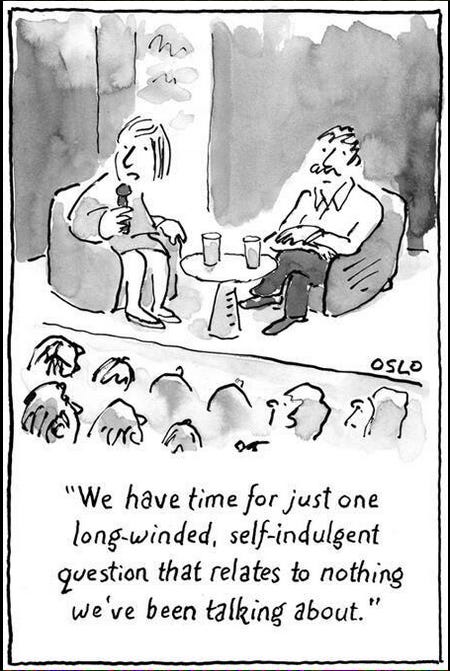
But please, for the love of god, make it a relevant question and not a statement or an anecdote. It’s the thing every author and interviewer dreads: the audience member who’s been sitting on a hard chair for 45 minutes growing ever more impatient about those pesky people on stage just talking and talking, and them not getting a turn; and now, goddammit, they have the floor, and nobody’s going to stop them! Don’t be that person. Also – and I’m speaking from recent experience here – if your question needs prefacing with, ‘This may sound aggressive, but…’, have a little insight and sit yourself back down.
Finally, when it comes to heckling, you won’t be surprised to learn that book events are generally far too decorous. However, if you must heckle, MAKE IT FUNNY.
To the signing queue!
Firstly, it is TOTALLY FINE to bring from home your own copies of the author’s new book, or of older books of theirs (best not bring library copies, though). But please don’t stand in the bookshop with your phone out, ordering books from Amazon (and ideally, don’t do it when you get home). You’re in a bookshop which pays taxes and employs people, and those people have given up their evening to serve you wine in the sincere hopes that you’ll buy a book. From them.
Secondly, even if you know the author, when you get to the front of the queue, tell them your name*. As an author myself I can’t tell you how discombobulating it is to see so many faces you recognise, or which at least look familiar, but which are appearing out of context, one after the other after the other, while you’re in a state of quite some stress. Even if it feels unnecessary, saying, ‘Could you sign it to me – Lorraine?’ (or whatever your name is) is such a kindness, I can’t tell you. And if the author looks at you blankly, even if you’ve met before, please do forgive them. Even if they appear relaxed, internally they are most likely performing a very peculiar high-wire act for which they have not been trained. And if you present your book without telling them your name and they say, ‘And remind me, how do you spell it?’ they’re not asking you to spell it: they’re asking to be reminded what it is. Replying ‘Oh, the usual way’ is unforgiveably cruel.
* Obviously this doesn’t apply to life partners or best mates. But acquaintances, ex-colleagues, online friends, one-time neighbours etc? The rule applies.
While we’re on the subject of spelling: if your name is long or complex, has alternate versions or is spelled in a way that the writer may not be familiar with, do let them know before they wade in with a Sharpie. Personally, I abhor Sharpies for signings, partly because of show-through and partly because of their terrifying permanence; I now favour an erasable rollerball. I wish I had discovered such a thing prior to a literary festival in Ireland at which I royally fucked up several people’s beautiful Irish names due to being ignorant and flustered. Meadhbh, if you’re reading this, I’m so sorry. The fault was all mine.
If you don’t want the book dedicated to you, but to someone else, that’s absolutely OK. It’s also OK if you just want it signed and not dedicated. And if you’ve bought more than one of the author’s books, you are clearly one of the best humans, and they will be delighted to sign and/or dedicate them ALL.
While the author is scribbling, it is totally acceptable, and in fact absolutely lovely, to tell them what their books have meant to you, or why you like their writing, or what place their work has in your life. For me, hearing how a book has landed completes the circle: then and only then do I really understand what it is that I’ve made. Most of us toil away in solitude, writing for an imaginary reader who may never actually materialise, if we can’t complete the book. Meeting real ones is always really, really lovely, so don’t feel it’s gauche or ‘too much’ to tell them how you feel. Having said that, asking them for their home address or contact details is generally a bridge too far.
And don’t be offended if the author, their publicist or the bookseller gently moves the conversation along: it’s not a judgement on your interestingness, but simply well-mannered concern for the people waiting patiently behind you in the queue.
Sometimes – particularly at festivals – you might see an author sitting alone at a signing table with nobody in their queue. There are several reasons for this: often festivalgoers don’t want to carry books around, which is understandable, so nobody comes to buy one; sometimes – especially when an event features two authors – one simply attracts more attention than the other, who must nonetheless remain at the table; alternatively (and this has happened to me) one of them has simply run out of books to sign and sell, while the other author’s publicist organised a bigger stack. Whatever the reason, the result is an author signing no books and feeling like a Billy no-mates. A lovely thing to do is go and chat to them, just so they don’t feel so obviously and devastatingly alone. You could even offer to get them a drink!
That’s all I can think of for now, but do please let me know in the comments if you have questions about book events, memorable anecdotes or (ideally) scurrilous gossip about my fellow writers. And if you’d like to come and get a book signed, my next event is at Framlingham Library in Suffolk, on June 8th. Tickets here.
Thanks for reading!
Comments
Nothing yet. Say the first thing.
Sign in to join the conversation.