
In 1309, Pope Clement V moved the papal court from Rome to Avignon. This small city in southern France soon became the center of the Christian world.
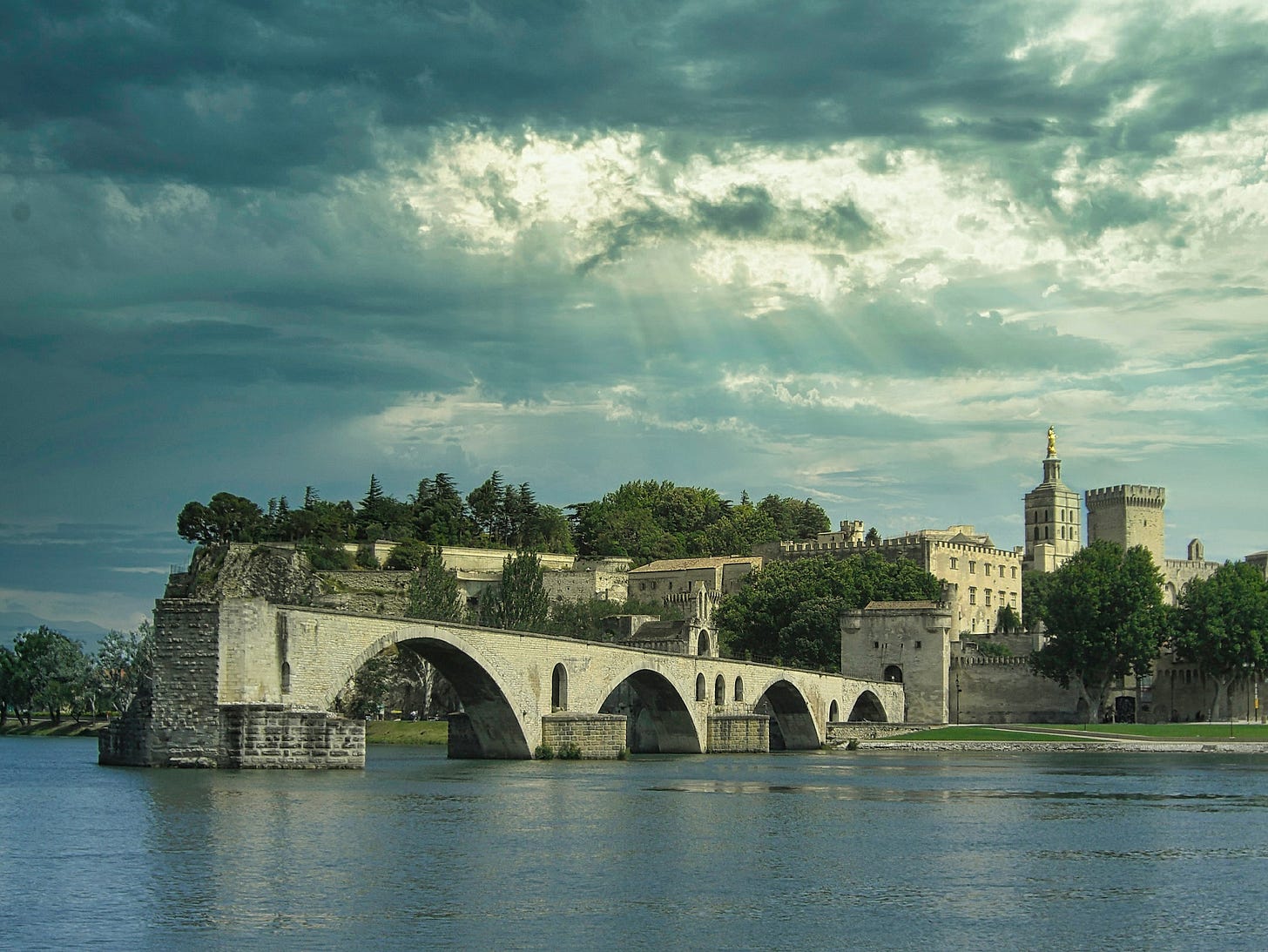
Rome had descended into political chaos. Rival aristocratic families were at war with one another, and the streets had become increasingly unsafe. Avignon, by contrast, was peaceful, and under the protection of the King of France. What was meant to be a temporary solution lasted for 70 years. Seven popes ruled from Avignon, one after another, and all seven were French.
During this period, Avignon grew rapidly. Its population rose from just a few thousand to tens of thousands. Kings, ambassadors, bankers, merchants, and artists flocked to the city, gathering at the gates of one of the largest Gothic palaces in Europe. The Palace of the Popes became the grandest Gothic structure of its time. Covering around 15,000 square meters, it was comparable in size to four Gothic cathedrals.
But this grandeur had a darker side.
With people arriving from across Europe came intrigue, power struggles, and a growing fear of poisoning. The popes’ food was tasted by others before it reached their tables, and mysterious objects believed to detect or neutralize poison were kept close at hand. One of them was the glossopetrae, or “tongue stones”. In reality, these were fossilized shark teeth, believed to neutralize poison when placed in contaminated food or drink.
One of the fiercest critics of what Avignon had become was the Italian poet Petrarch. He described the city as “the sewer of all vices”. And yet life had an ironic twist in store for him: it was in this very “sewer” that he found the love of his life.
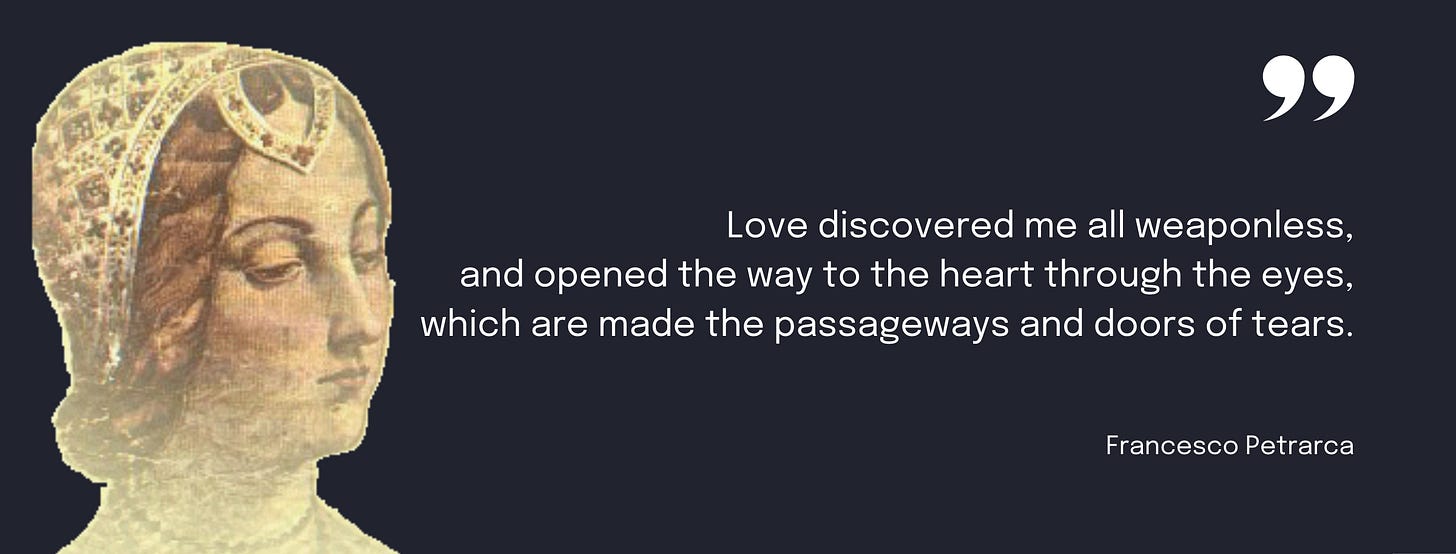
On April 6, 1327, he fell in love with a woman he saw near the convent of Saint Clare. Her name was Laura. She was married, and is believed to have been the wife of Hugues de Sade. Yes, that would make the couple ancestors of the Marquis de Sade, whose name centuries later gave us the word “sadism”.
Laura never returned Petrarch’s love. She died of the plague in 1348, but Petrarch continued to write to her through his poetry long after her death. His Canzoniere, containing more than 300 sonnets devoted to this unattainable love, ensured that Laura, and their story, would live on for centuries.

The popes brought more than just power, money, and intrigue to Avignon. Artists came too, some drawn to the city in search of work and new connections, others arriving by invitation. Italian artists decorated the walls of the Palace of the Popes, and Italian painting spread from Avignon across the Alps, influencing the development of European art.
Avignon can easily be dismissed as just a small medieval town and left off the itinerary. ☹️ But it’s home to a remarkable historical, architectural, and artistic heritage, and countless stories waiting to be discovered. Don’t miss out! Open Piri app and start our new Avignon audio tour, “The City of Popes”! ✨
If you’re getting this newsletter, it’s either because you recently used Piri Guide or you subscribed to it yourself. If you don’t want to get these newsletters anymore, you can unsubscribe at any time. We appreciate your time. 😇
Stay inspired and explore more on our Instagram and TikTok! Follow us for travel tips, behind-the-scenes stories, and more adventures!✨
Have a great weekend, everyone! See you next week!👋🏼
Comments
Nothing yet. Say the first thing.
Sign in to join the conversation.