
John “Buck” O’Neil had multiple reasons to be bitter, but he never gave in to the temptation.
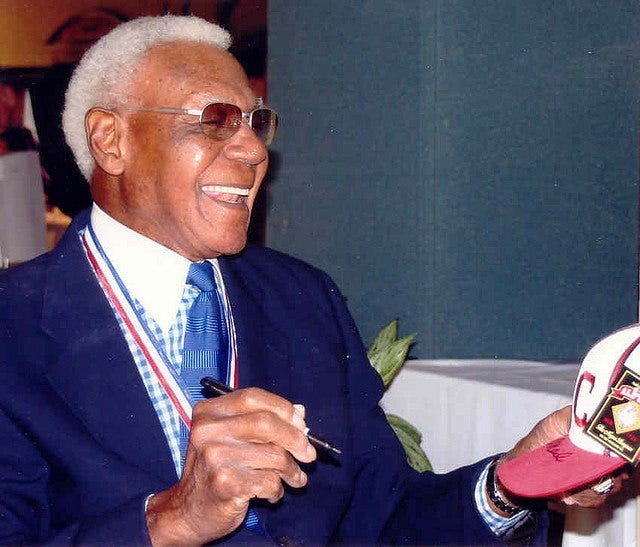
O’Neil was a great baseball player in an era when people of his skin color weren’t allowed to play Major League Baseball. O’Neil’s response was that he didn’t feel bad that he didn’t get to play in the same league as legends like Babe Ruth and Lou Gehrig; he felt bad that people who thought that those players were the only ones worth watching never got to see him or his teammates play.
O’Neil spent 10 years as a player in the Negro Leagues, interrupted by two years in the U.S. Navy during World War II, before spending the rest of his life around baseball as a coach, manager, scout and overall ambassador for baseball.
When the powers that be finally decided that stars from the Negro Baseball Leagues should be recognized in the National Baseball Hall of Fame in Cooperstown, N.Y., he was inexplicably left off the list of the 17 that were selected on Feb. 26, 2006. While there were individual Hall of Fame members with Negro Leagues ties in the Hall, like Hank Aaron and Ernie Banks, the Special Committee on Negro Leagues was charged with inducting a large group of contributors. The committee elected 17 candidates—12 players and five executives—from a final pool of 39 names. O’Neil was not on the final list.
The mood at the Negro Leagues Baseball Museum in Kansas City that day was similar to a funeral. But the obviously disappointed O’Neil showed up and spread the love. It certainly would have been okay if he had left the building and consoled himself. But he used his upbeat spirit to help everyone else feel better.
He was quoted in the next day’s edition of The Kansas City Star. “God’s been good to me,” he said. “They didn’t think Buck was good enough to be in the Hall of Fame. That’s the way they thought about it and that’s the way it is, so we’re going to live with that. Now, if I’m a Hall of Famer for you, that’s all right with me. Just keep loving old Buck. Don’t weep for Buck. No, man, be happy, be thankful.”
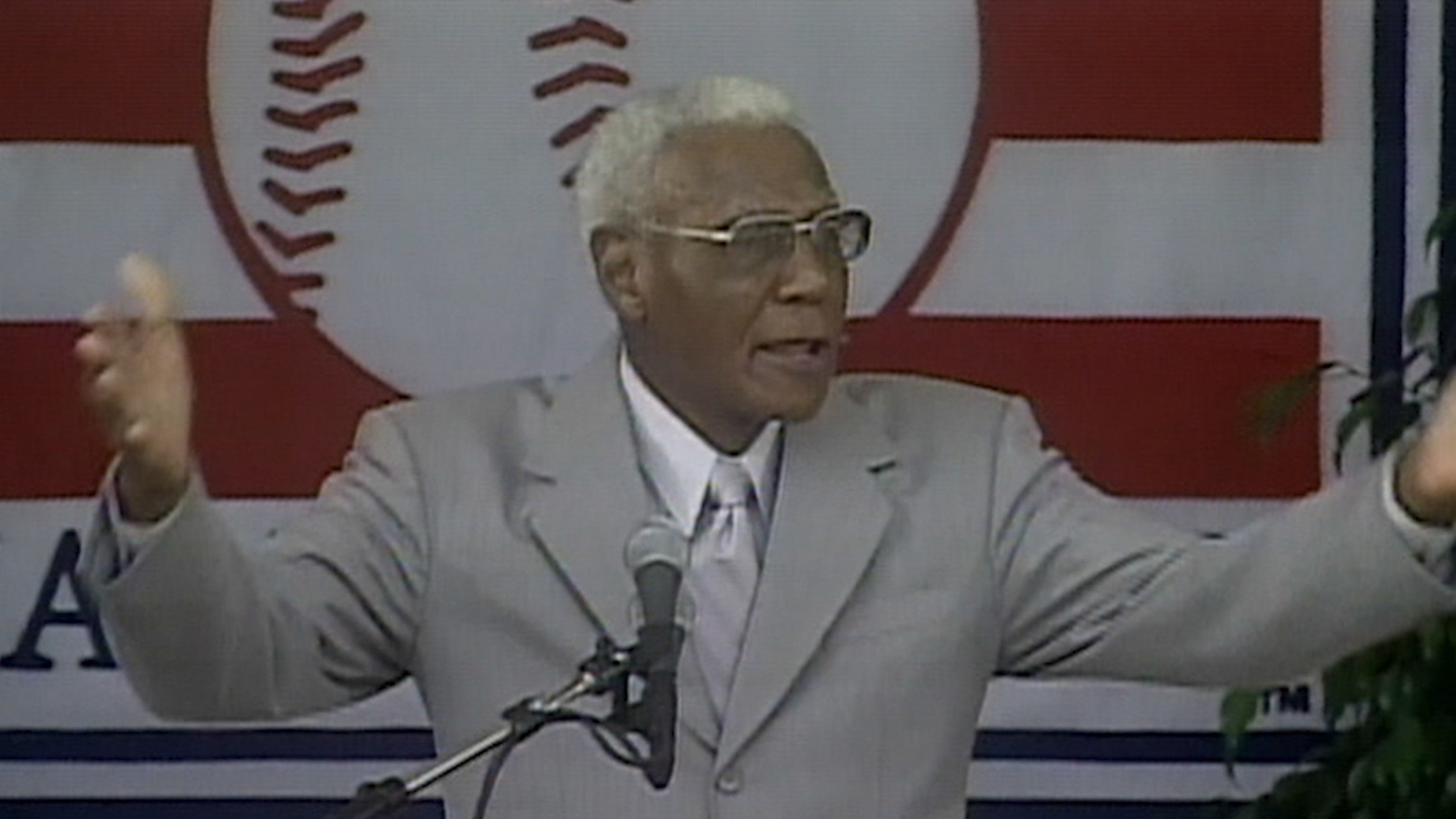
To prove his lack of bitterness, he gave the acceptance speech for all 17 inductees (all deceased) at the induction ceremony that July. He proudly talked about their worthiness of being selected, without pointing out the fact that he should have been included among them.
Here is his opening statement from that ceremony: “This is outstanding! I’ve been a lot of places. I’ve done a lot of things that I really liked doing. I hit the home run. I hit the grand slam home run. I hit for the cycle. I’ve had a hole-in-one in golf. I’ve done a lot of things I liked doing.
“I shook hands with President Truman. Yeah. Oh, man, I shook hands with the other President and I...hugged his wife, Hillary. So I’ve done a lot of things I liked doing.
“But I’d rather be right here, right now, representing these people that helped build a bridge across the chasm of prejudice, not just the ones like Charlie Pride and me that later crossed it. Yeah. This is quite an honor for me.”
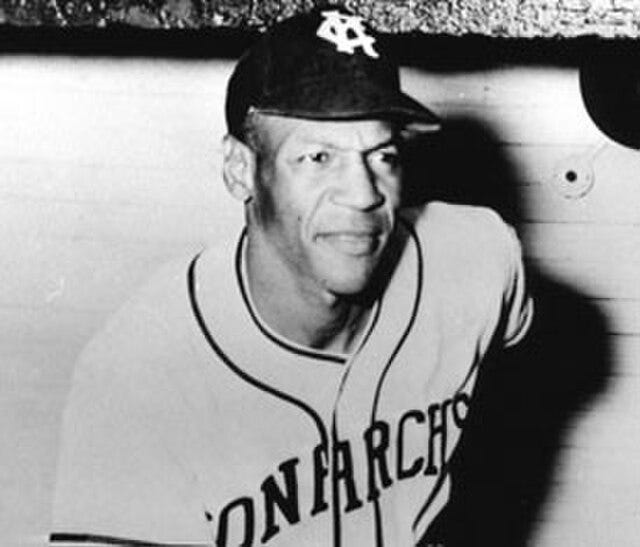
O’Neil was Kansas City’s secret for quite some time. He scouted for the Kansas City Royals for years, almost anonymously. But Ken Burns’ documentary Baseball made O’Neil a media star. He remained humble, yet wildly entertaining. He was a great storyteller, and he was always ready to share one or more of his stories.
One of the greatest things about “Ol’ Buck,” as he called himself, was that he didn’t care who you were. You could be a Major League Baseball star, or someone whose only connection with the game was the ticket you purchased for that night’s game. I never saw him turn down an autograph request, even when he was busy watching a game.
I had the privilege of covering the Royals many times when O’Neil came into the clubhouse to visit a player. He greeted me as if I were the one he came to see. He didn’t believe in negative feelings, and he showed it by never giving anyone a reason to have negative feelings about him.
And then there was his smooth voice that would have served him well if he had chosen to be a disc jockey on a late-night jazz radio station. Music was important to Buck, so it’s probably more than coincidental that the American Jazz Museum shares a building with the Negro Leagues Museum he was so instrumental in starting and sharing.
I’m sure he had favorite songs, but there are two songs that come to mind when I think of O’Neil. The first is “Take Me Out to the Ballgame,” which he sang on Burns’ Baseball. You can buy a bobblehead with a soundtrack of Buck’s version of baseball’s anthem.
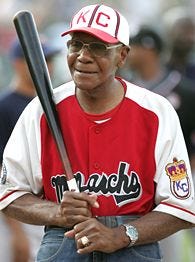
The other one reflects O’Neil’s faith, which he credited for his lack of bitterness. He may not have sung all the lyrics of Eric Reed’s “The Greatest Thing In All My Life,” but he got his point across when he led the crowd in Cooperstown that Sunday afternoon.
“I want you to do something for me,” he said. “I want you to hold hands. Whoever’s next to you, hold a hand. Come on, you Hall of Famers, hold hands. All you people out there, hold hands. Everybody hooked up? Everybody hooked up?
“Well then, I tell you what. See, I know my brothers up here, my brothers over there—I see some Black brothers of mine and sisters out there—I know they can sing. Can you White folks sing? I want you to sing after me:
The greatest thing -- come on everybody --
The greatest thing in all my life is loving you.
The greatest thing in all my life is loving you.
The greatest thing in all my life is loving you.
The greatest thing in all my life is loving you.”
O’Neil died a little more than two months later. He never knew that he would be inducted into Cooperstown in July 2023. But it wouldn’t have changed anything about him. He would have been grateful, but wouldn’t have spent a second thinking about how it should have happened 17 years earlier.
He would have thanked everyone who came to the party to celebrate. He would have signed tons of autographs. He would have told countless stories. Mostly, he would have loved on everyone.
He was driven by love. “I can’t hate a human being because my God never made anything ugly,” he said during the Hall of Fame speech. “Now, you can be ugly if you wanna, boy, but God didn’t make you that way.”
No posts
Comments
Nothing yet. Say the first thing.
Sign in to join the conversation.