
Hi!
When you’re starting off with something, you usually call yourself an amateur - an amateur photographer, an amateur cyclist, etc. But what exactly do you mean by “amateur”? Google defines amateur as “a person who engages in a pursuit, especially a sport, on an unpaid rather than a professional basis”. And it’s usually it’s used to mean incompetency. I used to call myself an amateur photographer to show that I’m not yet good enough to be “pro”. I still do, but I used to too.
But rather than this, I much prefer the definition Austin Kleon gives in his book Show Your Work! He terms an amateur as “the enthusiast who pursues their work in the spirit of love”. They don’t do it for the money. They don’t do it for the fame. They do it because they love it. And because of that, Austin continues, they have little to lose and so are more willing to take risks, experiment more and discover new things.
When I look back, some of my best work have been on projects where we had free reign over the entire creative process - ones we did for ourselves. One of my favourite so far was a project that our professor, Dr. Purushothaman assigned us in our final semester of undergrad: explain anything in electronics in whatever way we see fit. That’s all. No restrictions, no limitations, nothing. And so for that my friends, Abhijeet, Aarathi, and I scripted and created a very wonky and fun video which I still watch from time to time for giggles. Along with fun aspect, it was also a very interesting learning experience for us. Well, mainly for me and Aarathi, since Abhijeet already knew much more about cinematograpy. I learnt a lot about lighting a scene properly, capturing better audio, multi-track editing and more. Most of which I never had to deal with since I mainly concentrated on photography till then and had less experience with video.
In contrast, most of the videos I did at Cisco afforded little in the way of creative freedom. The engineers we worked with were experts in their respecitve fields and had very strict rules and concepts in mind for us to adhere to while making the videos. As Zen monk Shunryu Suzuki says “In the beginer’s mind, there are many possibilities. In the expert’s mind, there are few." (pulled from Show Your Work!). The restrictions meant that we were sticking to tried-and-tested edits and so there wasn’t much in the way of learning. Thankfully, Rahul Kolle, my co-creator, being the amazing scriptwriter and storyteller he is, managed to work with the restrictions and we made some pretty good videos.
At my current part-time job as a Content Specialist at ASU’s Center for Science and the Imagination, it’s a mix of both. For some projects, I have to stay professional and stick to established processes and techniques. But for others, I have quite a bit of creative freedom and for those, there usually is a lot of associated learning as well. Currently I’m working on shooting a 3-part lecture series on imagination and since I have quite a bit of control over the process, it’s been amazing. I’ve had to apply my learnings on lighting and audio to the project and I learnt how to use production controllers (the ATEM Mini for those curious) and multi-cam setups for recording.
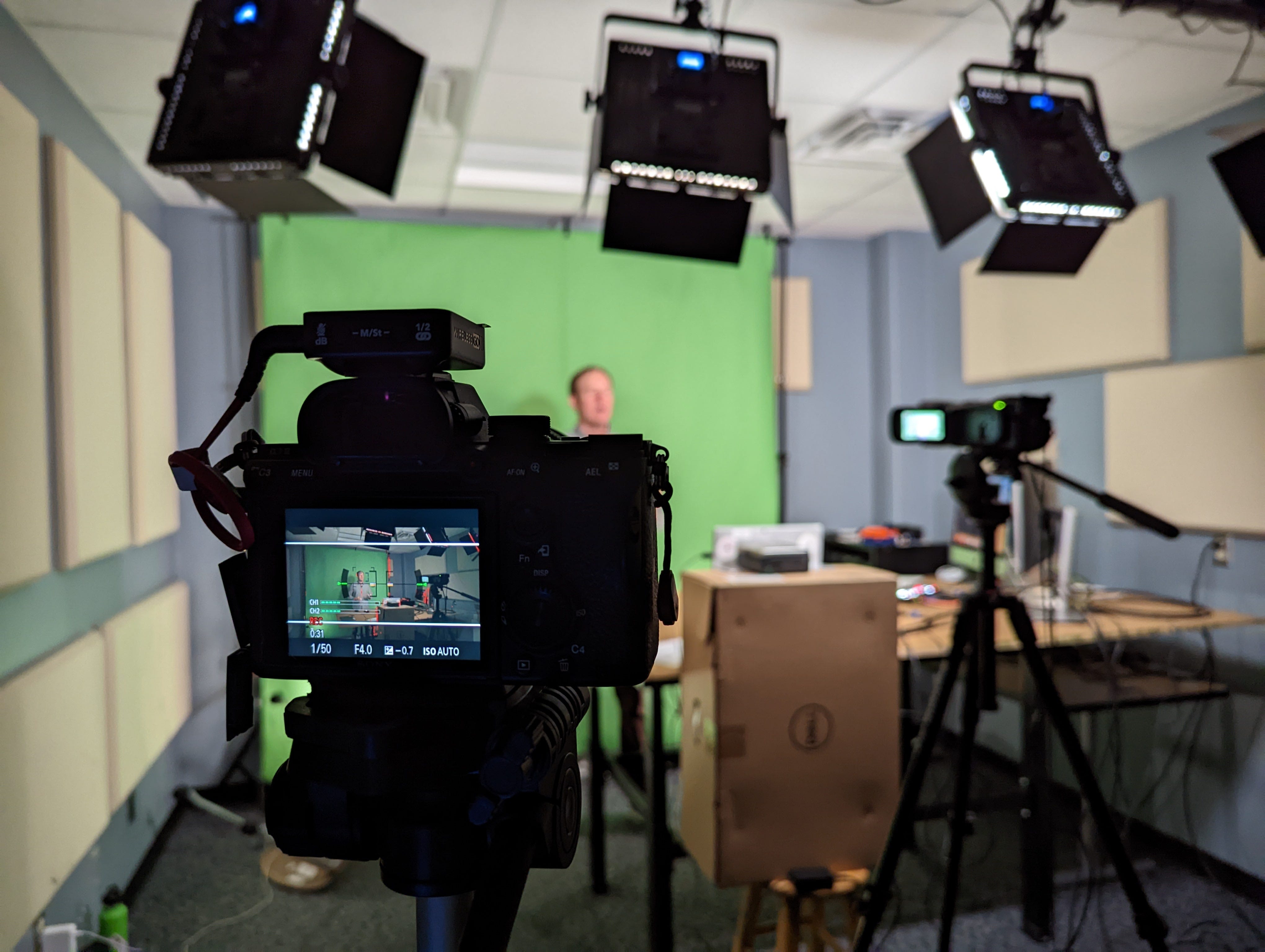
So far in my creative journey, I’ve been aiming to be a “professional”, working with pro-grade equipment, projects, etc. But reading through Show Your Work!, I’ve been taking a closer look at myself and wondering if I want to aim for that title. Honestly, I’d rather be an amateur who has the freedom to experiment, fail and get back up without consequences, than be a professional and have to walk a much tighter line. I’m pretty sure all this reasoning didn’t go through the heads of my family when they dissuaded me from taking up photography on a professional level, but it’s a good thing they’re way smarter than me.
On other fronts, classes are going well. Python’s getting more and more complex (and so, more fun!). I’m halfway through Show Your Work! and hoping to finish by the end of this week. And so far, I’d recommend it to any creative out there! It’s worth reading.
That’s all for this issue, I guess. As always, thank you for your time! See you all again soon!
P.S. The project we did in undergrad in case anyone’s interested:
No posts
Comments
Nothing yet. Say the first thing.
Sign in to join the conversation.