
selvita wrote the last song first, and she wrote it before she knew what it was for. She was working through an online tutorial, teaching herself to coax a lush, watery drone out of a single pure sine wave in Ableton, reaching for no samples and no shortcuts, just following the sound - because it was fun. A poem arrived the same day, the way poems have arrived for her since she was a girl filling diaries: “tears crystallize as our goodbyes flutter.” She could not place it. “I was like, what is this for? Don’t tell me I still need to process another ex,” she remembers thinking. Then she went to see her mother, and at the peak of a conflict about family history her mother said the words “I resent you,” and selvita came home to her grandmother’s house and finished the poem, and understood. “My creative spirit knew I was going to need this poem to read back and hear my voice speak through, because that rupture was going to happen.” The track is called The Silence. It is the emotional destination of her debut EP, La Sustancia Materna, and she had already built it before she took the wound the whole record is about.
For me, this tells you what kind of composer selvita is. The healing runs slightly ahead of the pain. The sound knows something the artist has not yet been told.
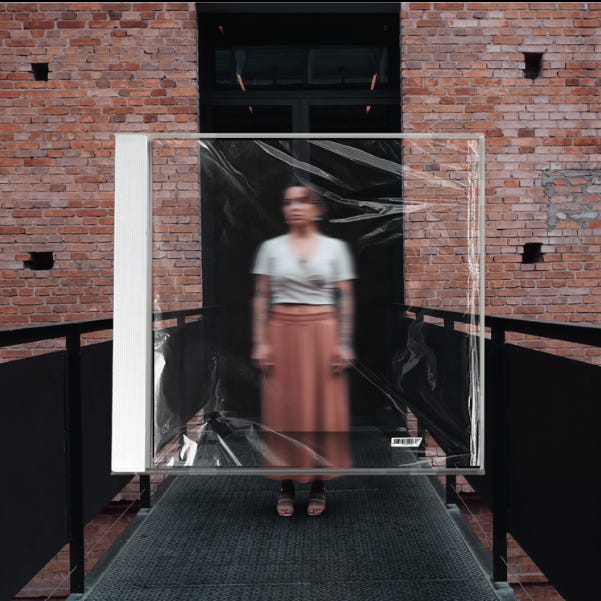
The rupture with her mother was never only about that one afternoon. In her words: “It carried the charge of generations upon generations of unresolved trauma, passed down between the mother line, great grandmother to grandmother to mother to daughter.” selvita is a second-generation daughter of a Salvadoran immigrant mother, born into what she describes as her mother’s need to leave a civil-war-torn country and “abandon her own bloodline to forge a better life.” The severance she works on as an artist is matrilineal, and the EP is her attempt to speak from the part of her that “wasn’t safe to express itself” inside that inheritance.
The title of the EP, La Sustancia Materna, names the nourishment a baby needs in its most permeable early years. It is emotional and psychological feeding, not only the milk, that lets an infant trust the world. What caught her was the idea that a baby “does not perceive any boundary between itself and the mother,” and experiences the mother’s states as its own. She was learning this while doing intense trauma work on her own earliest memories, and the concept “gave me permission to shift my perspective of those wounds and see them in a different light.” The title is Spanish, the language her mother “had to release and silence to assimilate,” so a Spanish title becomes a small act of reclamation. She calls it “probably the most important element of the whole process.”
The EP, the music, isn’t about technology per se. But it also unavoidably is. “The world is such a heavy place to be human,” selvita says, describing a disconnection that hides inside constant connection: “forcing this connection all day in the cyber realms,” phones and feeds and “the incessant ads and capitalism driving social media” leaving us desensitised to one another. Against that noise she makes an old claim, but one we all know to be true, that music is “one of the most powerful driving forces of human expression that shapes culture and shapes history,” and that a woman “speaking her truth through music” can be “a soothing balm” for it.
This balm is exactly what is becoming scarce in recent years. I have written before that since machines have made sound cheap and infinite, value migrates to the relational, human element that cannot be automated. When sound becomes frictionless and endless, the scarce thing is the felt human transmission behind it. selvita knows that transmission in her body. She traces that relationship to music to being six years old, screaming along to Prince’s “Controversy“ and feeling “what that transmission of sound was doing to my body” long before she had words for it. The EP, then, works from a false comfort toward release. It opens in the neurotic grasping of Understory, “hold me, please hold me,” moves through Amatury, the eight-minute piece named for her grandmother where she meets her own reflection in the water, and only lets go at the end with The Silence. It’s a record built to make a listener cry. Which is both an artistic expression and that one value no feed can fake.
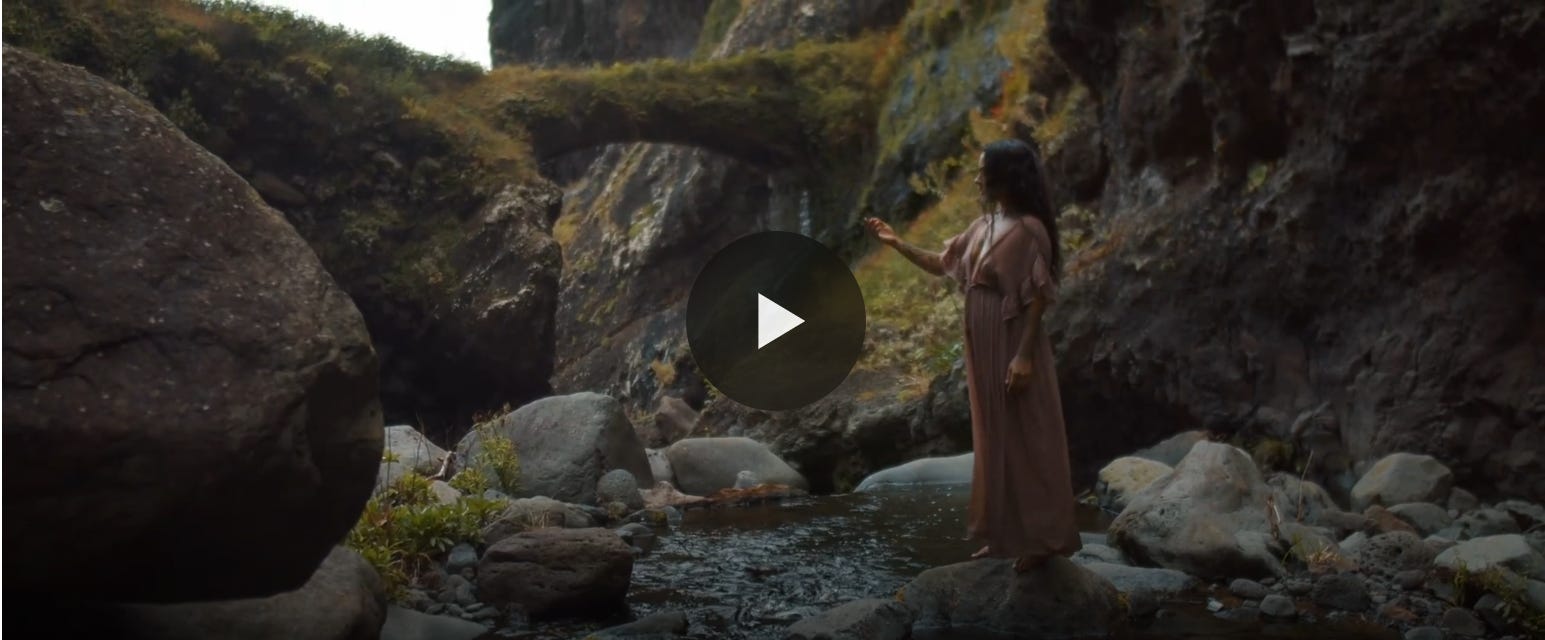
Before this EP, selvita at one time sat in an orchestral mock-up class at Berklee that she calls “one of the most challenging endeavours of my entire life.” It was the Orchestral Tools library, from whom she now received their Microgrant, that became her anchor through it. “Straight out of the box, without having to do anything else, the samples sounded so beautiful,” she says. There was a reliability in them that held up under pressure. Her instinct with any sample, however, is to “take them through granular synthesizers and get really weird, crack them open, drone them, make super weird experimental alien sounds.” The creative packs Illuvia and Arbos, one of them subtitled dystopian percussion textures, helped her through creative block because they already lived in her sonic world, but were also ready to be pulled apart.
Similar to the Kaltès and Alif Hilal conversations there is a structure to this. Kaltès built an entire EP from two field recordings, rain and water in a glass. Alif built Fountain from nothing but her own processed voice. selvita reaches the same place from perhaps another direction, starting from a wound she transmutes into an arc, teaching herself a sine wave from scratch when she could have reached for a preset. The constraint is not the enemy of the emotion. It is, instead, the door that emotion walks through. Her culminating project, due when she graduates this December, with professor Ryan Fogel advising, will extend the EP using more Orchestral Tools libraries, so the transmuting is only really getting started.
selvita’s PhD research, beginning in 2027, asks how ambient-experimental composition creates self-authorship for women composing outside dominant traditions, and she has lived experience. Her first-ever track, Heal Me, made “from a place of audacity” before she knew much about production, was picked up by the DJ Lefto Early Bird and then landed on Gilles Peterson’s BBC Radio 6 show. Against that she sets the studios where she felt “made small,” circumvented by male mixing and mastering engineers, “never given the encouragement to take the driver’s wheel.” Out of that friction comes her thesis, that a woman’s embodied compositional voice is “a soothing balm” for a disconnected, phone-saturated world, and she offers two witnesses she saw live recently, Hania Rani with a full orchestra and the spoken-word poet Aja Monet, both of whom she watched change a room in real time.
So back to that sine wave, and the poem that arrived before the pain it was for. selvita wants her listeners to leave with a state more than anything. “I hope you feel seen,” she says, and she means the parts of you “that needed to be silenced at one point to feel safe.” The record grants those parts a hearing, and it grants the rest of us permission to feel deeply whatever it evokes. selvita cries to process, and thinks we all should more often. La Sustancia Materna is her way of making a room where that is allowed.
“Alongside the cultural initiatives embracing displaced artists, broad networks of civic, human rights, migration, activist, feminist, community, and diaspora organisations contribute indirectly to the conditions in which displaced artists live and operate. They provide support in subtle, but essential ways, offering a safety net on which displaced artists often rely for guidance, orientation, visibility, and community building. Informal structures, such as cafes, collectives, libraries, community centres, bars, and other ‘third spaces’ often function as entry points for displaced artists facilitating connections, cultural transition, and a sense of belonging.”
✘ This doesn’t hit most media, maybe logically, but it’s an important part of the picture of forced migration. There’s a whole host of stories that come from these displaced artists that can be incredibly powerful. One non-recent example that came to mind when reading this piece is the Syrian Expat Philharmonic Orchestra. Music, as selvita also tells us above, connects.
“There’s too much rhetoric on platforms like LinkedIn from people who are literally paid to build branded experiences in Roblox, saying brands and artists need to have a Roblox strategy because there’s so many users on the platform. You don’t. That’s like saying every brand needs a sports strategy because there are 3.5 billion football fans in the world.”
✘ I’m sure a lot of readers have heard of the Rolling Stones activation in Roblox, but I’m equally sure most of you haven’t actually played it. Now, you can read Mat’s take and bring it to that next conversation you have about Roblox and sound a lot smarter because of it.
“i’ve written about this before and i’m sure i will write about it again and again and again, but i’m feeling especially stuck as of late when it comes to how i should be delivering my ideas.”
✘ Great musings on music can usually be found on main pop girl’s Substack, but here she touches on a feeling many share, including me. Writing is cool, but the world is video. Jump on the train or stick with what you know? Personally, I’m doing both, not sure if that works, either.
“In music tech development, a user’s progression is usually viewed as linear — beginner to pro, plus time and dedication. This shapes product dev, user experiences, and how companies and devs make money. My experience with music producers and the broader public has tended to jar with this — say 60% of the time — mainly because some of the most talented people I’ve met who make music are multi-modal creators.”
✘ This is a thoughtful excercise into understanding where and for whom and how GenAI can fit into the broader music creator landscape. Kalam starts from his own experience, which you can see replicated across, for example, subreddits, and extends it into his experiences in music and tech. Don’t be too dismissive if you want to understand how this could all work (and, yes, the theft that started it all is still an issue).
“The Korea–Japan exchange is also a starting point for a broader Asian network. The conditions that enable it, geographical closeness, zero time difference and cultural similarity, apply equally to Southeast Asia. Club scenes in Bangkok, Jakarta and Manila are growing fast, opening up potential new routes for artists and promoters from both Korea and Japan.”
✘ It’s a massive chunck of the planet, but amazing to read about the closeness that comes out when multiple scenes start to see each other and listen to one another. Reading this really makes me want to go over there! Anyway, this piece sits strongly in the lineage around micro-identities, community, and music’s power to connect that this newsletter writes about a lot.
Lido Pimienta can do no wrong in my ears. Her new record, Caribenya, is another overpowering collection of rhythms and melodies all pierced through with her amazing voice. The whole record truly feels like the collision of worlds that is her music, represented by the various places it was recorded and the variety of collaborators. Definitely take some time to really sit with this record. It’ll be the best thing you do for yourself this week.
Comments
Nothing yet. Say the first thing.
Sign in to join the conversation.