
Is “Community” the hardest-working word in music right now? Every label has one or wants one. Every artist is told to build one. Every platform sells the promise of one. The word gets stretched to cover a mailing list, a Discord server, an Instagram comment section, and a queue of ticket buyers, until it gets to the point that everyone stops asking what it actually means. This is why I never talk about a MUSIC x community. It’s easy to say “we have a community” and much harder to say what the community is for, who it serves, and what would be lost if it disappeared tomorrow.
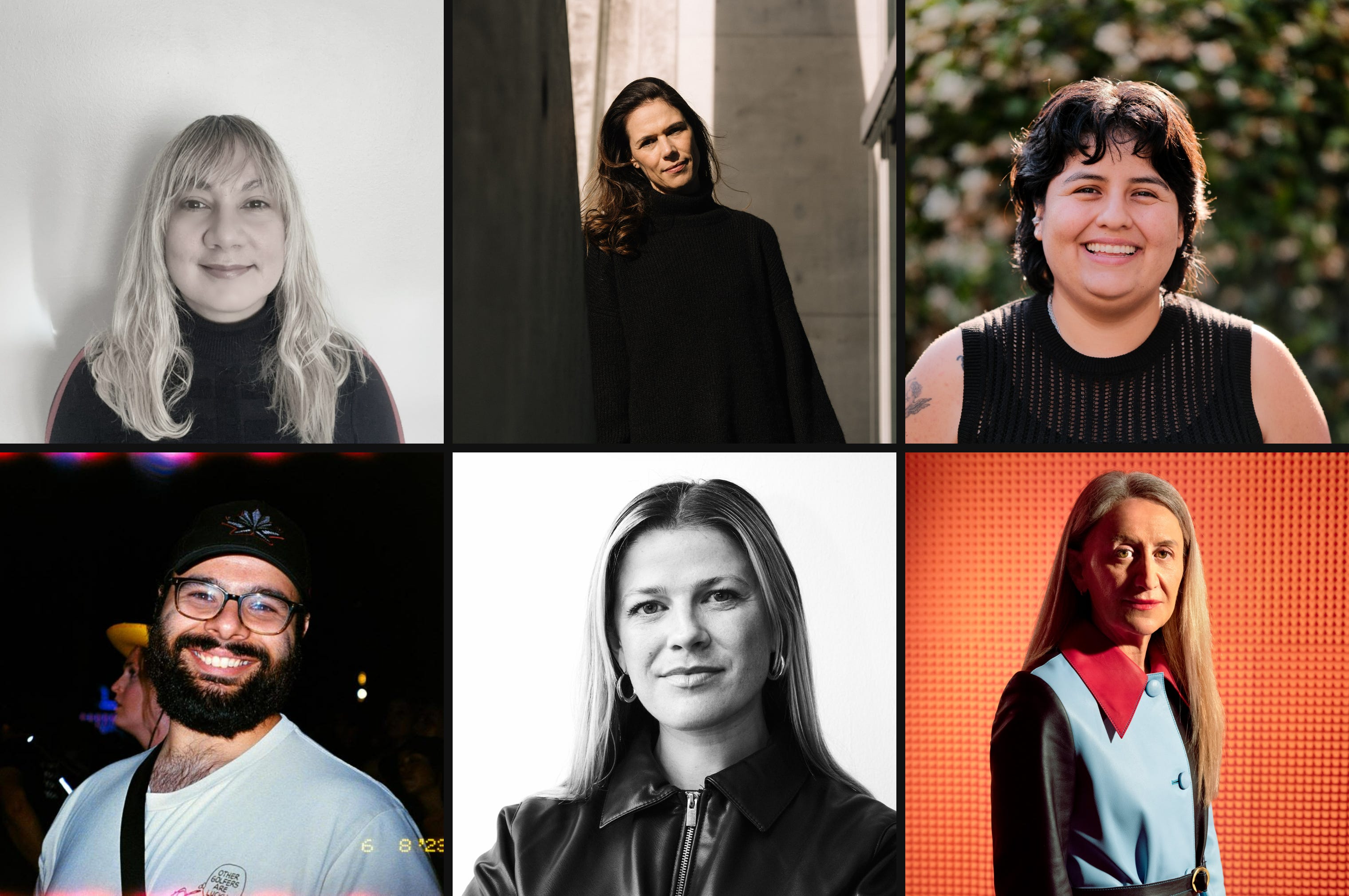
In May I ran a bootcamp with the Association for Electronic Music. It was a small cohort focused on strategic community building. There were fourteen participants, all with their own projects, a handful of generous guest practitioners, and a lot of time spent turning ambitions into strategies I feel confident that participants can now execute on. We had Georgia Taglietti opening up the theories, Yvonne Hartmann and Nina Kehagia connecting branding to honest metrics, Gabriela Gironas on what happens when communities scale, and Austin Gregg and Taz Sharp on the messy reality of platforms. A few of the projects that participants work on help say something about where music communities are right now, and about the moves every one of them had to make.
Christopher Small gave us a useful word: musicking. He argued that music is not really a thing at all but something people do together. “To music is to take part, in any capacity, in a musical performance,” he wrote, folding the listener, the dancer, the stagehand and the person pouring the drinks into the same act as the performer. Community works the same way. It is a verb wearing the costume of a noun. A community is a set of relationships you design and tend to. There’s a shared purpose, some form of value exchange, and a mode of governance. We saw four levers that came back in all sessions: purpose, trust, participation, and governance. The moment one is missing, you feel all four at once.
I think there’s a reflex in music to first announce a community and then go looking for people to fill it. The work actually runs the other way. Starting with why anyone would want to belong, and then build the place to set that belonging in.
Corey Ransom, who makes music as Maor Sound, arrived wanting to build something he called The Signal. At first he described it as a fanbase around his work. Then, while refining his Minimum Viable Community Canvas, he caught himself.
“A real community can’t just be ‘come support my work.’”
His strategy turned and he changed his approach from wanting something from people and started asking himself why they would want to be there, and what they would get to make together. His community, The Signal, stopped being a kernel of a fan club and started becoming, in his words, “an intentional creative world” for people drawn to weird but emotional work.
That is purpose. A community without a value exchange translates to an audience with added admin.
We also discussed the 90-9-1 rule in various sessions. This relates to the fact that in most online communities ninety percent of people only watch, nine percent occasionally contribute, and one percent do most of the building. Many of us recognised ourselves in the ninety for most communities. We all lurk in plenty of communities we love and this knowledge reframed a lot of design choices. Rather than treat silent members as a failure or a group in need of a community solution, we discussed building places for observers, occasional contributors, and active collaborators. With the Orbit Model we can facilitate for people’s movement in multiple directions. People can be lurkers and become participators and facilitators. But a participator who gets a child, for example, can also move towards being more of a lurker yet still stay involved.
This changes what we need to measure in community. If you only count the loudest voices, you will probably always feel like you’re failing.
Yvonne Hartmann and Nina Kehagia pushed the cohort from how a community looks to what it is actually achieving, and the exercise was tougher than it sounds. Write your success as a number, a specific outcome, and a timeframe. Maor Sound’s version, for the next twelve months, was a Signal List of 150 to 250 aligned members, at least a quarter of them actively engaging with each drop, and three community-powered moments such as listening sessions or live art shows. That sounds pretty modest, concrete, honest, and achievable. It’s also the opposite of a follower count, which itself isn’t even easy to grow these days, but does tell you almost nothing about whether anyone would notice if you stopped.
Engagement is the easiest metric to reach for, but also the one that flatters most. The signals worth tracking are perhaps not as readily available but all the more valuable: who comes back, who contributes, who brings someone else in, and whether the community is doing real work for the thing behind it. Make your own metrics.
Linecheck has been running in Milan for over a decade, a music meeting and festival that pulls professionals and music lovers from more than twenty-five countries and prides itself on meaningful human connection rather than a more transactional kind of networking. Simona d’Alessio, who works with Linecheck and the Music Innovation Hub, her realisation in the course was one of confidence: the festival already builds community brilliantly, for a few days a year, in a conference space. There’s now a strategic community play about everything in between. Linecheck will try to strengthen the online layer between editions, turning recurring attendance into a year-round relationship, exploring messaging spaces like Telegram and matchmaking tools for professionals. They’re trying to do all of it without surrendering their cultural identity to an algorithm.
The questions they left with are definitely the right ones. What recurring rituals turn a yearly gathering into a continuous community, and which places actually allow many-to-many conversation rather than a mere broadcast channel? We can call this participation design, with sprinkles of rhythm or cadence thrown in.
Gabriela Gironas, who has built fan-first rollouts for artists from BTS to Moses Sumney, made the case that growth changes a community whether you plan for it or not, and care has to be designed in from the start instead of bolted on only once the cracks show. Justin Cepeda’s project, The Mindful Artist Manager, takes that idea and makes it the focal point. It is an education community helping independent artists manage their careers more mindfully and helping managers lead more ethically. It centers around resilience, relationships, strategy, and a sense of belonging. This project also has a beautiful way of pointing out that details matter: everyone in the community is called a “manager,” whether they manage an artist or only themselves, a deliberate piece of language designed to flatten any hierarchy and build unity. Justin was also clear about his risks: the solo-founder trap, the pull of perfectionism, a brand that could sprawl in every direction at once.
Designing for care from the start, starts with governance. Taking time to write down your risks and naming your dangers is part of that early governance work. It’s not a distraction from it.
The fourth project, Becky Young’s work with Earth Percent, points somewhere different again: a community built around a cause rather than a person - even if Brian Eno founded it - a place, or a brand. Over 300 artists have already pledged to donate a percentage of their royalties or other income towards the climate and nature. The community aspect is their Artists 4 Earth group, which is a WhatsApp group of around 50 artists who also meet at gatherings and events. The trust in these places is high with members organically collaborating or self-organising meet-ups. This is basically how participation should work. Now, the question is how to build on this organic, emergent behaviour? Becky had honest questions about this: how to build rituals without forcing them? How to design for different journeys, from that bedroom producer to the headline artist? How to track impact beyond simple growth metrics to showcase a genuine cultural change.
That metrics question again, and for a community built around a cause it resonates beyond how growth gets measured to how the broader impact gets qualified and with that how different people gather behind the cause - together.
Lay these projects out and they sit on a spectrum: an artist building a world, a values-led education brand, a festival reaching for a year-round life, and a cause gathering an industry. They may have different scales, different members, and different places of operation. However, the shift underneath all of them was the same. Each one started asking why anyone would want to belong, and what they would build together once they did.
Community, like music, is something you do together. So design the doing.
“More of that budget should be spent on engaging people outside of the games industry rather than giving so much of it to gaming influencers. Activations at music festivals can help achieve this while also creating cultural moments that players will remember for a lifetime.”
✘ Great piece by Mat about potential marketing avenues between gaming and music, specifically festivals. Personally, I see this as win-win situations - just like Mat.
“Put another way: in a poolshare system, an artist with the #1 growth rate could still be losing ground. In the poolshare context, “growth rate” on pure percentage terms is both practically irrelevant and fundamentally misleading. It says nothing about how many dollars an artist gained, nor about their change in poolshare.”
✘ Definitely a point that needs to be made, and do feel free to repeat it where you can.
“The study identifies five audience segments: Power Fans, High-Intent Fans, Mainstream Fans, Social Fans and Occasional Fans, highlighting that nearly half of women fans fall into High-Intent or Mainstream categories. These groups are identified as having significant potential for increased engagement if barriers to participation are reduced.”
✘ Can we stop underestimating the role women play in just about anything now?
“One piece of advice I’d give those starting out, which may seem obvious but really wasn’t when we were getting started, is to have your finances in mind from the beginning, and to consider the choices you’d make if this project were not just a hobby — even if, in your head, it still is. Because that consideration can evolve quickly, but the structure (and choice of platform) you set up from the start is much harder to change once people become attached to it. Be clear about the “boring stuff” from the beginning, even if it feels silly to take yourself so seriously.”
✘ There’s some amazing advice in here. This one resonating particularly with the piece above.
Flowers Not Bombs is the second in a series of grassroots benefit compilations supporting Palestinian-led mutual aid groups on the ground in Gaza. Organized between Palestinians in the diaspora and Palestinians fighting to remain on their land in Gaza, these projects support daily survival, education, access to food, and community self-determination in the face of genocide and ongoing colonization. Great music, released through Beacon Sound, to support meaningful work.
Comments
Nothing yet. Say the first thing.
Sign in to join the conversation.