
Not too long ago, I wrote about the 2 axes of abstraction, which is a model for thinking about TTRPG systems. Now as much as I love systems, I’m actually more besotted with adventures. I want to talk about how abstraction works in adventures and pre-written game material.
With adventure content, we have two factors to consider:
Complex vs simple. A 10ft deep pit trap is simple. A steam powered array of spinning blades that operate using a specific series of pressure plates in addition to a timer mechanism and with a possible failure-to-trigger rate for each spinning blade is complex.
Detailed vs abstract. Do we write lots of stuff down, or do we paint in broad strokes which leaves more for the GM to fill in if the players poke at the gaps? Do we even leave something without any detail at all?
This leads to a 2 factor model.
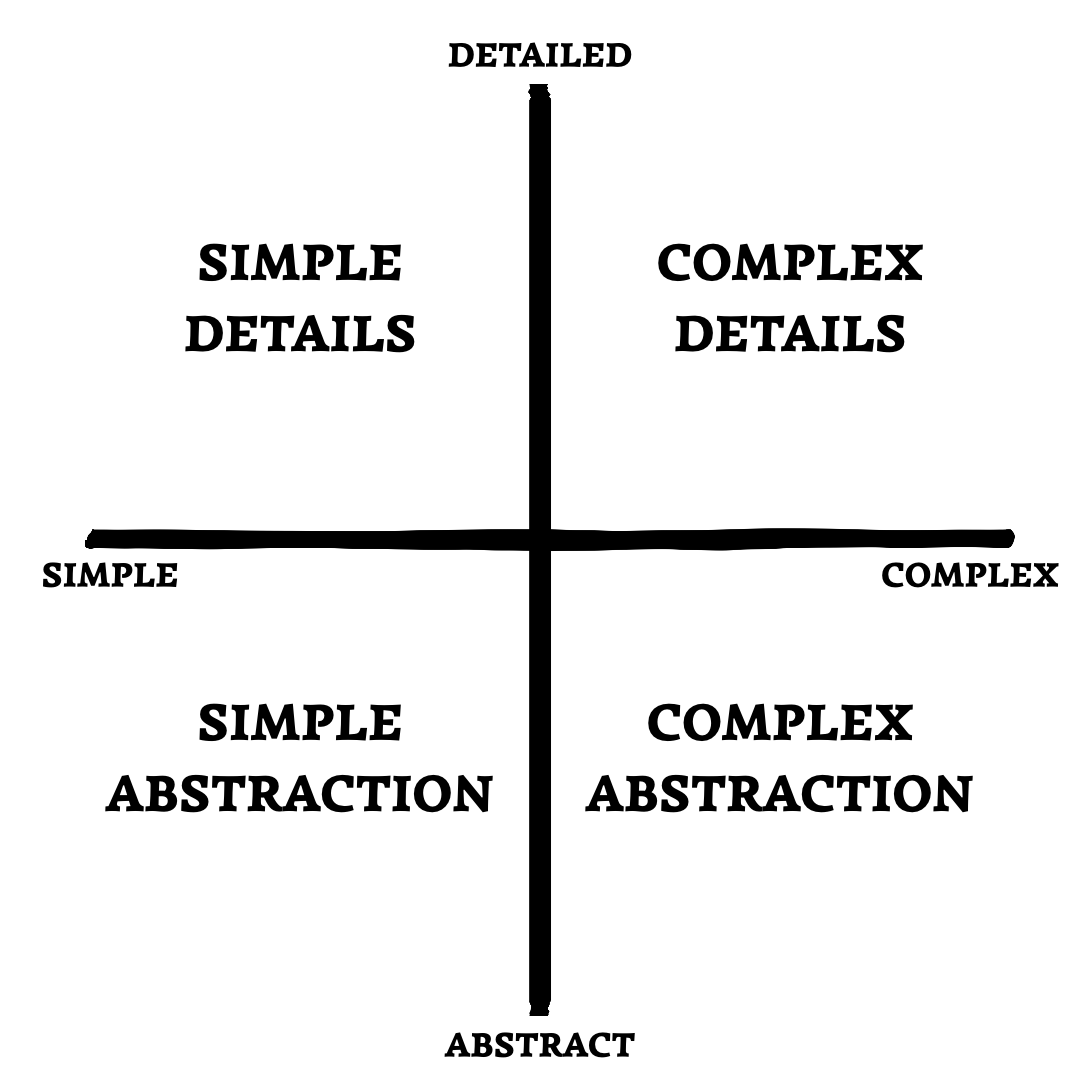
Let’s dig into each quadrant and explore their domain and function.
Complex details are the easiest to start with really, since they essentially amount to “how this thing works is mostly written down”. Complex details:
Minimise the GM work that’s required to arbitrate players’ interactions with the thing.
Leave less space for GMs to improvise or add their own content unless they actively discard material.
Take both GMs and players longer to parse and process.
Provide players with a rich space to play in.
Highlight something as being important (if we write a lot about something, we’re saying it matters).
We can glance at this location key from Coriolis: The Great Dark’s Flowers of Algoraab campaign:
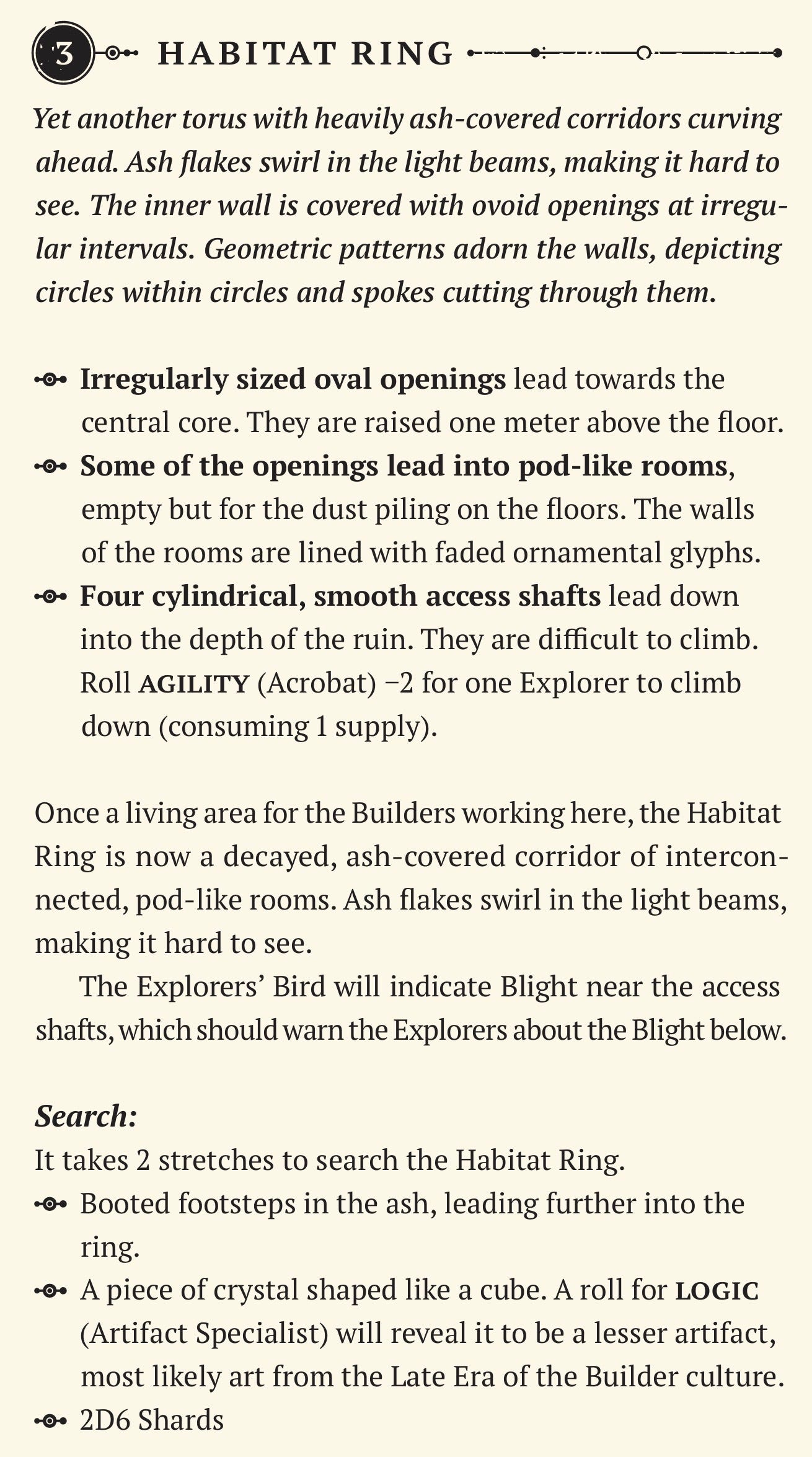
This provides significant detail about the space: it minimises work for a GM and gives the players lots to explore. But it also doesn’t leave GM’s as much space to add things or improvise, because this space is so carefully put together.
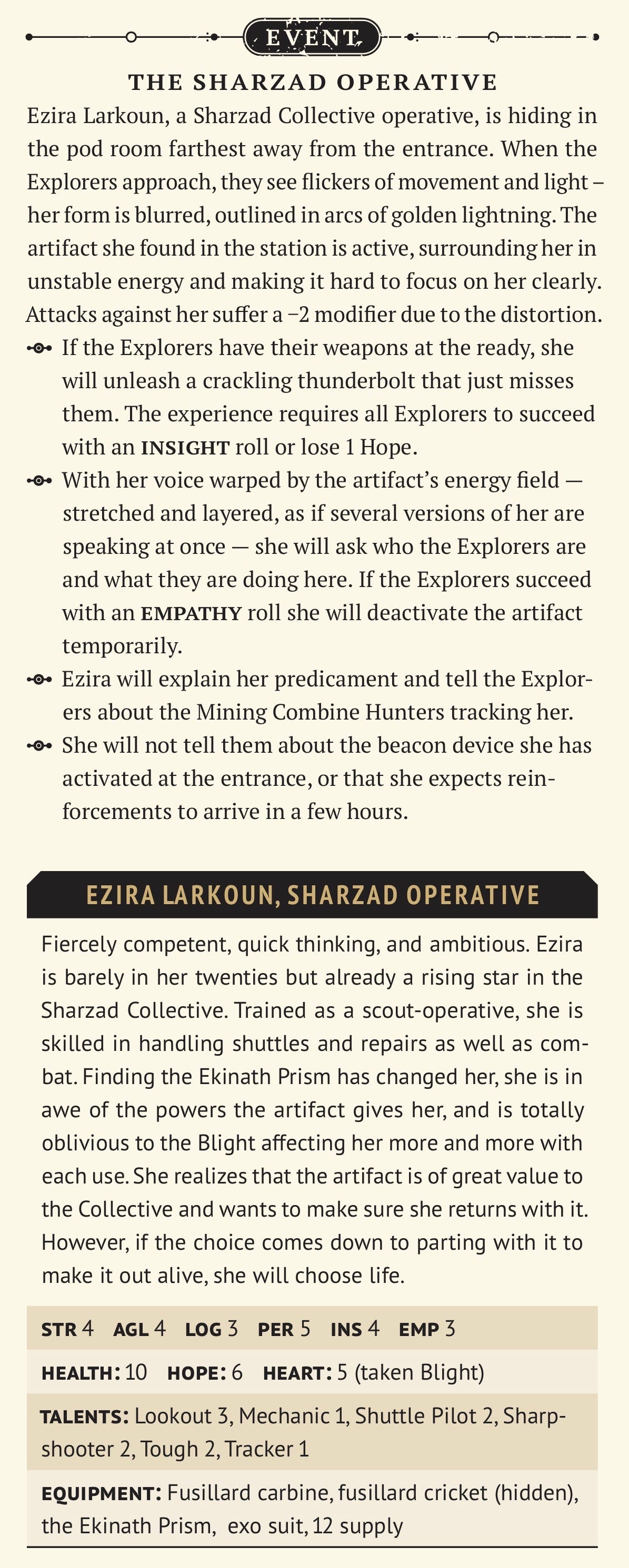
We can see a similar approach in the encounter for this area, which offers a huge amount of information about an NPC you can cross paths with in this location.
By contrast to complex details, simple details are quicker to parse and leave more space for the GM to improvise or add content to. But they also require the GM to fill gaps by default, since they offer less scaffolding for the GM to work from if players poke around.
Whilst the situation presented to the players might be less ‘chewy’, the simple detail is acting as a foundation for emergent complexity: the GM’s rulings and the players interactions with the simple thing create complex situations.
Take a look at this key from The Bureau for Liminal Horror:
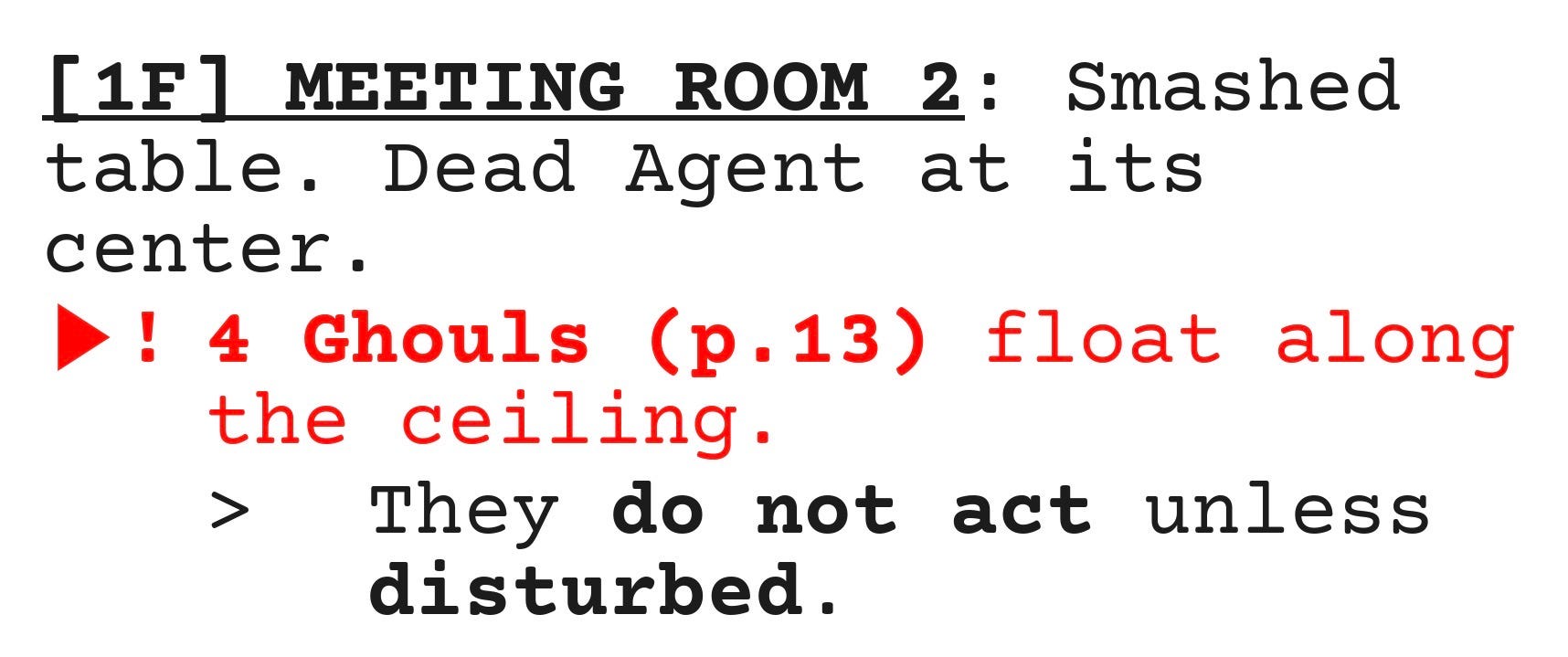
There’s little detail of what the room is like really, that’s space for you to fill! But the Ghouls present a simple powder keg that could emerge into something complex: trying to sneak by, trying to flee from them, or trying to ambush them.
Encounters can be very simple too. This fragment of one of Wolves Upon the Coast’s encounter tables demos a case where we have subjects and not much else.
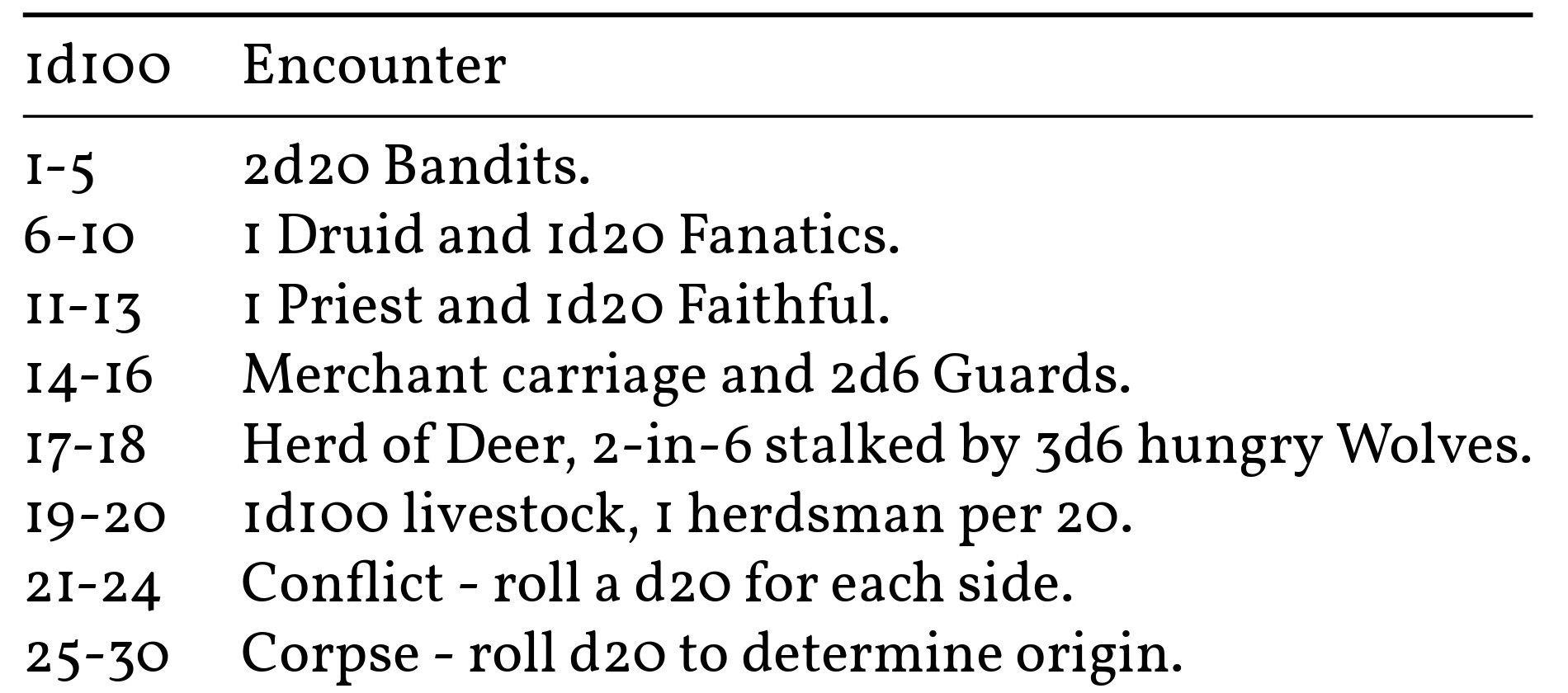
If you roll up that some bandits are fighting some druids, why are they fighting? What are their names? At what stage is the battle? That’s for you to figure out!
Let’s look at that Liminal Horror key again:
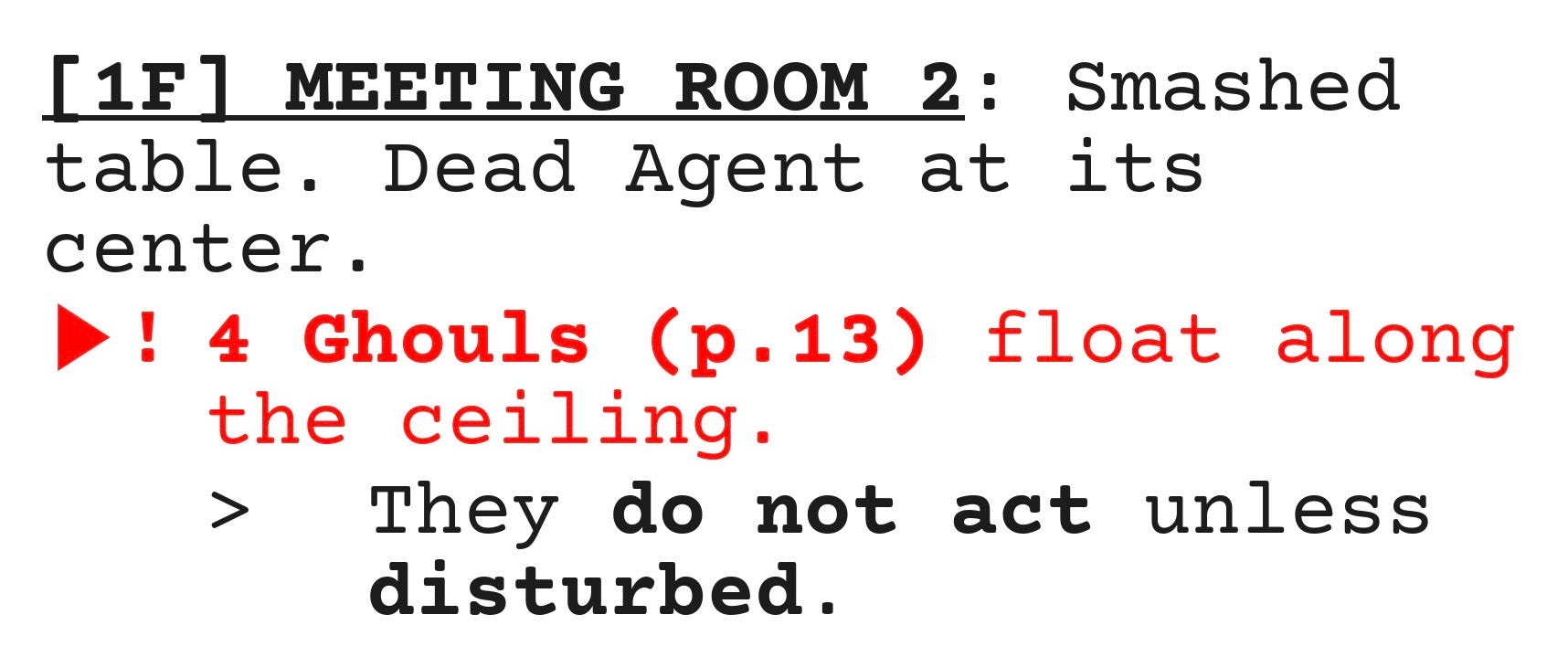
There are lots of simple abstractions in this key. What the meeting room is like is a simple abstraction, since most GMs will be able to easily improvise details about a meeting room.
Likewise, the interactivity abstractions are simple: a GM will easily make a ruling on the players attempting to sneak past, to ambush the Ghouls, or how they would flee from them if a chase occurred.
Simple abstractions are a way to make information less dense whilst not giving the GM much work to do. They enable you to keep your prep from having to exhaustively explain everything. Even in our complex detail example, there are plenty of simple abstraction left, since it’s impossible to cover all possibilities.
Let’s revisit that encounter table from Wolves:
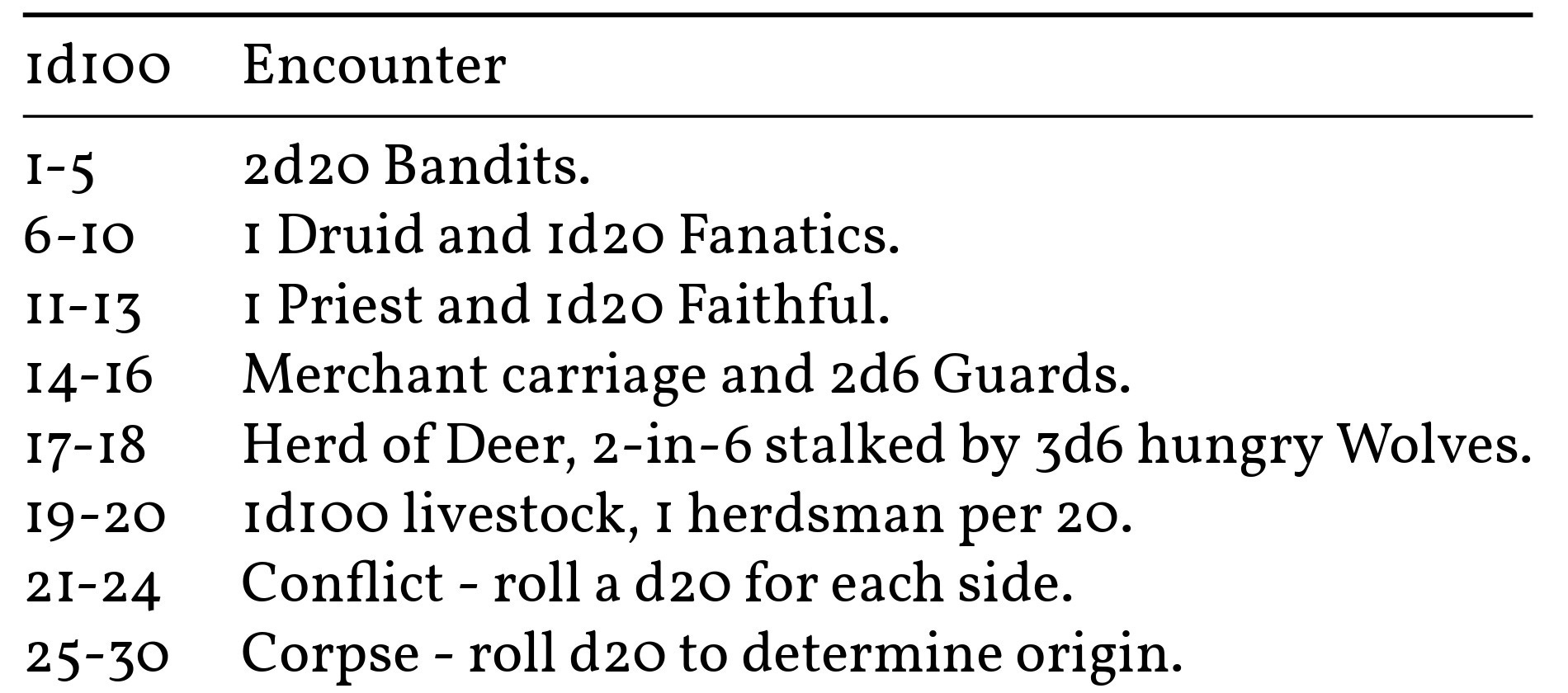
This leaves a fair bit of complexity up to the GM. When you roll an encounter, there’s lots of stuff you might need to figure out:
Names
Social structure
Current activity
Motivation or goals
Opinions of the PCs (which you could use a reaction roll to help with)
Where are they right now?
Why would we leave this kind of work to the GM? To invite them to be creative!
Complex abstractions are about giving the GM a big gap and saying “let your imagination do its thing, make this place yours” and in essence, requiring they make something up if the players poke that empty space.
These complex abstractions also have a second, oft less-spoken-of function. The creation of mystery. Which is to say, a module may intentionally not provide answers because it doesn’t wish there to be an objective answer.
Case in point, this hex from Wolves:
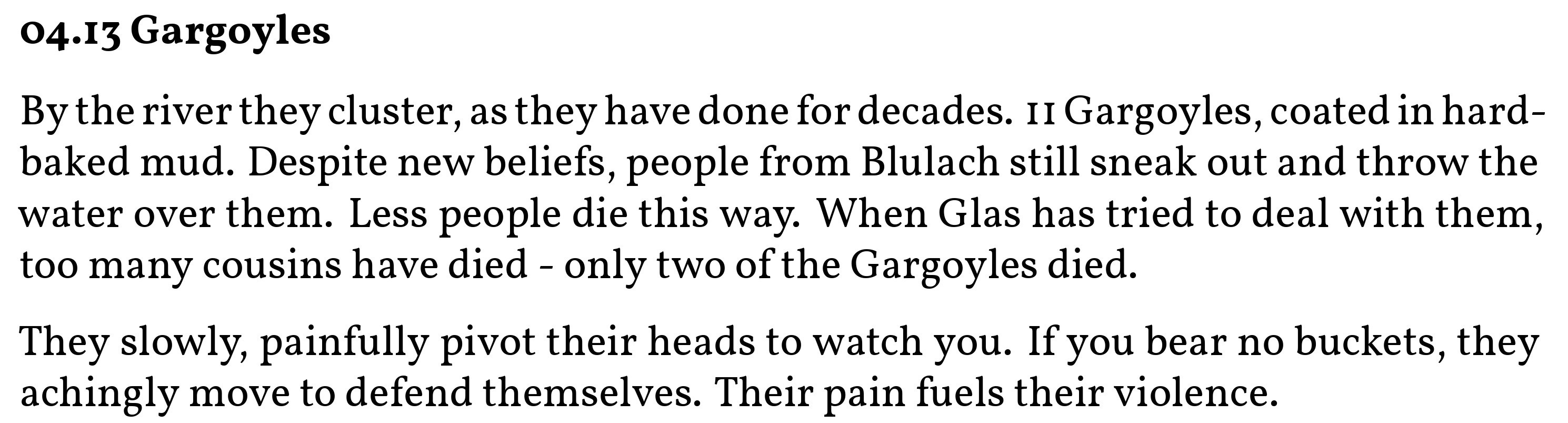
Why are the Gargoyles here? It’s a mystery. The module doesn’t explain it (or at least I haven’t found the secret reason in the rest of the text yet, Wolves is full of those). And it’s actually good to have this stuff without explanation because that feels real.
Explaining everything is kind of like those fantasy novels or world building projects where everything single thing needs an ironclad justification and a mechanical backbone based on the fallacy that things are more realistic if you provide totality of reason. It couldn’t be further from the truth. Omitting details is realistic. Leaving things partly or totally unexplained is part of making things feel real.
In truth, I think all good adventures use all 4 of these quadrants. Here’s how I think about using them.
Complex details. I use complex details to create chewy situations for players and to create things that improvisation is going to struggle to produce. I’m making sure critical gaps are filled to, stuff that I can’t risk filling with something improvised in case it breaks that complex detail.
Good complex details also flag something as being important: they let you know that something requires attention. When complex detail talks about unimportant stuff, that’s how we end up with bloat. We don’t want too much complex detail: that causes problems.
Simple details. These are used to streamline my prep. Essentially, it’s me saying that I trust myself enough to join the dots at run-time. I can describe the drinks menu at a tavern without preparing it ahead of time. I might struggle to improvise a complex social debate that’s happening inside the tavern though (that’s what complex details are for). Simple details also invite emergent complexity and avoid players getting too overwhelmed with ceaseless complex situations.
Simple abstractions. Simple abstractions are breathing room that come from writing simple details. They let me keep my prep leaner and avoid exhaustive explanation. It also gives me some wiggle room if I want to add a little bit more flavour at run-time.
Complex abstractions. Complex abstractions are something other GMs may enjoy for the wide space it gives them to improvise, me… not so much. Sometimes I do enjoy that. Particularly high level stuff, like what happens if the players do something that would affect a whole setting, I think that’s cool to choose for yourself. Big empty spaces can be fun to fill.
But the main motive I have for complex abstractions is to create mystery: to leave gaps I have no intention of explicitly answering (though I may have a secret explanation). Complex abstraction is essential for making things feel real and life-like. There aren’t always answers.
I think actively about these 4 quadrants when prepping for my table or designing adventures. It helps guide me on how heavy-handed to go on detail and where to leave gaps. Try it, you might find it makes prep easier.
Comments
Nothing yet. Say the first thing.
Sign in to join the conversation.