
By Nele Nessler
Correspondent for De Telegraaf of the Netherlands, reporting for the MUNFW World Press
De Telegraaf is a right populist and nationalist news source with a regime-critical editorial stance.
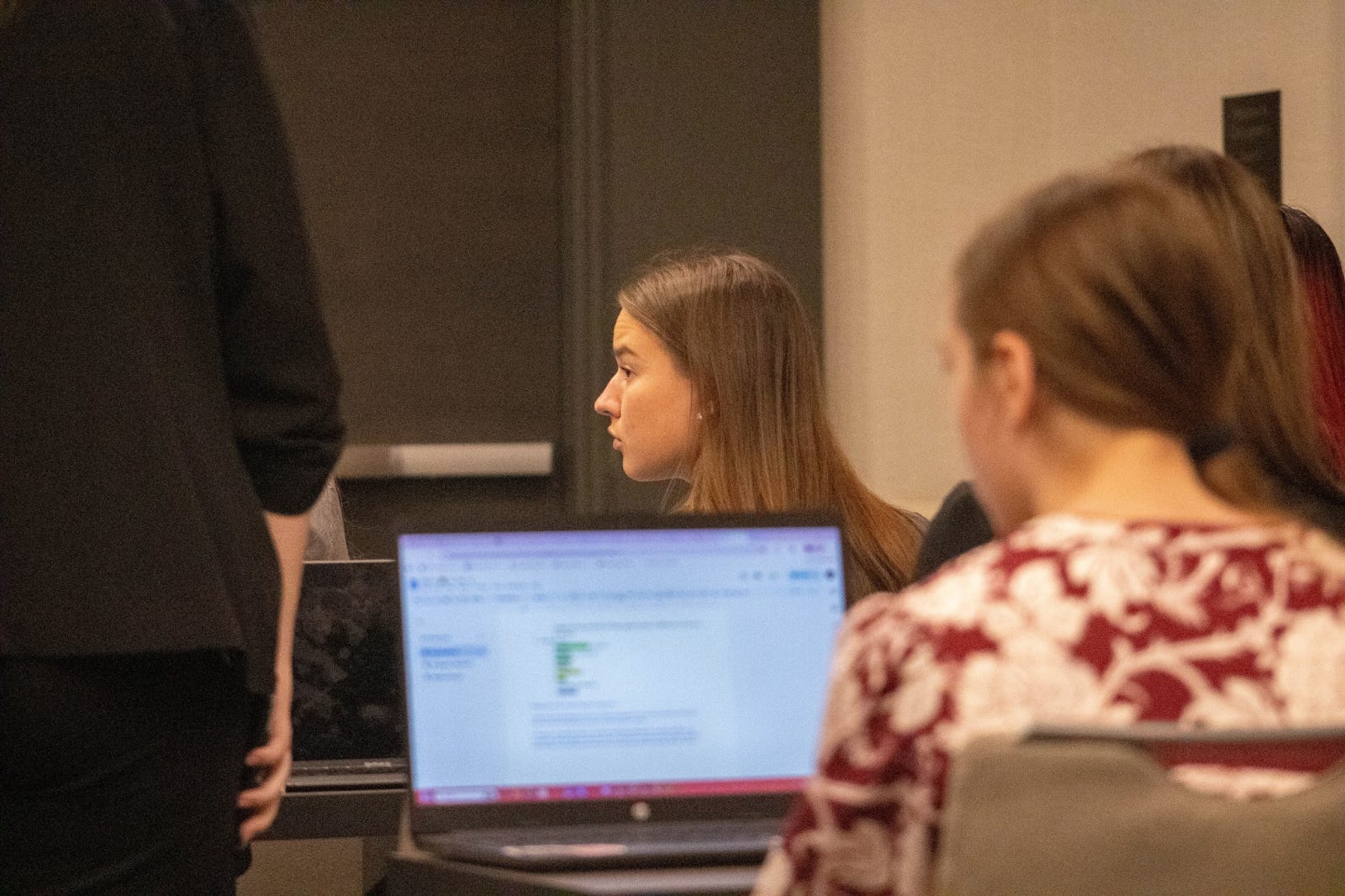
On the night of Sunday, 19 April, screaming matches broke out in the Commission on the Status of Women (CSW) at Model United Nations of the Far West. Delegates unprofessionally yelled at each other in a conversation surrounding Female Genital Mutilation (FGM) and its importance for several cultural and religious contexts.
On one hand, Western and so-called westernized states stood their ground on the potential abuse aspect of FGM.
On the other side, states that still practice FGM defended their sovereignty on those matters, and a few other states agreed. These states strongly argued against a potential ban which members such as Columbia and the Netherlands kindly pushed for.
The delegate of Saudi Arabia backed countries on their stance of sovereignty and their right to expressing cultural and religious freedom. That led to calling the anti-FGM block “westernized”, trying to implement western beliefs on other states. Especially Columbia´s delegation got emotional concerning the matter, calling it a “human right´s violation” and called for strong action, such as education and support for “victims” of FGM.
In 94 countries, Female Genital Mutilation can be found, which is almost a half of United Nations Member States. This is especially shocking when looking at the fatalities of that practice. Every year, over 40,000 girls and women die from the procedure.
Is the United Nations (UN) indirectly supporting women’s death? Interestingly enough, most of those practicing countries are part of the so-called “developing world” and depend on the budget of the UN. Why not just cut funding for states that still have that barbaric tradition in place? Why should members who let abuse happen benefit from the UN’s money?
Alejandra Garcia, the commission’s delegate of Mali, appreciated the different perspectives, even though “energy [was] misunderstood” in the debate. She also was grateful for the support of Saudi Arabia, as the Global South is still underrepresented at the UN.
For example, the Global South has no permanent member on the Security Council (SC) as the delegate stated. Having a powerful state in their corner helps with “credibility” and leads to “broader conversations [and] dialogue,” as the Eurocentric language of the UN lacks nuance.
Mali insisted on FGM being a cultural practice, not abuse of women. Opposite that, Columbia’s delegate Sophia Maria Lilot argued that the focus on the health and support of women is not a western view but a humane one and should not be up to discussion.
She said that although Columbia was colonized by the West — namely Spain — it is a South American state first and rejected being called westernized. Western states, such as the U.S. and the Netherlands, spoke out against “sacred” practice, both having implemented a total ban in their respective states with “a zero tolerance policy,” as Shannon Petrulis, the delegate of the Netherlands, stated.
First saying that the U.S. is ”never afraid” to speak on issues concerning “true women,” Cyrus Holt quickly backtracked on that statement and proceeded “to hold his tongue.”
Petrulis of the Netherlands commented that women might care more about gender specific problems than men who can feel “uncomfortable, scared” and even “emotional” on those topics. One can speculate that the male delegate was in fact afraid of repercussions from the many women in the room. It still seems like women’s problems are discussed best by women.
As consensus was not reached at first, Columbia and Saudi Arabia talked it out privately and amendment 26 passed in the end, with Saudi Arabia abstaining. While respecting sovereignty and “acknowledging religious freedoms” of Member States, MUNFW “urges Members to work in collaboration to inform communities of the health consequences of FGM.”
It looks like the fight on barbaric Female Genital Mutilation is not lost, even if the pro-FGM bloc would like to think so.
Do you have tips and information to share with The World Press writers and editors? Would you like to submit a letter to the editor? Email worldpress@munfw.org today.
No posts
Comments
Nothing yet. Say the first thing.
Sign in to join the conversation.