
Last week, I wrote about the eight steps to learning how to practice. This week, here are three ways to actually do it.
I filmed these videos this week and used some of these practices as warm ups in my classes this week. I thought I would share with you too. None of these practices are about making a good painting. They are practice exercises meant to be fast, keep you loose, and no pressure. If a good painting comes out if, great — but that is not the intention.
If you have five minutes: contour line drawing, in watercolor.
Most people did contour line drawing at some point in school. The traditional version: you look only at your subject, and you draw its outline slowly, without lifting your pencil. It’s a game to figure out how to get your pencil, and in this case your brush, all the way around without lifting off the paper. The goal isn’t accuracy. It’s forcing your eye and hand to work together without your brain jumping in to correct things.
I did this one with my son, using watercolor instead of pencil. Using a round brush, load it well with pigment, and the better the brush, the longer the line you can pull before it runs dry. This works because water forces commitment the same way not looking at the page does. You can’t hesitate. This practice helps teach brush mark, flow, and commitment to line.
This one works in watercolor specifically because of the flow. Gouache and oil can’t flow like watercolor, so this exercise doesn’t translate the same way.
If you have 10 or 20 minutes: color mapping and value studies
Color mapping works in any medium. I used it this week in watercolor, gouache, and oil classes. You’re not drawing, you’re not thinking about value, you’re just putting the color down the way you see it in front of you so you can see how the colors behave next to each other on the paper. No masterpiece. Just information about how the colors relate to each other.
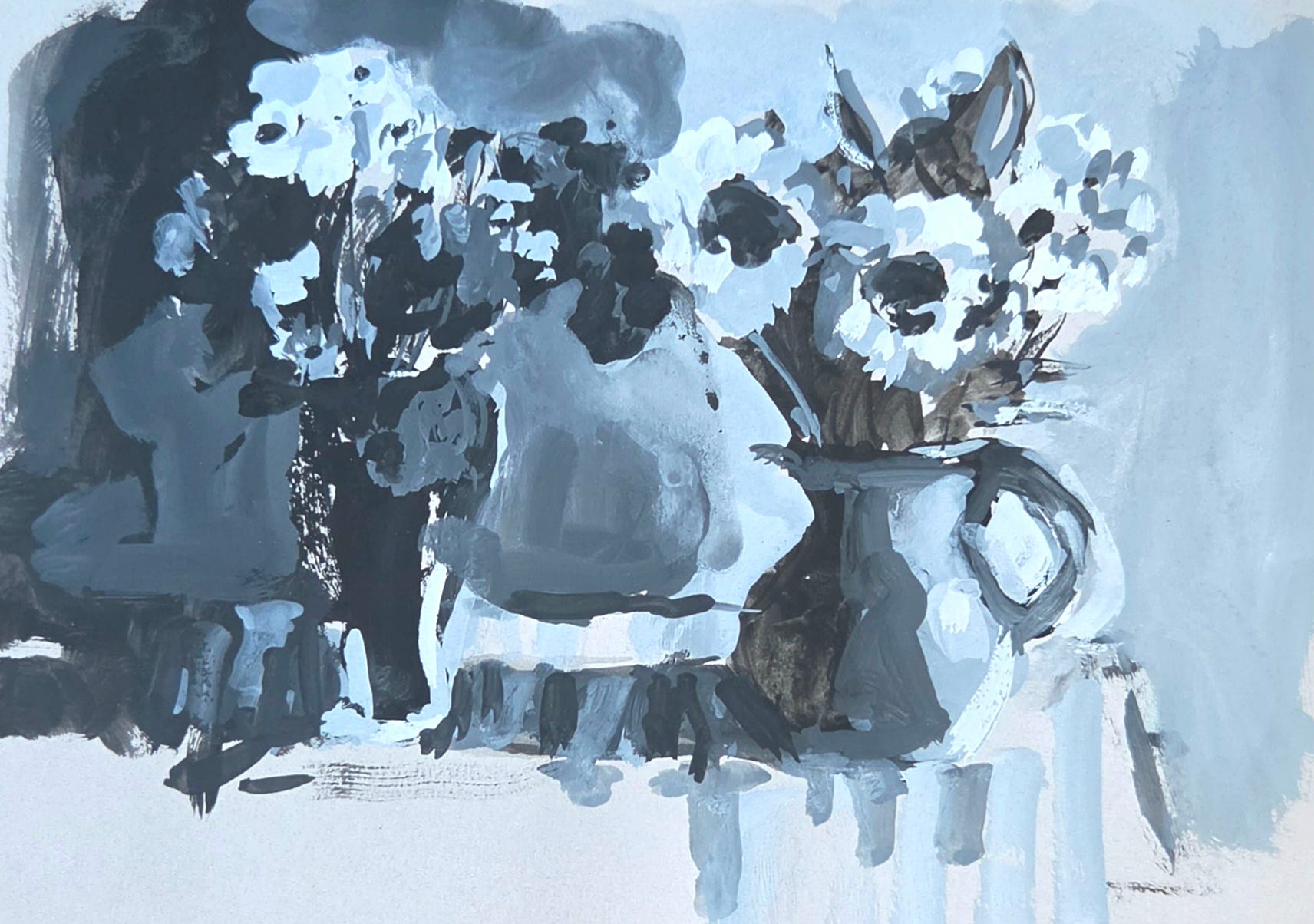
Value studies are a quick way to see form. Pick two or three values, not a full range, and block them in without worrying about drawing anything correctly. I did mine as a self-portrait this week, but a still life or something out the window works just as well. The point is the same as color mapping: strip away most of the decisions and focus on a few key things. This works well in oil and gouache.
Watch the videos, then tell me
Let me know if these videos are useful to you, ones that walk through a specific practice and explain why it works. Would you want me to make more practice tips? I tried to keep these short, but if you want more explanation, I can provide that too.
If you have questions after watching, please ask, and I’ll do my best to answer.
Catch up with:

No recipe this week. Between night classes and this heat, the kitchen has been closed. Dinner has mostly been peaches, melon, a hunk of cheese, and calling it a night.

See It, Mix It, Paint It: Oil Painting for Beginners
Wallingford Community Arts Center
Mondays, 10:00 AM–1:00 PM · October 5–November 9, 2026
Learn to paint what you see in oil: how to look at a subject, mix the colors in front of you, and build a painting you’re happy with. This six-week class is built around three still life paintings, each developed over two sessions — one to block in composition and establish color, one to return with fresh eyes and push toward a finished result. No previous oil painting experience necessary.
Register here
Sketch to Paint: Intro to Oil Painting
Main Line Art Center
Wednesdays, 10:00 AM–1:00 PM · September 16–October 21, 2026
From first line to finished painting, this six-week class guides you through the full process of creating an oil painting from scratch. Working from a still life setup, you’ll learn to simplify a scene, establish composition, and build value and shape, starting with sketchbook drawing before the brush touches canvas. No prior drawing or painting experience required.
Register here
Light First: A Step-by-Step Introduction to Oil Painting
Main Line Art Center
Wednesdays, 1:00–4:00 PM · September 16–October 21, 2026
A calm, structured introduction to oil painting that starts with light. Working in black and white, you’ll build a value scale, practice mixing consistent tones, and learn to organize a painting using value relationships before color enters the picture. Designed for absolute beginners and anyone who wants a clearer foundation.
Register here
Let It Go: Expressive Watercolor
Kennett Copy and More
Fridays, 12:00–3:00 PM · September 11, 18, 25 & October 2
Level: Intermediate
For painters ready to move beyond the basics. Each session centers on the brush, building confidence, variety, and personality in your mark-making, with unexpected tools like drinking straws, sticks, and collage opening up new possibilities. Working from in-room still life and photo references, each week is a self-contained exploration, so there’s no falling behind. You’ll leave with a growing mark-making vocabulary and a clearer sense of your own painting voice.
To register, call Kennett Copy and More at (484) 732-8066 and ask for Lori.

Thanks for reading Finding Creative Ground ! This post is public so feel free to share it.
Comments
Nothing yet. Say the first thing.
Sign in to join the conversation.