
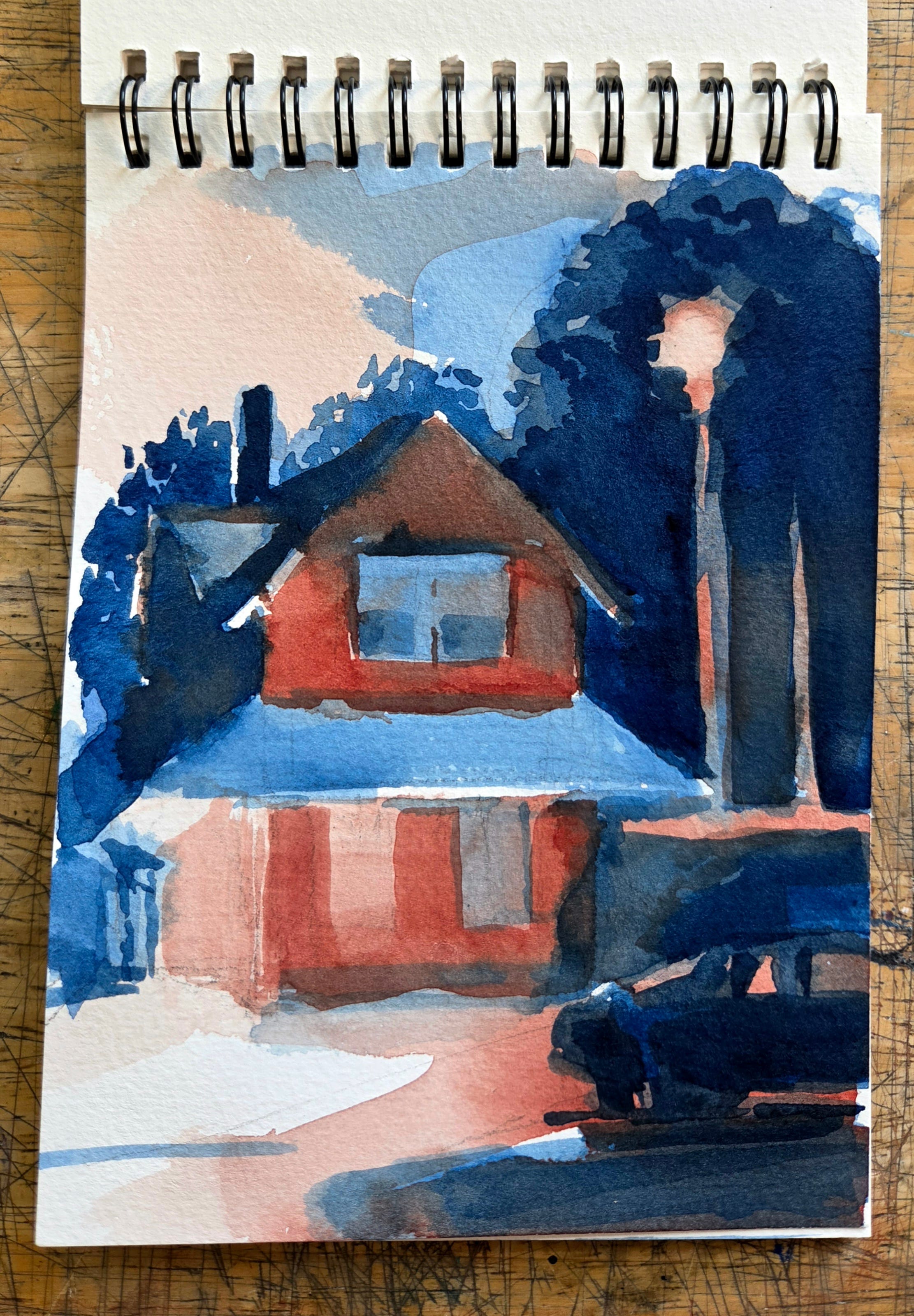
A while back I read something on Substack from a musician/music teacher who teaches students lessons specifically on how to practice (I can’t find the post now). There is an assumption that a student should already know how practice and drill something on their own, but most don’t.
I didn’t know how to practice the piano as a kid. I was told to practice scales and my assigned pieces every day. Being told to go practice is not the same thing as being taught how to problem solve or work through an uncomfortable assignment. While I did have art class in school and took some specialty art classes outside of school, I was not taught how to practice art either. I loved drawing a lot more than playing the piano and drew as much as possible. I would reach points of frustration and not know how to work my way through it, and assumed that eventually I would learn it, so I would let it go. I eventually learned how to practice art and drill skills and techniques, but that happened more by accident than intentionally.
Nowadays, we have so much vying for our time and attention that the idea of drilling and practicing has to become more intentional. Knowing what skills we need to practice, and how to sit with the discomfort of not knowing how to make your hand do what your brain understands, and understanding that putting three paint marks on the paper, standing back, then cleaning your brush, will improve your overall art practice.
We assume the skills that need direct teaching are the visible ones, how to mix a color, how to hold a brush, how to draw a form, and see light and dark. We assume the invisible skills, how to practice, how to watch someone else demonstrate painting techniques and pull something usable for your own art practice, how to sit with not understanding yet, will develop on their own.
Watching an art demo and learning from a demo are two different activities. You can watch someone paint for twenty minutes and walk away with nothing, not because you weren’t paying attention, but because nobody told you what you were supposed to be looking for. Watching with intent is a skill, and like any skill, it has to be built.
How is the artist using their tools? How much drawing happened before any paint went down? The order colors got mixed and laid in? How the paint was manipulated on the surface, whether watercolor, gouache, or oil? Is the demonstrating artist describing what they are doing or what they are thinking? This is not always obvious to an untrained eye. Decide in advance which one or two things you’re watching for. Trying to absorb everything is overwhelming. People often focus on the tools, thinking if I get the same brush or easel as the demo artist then I can make paintings similarly. While having good tools and paints will help, that is not the secret to making great art. Take note of the tools, but more importantly, take note of the skill and how the artist thinks as they are making the work.
"How do you mix that color" is asking for a prescription. "Why did you choose that color for there" makes the teacher's reasoning visible, which is advice you can take home and use again later on your own. There is a difference between being handed the recipe for a dark color and being told to connect the darks in the painting. The recipe gets you through today's painting. Connecting the darks is a principle you can carry into every painting you make after this one.
Color strips, gradients, swatches, value scales, thumbnail drawings, don’t feel like art or as much fun. These feel like a detour from the real creative work, but they’re closer to a violin student spending months learning bow hold before playing a single song. The unglamorous repetition builds control and hand-eye coordination. Skipping the boring stuff doesn’t get you to making your masterpiece faster, it just means the process is going to be more frustrating.
I am color swatching in the video above as a way to learn how other painters used their materials and practice color mixing.
Suzuki music students never fully retire a piece. They replay old songs because returning to something easy, without the pressure of learning something new, is where tone, control, and understanding actually deepen. Revisit an early exercise once in a while, not to relearn it, but to notice what’s different about doing it now.
A demo is something you watch. A lesson is something you do, with correction in real time. They are not the same event, and asking one to do the job of the other is where a lot of frustration comes from, on both sides. If you need hands on correction, ask for that specifically. Don’t expect it to arrive inside a demo. As an adult artist I have learned to take what I have observed in a demo and turn it into a lesson for myself. I will never be done learning. If a demo artist pulls out a value scale and talks about the importance of value in a painting and you have never made a value scale then turn that demo into a lesson and make your own value scale.
Small children in early Suzuki violin lessons spend a long time doing what looks like just waving a bow around in the air. It looks silly if you don’t know they are building the skill of holding the bow. Painting asks the same thing sometimes, hold the brush this odd way, mix more paint than seems reasonable, draw the subject before painting. These steps feel like they get in the way when you want to move to the fun painting part. You have to trust that these skills will make the painting process more enjoyable, because you have an understanding of the material and the tools before you get to the creative process.
Most people do not know how to practice art on their own. If sitting down to work on your own feels aimless or frustrating, that’s not a sign you’re bad at the art. It’s a sign that practicing is its own skill, one that usually never gets taught directly, and one you’re allowed to learn on purpose.

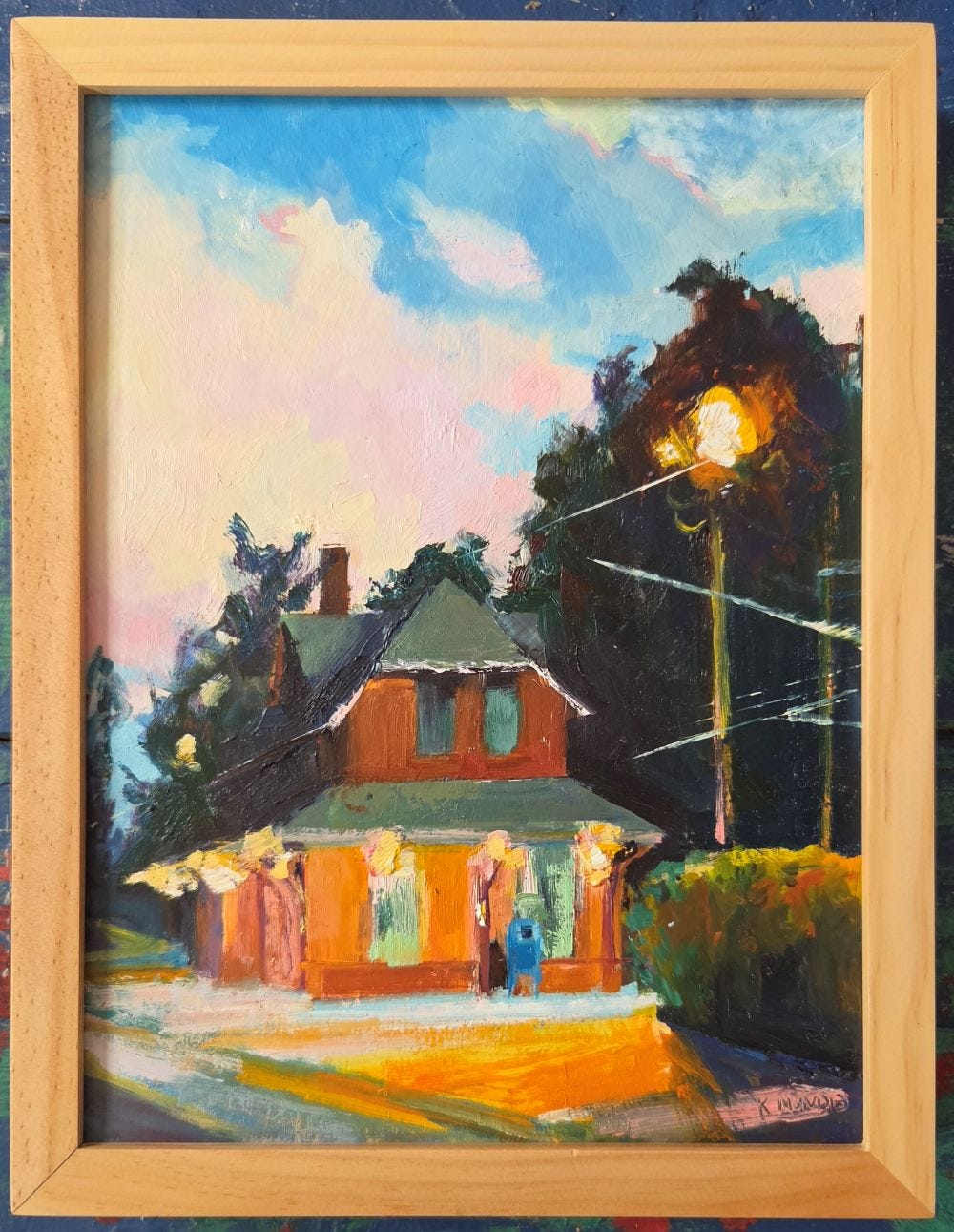
A few of my landscape paintings will be part of the Summer Group Show at F.A.N. Gallery, 221 Arch Street in Philadelphia, running August 7 through August 28. Opening reception is Friday, August 7, 5 to 8 PM. Come by if you’re in Old City.
I’ll have about 10 paintings in the New Brunswick Art Salon, an oil and mixed media exhibition at Alfa Art Gallery featuring artists from across the Mid-Atlantic region. The show runs September 1 through October 24 at 108 Church Street, New Brunswick, NJ. In-person opening reception is Friday, September 10, 6:30 to 9:30 PM, with a virtual opening reception on Thursday, September 11, 6:30 to 9:30 PM.

Thanks for reading Finding Creative Ground ! This post is public so feel free to share it.
Comments
Nothing yet. Say the first thing.
Sign in to join the conversation.