
My guest for this issue of Multiplier is Brian Kwek, the former co-founder of Witching Hour Studios. These days, he heads up Ysbryd Games — which recently published the psychological horror platformer LOVE ETERNAL. You can find out more info via the Ysbryd website and you can still find Masquarada: Songs & Shadows on Steam.
Fergus: It’s been ten years since I played Masquerada and it’s lived rent-free in my head ever since. I keep waiting for the wider RPG gaming community to come around and “discover” the game, to no avail.
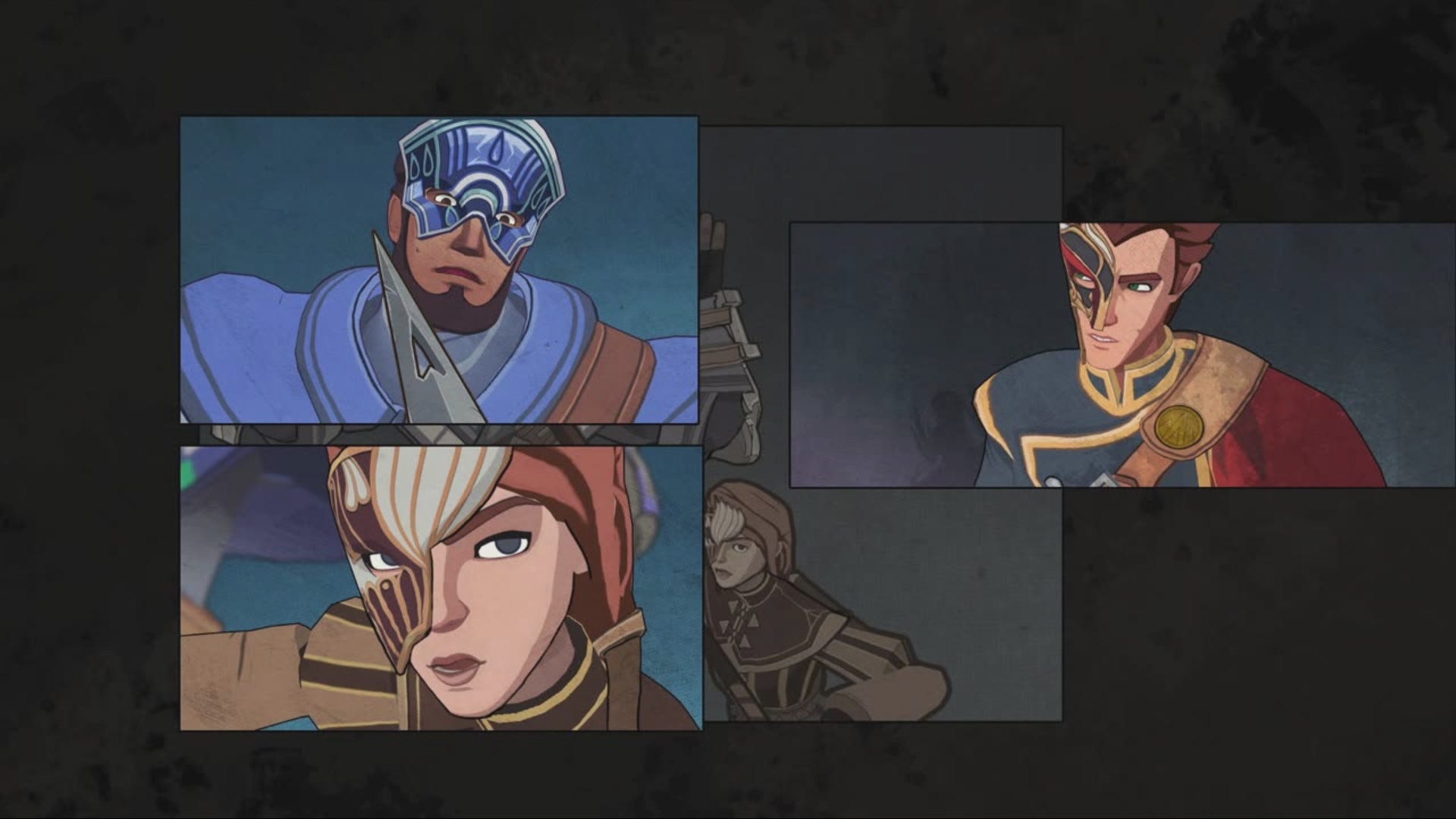
I don’t know if Masquerada: Songs and Shadows was quite ahead of its time, but it’s so easy to look back and see it as a relic of that specific moment in gaming. It’s got a slick comic-book inspired art-style, came out just months after the conclusion of a successful crowdfunding campaign, features pre-Critical Role voice acting, and blends together the “magic” system of Avatar: The Last Airbender with a Venetian fantasy aesthetic.
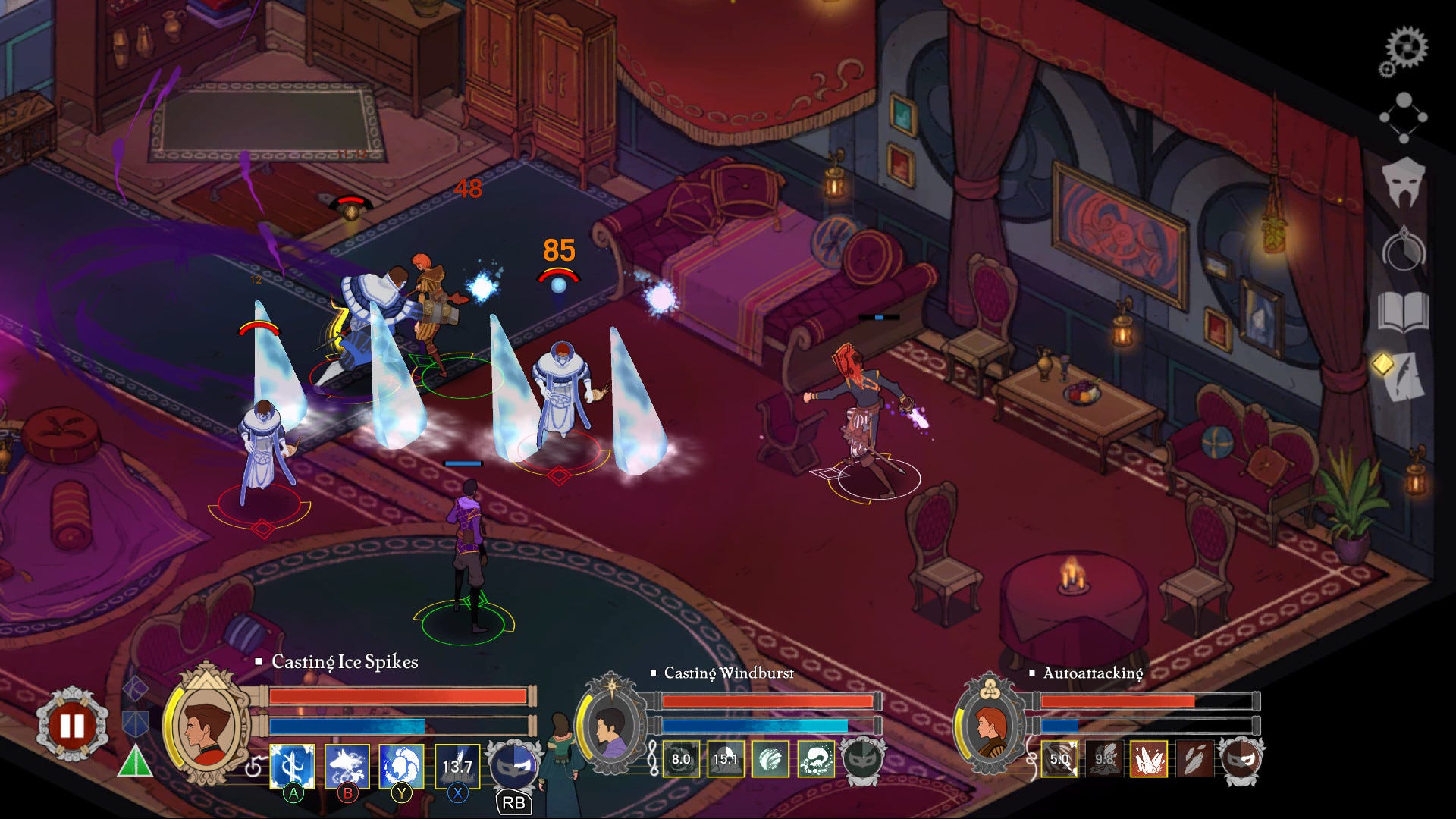
Throw in the pause-and-play gameplay usually associated with Western CRPGs like Baldur’s Gate – a genre which at the time was very much in a state of decline if not dormancy – and you’ve got a real cocktail of a game that offers cinematic storytelling and not-quite-so-crunchy-but-still-strategic gameplay. Are there any influences I’m missing in that description? As one of the key figures behind the development of the game, are there aspects of the experience that you think are less commonly-cited or widely appreciated?
Brian: Wow, thank you for the kind words and appreciation for the stronger qualities of Masquerada. One would have hoped that in the years following Masquerada’s wake, the combination of events like Baldur’s Gate 3’s GOTY status and the meteoric rise of all things Critical Role would have created some sort of seedbed for people to “discover” Masquerada. Of course, this may also speak to the larger industry malaise of an oversaturation of games where no one can simply just find or talk about games if they are not perfect, and worse still that said games are old.
I think you captured most of the game’s influences and highlights that we tried (or at least, in a 2026 context, would have tried) to yell about to the world back in 2016. If you want to talk about nuances or highlights that haven’t been specifically mentioned, the first would be Josh Whelchel’s magnificent soundtrack for Masquerada. Josh composed over 90 minutes of ethereal music to score the game’s sweeping drama; we really let him cook with those tracks to bring out motifs at times majestic, at others disturbingly alien. Josh brought in a veritable army of instrumentalists and an 8-piece choir ensemble to bring the performances to roaring life without us really specifying anything to that extent in our music briefs, and I still think that was a heck of a thing to experience.
Ostensibly, Masquerada’s voice acting being led by storied names like Matt Mercer and Jennifer Hale was to be a talking point for PR and marketing... but you’re not likely to guarantee incredible performances without fundamentally good character writing, and I always thought Masquerada delivered that in spades, thanks to Witching Hour’s lead writer, Nicholas Chan, and the game’s voiceover director, Michael Csurics of Brightskull Entertainment.
The gravitas and pathos of the main cast was something rare that Nick was able to put to paper due to his dramaturgical experience, something that was able to be drawn out even more in the recording booth with the VAs because Michael helped us arrange ensemble recording for vital narrative scenes. So, ensemble recording, ie. two or more regular voice actors being put in the same booth to record scenes together, is normally insanely expensive to the point that ordinarily AAA studios won’t touch that with a stick, but hey, we indies find ways to make things work more cost-effectively...
In hindsight I have to tell you that gamers only care if those names are attached to game IPs or brands they already care about, OR if the said names are actually leading the game project — as was the case with Date Everything!
Lemme fire back a question at you: How did you hear about Masquerada, and what drew you to it enough to actually pull the trigger on purchasing AND playing it? Was it actually the Kickstarter that did its job, or something else?
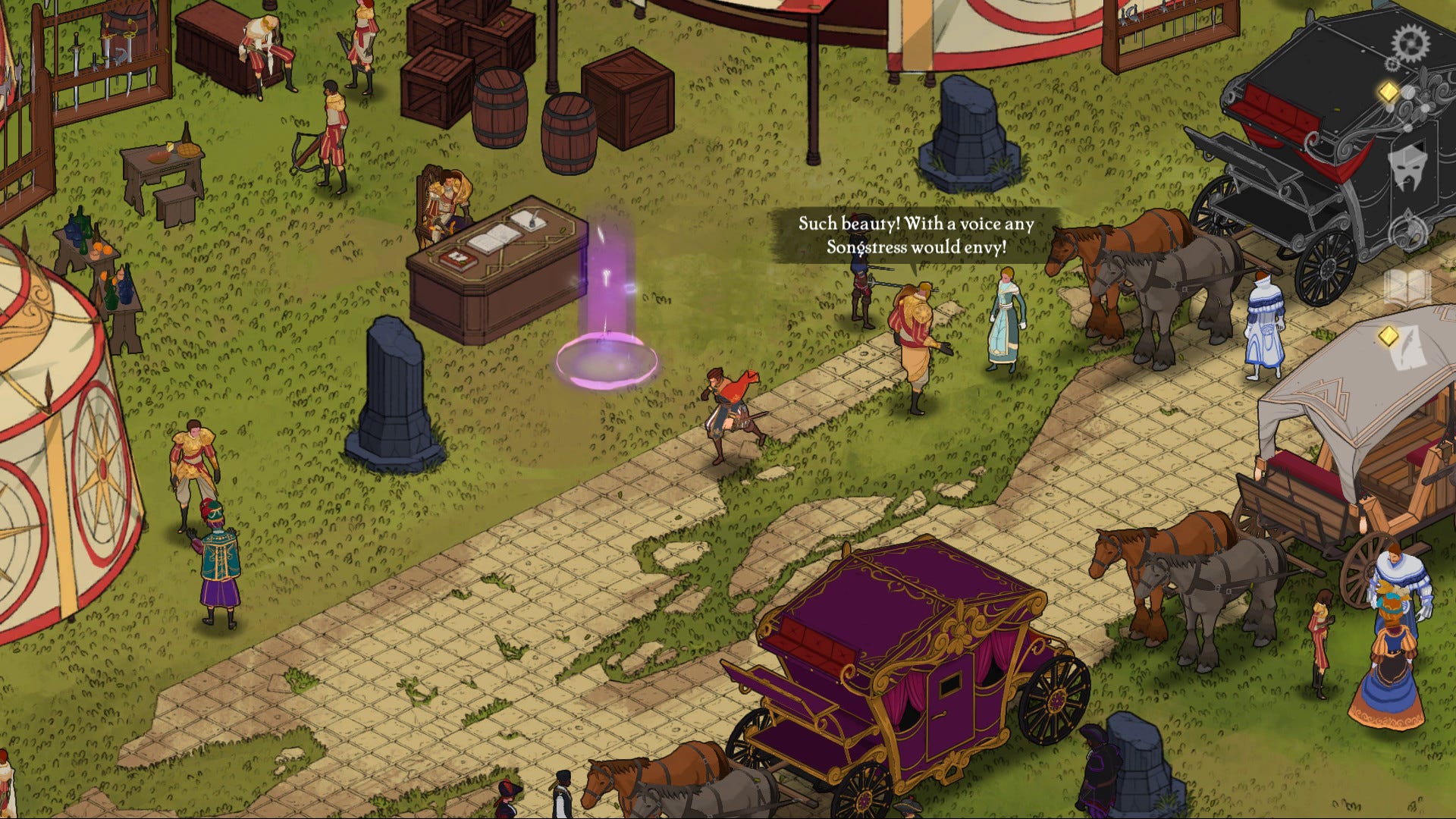
Fergus: The fact that you went to the trouble of ensemble recording is really interesting, and I think it paid off in the finished product. For some of the more pivotal story beats especially, I do vividly remember being quite locked-in on the lore and characters of Masquarada.
My memories of how I found the game to begin with are a little foggier. While I was backing a lot more video games on Kickstarter in 2016 than I do nowadays and likely would have read about the game via Kotaku or something like that, I am fairly sure I would have picked up Masquarada on the novelty of it being a streamlined or modern take on a classic CRPG more than anything else.
Back then especially, we were only on the cusp of the wave that eventually brought with it Baldur’s Gate 3. Perhaps part of the problem might not be that Masquarada is old as much as the reality is that there is so very much new stuff these days when it comes to neo CRPGs. Both before Larian’s breakthrough success and after it, fans of the have been inundated with games that – like Masquarada – try to find a more modern take on one of the oldest genres in PC gaming. And yet, as Masquarada shows, getting in front of that audience remains a bit of a dice-roll – if you’ll pardon the pun.
Although I’d agree that fans are discerning enough to gauge whether a big name is attached to the project for more than just the paycheck nowadays, I do suspect poor timing may have been part of the problem. Outside the CRPG space, I think we are seeing more developers and publishers lean on star power and the parasocial relationships that a lot of fans have with voice actors as a shortcut to finding an audience. The way that PlayStation positioned Erika Ishii for Ghost of Yotei and Rahul Kohli for Saros naturally come to mind.
My gut feeling is that if Masquarada came out even a handful of years later, I do think it may have stood a better chance at cutting through the noise. As always, unfortunately, I think it really does come down to how utterly cooked the online information ecosystem is nowadays. If you’re doing something truly original or approaching the market as an unknown, it’s so difficult to get in front of the right eyeballs and get discovered.
Brian: I have to agree with you that maybe if Masquerada had landed in 2021 instead of 2016 — when everyone was locked up at home during the pandemic —there might have been a better chance of being seen to be bringing something fresh to the table.
In some ways, the mid-2010s era of gaming was when people really stuck to their guns about what an old-school genre like a CRPG had to be. As a very linear game with virtually no choices, Masquerada was basically the opposite of a CRPG, even if it wore the skin of one.
In hindsight that was the Achilles’ heel of the game from a commercial point of view; the trade-off of focusing our limited resources to really hone in as best as the studio could on AAA-quality trimmings of storytelling (or what we thought that meant, anyway) only seemed to make Masquerada repellent and alienating to the CRPG audience we thought the game would best resonate with. That was a bitter pill to swallow for everyone involved.
On leveraging the voice actors as “marketing assets”, I’m not disagreeing with you at all about Erika Ishii and Rahul Kolhi’s star power being news points for those games. My specific point is that people need to care about the game being promoted first; not to pick on your two examples, but these include the sequel to a highly acclaimed AAA title, Ghost of Tsushima AND the spiritual followup to Returnal, with both of these titles being PS5 exclusives published by PlayStation Studios. Masquerada and Witching Hour were not remotely close to having even 1% of the ability to pull the kind of press that either of these games can generate on their own based on the pedigree of Sucker Punch and Housemarque alone, let alone the scale of the PlayStation PR war machine at work for both of these games. It is in that sort of environment that “voice actor star power” really thrives and draws eyeballs.
I’ve seen other indie titles market their stuff to the tune of “Our platformer’s soundtrack includes compositions featuring Emi Evans, the singer of NieR: Automata’s incredible vocal tracks!!” and stuff like that just completely bounces off of people even if they were NieR fans.
In my observations so far, the emotional connection to any sort of “star power” cannot be easily invoked unless gamers see why your game’s use of the said star power actually relates to how they connected emotionally to that star in the first place.
To frame this in a very blasé way, you couldn’t make use of Emi Evans effectively unless your trailer made it clear that your game’s narrative was going to crush the player emotionally in the same way that NieR did... and how is a person going to deduce that from a trailer (if they watch it at all, which as we know is a minor impossibility in 2026 and beyond)?
The above was me trying to indirectly answer your final question about how the challenge of game visibility has evolved. Every year since 2018 or so, I regularly say it’s never been worse, and it’s always true every time I say it. But that might only be consistently true if you — like me and Ysbryd — are interested in promoting weird narrative games with the principal interest of examining the darker aspects of human nature.
I mean, there’s never been a better time to be releasing friendslop games or something, right? Certain kinds of developers and publishers are still doing well out there, so it’s not doom and gloom everywhere - although I say this after just having read that Double Fine is allegedly about to be shuttered by Xbox, so maybe don’t take my word as being sanguine in any useful way.
The old school of narrative-driven games are becoming more of an endangered species because the audience that enjoys them are not what your classic villain CEOs refer to as a growth market... but for better or worse, I’m no villain CEO, and narrative-driven games are a hill I’m prepared to die on because it’s an art I still believe in.
Maybe no more CRPGs in my future though; even if Baldur’s Gate 3 did gangbusters, I’ve had quite enough!
No posts
Comments
Nothing yet. Say the first thing.
Sign in to join the conversation.