
Today, I want to continue a bit on the failure of our forecasting model. In the Weekly Forecasts 21/2026, we had warned on the approaching failure by noting that:
Such developments make it likely that the U.S. economy will not see the plunge our forecasting model has been anticipating since mid-June. Naturally, it would have been impossible for the model to see a major data center boom to manifest during the past few months.
The model simply could not have seen a data center boom manifesting during H1, which is one possible reason why it failed on its mission, i.e., on the anticipation of medium-term turning points of the U.S. economy. I have some ideas on how such “shocks” could be incorporated into the model, but there’s currently no time to do the modeling they would require. But we will return to the modeling of the turning points of the U.S. economy in due course.
Relating to this, yesterday GnS Economics published Weekly Forecasts 27/2026, where we looked into the U.S. yield curves. They carried something of a warning for the short- to medium-term outlook of the U.S. economy. We concluded: The three yield curves are thus sending a unisonous message: the onset of U.S. recession is either close or very close.
We studied the 10-year/3-month, 10-year/2-year, and private sector yield curves. Their unison message was something of a surprise considering, e.g., that the Fed is manipulating, especially the yield of 3-month Treasuries and hence the 10-y/3-mo spread through its repo market bailout.
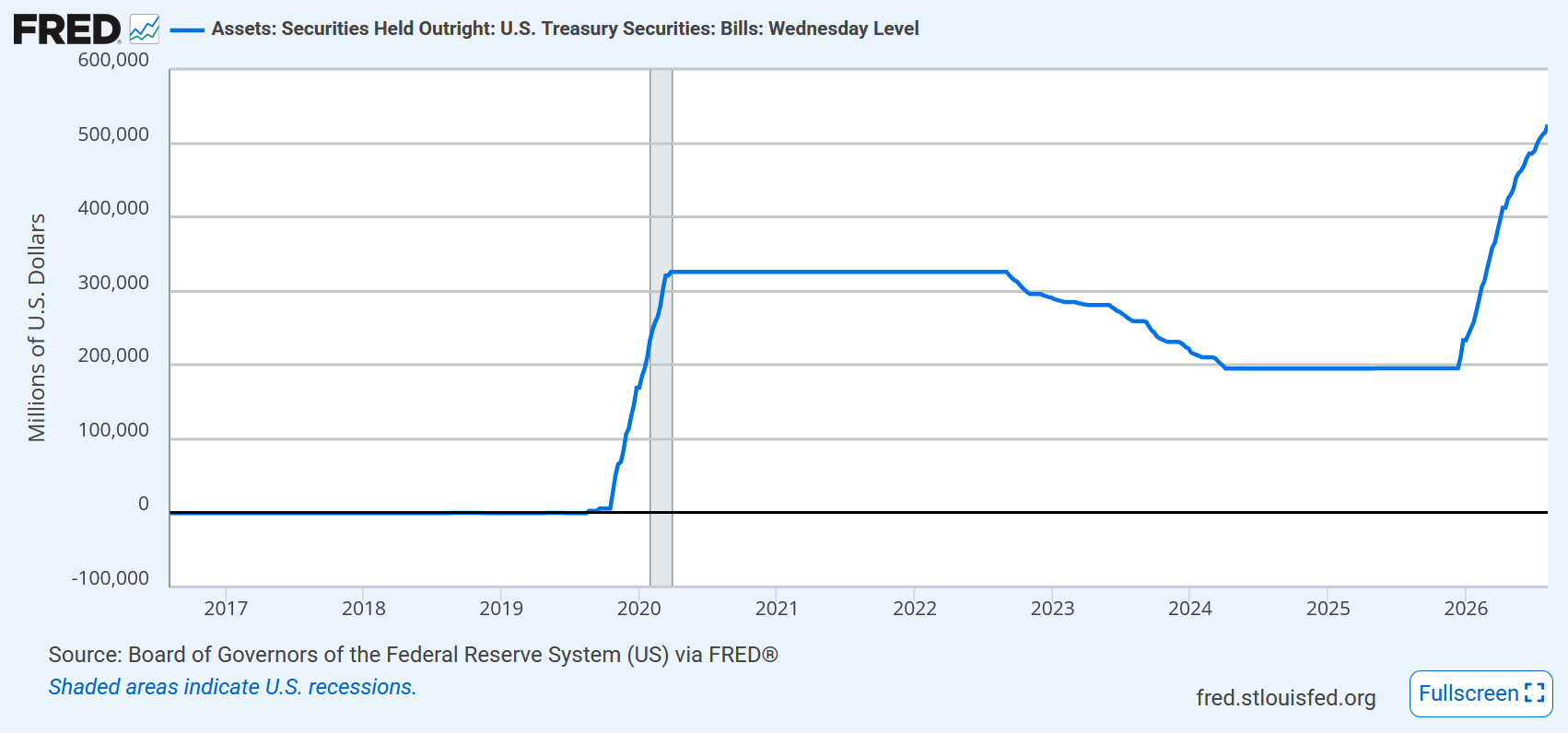
If people only understood why the Fed is doing this, they would panic. But they don’t, as authorities do now want them to. The re-emerged currency crisis of Japan can (will) add to the plumbing issues through the reversal of the carry trade. I’ll write more of it next week.
We can safely assert that the U.S. financial system is in another 2007. There is a major underlying weakness, most likely in Private Credit, which is why the Fed was forced to launch a covert bailout of the repo markets, i.e., the financial plumbing of the U.S. During the summer break, I learned even more worrying things about the private credit sector, which I will detail probably next week.
In November, GnS Economics issued a warning of a ‘Black Swan’ lurking in Private Credit. We noted:
Now, combining the above leads us to three highly detrimental outcomes of Private Credit, which can manifest in a recession:
Withdrawal of the only credit line of a company in a recession will almost certainly lead to a liquidation of the company (bankruptcy).
Private-credit-funded companies able to survive a recession are likely to be considerably fewer than bank-funded companies, because private credit has fostered unprofitable and zombie lending.
As large investment funds hold a large share of credit lines of companies, #1 and #2 imply that a recession can lead to a deluge of private-credit-funded corporate bankruptcies.
And continued:
Alas, in the worst case, what we will face in the next recession is not fire sales of corporate debt but fire liquidations of corporations. Private credit firms will liquidate firms en masse, leading to a collapse of the corporate sector and the GDP, and to skyrocketing unemployment.
Yesterday’s Weekly Forecasts warned that the onset of U.S. recession can be just a couple of months away, which is likely to start the collapse of Private Credit, leading into another financial crash. The most prominent factor behind our warning was the signal from the private sector yield curve (YC).
Comments
Nothing yet. Say the first thing.
Sign in to join the conversation.