

This week I went to my first Prom of the season. It wasn’t one of the big orchestral concerts the Proms is so well known for but a Late Night Prom which started at 10.15pm with the Jupiter Ensemble, led by lutenist Thomas Dunford and tenor Laurence Kilsby making their Proms debut.
The programme was essentially divided between two English composers - John Dowland, who was born during the time of Elizabeth I and Henry Purcell, born almost 100 years later. To some of my friends (you know who you are), this music falls under the category of ‘Tudor music’ but really, anything involving a harpsichord or a lute makes them squirm. But I won’t unpack this here.
It does point to a discussion I was having with my friend how classical music is often classified as one thing, like it was one sound, one style, one genre. I think it’s like saying all food tastes the same because you’ve used onion in the base. Instruments appear across the centuries but what composers do with them can be completely different.
I was excited to see the Jupiter Ensemble which I’ve been following for a while and they didn’t disappoint. Dunford moved between standing beside the young tenor (27!) Kilsby for the more intimate songs and sitting with the ensemble for the larger pieces. Dunford completely broke down the stiffness that can often appear in ‘early music’ concerts. For encores, he managed to get the audience to join in with 2 songs written by him and ‘Hey Jude’, keeping everyone singing as the performers left the stage. A clever exit strategy in my book.
But this isn’t really a concert review. The concert made me want to spend some more time with the first composer on the programme - John Dowland, whose death 400 years ago is being commemorated this year. Dowland was a big musical celebrity of his time. He was both a composer and a performer who essentially made melancholy into an art form and a personal brand.
So, this week’s newsletter is a brief introduction to a man who made sadness sound, well, great.
We know almost nothing about Dowland’s early life. We know he was born in 1563. Where exactly is debatable, perhaps London, perhaps Dublin. His main instrument was the lute.
So, what exactly is a lute? Excellent question. The lute is a plucked string instrument with a rounded body and a soft, intimate sound. You can think of it as a distant relative of the guitar, but the lute comes in all sorts of shapes and sizes.
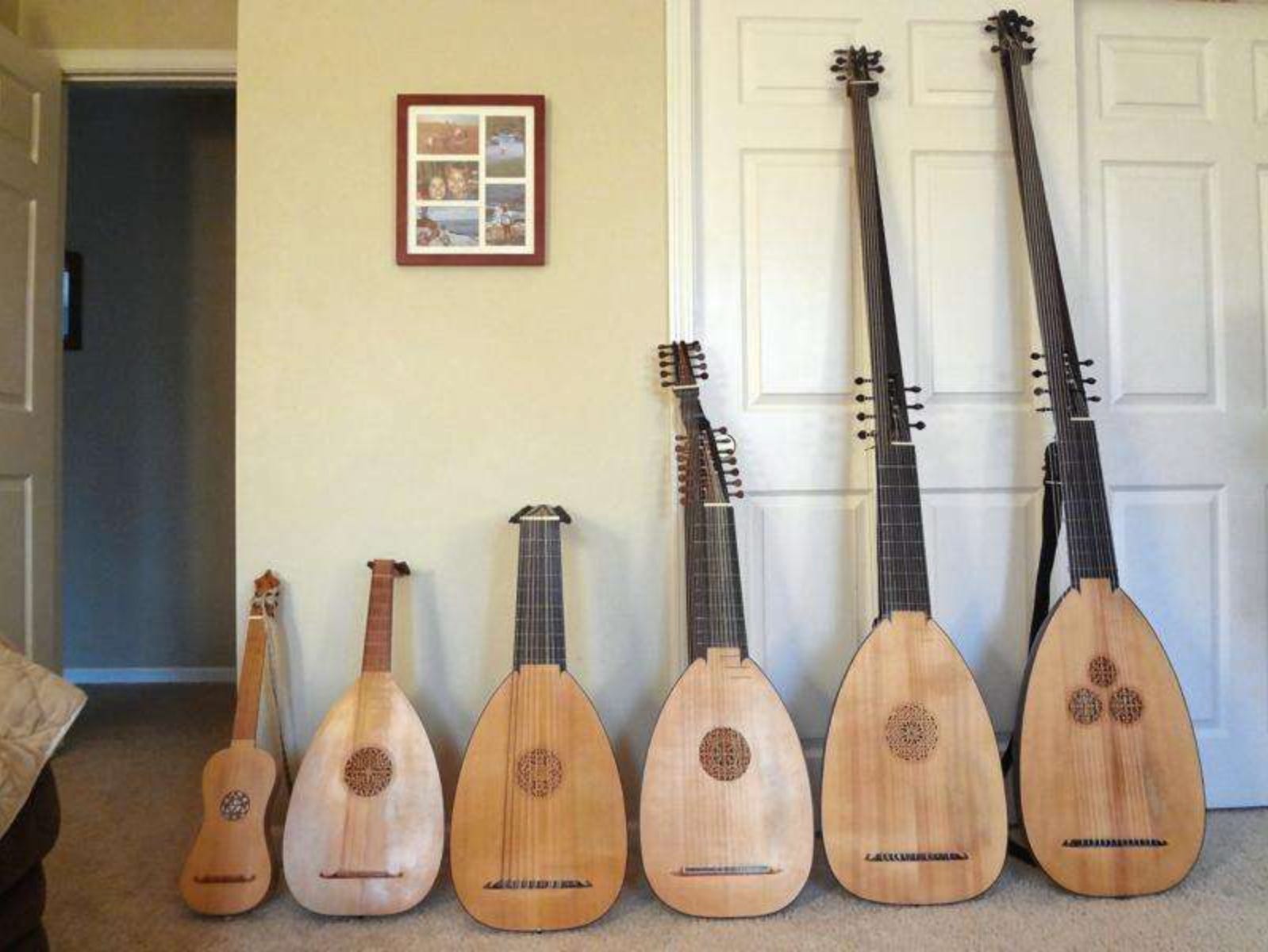
I think the important word here is ‘soft’. The lute was designed for courts, smaller chambers, or for the home, not a concert hall seating 5000 people. This was my only difficulty with the Late Night Concert. The cavernous Royal Albert Hall, without amplification, made me concentrate to really hear the details. I did listen to the concert which was broadcast afterwards to hear more of the detail. This music is supposed to pull you closer, rather than project outwards.
The Frog Galliard shows that quiet doesn’t necessarily mean gloomy. A galliard, like so much of the music written back in the day, was a dance in triple metre (1, 2, 3, 1, 2, 3) and this one does complicate Dowland’s reputation a little as the ever miserable man of English music.
Dowland also reused the melody for the song ‘Now, O now, I needs must part’. In a time when music could only be heard live rather than summoned instantly on a smartphone, this was very common. A good tune didn’t need to be fixed in one form. You could play, sing, rearrange and adapt it to whoever was available.
‘Come Again’ was printed in Dowland’s enormously successful ‘The First Booke of Songes or Ayres’ published in 1597. The book contains quite a few of his greatest hits, but it’s actually the way it was printed that reveals something important about how the songs were used. The music could be performed by a solo singer and lute but it could also be sung in four parts. Those parts were printed facing in different directions on the same page, which allowed several people to gather around a table and sing together. The singers faced one another rather than outwards. This wasn’t music that was necessarily meant for the big stage, it belonged in the home, for families and friends.
Now read these last two lines in the first verse:
‘To see, to hear, to touch, to kiss, to die
With thee again in sweetest sympathy.’
We don’t often think of songs from the 16th century as being particularly sexual, but ‘to die’ wasn’t an innocent choice of words. The same euphemism appears throughout the period. If you haven’t guessed, the poet is talking about an orgasm.
But, this is Dowland, and pleasure doesn’t last. As the song continues, seduction turns to rejection, despair, and something that resembles death. On the surface it’s an elegant, lovely tune. Listen to the words, and it becomes much more unstable. It’s a recurring theme with Dowland, There’s a fine line between desire and sheer misery.
A Dowland introduction wouldn’t be complete without this tune. When he wrote this instrumental pavan (another dance) ‘Lachrimae Antiquae’, meaning ‘old tears’, Dowland struck musical gold. The opening notes fall like sighs, creating an immediate atmosphere of sadness.
This melody was so famous it travelled all through Europe and appears in manuscripts from England, Spain and Italy, all the way to Sweden too. We don’t have one single definitive version, though. Similarly to a jazz standard perhaps, it could be played with the instruments and musicians available. Each performer and performance could add ornaments and make its own mark.
Dowland returned to this tune many, many times. He added words and transformed the melody into his most famous song ‘Flow, my tears’, and then built a whole collection around it called ‘Lachrimae, or Seven Teares’. This one musical idea became Dowland’s calling card.
I think this melody is the easiest route into Dowland’s particular kind of melancholy. Dissonances create tension before resolving, almost like comfort has to be earned. Personally, I prefer the instrumental version to ‘Flow, my tears’. The words are almost unnecessary and sadness feels slightly bigger and slightly less specific. I’ve added both versions to this playlist so you can judge for yourself.
By the time Dowland published Lachrimae in 1604, he was so associated with melancholy that he gave one of his instrumental pieces the title above, meaning ‘Always Dowland, always grieving’. A slight Latin pun, ‘Dowland’ sounding a bit like ‘dolens’ - grieving.
The title is slightly overdramatic but also a good way to publicise yourself. Dowland wasn’t a bad marketer and understood the need of an image and growing a brand. We don’t know if he was actually reflecting his emotional life or slightly exaggerating it for effect but it worked. We still associate his character with his music.
It’s a good time to point out that Dowland wasn’t the first to make melancholy fashionable, it was already rather trendy in Elizabethan and Jacobean England. Sadness could suggest intelligence, sensitivity and emotional depth. But Dowland perhaps took it furthest and ‘Semper Dowland’ feels like more than just another sad piece. It’s the composer signing his own name in music; this is who I am, and who you’ve come to hear.
Instead of ending with another Dowland lament, I wanted to finish with the piece that closed the main programme at the Prom. Henry Purcell’s ‘An Evening Hymn’.
Purcell was born more than 30 years after Dowland’s death, and into a very different musical world. Purcell’s music is perhaps richer, definitely more theatrical, but ‘An Evening Hymn’ belongs to the same English tradition of letting a single voice and a small group of instruments express so much.
The song begins at the end of the day: ‘Now that the sun hath veiled his light, and bid the world goodnight’. The singer prepares for sleep but wonders where his soul will rest. The answer is ‘in God’s arms’. This is a devotional piece, but I think the words don’t just speak of devotion but also of preparing for the end of life.
Underneath, a repeated short bass line, again and again. Above, the voice gradually frees up and becomes more elaborate, before the piece opens into an extended ‘Hallelujah’. It stretches, curls and lilts over the repeated bass, almost like the singer doesn’t want the night, or the music, to end.
After all the Dowland tears, Purcell offers something a bit different. This isn’t a sliver of daylight but perhaps the possibility of finding some comfort in darkness.
Dowland may really have been as melancholy as his music suggests. Perhaps, like so many artists after him, he understood that people respond to strong identity and gave them exactly what they wanted.
Either way, 400 years later, his image has lasted. The lute, the tears, the despair. Dowland perhaps didn’t invent melancholy, but he certainly made it his own.
Have a good weekend! x
No posts
Comments
Nothing yet. Say the first thing.
Sign in to join the conversation.