
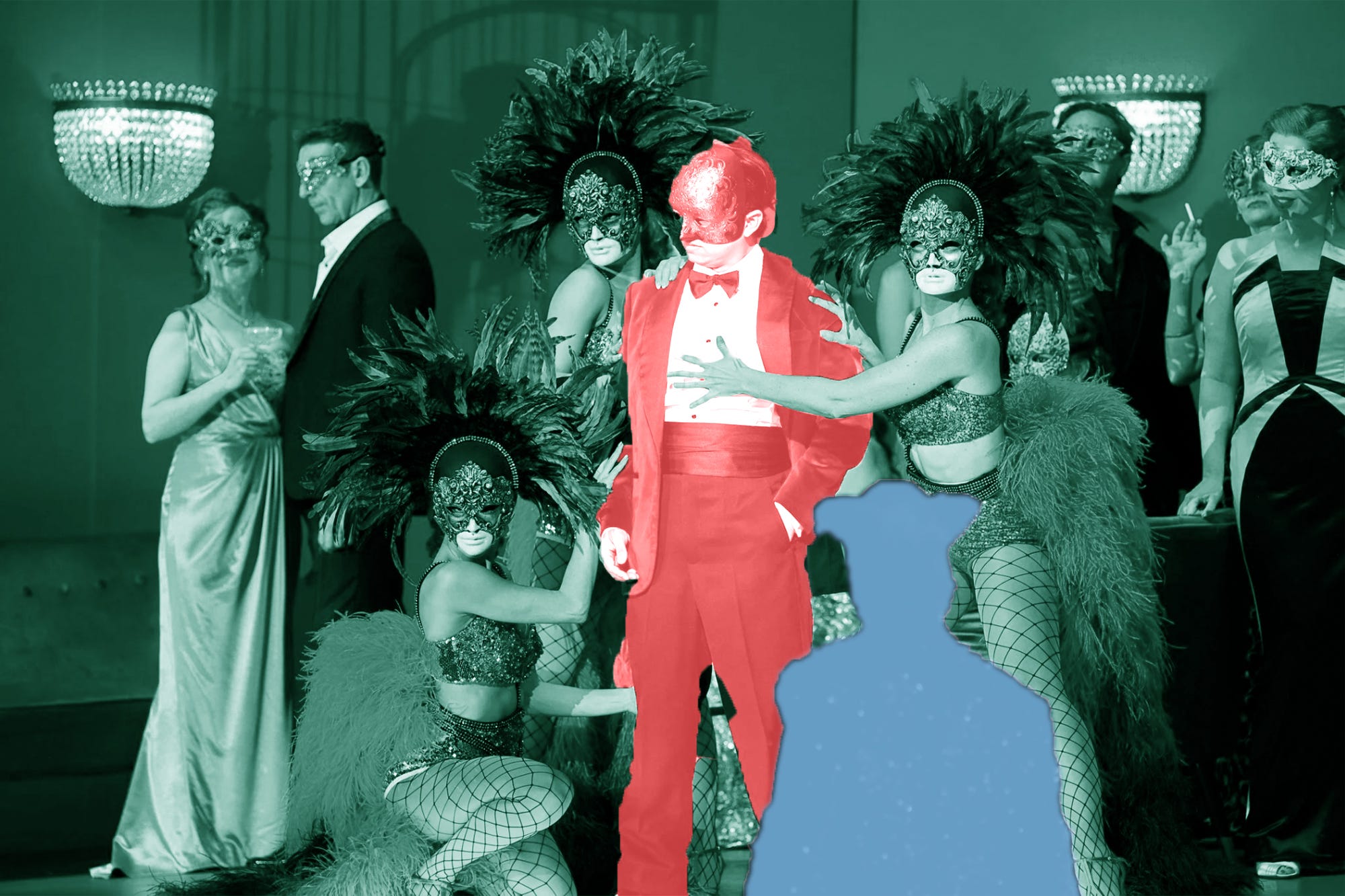
Last week at the Proms an opera that you almost never get the chance to hear was performed: Weber’s Oberon. There’s a pretty good reason for that. The music is wonderful. The opera itself is... problematic.
In fact, in the performance the forces did something fairly drastic. Instead of using all of the original spoken text between the musical numbers, they commissioned a completely new narration. The conductor Mark Elder has made the problem very clear: the music doesn’t need fixing, but the libretto does.
We tend to treat a piece of music as something fixed. The composer wrote it, we perform it. But opera doesn’t always work like that. What happens when the music is brilliant but the words are terrible? Or when an opera is simply too long? What if the composer keeps rewriting it because even he thinks something is wrong? And what happens if he dies before its finished?
Can you fix a bad opera? And perhaps more importantly, who gets to decide what needs fixing?
Weber’s Oberon is certainly not a frequently performed opera. I’ve never seen it, and judging by the reaction to last week’s Proms performance, the music at least deserves far more time in the sun. But Oberon suffers from one fairly serious problem: its libretto, the opera’s text, has been famously regarded as, well, terrible.
It doesn’t help that Oberon has a lot of spoken dialogue between the musical numbers, so there’s no getting away from it. The story jumps between fairyland, Baghdad, a desert island, pirates and assorted magical interventions. You’re basically stuck with an opera where the music and the drama seem to belong to two completely different levels of quality. Wagner was a great admirer of Weber and was hugely influenced by him. Wagner, incidentally, avoided this particular problem by writing his librettos himself.
Weber knew there was a problem. Oberon was commissioned for Covent Garden and premiered in London in 1826. Despite suffering from tuberculosis and travelling against his doctor’s advice, Weber came to London for the production and even worked on his English so he could understand the libretto properly. He was dissatisfied with the structure of the opera and intended to revise it once he returned to Germany. He never got the chance. Less than 2 months after the premiere, Weber died in his sleep in London, aged just 39.
So what do you do with it now? You edit. The Proms performance replaced much of the original dialogue with a new narration by Timothy Knapman, performed by Tamsin Greig. Other productions have cut, shortened and rearranged it. Because the music is a completely different story. It’s imaginative, mischievous and just as sparkly as you’d hope. The overture, unlike the complete opera, has become standard concert repertoire.
Beethoven wrote 9 symphonies, 16 string quartets, 32 piano sonatas and a huge amount of other music. But only 1 opera.
And that opera did not come easily.
Beethoven revised Fidelio again and again. The first version appeared in 1805, another followed in 1806, and then in 1814 he returned to it once again, cutting music, adding music and reworking the text. He even wrote 4 different overtures along the way. The earlier versions are generally known today as Leonore, while the final version is the Fidelio we hear today. Beethoven found the whole process so difficult that he never completed another opera.
The story itself is actually fairly simple. Florestan has been secretly imprisoned by his political enemy, Pizarro. His wife Leonore disguises herself as a young man called Fidelio and gets a job working for the prison guard Rocco so she can find him. This plan works really well, apart from one complication: Rocco’s daughter Marzelline falls in love with Fidelio, not realising that Fidelio is actually Leonore.
Eventually Leonore discovers where Florestan is being held. When Pizarro arrives intending to murder him, she reveals who she really is and stands between them. At exactly the right moment a government minister arrives, Pizarro is exposed and Florestan is freed. It’s a rescue opera, essentially, with a slightly ridiculous romantic subplot attached.
I’ve chosen the quartet ‘Mir ist so wunderbar’ from Act 1, where Marzelline, Leonore, Rocco and Jaquino are all thinking completely different things at the same time. Marzelline is dreaming about marrying Fidelio, Jaquino is watching the woman he loves fall for somebody else, Rocco is happily imagining the wedding, and Leonore is thinking: this is really not why I came here.
Rossini wrote some of the most loved operas in the repertoire, including The Barber of Seville and La Cenerentola, Italian for Cinderella. But I think one of his most famous pieces of music comes from an opera that a few people have actually seen.
The overture to Guillaume Tell.
Or rather, one part of it. The overture actually has 4 sections, but its final galloping section has appeared everywhere from cartoons to television programmes. You’ll probably recognise it within a few seconds.
The strange thing is that while the overture is incredibly famous, the opera itself is generally not perfromed. One obvious reason is its size. Guillaume Tell has roughly 4 hours of music and is written in 4 acts. Even early performances began cutting it almost immediately. Today, even with cuts, a performance can still be a very long evening.
And length creates very practical problems in opera. You need an orchestra, chorus, soloists, stage crew, technical staff and an enormous number of people working backstage. Make the evening much longer and all of that becomes more complicated and a lot more expensive. Then there’s the audience who, however committed they are, might not particularly fancy spending the best part of 5 hours at the opera house once intervals are included.
So you cut.
And Guillaume Tell has been cut almost from the beginning. It was Rossini’s final opera and an extraordinarily ambitious one, but it’s also a reminder that what a composer writes and what can realistically survive on stage are sometimes two different things.
I went to see it in London several years ago and, I have to admit, left at the first interval. I hope one day I change my mind about it, but so far I can’t say it’s the Rossini opera I most want to return to.
The overture, though? That I’m happily keeping.
With Boris Godunov, things get much more complicated because the question isn’t whether you can fix a bad opera. It’s whether you can make something technically ‘better’ and accidentally make it worse.
Mussorgsky had relatively little formal musical training. He had served in the military and worked as a civil servant, and while his musical imagination was absolutely unique, some of his contemporaries thought his technique, particularly his orchestration, was, let’s say, rough around the edges. Orchestration is essentially the art of taking musical material and deciding how an orchestra is going to play it: which instrument gets which line, how everything is balanced and how you create different colours from the orchestra. I had to study it at music college and it is incredibly difficult. It really is an art form in itself.
Boris Godunov tells the story of the Russian Tsar Boris, who is haunted by the death of the young heir Dmitry and increasingly consumed by guilt and paranoia as Russia begins to fall apart around him. Meanwhile a young monk claims to be the surviving Dmitry and sets out to challenge Boris for the throne. It’s basically political power, murder, guilt and madness on a very large Russian scale.
Mussorgsky actually produced 2 versions himself. His first, completed in 1869, was rejected by the Imperial Theatres, partly because it lacked a substantial female role. So he went back to work, expanded it and produced another version in 1872. But after Mussorgsky’s death, other composers decided it still needed help.
Most famously, Nikolai Rimsky-Korsakov, one of the great orchestrators, reworked the score. He cleaned up harmonies, altered the orchestration and gave the whole thing a more polished sound. For decades, this was largely how audiences knew Boris Godunov.
And it works. It sounds grand, colourful and exactly what you might expect from an opera about a Russian Tsar.
But something gets lost.
For this one, I’m giving you 2 versions of the same music: Mussorgsky’s original and Rimsky-Korsakov’s reworking. Listen to them one after the other and the difference is pretty obvious. Rimsky-Korsakov’s version is neater and slightly more elegant. The original Mussorgsky is rougher, darker, just a bit more strange. Once you’ve heard the original, Rimsky-Korsakov’s version can start to feel almost too well behaved.
And then there’s The Tales of Hoffmann, which might be the messiest example of all.
It’s probably Offenbach’s most famous opera and definitely my favourite of his. He wrote plenty of other works, including Orpheus in the Underworld, with its famous can-can, but Hoffmann has some of his most compelling music. I’ve known it for years and yet something about the opera has always felt slightly strange to me. The pacing. The way the acts fit together. The sense that you’re watching several different stories that somehow belong together and somehow don’t.
It turns out there’s a pretty good reason for that.
The opera follows the poet Hoffmann as he tells the stories of 3 women he has loved. First Olympia, who turns out to be a mechanical doll. Then Antonia, a singer whose very act of singing threatens her life. And finally Giulietta, a Venetian courtesan who steals his reflection. They are different women but also, in a way, different versions of the same impossible woman. At the beginning and end of the opera there is also Stella, the woman Hoffmann is currently in love with.
The trouble is that Offenbach never quite finished putting the whole thing together.
He was already seriously ill while working on it and was desperate to live long enough to see the premiere. He continued working during rehearsals, but in October 1880 he died. The Tales of Hoffmann opened in Paris just 4 months later. Offenbach had completed the piano score and parts of the orchestration, but the opera still needed somebody else to prepare it for performance. That job fell largely to composer Ernest Guiraud.
And this is where it gets really messy.
The Venice act was actually cut from the Paris premiere. Music moved around. Guiraud completed orchestration and later supplied recitatives. Different publishers produced different scores. Later productions added material, removed material and changed the order of the acts. Then, during the 20th century, manuscripts that people thought had disappeared started turning up, allowing scholars to reconstruct more of what Offenbach may originally have intended.
Which brings me to ‘Belle nuit, ô nuit d’amour’, probably the most famous piece in the entire opera.
It opens the Venice act today, the two voices, gliding on a Venitian canal. And here’s the really strange bit: Offenbach hadn’t actually written the melody for The Tales of Hoffmann. He had used it years earlier in another opera, Die Rheinnixen. It was brought into Hoffmann as the work was taking shape and became inseparable from the Venice scene.
So one of the most recognisable moments in Offenbach’s masterpiece comes from somewhere else, in an act that wasn’t even performed at the opera’s premiere, inside a work that its composer never lived to finish.
And yet I wouldn’t want anybody to ‘fix’ it.
Maybe that’s the strange thing about all of these operas. We talk about the definitive version as though there must be one. But sometimes the version we love is the result of so many changes and decisions beyond the control of a composer.
Have a good Sunday! x
No posts
Comments
Nothing yet. Say the first thing.
Sign in to join the conversation.