
The main ingredient required to explain the colours of nature is the fine structure constant, a number characterizing the strength of electricity and magnetism. It has the measured value 137.0359991(1) and was discovered in 1916 by Arnold Sommerfeld in Munich.
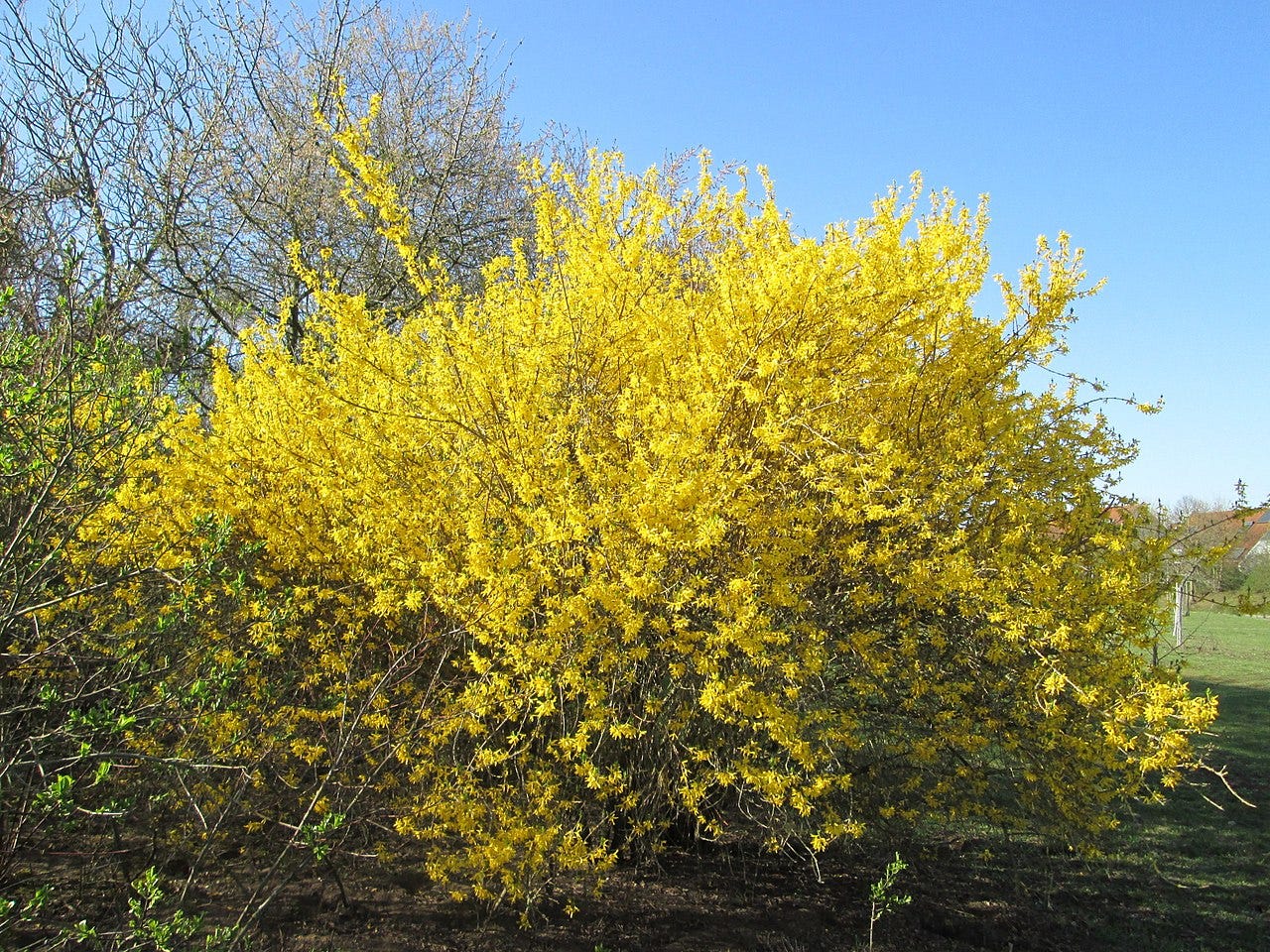
(photograph by AnRo0002, via wikimedia)
Since 1916, the origin of this number, usually abbreviated as 𝜶, has been unknown. Many people have tried to understand it. Dirac tried. Pauli tried dreams and psychotherapy. Feynman tried. For almost a century, nobody succeeded.
Then, in 2004, Hans de Vries, in the Netherlands, published a fascinating formula for 𝜶. He published it on his website, where it is still found today: http://www.chip-architect.com/news/2004_10_04_The_Electro_Magnetic_coupling_constant.html De Vries was exploring quantum electrodynamics and found an astonishing formula for the fine-structure constant that looks like many others in quantum electrodynamics, the domain of theoretical physics exploring everything electric. His formula is the implicit expression
\(\begin{eqnarray} && \alpha = e^{-\pi^2/2} \, \bigg (1 % all checked in April 2026 + \frac{\alpha}{(2\pi)^0} \, \bigg (1 + \frac{\alpha}{(2\pi)^1} \, \bigg (1 + \frac{\alpha}{(2\pi)^2} \, \bigg (1 + \frac{\alpha}{(2\pi)^3} \, \bigg (1 + ... \bigg) \bigg) \bigg ) \bigg ) \bigg)^{2} \end{eqnarray} \)
and predicts the value
𝜶_predicted = 1/137.035 999 095 829 70…
Note that the expression only contains e and pi, the integers, and nothing else.
In 2026, the latest and most precise experiments suggest
1/137.035 999 0… < 𝜶_exp < 1/137.035 999 2…
In other terms, the formula by de Vries from 2004 is in full agreement with the data of 2026! (There are some details here, because the latest experiments disagree among each other in the last digit and, above all, on their (triple) standard deviations, but I leave that for another time.)
De Vries’ formula is the only formula of the fine-structure constant that has withstood the test of time. It is also the only formula that has the chance to agree with quantum electrodynamics. De Vries did not publish how he guessed it. In any case, his intuition for perturbative field theory is extraordinary.
This is already a fascinating story by itself. But the fascination continues: the strand tangle model, about which I have told so much in this blog, can deduce this formula, and does so ab initio! In other words, strands imply that de Vries’ expression is the correct description of nature: de Vries’ expression for the fine-structure constant follows from the single fundamental principle of the strand tangle model that describes general relativity and the standard model of particle physics.
The combined prediction of de Vries and of the strand tangle model is precise and falsifiable. Future experiments can test it further and thus decide whether nature is really made of invisible strands that connect everything with everything else.
*
The story of the strand model is told in the papers and presentations found at https://www.researchgate.net/profile/Christoph-Schiller-2/research. Enjoy.
*
A naughty comment: Ai missed the connection between strands and de Vries’ formula, even though everything has been available publicly for years. What do we learn from this? In 2026, Ai systems can talk, but cannot think.
* *
No posts
Comments
Nothing yet. Say the first thing.
Sign in to join the conversation.