
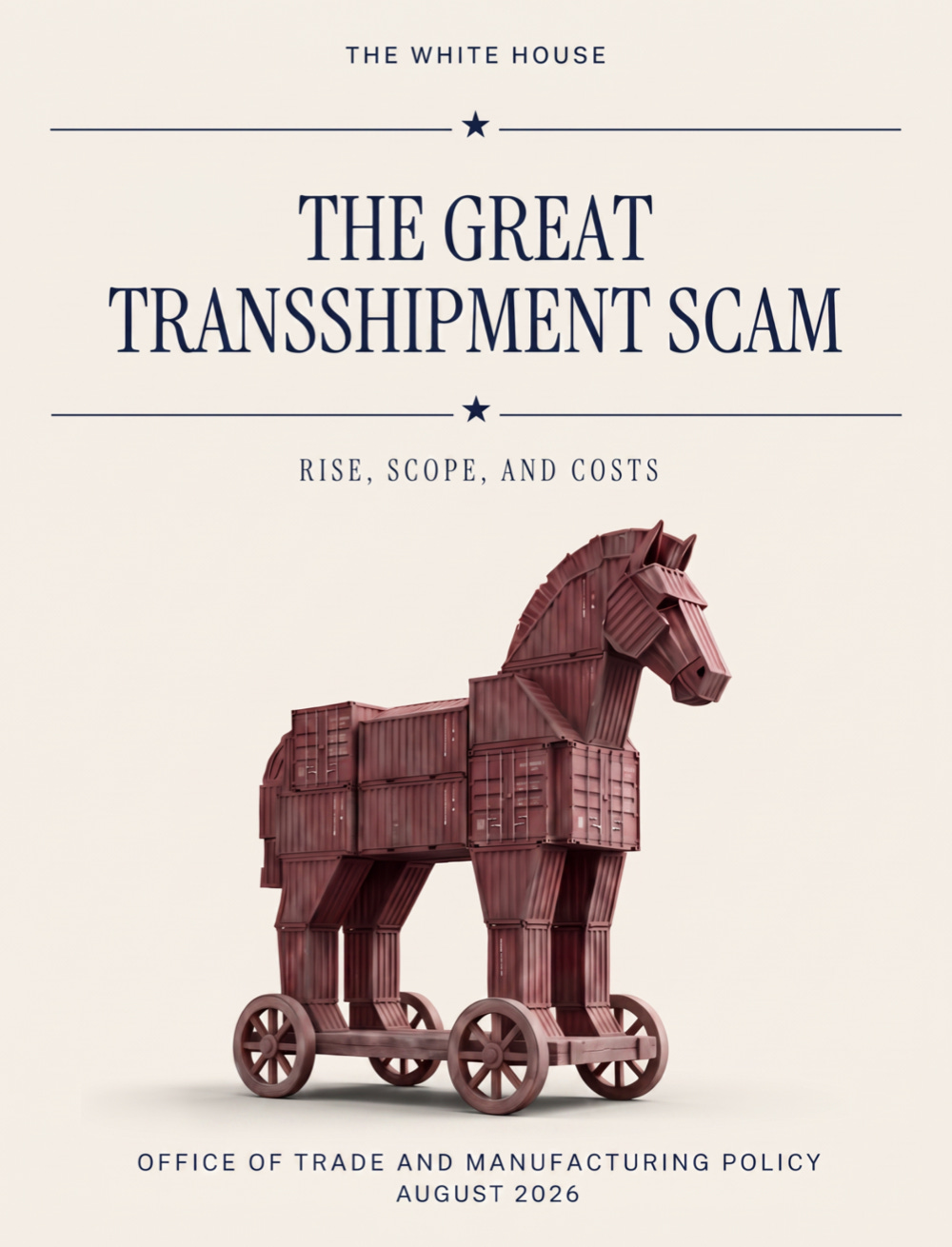
It feels like everyone is writing about the White House’s new war on transshipment this week – see Mona Paulsen HERE and Alan Beattie HERE. And … I’m also going to write about it.
First, it was entirely predictable that the US would start to care a lot more about where products are actually from. For example, HERE is me making exactly that prediction in the FT early last year.
In summary, as country-by-country tariff differentials increase, so too does the incentive for companies to declare that an import is from Country A (10% tariff) instead of Country B (15% tariff).
This is complicated by the fact that, in practice, a single product can be “from” lots of different countries, with its component parts sourced from all over the place.
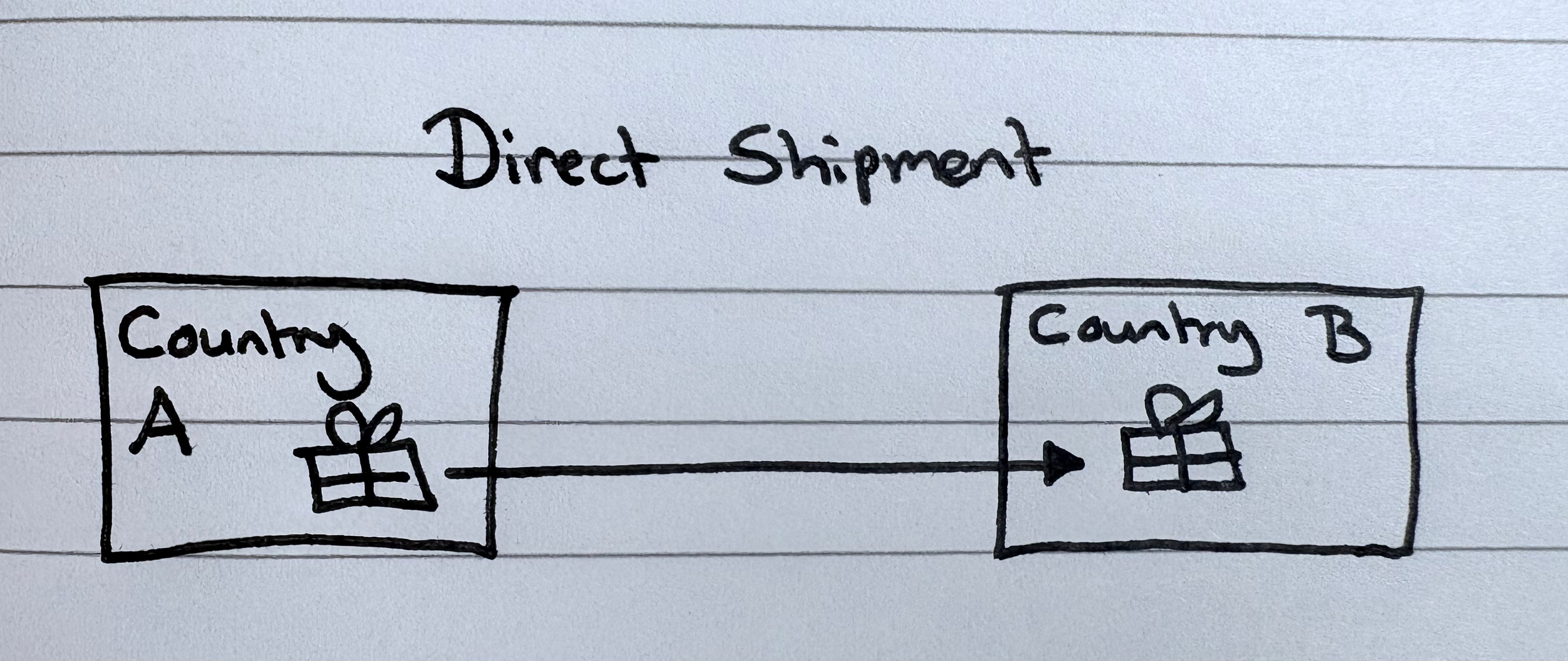
But what does transshipment have to do with this? Loosely defined, transshipment is when an import does not move directly from Country X to Country Y. Rather, for one reason or another, it takes a detour through another Country or Countries.
In graphic form, this is what ideally happens:
But sometimes, when that isn’t possible, this happens instead:
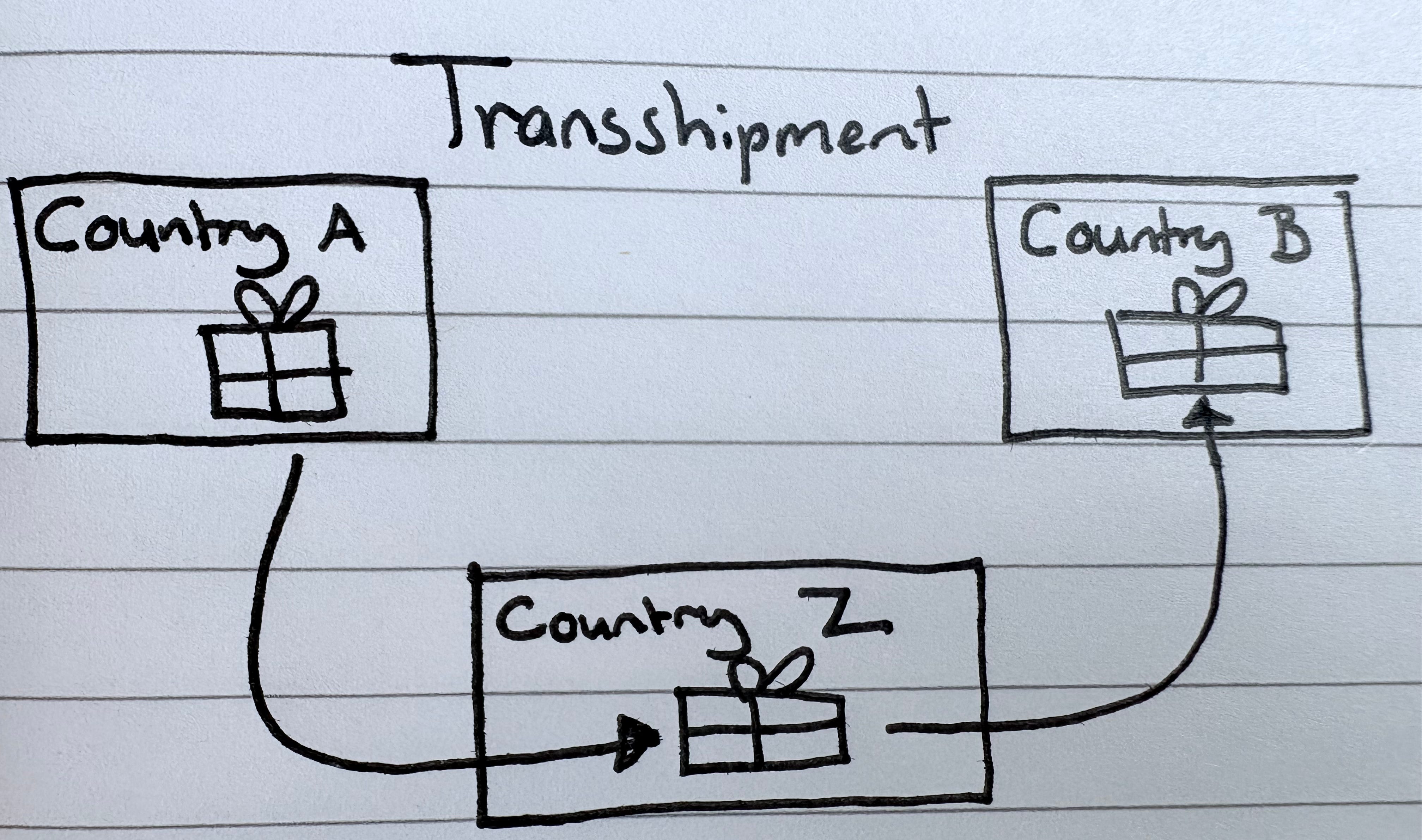
And, importantly, transshipment itself is not necessarily a problem. Moving a Chinese product through Singapore does not magically make it Singaporean.
There are lots of legitimate reasons for transshipment.
For example, the exporting country might be landlocked. This could require the exported product to be transported by road or rail to a seaport in a neighbouring country before being shipped to its final destination.
Equally, a company might choose to ship a load of inventory on bulk to a warehouse in an easily accessible country, and then split it up for sale to countries in the region.
The Trump administration acknowledges that these legitimate reasons exist, but its new paper focuses overwhelmingly on a different type of transshipment: using a third country to disguise the true origin of a product and dodge Trump’s tariffs, particularly those imposed on China:
The United States faces a growing challenge from the illegal transshipment of goods through third countries to evade applicable tariffs and other trade remedies. Exporters in higher-tariff jurisdictions can abuse differences in U.S. tariff treatment across countries to route goods through lower-tariff jurisdictions before entering the American market. Illegal transshipment may involve relabeling, repackaging, re-invoicing, minor processing, false country-of-origin claims, or other actions intended to secure tariff treatment that would not apply if the goods’ true economic origin were declared
As such, it has grouped offending countries into “Three Tiers of the Shadow Transshipment Network”:
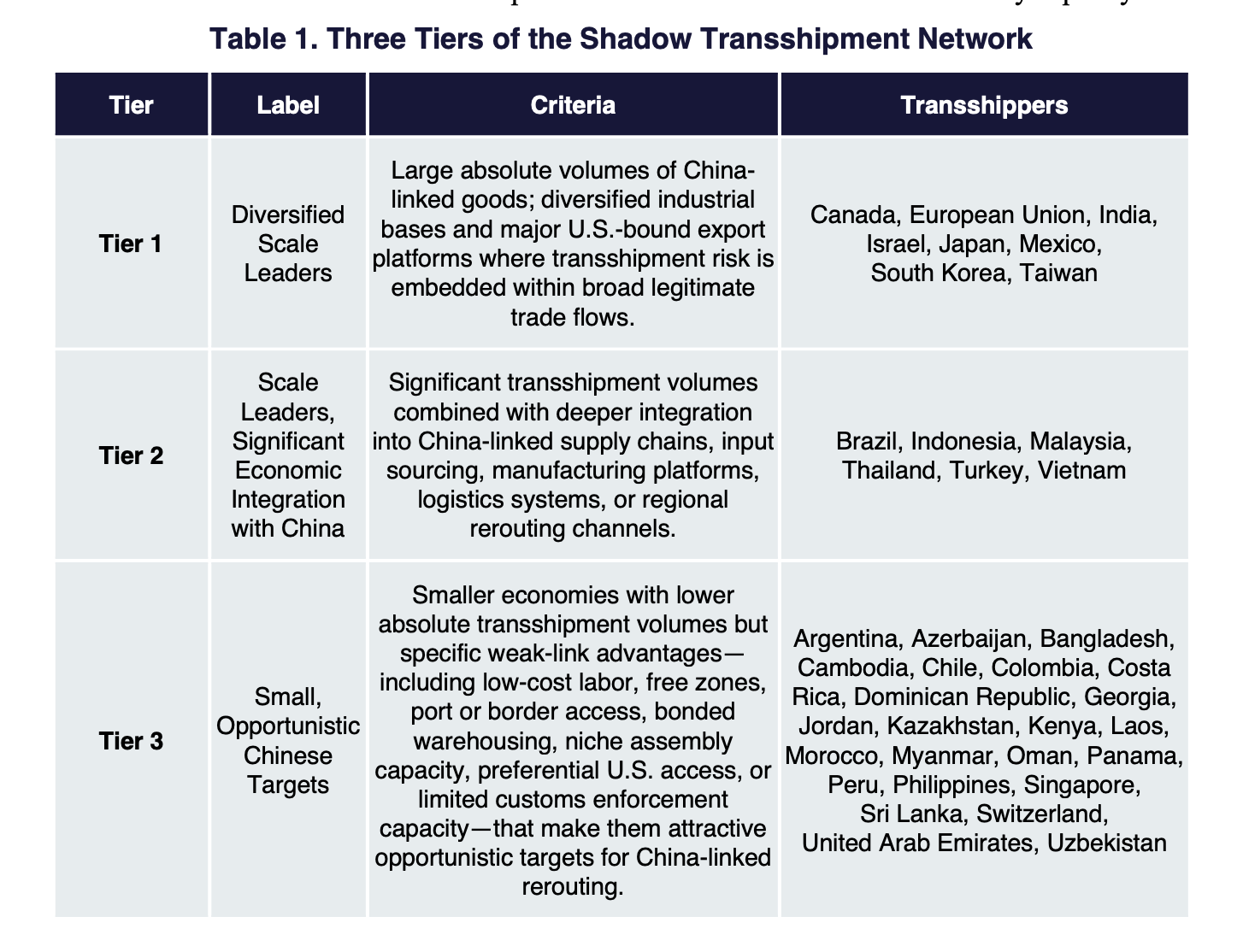
And decided that the rise in imports from these countries, which coincide with a fall in imports from China, means that China is simply re-routing exports to the US to dodge tariffs.
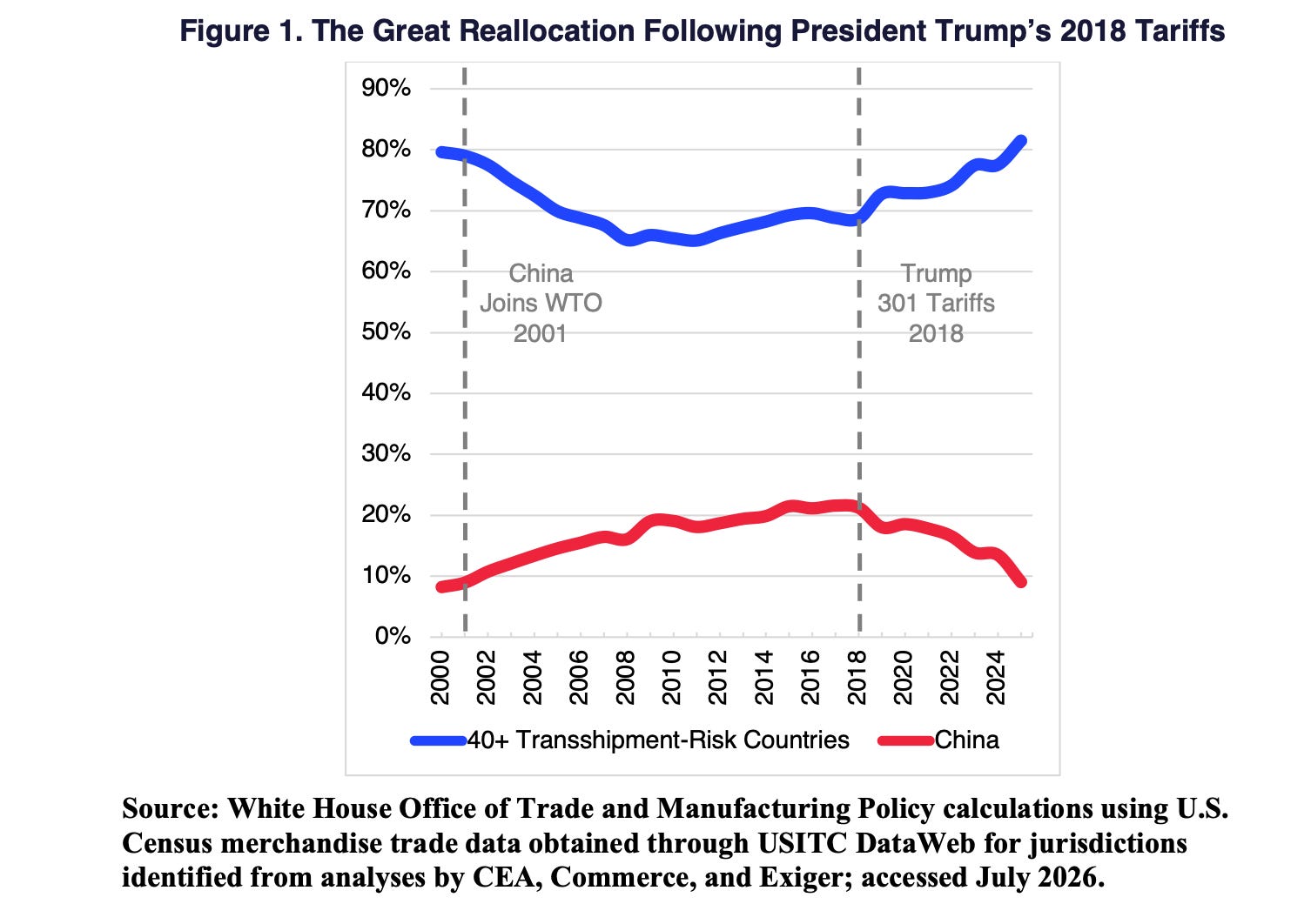
Anyway, I’m going to do something slightly different than most of the commentary I’ve seen on this and say … yeah, there probably is quite a lot of re-routing happening.
That doesn’t mean every increase in exports from Vietnam or Mexico is secretly Chinese. But when the tariff differential is large enough, the incentive to game origin is obvious.
In fact, concerns about goods being routed through third countries, or undergoing only minimal processing in an attempt to acquire a new origin, are pretty embedded into the assumptions underpinning normal free trade agreements.
See this from the EU-Japan FTA:
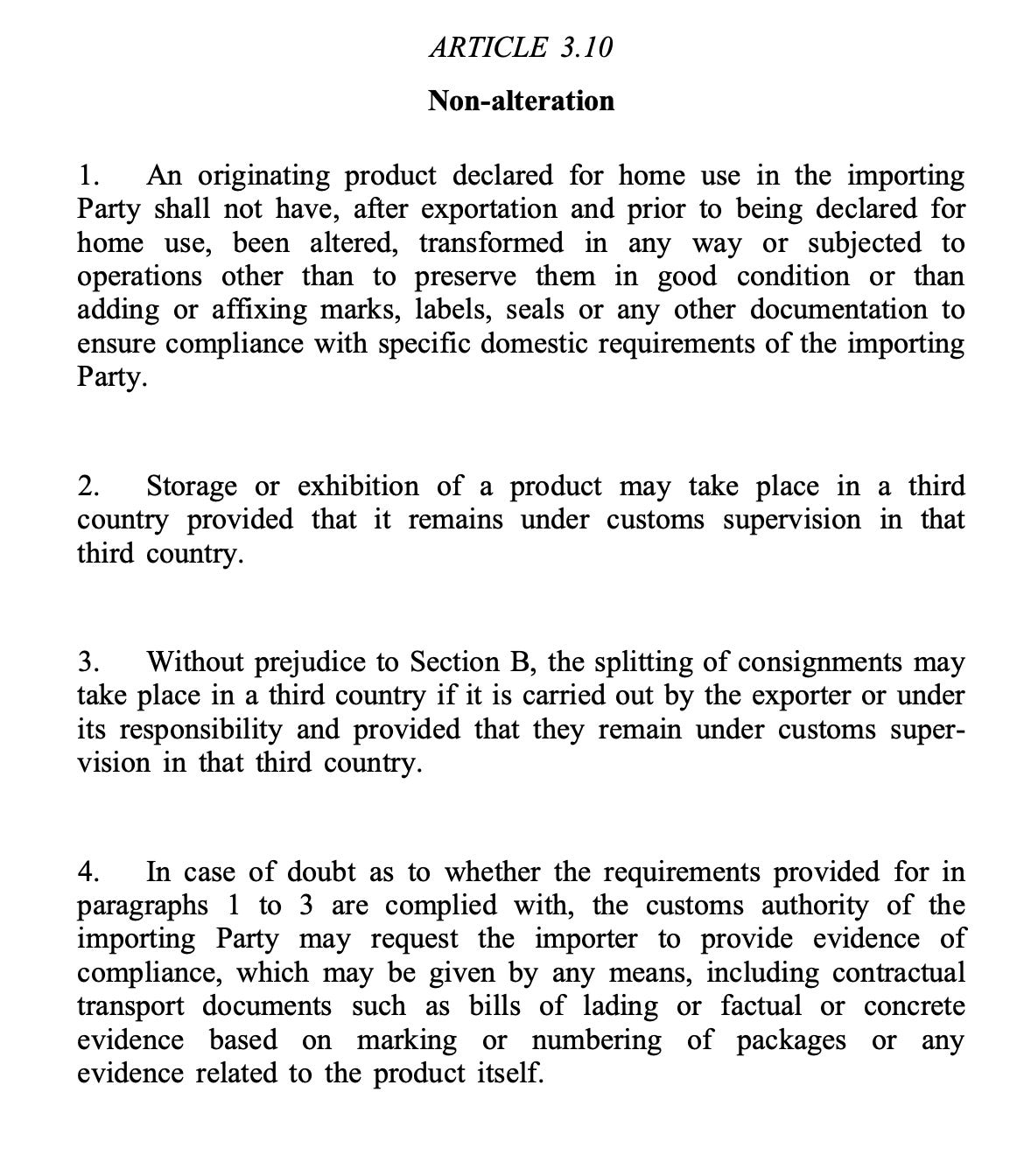
In summary, this clause states that while goods seeking to qualify for the EU-Japan free trade agreement can be moved and stored in other countries, they must remain under customs supervision and no one is allowed to meddle with them.
Separately, there is also a long list of activities [Article 3.4] that absolutely never confer origin status. The point here is to prevent, for example, a company importing something from China into Japan, tweaking it a bit, and then claiming that the resulting product is Japanese for the purpose of qualifying for the preferential tariff rate.
The EU takes a similar approach to non-preferential origin determinations — goods entering outside of free trade agreements — with Article 34 of the Union Customs Code Delegated Regulation setting out “minimal operations and processes” that cannot confer origin.
These include changing packaging, simple painting or polishing, affixing print marks, simple mixing, etc.
However, in the US context, many of Trump’s new country-specific tariffs do not come with bespoke rules of origin. Instead, determining where a product is “from” often falls back on the US’s non-preferential origin regime, which remains rather vibes based: a fact-intensive assessment of where the product was “substantially transformed”.
The challenge for the US is that it is nearly impossible to determine where something is actually from at the border.
Sure, it’s possible that a bunch of boxes arrive from the EU, declare as EU-origin, but also happen to be covered in large Mandarin graffiti. But, failing that, for lots of widgets you really can’t tell where the component parts are unless you audit the companies involved, dig into the documentation, do site visits, etc.
It’s hard!
The US’s solution for now appears to be what the White House paper calls an “an AI-enabled Detective Border”. This would essentially use data and pattern recognition to identify anomalies and trigger further investigation.
For example, if an importer has been bringing in products from China right up until the moment the tariffs hit, and the next day starts declaring products under the same HS code as being from Singapore, a light will start flashing red.
But I think that, in parallel with an uptick in investigations, fines and penalties, we are also going to see greater codification of US origin rules, particularly outside the FTA context.
We see glimpses of this in the context of the Section 232 tariff applied to drones, where exporter countries benefiting from a lower rate will be required to demonstrate “substantially all the critical components and technology are certified by importers to be products” of the US or approved trade partners.
I think we’ll see more of this. More value-based rules and local-content thresholds, and more specific requirements around where key components and technologies can come from. And, quite possibly, some explicit ‘No China’ propositions.
Because Detective Border can help the US identify suspicious trade. But ultimately, if you want to enforce radically different tariffs depending on where a product comes from, you need a reasonably clear answer as to what “comes from” actually means.
But for now, let’s see what Detective Border uncovers.
One of the most important questions for companies is whether Trump’s tariffs will endure once he’s gone.
My view is that while some of the specifics will inevitably change, the aggregate US tariff level will remain elevated. This is because the revealed preference of both US parties is that they actually quite like [some] tariffs. But also because even if the public say they don’t like tariffs, given a choice between tariffs and another tax increase, they will probably prefer tariffs.
But some folk disagree with me!
[I know, how dare they.]
Here’s Simon Lester, for example, making the correct point that tariffs do not in fact raise revenue in the aggregate, and perhaps more speculatively, that such a point should be fairly easy to communicate to the public:
My points above should be fairly easy to communicate with simple charts showing the tariff increases along with the rising budget deficit and debt, so I'm hopeful this can work politically for a future president who may be interested in pursuing the removal of these tariffs. As noted, tariff revenue is simply not the main factor in dealing with budget deficits/debt, and the focus of the tariff debate should be on the broader impact of the tariffs on the economy and on relations with other countries (which, in my view, hasn't been great so far).
Read his full post HERE.
MFN fan-favourite Nigel Cory emailed in this piece of miserabilia:
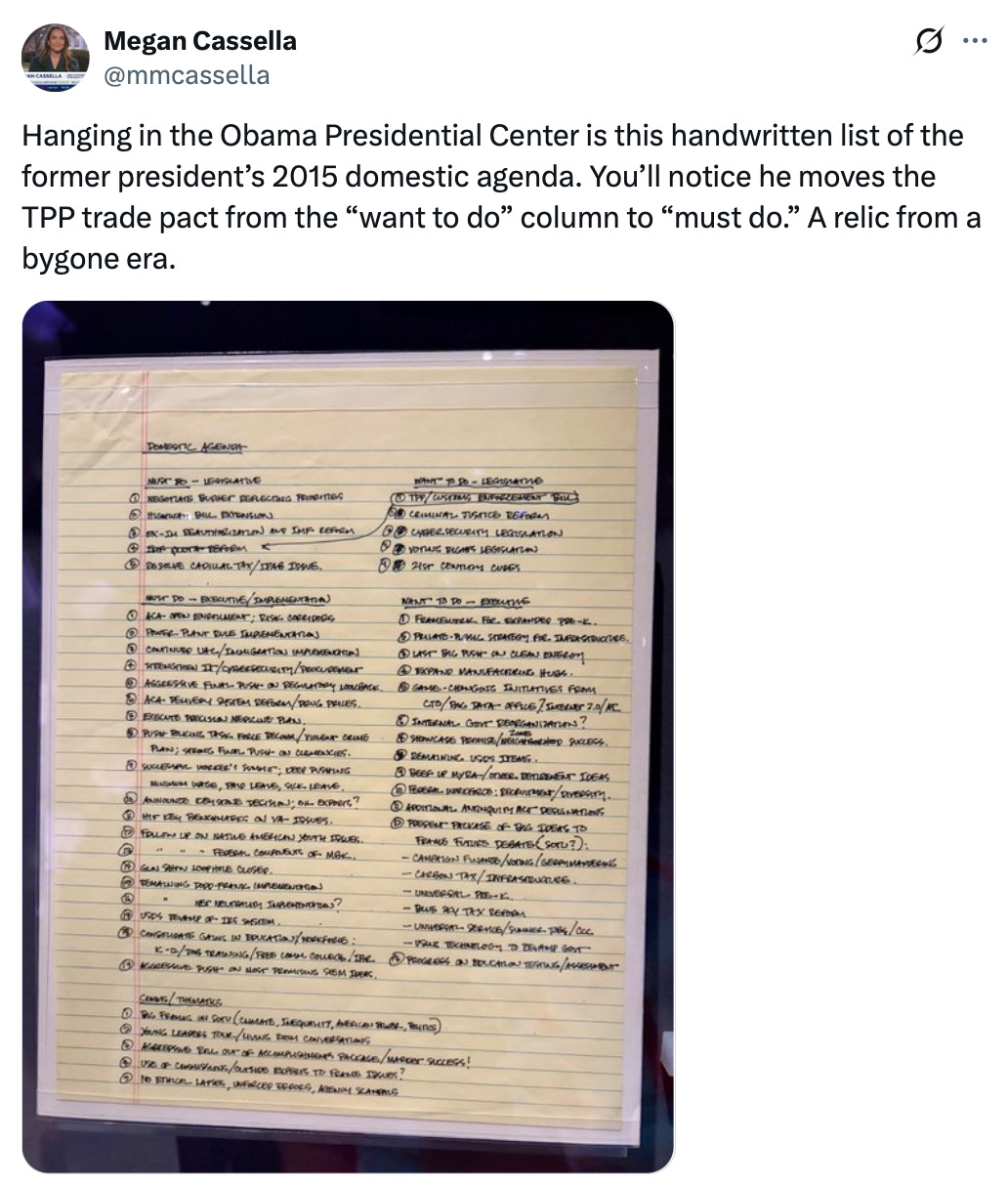
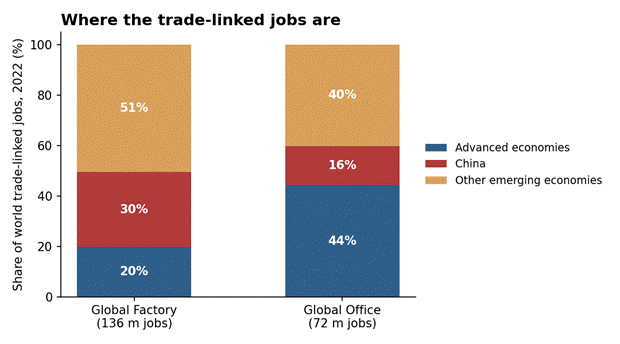
From Richard Baldwin’s latest Substack:
Best,
Sam
No posts
Comments
Nothing yet. Say the first thing.
Sign in to join the conversation.