
MØRNING. Today we’re playing agony aunt.
If you’ve ever dated a man or know anyone who has, chances are you’re familiar with this one already. However, understanding why or to what possible end the random-bikini-pic-like occurs, is a matter left largely unresolved. Meanwhile, respect, relationships and public image crumble, one double tap of pixelated flesh at a time. Luckily for us, relationships and intimacy writer Jessica Key is here to unpack the phenomenon and doesn’t shy away from the uncomfortable question. What if it really does mean nothing?
It’s 2am and I’m two years deep in the grid of a woman I don’t know, a stranger with a follower count I’ll never have. Time has gone slippery. Okay, my captions are funnier, but she has visible abs and a perma-tan. My phone illuminates my face, the room around me no longer visible. I can only see hot dog legs, sponsored smoothie bowls, Zara hauls, what she eats in a day.
I scroll back up, and my heart lurches again when I see it: his like on her bikini pic. When I finally build up the courage to mention it, jokingly and in passing, he tells me it’s nothing, that I’m overreacting. And maybe I am, because the jealousy I’m feeling does seem out of proportion to one red heart.
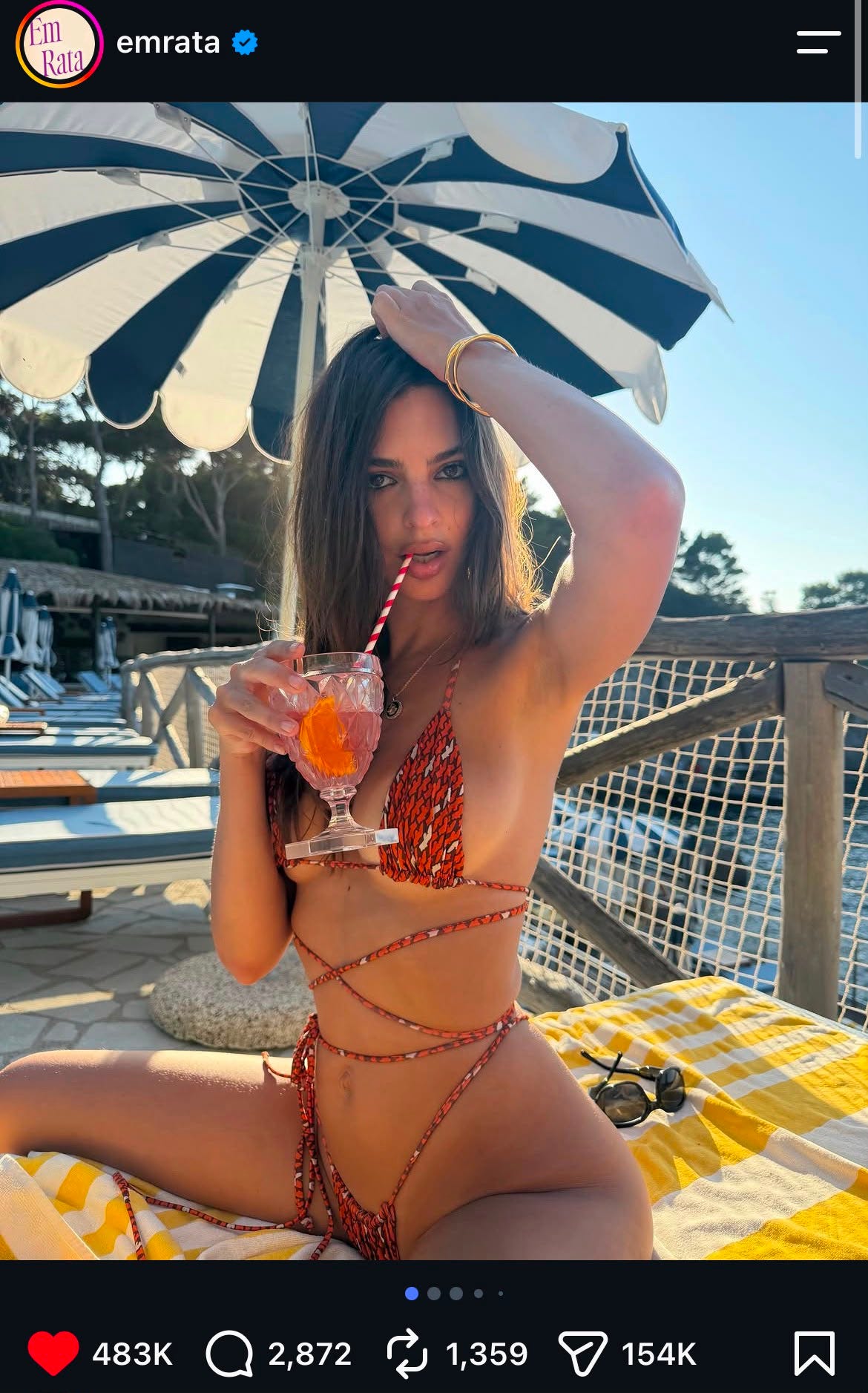
But still, his ‘it’s nothing’ just doesn’t land for me. I know that everything on the internet means something. So I went looking for what it meant, and found a story that didn’t just erase me, but him and her too.
He could have just liked her story, sent out a flare that was only ever meant for her to see. But he didn’t. He took it to the grid and made his private glance public. A like is meant to be seen: timestamped and visible by design. This is Erving Goffman’s impression management in the digital age: a small deliberate act that controls the way our audience sees us, and we’re all doing it on social media all of the time. Hot selfies, do-gooder GoFundMes, performative reading posts: these are all public signals we send up to build a version of ourselves in the eyes of others.
Every performance has an audience, and I’d assumed the audience he had in mind was her. I thought he was playing some kind of loser lottery, hoping she’d see the like, notice his shirtless selfie and DM him. But even he had to know that was a long shot: he was a tadpole squirming in a sea of likes. No, the like couldn’t be for her. It was something else entirely.
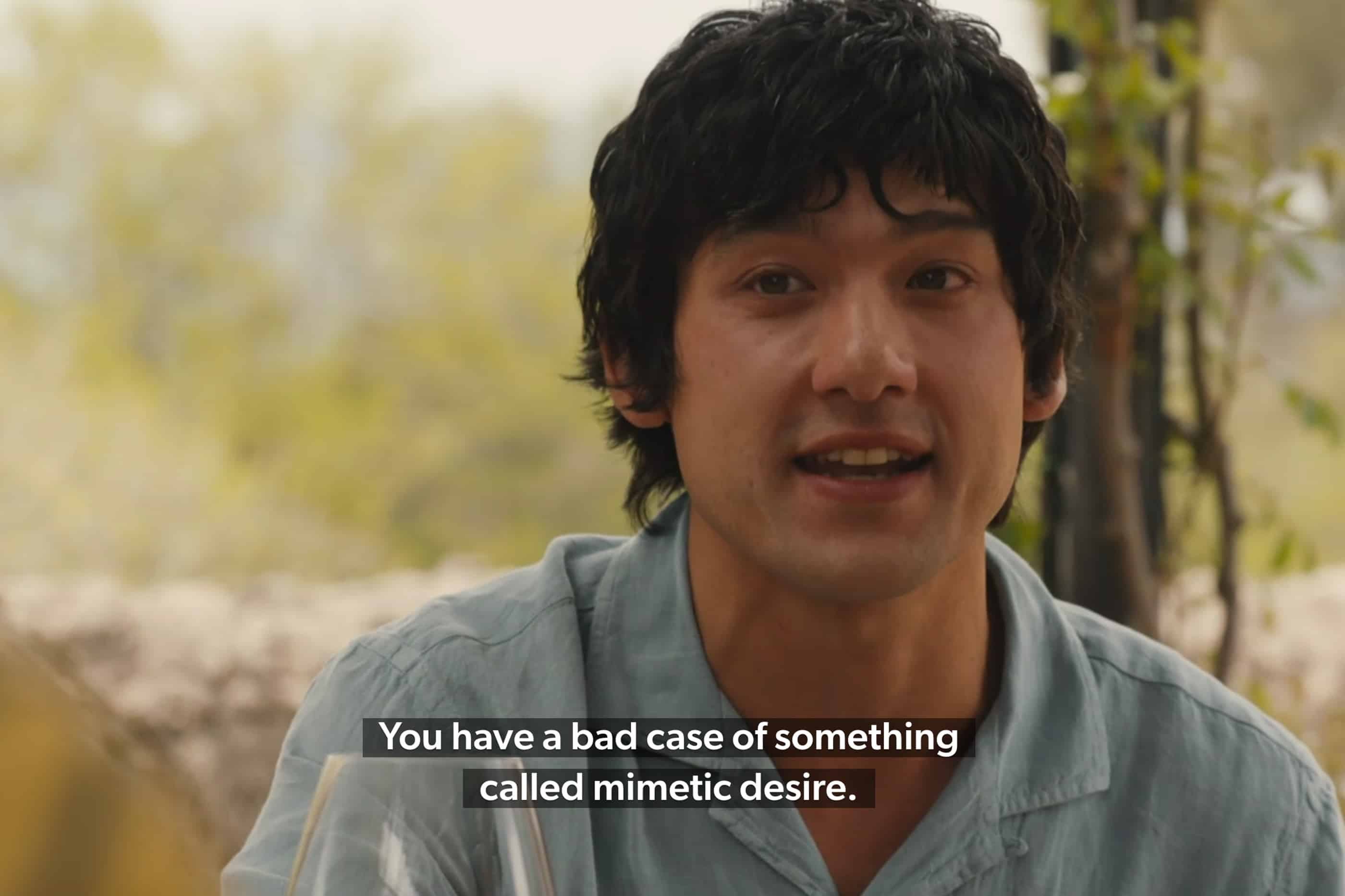
In a world of algorithms, where what we see is built on what other people like, our desire can never really be our own. This isn’t a new idea. René Girard called it mimetic desire: we want things because other people want them first. Instagram just monetised it. He didn’t want her, he wanted what the feed had certified as worth wanting. Her picture surfaced for him because other men his age, following similar accounts, liked it first. He just inherited their wanting.
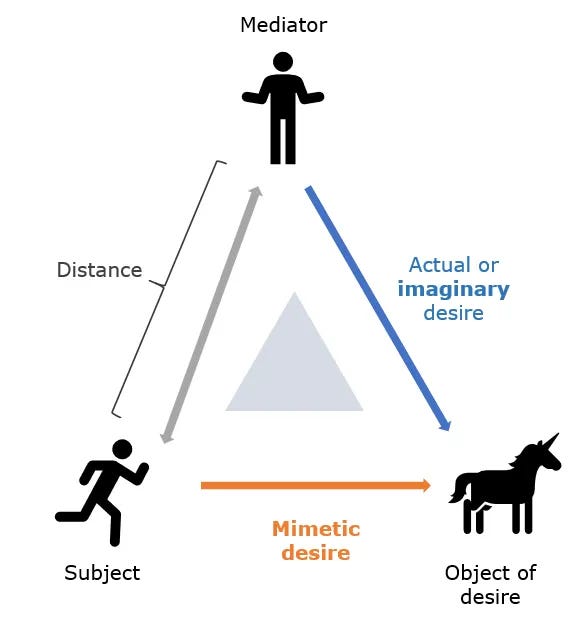
But this desire doesn’t just come from men, it goes back to them too. This brings back the question of who the like is actually for. Eve Kosofsky Sedgwick takes Girard’s triangular theory of desire and makes it asymmetric and gendered: when two men show interest in the same woman, the charged bond is actually between the two men. She’s just a conduit: the like travels through the woman, towards the other men. Hello, homosocial signalling!
I thought I was watching him want her, but I was actually watching him talk to other men.
So what was he trying to tell them? Men seen alongside desirable women get read as higher-value, more competent, more worth knowing. The like lifts his stock with the only audience that ever mattered. I’d wondered why men persisted in this behaviour despite being told by women that it was degrading, offputting and essentially embarrassing, and now I get it. It’s not about us.
When I talked to men about why they did this, men who were not linked to me romantically and had no incentive to lie, their honest answer, again and again, was ‘I don’t really know tbh.’ Now, I’m not about to make this a ‘believe men’ piece, but there’s something in that worth investigating. What if the like, and the signalling contained within it, wasn’t a decision he made at all, but part of something broader he was barely aware of?
In Roger Caillois’ studies on insects that disguise themselves as leaves and twigs (bear with me), he argues that survival doesn’t really explain their disguise – they mostly get eaten anyway. They were answering a stranger pull, one that called them to dissolve into the space around them until there was no line left between the creature and its background. Anyone who has doomscrolled on TikTok knows how this goes: hours gone, holding in a pee, not quite sure whether you’re really still there. The internet invites this daily. And it may be that here, in this dissolved state, he liked the photo. He was no longer a man taking her in and deciding, he was simply a hand following the motions of many men’s hands before him.
This doesn’t mean the message goes undelivered. The like still happens, the signalling is still picked up by other men, masculinity is still asserted. It’s just that it’s sent by someone on autopilot, checked out. The true self, the one that might ask ‘what would my girlfriend think if she saw this?’ is no longer in the driving seat.
‘I don’t know’ isn’t an excuse, it’s a confession. When he told me ‘it’s nothing’, he wasn’t lying, he was describing himself in a state where he no longer existed.
And maybe that’s worse. Maybe it was easier for me when I could put the like down to the selfish nature of masculine desire, or, even better, take it as a proof of my own unlovability. But I can’t fight an absence, I can’t extract a reason from a boyfriend who dissolved into his phone and then came back not knowing where he’d gone.
He wasn’t there. And, two years deep in a stranger’s grid at 2am, my own face illuminated by her posts, the hours gone somewhere I couldn’t account for, neither was I. We’d both disappeared into the same machine, we were just standing at opposite ends of it.
Until next time readers.
Words by Jessica Key Edit by Sui Donovan & Merle Butcher. Cover image via Euphoria. Brought to you by @morning.fyi.
No posts
Comments
Nothing yet. Say the first thing.
Sign in to join the conversation.