
2026/01/18 [Osaka, Japan]
We’re already 2 weeks into 2026 and it’s off to a strange and exciting start! Last year ended with schedule finalizations (flight, hotel, and course booking) and a 48 hour trip from Uruguay to Japan.
Coming to Japan to visit family as a kid was a horizon broadening experience. It allowed me to grasp a very different language and culture through attending school and basically living a normal Japanese life for 1/8th of each year. Even so, I wish I had taken greater advantage of the opportunity. Despite all that time here, I know surprisingly little about the country’s origins and history. Pretty disappointing, I know, but hindsight is 20/20…
Now that I’m back again, I plan to remedy all of that.
Since arriving, my fiance and I have been taking a short tour of central Japan before the year truly gets underway. Alongside visiting historical sites, I’ve been taking an online course on Japanese history (Understanding Japan: A Cultural History ), which has been a great supplement. It’s helped ground the things I saw in context.
I’ve always been particularly interested in religion, which makes Japan especially fascinating! Japan has two predominate religions that co-exist, Buddhism and Shintōism. Except, they do more than just co-exist. Historically, they intertwine to the point where it can be hard to separate one from the other.
A common misconception about Japan is it’s historical isolation. In reality there was one 200 year period of true isolation, the Edo period, during which the Tokugawa shogunate restricted interaction with most of the outside world. Other than that, Japan did a lot of engaging with it’s neighbors from Korea all the way to the Middle East.
Because of that, at least a little religious intermixing was bound to happen. Shintōism is the original religion of Japan, with Buddhism arriving (primarily) from a Korean mission sent over in 552 CE. Different periods brought different goals and the frequently changing rulers endorsed whichever suited their needs the most.
During the unification of clans, Buddhism was promoted to reform Japan into a civilized nation equalling China and Korea. Later, Shintō tales parallel political power struggles explaining why one region conquered another.
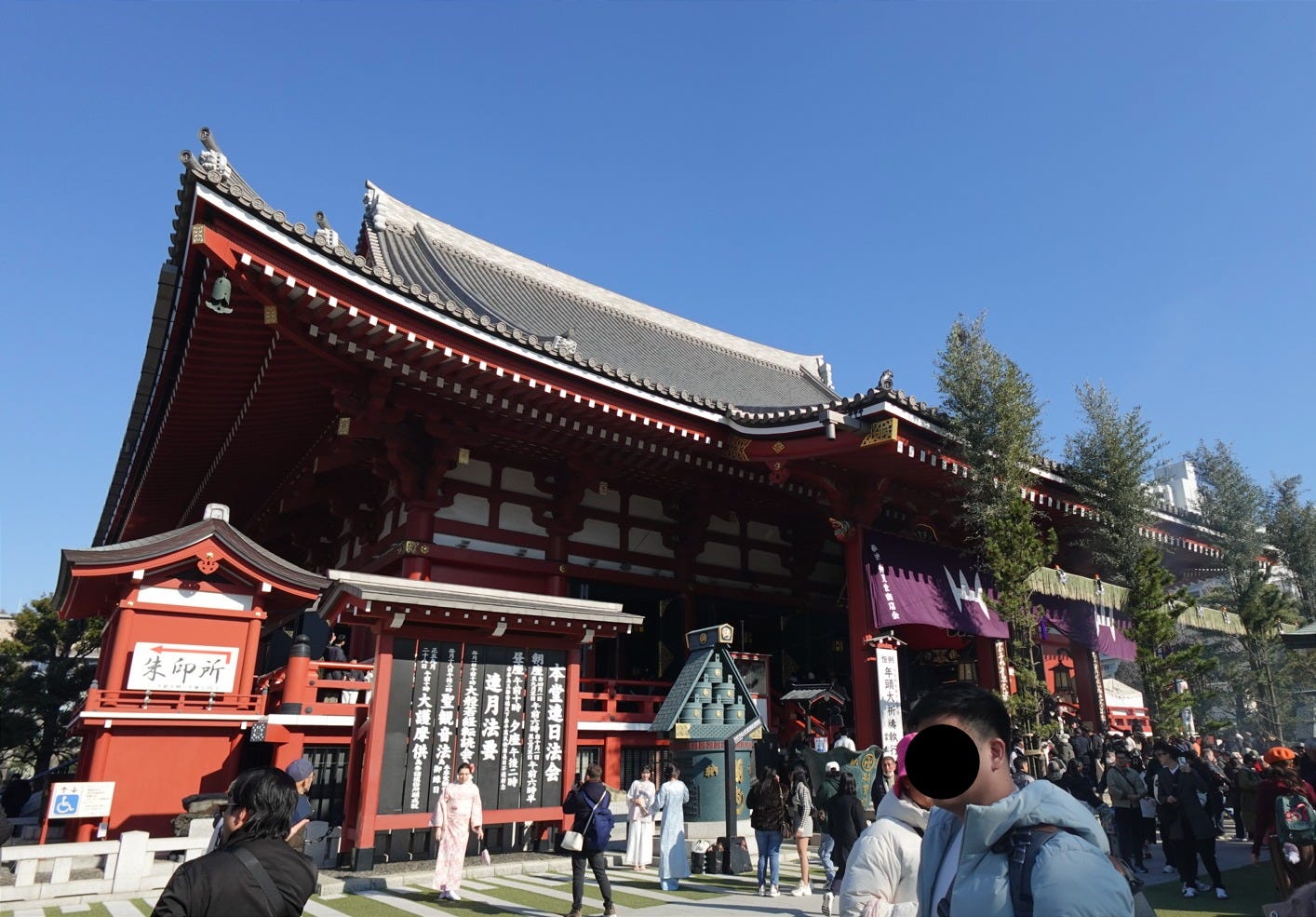
During our stay in Tokyo we visited Senso-Ji (the city’s oldest Buddhist Temple) which is dedicated to Kannon, a Buddha who postponed ascending to nirvana to help others. One thing I noticed was that Senso-Ji’s famous Kaminari-mon Gate included Buddhist statues of Fujin & Raijin— Shintō gods of thunder and wind. Somewhere in the entwined history of these two religions many Buddhas became associated with a Shintō god and Shintō gods became Buddhist guardian deities.
The blending continues into everyday life. Because Shintō centers on life and vitality, while Buddhism gives guidance and comfort around death, Japanese families hold Shintō weddings and Buddhist funerals. They participate in festivals at both shrines and temples, and see no contradiction in doing so because that’s the way it’s always been.
“Born Shintō, die Buddhist.”
Along with the history course, I’ll be getting plenty of Japanese language practice in. Even in the past couple weeks (severely lacking in dedicated study time) I’ve noticed improvement in my kanji reading because I can’t escape it if I wanted to…
It will be even more immersive when I start my first course of 2026 this week. I’ll be learning everything I can about the making of textiles and garments from the thread up—learning fine weaving, silk fabric creation, traditional sewing, and design from local artisans. The first couple months I’ll be staying with family and commuting to various courses. I’ll start of with 1 month of weaving and textile creation in a local workshop in Kyoto. Then 2 months of design/creation/tailoring apprenticeship under an artisan with the option to travel down to Beppu, Oita to continue the apprenticeship under a different teacher later on.
I’d also like the take a JLPT (Japanese Language Proficiency Test) while I’m living here. The higher N2 and N1 level certifications a good to have if I wanted to start a business or be employed here in Japan. For some additional work experience, I’ll be helping out at some expos here in Osaka and continuing my English teaching.
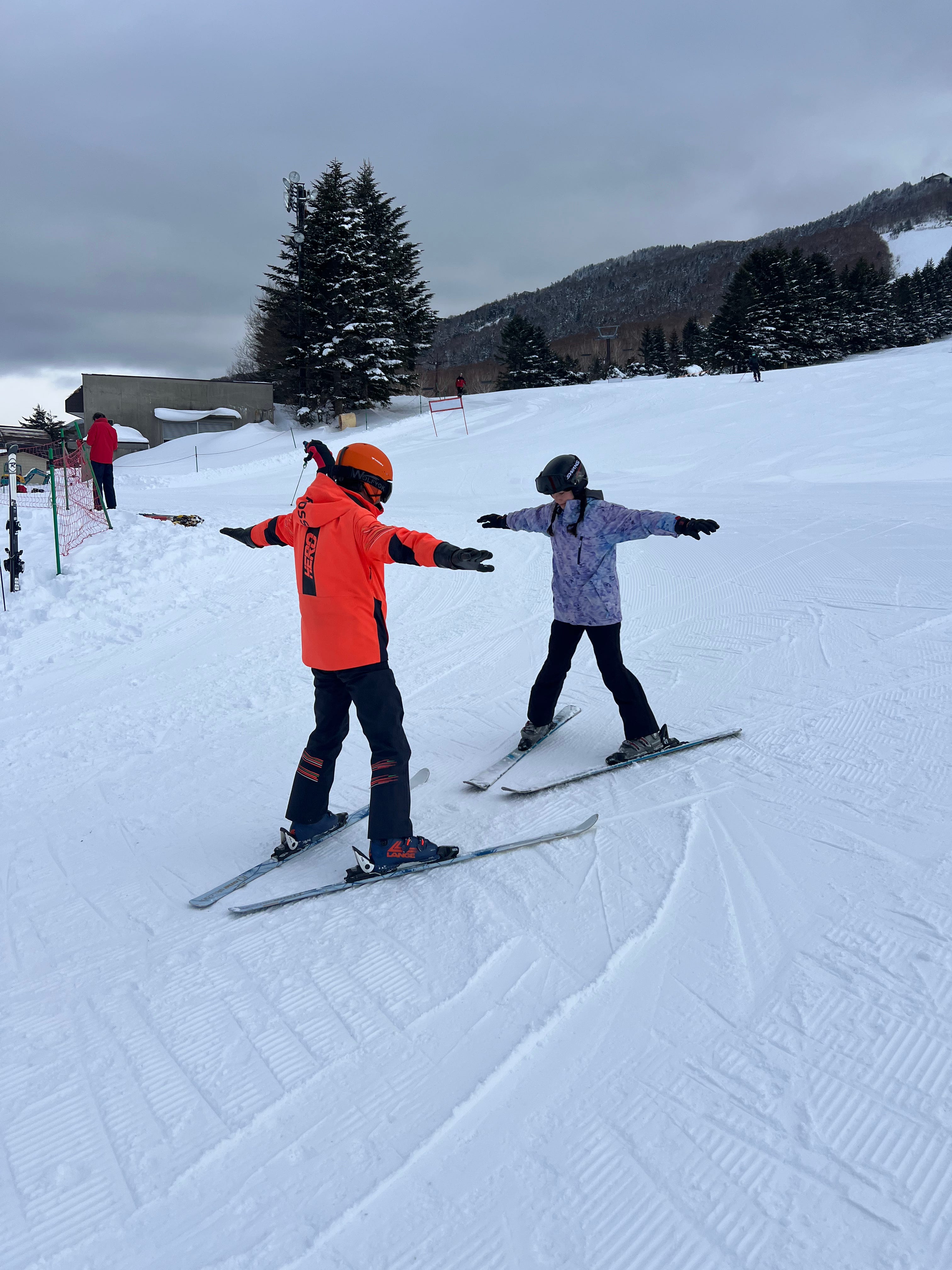
There have been many new and interesting experiences already! I tried my hand at skiing, which was a challenging and enjoyable. I’d never experienced such powdery snow before! (Only Pacific Northwest sludge…)
The most important technique: PIZZA
Then, exploring onsen mountain towns, observing Japanese firefighter drills, learning about the 119 (Japan’s equivalent of 911) emergency call process, taking traditional 20th birthday photos, and spending time with family and friends have made the past couple weeks very memorable.
It’s been a great start, with plenty more to come as skill building and creating take center stage.
-Morgan Senna
Comments
Nothing yet. Say the first thing.
Sign in to join the conversation.