
Dear Morfollower,
First of all, happy new year! Perhaps we crossed paths last year, in the field, in a meeting room, at a conference. Either way, I’m really glad we connected, and I hope we can keep the conversation going in 2026.
For this first newsletter of the year, we want to share what we’re learning about a challenge that keeps fascinating us: how to truly understand land at high resolution while working at scale. Here’s why it matters: a site is never homogenous. Even within a single fazenda, soil, microclimate, and vegetation can change within a few hundred meters. Treating land as uniform means missing what really drives success on the ground.
This leads to a key question: how do we capture this variability, zone by zone, and track how each area evolves from the very first months?
Monitoring a single hectare is already well understood. Working across thousands of hectares with satellite data is becoming standard. What’s new, and what makes the difference, is the ability to do both at once: analyze thousands of hectares with near-centimeter resolution. This edition explores exactly that shift, through concrete examples from our sites and the tools that make it possible.
Happy reading,
Pascal, CEO of MORFO
How do we move from a complex site to actionable decisions? In this article, we detail our 5-step approach to plant the right species in the right place, moving from a global view to multiple specific, qualified zones.
Once you have a “per-hectare” plan, the question becomes: how do you quickly know if the trajectory is right, and where to correct? This is where early monitoring changes everything. Not as proof after the fact, but as an operational tool. In this article, we take you with us to Belém. We use the concrete example of our project there, opened during COP30, to show you analyses from the first months, and how it’s changing the way we adapt in real time.
Early monitoring helps us see what’s happening now. But there’s a deeper constraint: even if we do everything right today, climate change is shifting the target. We’re restoring ecosystems that won’t live under the same conditions that shaped them.
This is the starting point of FaBRestor (Future-Based Restoration), published in Restoration Ecology: a framework that builds on existing methods by integrating three “timeframes” (past, present, future) to design ecosystems that are more robust, adaptive, and aligned with what’s coming. In short: every hectare counts, but it also counts through time.
Read the FaBRestor publication post
Should you wait years before opening a restoration site to partners, funders, teams, and stakeholders? It’s a risky bet, because in the first months, tomorrow’s forest doesn’t really look like a forest yet. But we explain in this article why we do it.
Veni, vidi, vici. There were 948 visitors at our site in Belém (we had initially planned for 200…). They share what they saw here and there.
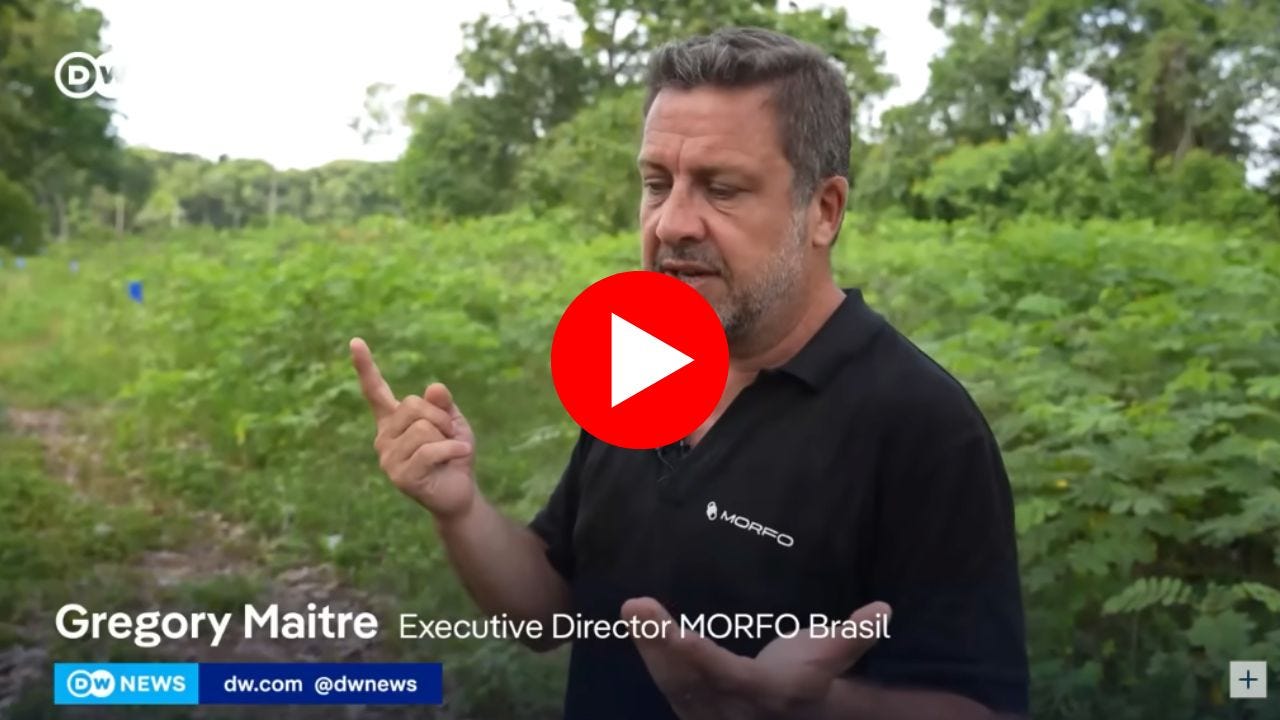
Gregory, our GM Brazil, is celebrating his 50th birthday. Happy birthday Greg! At our request, he shared what he learned over 4 years leaving a comfortable position to build MORFO in Brazil. If you haven’t read it, check it out on LinkedIn.
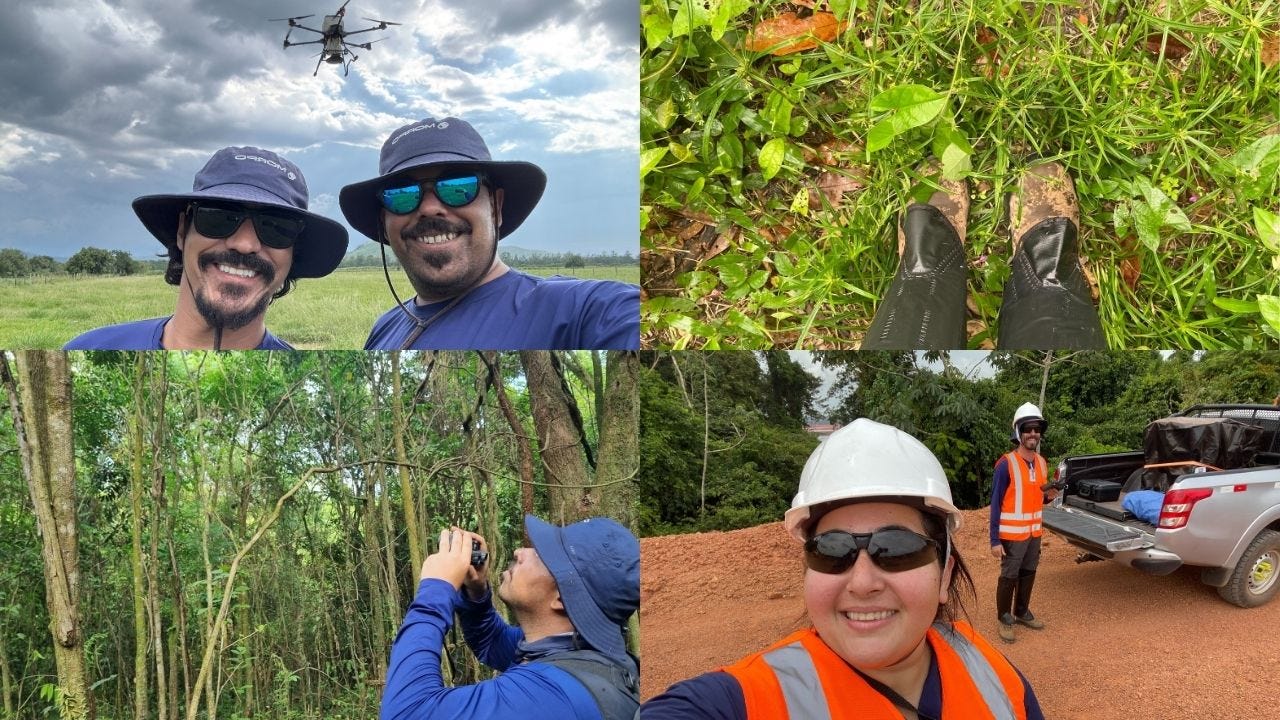
Right now, our teams are 100% focused on operations. It’s an extremely intense period: planning, coordination, execution, quality control, and field adjustments. Here are some photos taken in recent weeks to show what “restoring at the hectare scale” actually looks like during execution.
🌎 Thank you for reading MORFO’s newsletter until the end. If you enjoyed it, please share it with someone who cares about doing restoration seriously, hectare by hectare.
🇧🇷 Do you want to read our newsletter in Portuguese next time? No problem. CLICK HERE!
No posts
Comments
Nothing yet. Say the first thing.
Sign in to join the conversation.