
If you’re wondering where things are up to with my free/paid subscriber experiment, there is an update at the bottom.
A reminder that I’m hosting a conversation with Dr Curt Thompson next Thursday, details here.
This weekend we had a gardening day at our community house. As part of our collective rhythms (or Rule of Life), once a month we set a day aside and each housemate takes turns planning activities for us. The brief is that we have to do something fun together as part of keeping our relationships healthy, but otherwise they reflect our wildly different interests. Some of them are just for us, but we use many as an opportunity for hospitality, inviting in friends and neighbours. My house day is always gardening focused, partly because although I am Lead Gardener there are lots of tasks too big to handle alone, and partly because I keep trying to get the wider community as excited about growing things as I am. We are also blessed with a big garden, for London, and it is a chance to share the space with others. Members of our wider community join us who have sometimes been labelled “vulnerable”, but on garden day, everyone has something to offer. Something about working side by side, outdoors, feels like good medicine.
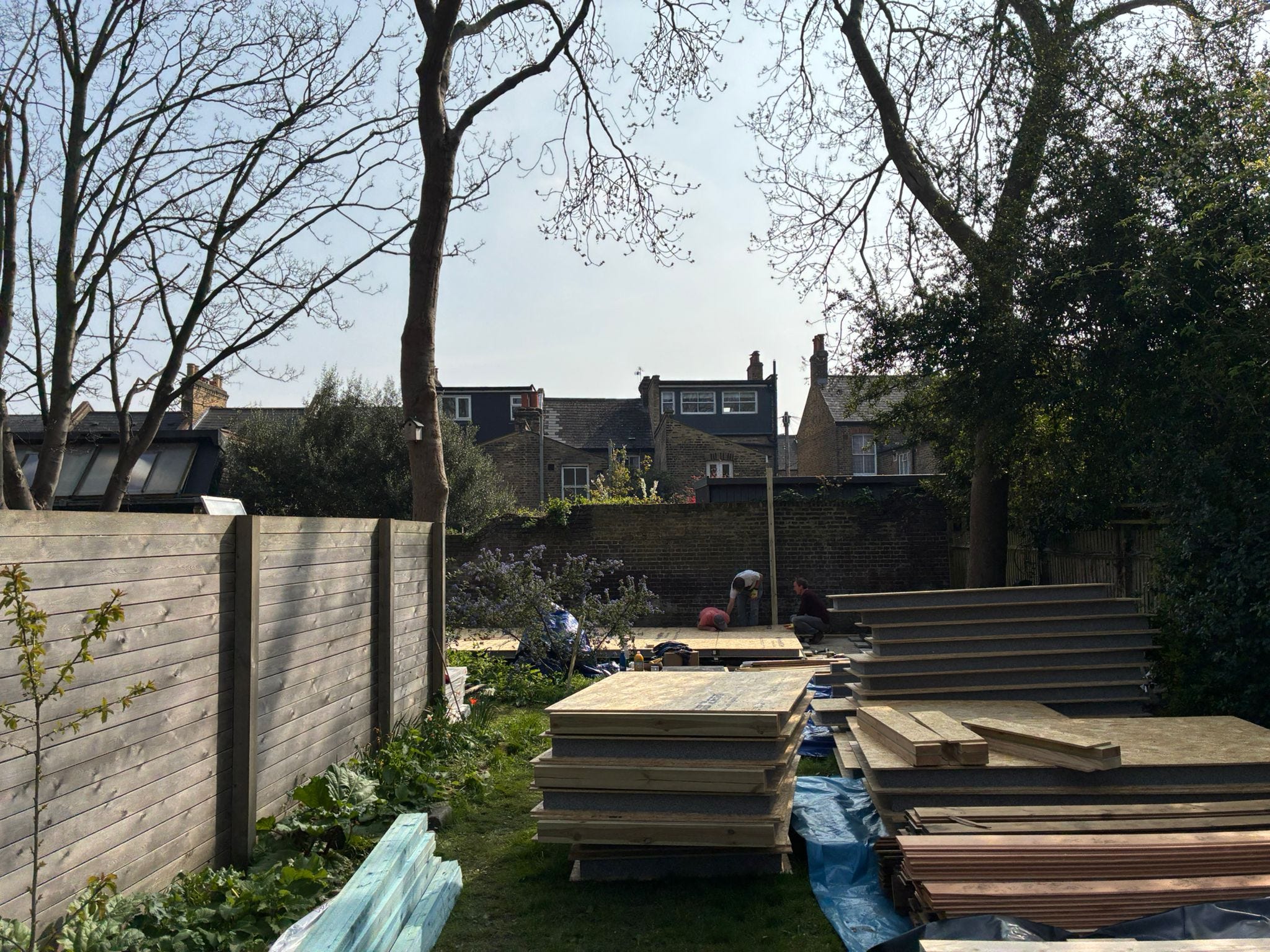
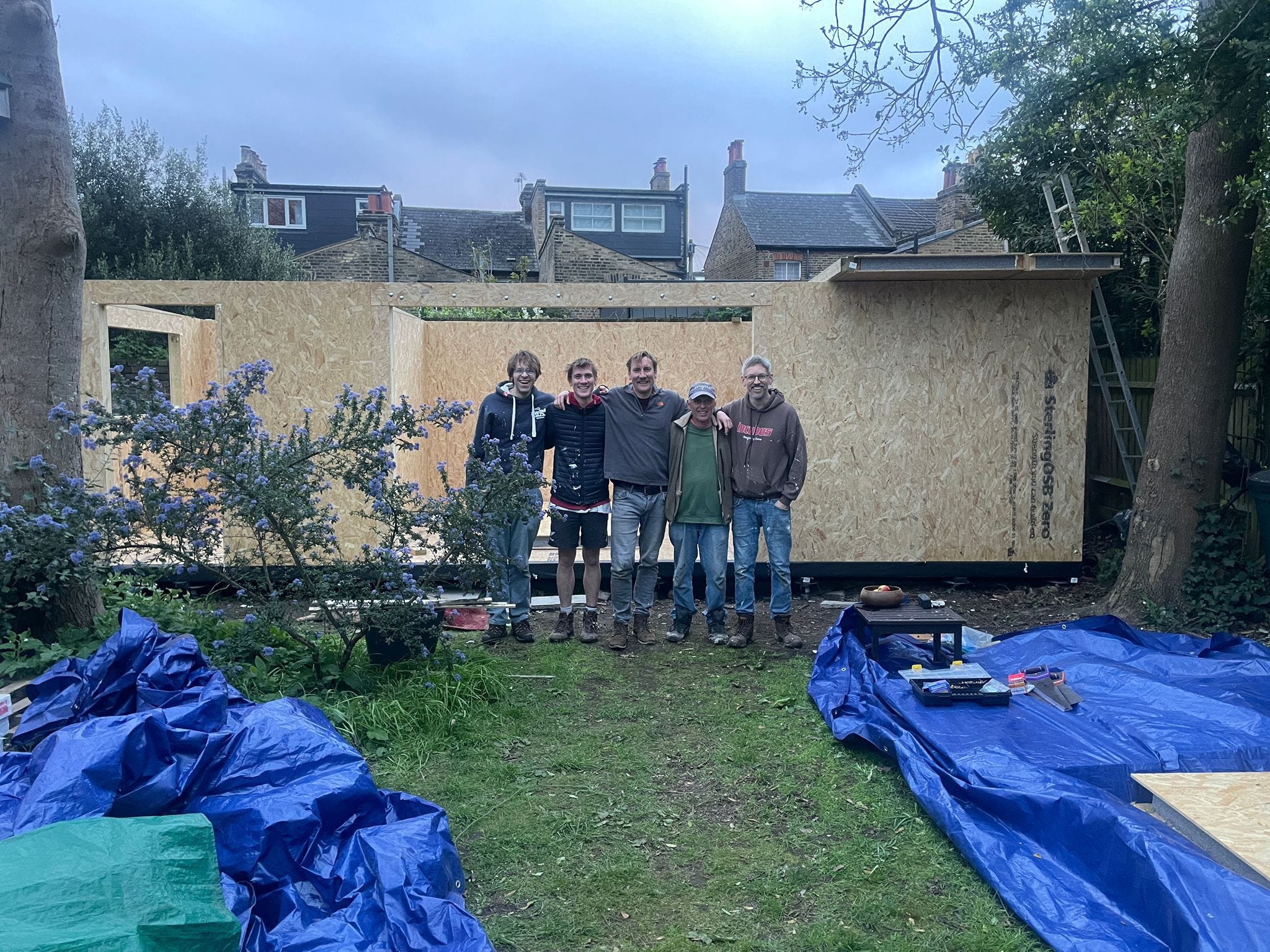
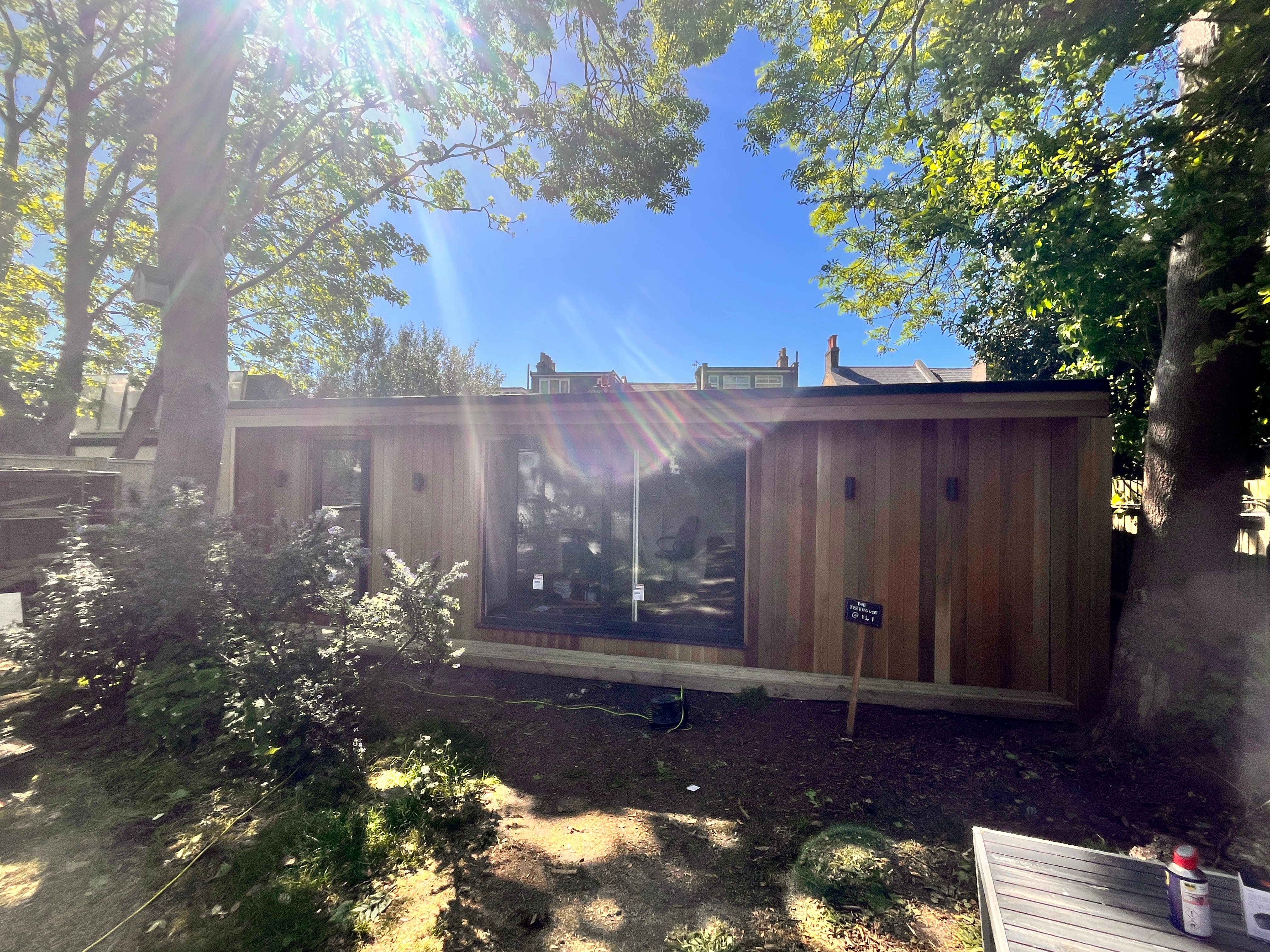
The day this year involved the usual things: seed sowing, top-dressing veg beds, compost turning (always my favourite, the teeming life in the pile never fails to blow my mind) but also re-finding the garden. We needed multiple trips to take the huge amount of detritus to the tip now we have (almost) finished a big building project. We have a new housemate due (they will start tiny but grow fast) and are in need of more space, so have built a new chapel/garden office/podcast studio/escape space. And when I say built, I mean with our own hands. We ordered a kit of SIP panels which came on the back of three flat bed trucks and took a whole day to unload, then taught ourselves how to put it together. Almost every skill was a new one. When I saw “we”, it has mainly been the male housemates alongside assorted dads, uncles, brothers, neighbours. I’ve held things and nailed things and am now Lead Decorator and my very pregnant housemate has kept everyone fed and watered, but the average difference in strength between the sexes in this area has been in evidence. Which is fine. More than fine, really. The satisfied gathering of men having a beer the day the walls went up felt like a lovely picture of non-toxic masculinity and an echo of barn raisings down the centuries.
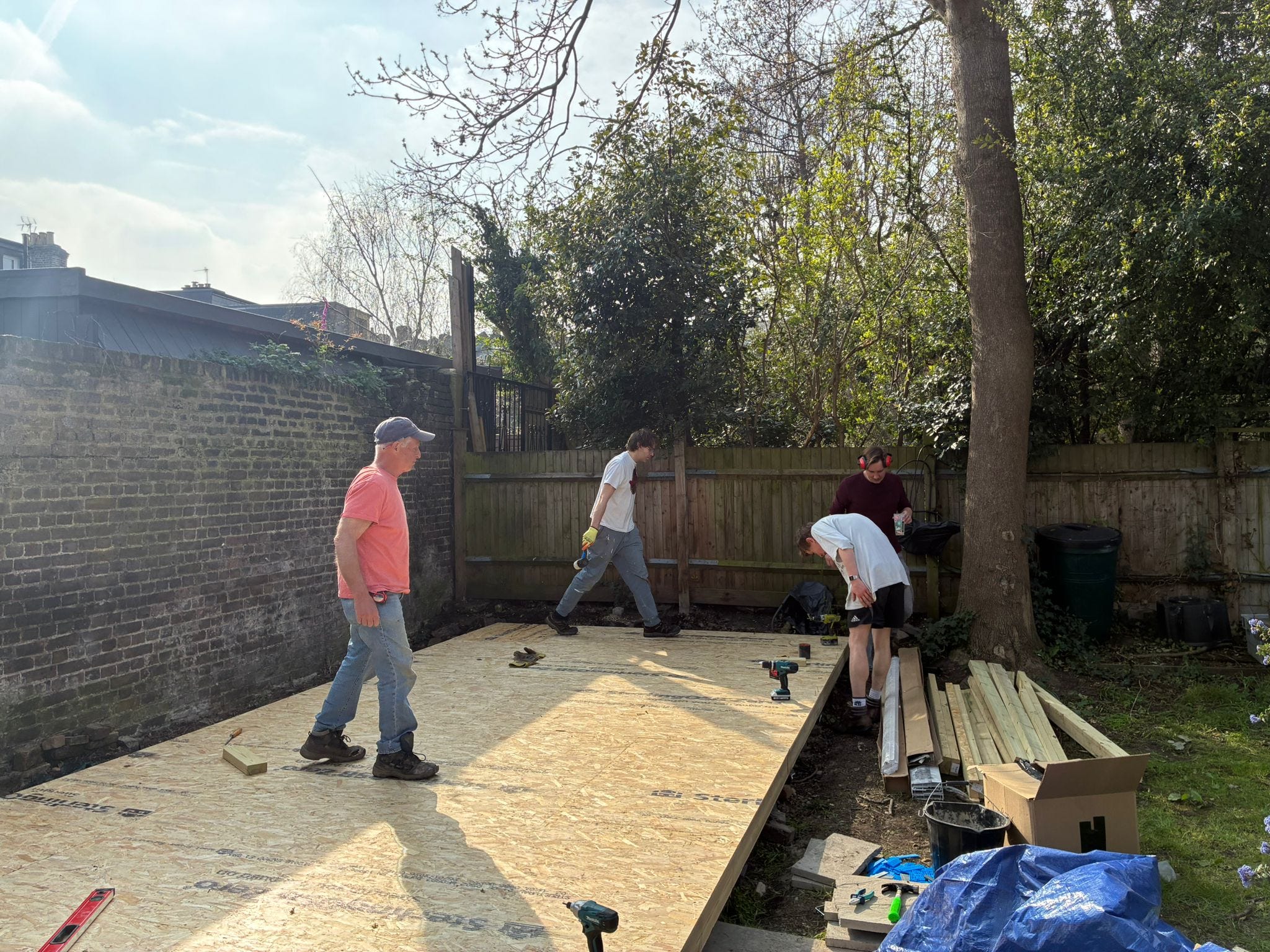
Despite my comparatively weedy arms, I have been trying to grow in these skills too, not wanting to lean too hard into gender stereotypes. It is partly because I can see how good it is to face a hitch, a frustration, a seemingly immovable material problem and figure out how to fix it. The relative resistance of the physical grounds me. It is so intractable, demands so much more of me. While filling and painting I had a strange sensation of unfamiliarity, used as I am to mainly engaging with more malleable pixels, sentences, concepts. I am only using AI sparingly, and conflictedly, but I can already feel it forming me, making me used to its speed and ease. Technology does this, puts most of us, much of the time in what Andy Crouch calls “Superpower Zone.” He distinguishes between tools, which demand something of us but make things a bit easier, and certain types of tech, which demand essentially nothing of us, effectively sidelining human capacities. These types of tech put us in Superpower Zone, which is:
…the exhilaration of effortless power; the exhilaration of having some technologically-assisted ability, whether it’s pressing the accelerator in a car or scrolling through huge amounts of information or photographs online. It’s the sensation that I am getting a great deal done with very little effort. It’s quite habit-forming, because when we are operating as heart-soul-mind-strength complexes, which is what we really are, getting things done is difficult and often slow and complicated. And what the superpower zone gives us, and what the superpowers in technology afford us, is a reduction in complexity, a reduction in the sensation of effort, and an increase in the sensation of efficacy. That’s like a drug for a human being. But the superpower zone never fully involves or develops all four of those constituent parts of the human being. You always leave something behind to take advantage of it.
When I sit in my car and press the accelerator, my strength is not being used at all. It takes essentially no strength to press the accelerator. Whereas, when I get on a bicycle and pedal, I’m fully involved with my strength, my heart, my mind, and my soul. And it fully involves me and develops me as a person. When I get off a bike after a vigorous ride, I’m stronger than I was before. Whereas the longer I sit in a car, the more my physical capacities diminish….The basic problem with the superpower zone is that…it’s actually quite diminishing of us as persons in the fullness of what we were meant to be.
A few weeks of working much more with my hands does feel like it is growing me, rather than shrinking me. We are using some power tools, but I decided they are still tools, not tech, because they still require human skill, focus, effort, strength. When you mess up a screw hole there is no undo button, and it has scared me how part of my mind kept groping for one.
While we were clearing the garden of pallets, I decided to attempt an idea I had held for most of the four years we have lived here: bike sheds. We had four giant perspex panels that the previous owners had used to divide a room, and with some ingenuity, a little help and some determination, I managed to turn the pallets and panels into two new bike shelters. This in turn frees up space in our shed for more bulk buying of lentils and incoming baby equipment.
At one point, my nine year old son wanted to help. A younger man from another community house who had pitched up for the day took him under his wing. Together, they sawed lengths of waste wood to brace the pallets, measuring and levelling carefully. I doubted my son’s even weedier arms would be able to saw anything, but he kept going, determined to finish the job. Afterwards, with a lot of careful instruction, he used a nail gun and a power drill. Another guest, watching all this through half closed eyes said “aren’t you worried he is going to injure himself?” “No” I replied, honestly. “Or rather, he might, and we might end up in A&E, but I think the learning would be worth it.” I recalled a conversation with Rosie Spinks recently about her forthcoming book and her conversations with anthropologists about what is really needed for interdependent societies. “Toddlers with Machetes” is the memorable phrase she gifted me, a vision of families and cultures and tribes which teach their young real skills then trust them, expect something of them.
My son wielded his power tools that day, but also spent lots of time with other kids on a trampoline, sneaking too many biscuits when the adults weren’t looking. When I asked him round the firepit that evening what his favourite part of the day was he said “building the bike shelters”. Now, every time a guest comes he takes them down the garden to show them.
Gardening and building (and cooking and mending) things together is increasingly central to who we are trying to become. Some of the values of our community are Hospitality, Prayer, Celebration, Creativity and Upskilling. The last one might read strangely, but it has become more and more central. We are not from a generation which inherited a lot of practical skills. We all went to university, were taught that learning to make things, mend things, grow things, build things were somehow less valuable than analytic, strategic thinking or stuff you can do on a screen. Head, not hands, essentially. The implicit invitation was to make enough money so you could afford to get someone else to do practical things for you, buy a new one whenever something broke. I’ve no quarrel with thinking or working on a screen (like this work, in fact), but I am calling bull on those being the only skills worth developing.
It is partly the prepper in me, wanting to be of some use to our neighbours when the apocalypse comes (AI or climate or both). It is also, increasingly, because learning these kinds of skills is just bloody satisfying. I saw it in my son and I feel it in myself. This makes sense. Two of the five ingredients in a flourishing life, according to the grandaddy of positive psychology, Martin Seligman, are Flow and Mastery - doing things which stretch us and take our whole attention, and seeing ourselves get better at them. I have never felt either working with an LLM, but I experienced both this weekend, thinking hard about what seeds to plant to maximise our vegetable harvest, figuring out how to make bike shelters from materials destined for the tip. There is joy in it.
I am often, however, living both sets of values at the same time. It was one of my housemates who suggested we build the new space ourselves. The rest of us were sceptical. It has taken significantly more time than hiring someone in and not saved us that much money, in the end. The process has been full of delays and frustrations. We have been stretched in our capacity, sometimes grumpy, occasionally resentful. The end result is less polished, less perfect than it would have been if professionals put it up. We may run into problems with it later down the line (teaching yourself to fit windows is pretty complex, it turns out.) Most of the burden has not fallen on me, and still there have been days when I have longed for the frictionless option, to throw money at the problem rather than work through the stickiness ourselves. I’m glad we haven’t.
Like most of the values we are trying to live, I have to keep intentionally choosing them. When I’m rushed and tired I have no interest in trying to figure out why the dishwasher is not draining. I want someone else to deal with it. Sometimes that is ok, but we are living in a time not just of learned but taught helplessness. It is far more profitable for humans to ask an app or a machine or a frictionless, globalised service to meet our needs. There will be other humans involved, but we will never need to risk the friction of actually relating to them. Learning instead to meet our own needs, for and with others, to share what we have, to teach each other what we know, disrupts that taught helplessness. We have to learn how to be together. It keeps the value of all that skill and knowledge locally, in webs of relationships, in gardens and homes, rather than allowing it to be extracted and sold back to us.
It steadies me, makes me more hopeful. I think it probably grows our souls as well as our skills. There is no undo button for character formation, after all. And if it doesn’t, at least we have somewhere to put our bikes, and somewhere to pray.
I wrote a piece last week partly about the changing Substack landscape and my sense that in order to make a living as a writer it is increasingly necessary to pivot to salesy, content-market-machine tactics. I offered a bold, vulnerable feeling invitation: for more of you to become paid subscribers on a more relational, less transactional basis so I could make the whole thing free. I said that if I hit 475 paid subscribers I could do that, an increase of nearly 100.
40 of you took up the invitation. THANK YOU. Existing and new. Several existing paid subscribers upgraded to Founding (you can do this in your settings, if you’d like to ) and others took out subscriptions for others as gifts. If you are among them, it is one of the most encouraging things that has happened in a while. It is the most paid subscribers I have ever gained in a week, and already helps with the sense of financial precarity pursuing this kind of vocation, in these kind of times provokes. More than that, I felt met in my groping attempt to articulate a different way of connecting, not theoretically, but in real concrete commitment. There are a lot of us, then, who do not want to interact with the world solely as a customer, who are prepared to experiment with a different logic.
Lovely Oliver Burkeman shared the post and someone responded to him with this, fascinating note:
If nothing else, it has been a fascinating exercise in surfacing some of our assumptions, noticing what our consumption patterns say about our deeper values, what we believe about human nature. Classic Economics has a lot of baked in anthropology. We will optimise our self-interest, always, it teaches. Some paid subscribers did indeed defect, reducing the numbers of growth overall to about 30, and I felt (I was glad to discover) genuine sense of “God Speed.” It is ok if this halting attempt at as much honesty and humanity as I can muster in public gives some people the ick. As I am holding onto:
So what is next? Honestly (big word at the moment), I don’t know. This post is free, and audio and events will continue to be for paid subscribers as planned, partly because it protects the space for real conversation. I don’t want to make a knee jerk decision about whether 30 net new paid subscribers is enough to make all the written content free. I don’t know exactly what it would mean for my ability to earn money on here in the future. I didn’t think so, but I got so excited about the idea that I am loathe to let it go. So I am going to take a moment and pray about it. Wherever I land, for those of you reading, thank you. Whether you can afford to pay or not, I am so grateful to have you here.
Comments
Nothing yet. Say the first thing.
Sign in to join the conversation.