
Hey there,
Here are the last two chapters of The Eggroll Armistice.
Chapter 8 is the verdict. Chapter 9 is the couch, the coffee, and the cat. I’m giving you both at once because they belong together. Splitting them felt like sending you home from a party before dessert.
Quick catch-up if you’re just joining: Marisol has spent a month in a muddy war camp keeping a thousand soldiers fed. Two lords, two siege weapons, a demonstration scheduled for Day 25. Three gamblers on a hill who bet on it. Last chapter, she reached into a well of magic she wasn’t supposed to touch, made a feast, and collapsed in the grass.
Now she wakes up.
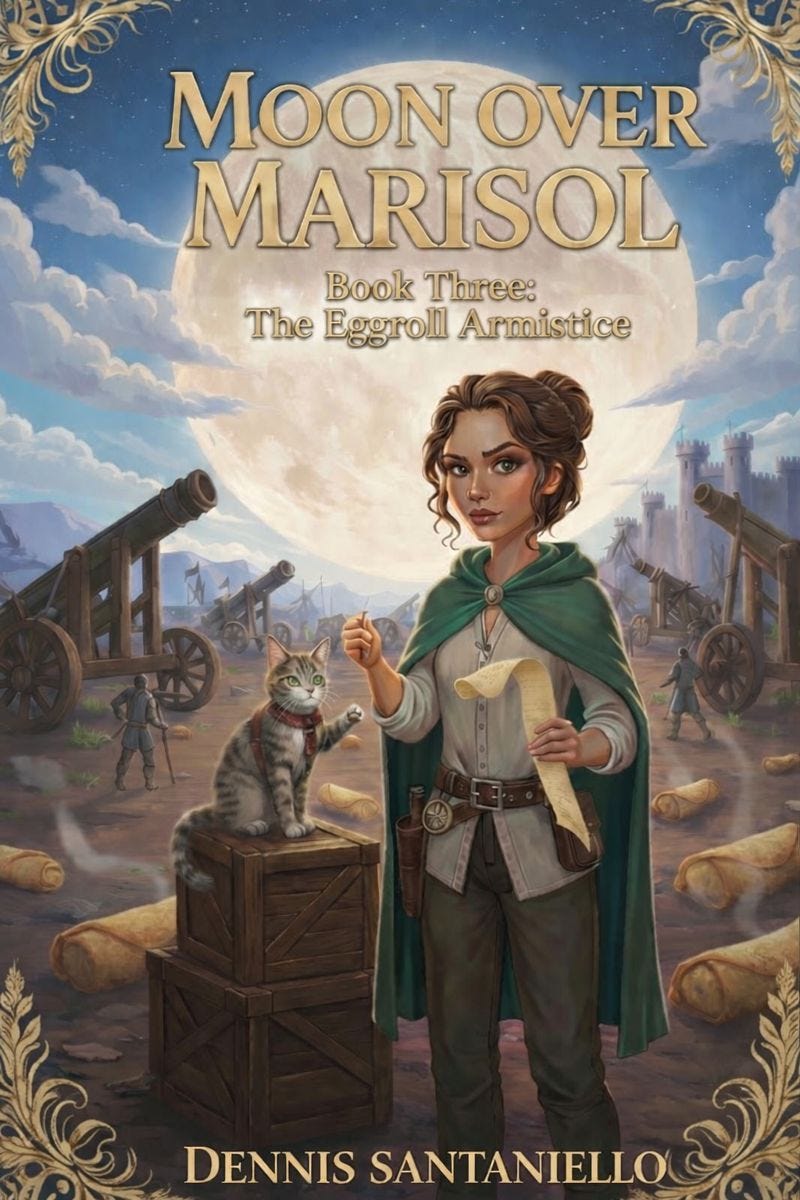
I woke to music. Someone playing a flute, soft and gentle, while people talked and laughed around them.
I was still lying in the grass where I’d collapsed. Someone had put a blanket over me. Tibby was curled up against my side, warm and purring.
“How long was I out?”
“Couple hours. It’s late morning now.”
I sat up slowly. Everything hurt—not pain exactly, just the deep exhaustion that comes from using every bit of magic you have and then reaching for more.
The feast was still happening.
Soldiers sat at tables, eating and talking. Some were on their second or third helpings. Some were just sitting, full and content, chatting with people from the other camp like they’d been friends forever.
The food was still there—not as much as when I’d created it, but plenty. The magic had made enough to last.
Pemberton and Corso were at the center table, gesturing animatedly, surrounded by both sets of officers.
“What are they doing?”
“Discussing trebuchet design. They’ve been at it for an hour. Corso’s explaining his counterweight calculations. Pemberton’s suggesting modifications to improve accuracy.”
“No fighting?”
“No fighting. No demonstration. Just... engineering.”
I watched them—two men who were supposed to be enemies, completely absorbed in technical discussion, occasionally sketching designs in the dirt with sticks.
“This is what the demonstration was supposed to be?”
“According to the letters, yes. They were supposed to fire at each other. Prove which siege weapon was superior. See which lord’s philosophy was correct.”
“And instead they’re collaborating.”
“And instead they’re collaborating.”
I pulled myself to my feet, wobbly but managing. Walked closer to the tables, to the celebration I’d created, to the feast that was still feeding people.
Someone saw me. “The cook! The cook’s awake!”
A cheer went up. Not loud, not overwhelming, just... acknowledgment. Appreciation.
Thomas from Millbrook came running over. “Cook! You made this! All of this!”
“I made it.”
“The eggrolls—those eggrolls—” He was practically vibrating with joy. “I’ve never tasted anything like them. My mom’s are good, but these... these are perfect.”
“They’re my mama’s recipe.”
“She must be an amazing cook.”
“She is,” I said quietly. “She is.”
He didn’t know what to say to that, so he just stood there, grinning, happy in a way I’d never seen him before.
“You’re going home.”
“I know! Lord Pemberton announced it this morning. We’re all going home. No demonstration. No fighting. Just... home.” His eyes got bright. “I can’t believe it. I thought—I really thought I was going to die here.”
“But you didn’t.”
“But you didn’t.” He looked at the feast, at the soldiers laughing together. “Because of you.”
“Because all of you chose not to fight.”
“Because you gave us a reason not to fight.” He wiped his eyes quickly. “Thank you. For everything. For the food. For caring. For... for making us remember we’re human.”
I pulled him into a hug—brief, probably inappropriate, definitely necessary.
“Go home, Thomas. Help your dad make barrels. Avoid your sister’s chickens. Live a long boring life.”
“I will.” He pulled back, grinning through tears. “I really will.”
He ran back to his friends—a mix of soldiers from both camps, all of them eating eggrolls and laughing about something.
“Good work, baby,” Tibby said.
“We’re not done yet.”
“Close though.”
“Close though.”
By midday, the reality had set in.
Both camps were packing up.
Casually dismantling everything, preparing to go home. Soldiers were swapping addresses. Promising to write. Making plans to meet up at the next harvest festival.
Pemberton and Corso had moved from the feast to stand in front of their respective siege weapons.
“Your trebuchet’s range is impressive,” Pemberton said, looking at the black and silver machine.
“Your catapult’s precision is enviable,” Corso replied, examining the gold and red one.
“We should collaborate. Combine the strengths of both designs.”
“Create something new. Something better.”
“Exactly.” Pemberton extended his hand. “Partners?”
Corso shook it. “Partners.”
Just like that.
Three weeks of standoff, seventeen days when I’d arrived, all of it ending with a handshake and an engineering partnership.
“Should we tell our families?” Corso asked.
“Probably should. They’re expecting results from the demonstration.”
“Well, we got results. Just not the violent kind.”
“Better results, really.”
“Much better.”
They walked off together, already sketching new designs in the air with their hands, completely absorbed.
The siege weapons stood abandoned in the mud, no longer symbols of conflict, just... expensive decorations that nobody wanted anymore.
The soldiers from both camps were leaving in groups—some heading east, some west, some north. Going home to villages and farms and families who thought they were dead.
I watched them go, one group at a time, until the field was almost empty.
Thomas’s group was one of the last. He waved from the road, grinning, alive.
I waved back.
“Eighty-eight successful missions,” Tibby said, watching them disappear.
“Not yet. Still have a few days left.”
“Formality at this point.”
“Maybe.” I looked at the field—empty now except for abandoned tents and those ridiculous siege weapons. “But I’ll wait for the green check before I celebrate.”
“Fair.”
We started walking through the empty camps, picking through what was left. Most soldiers had taken their personal gear but left the military supplies.
The tables from the feast were gone—vanished when the magic wore off. But I could still see the impression in the grass where they’d been. Still smell the lingering scent of eggrolls and roasted meat.
“Listen,” Tibby said suddenly, ears swiveling toward the hill.
I stopped. Listened.
Shouting. Distant but clear. Coming from the silk pavilions.
“The gamblers.”
“They’re losing it.”
“Let’s get closer.”
We didn’t go all the way up the hill.
Didn’t need to. The sound carried well enough in the empty field.
Three men screaming at each other. Blaming. Arguing. The sound of things breaking.
“—FORTY THOUSAND GOLD! FORTY THOUSAND!”
“—YOUR FAULT! YOU SAID IT WAS GUARANTEED!”
“—RUINED! WE’RE ALL RUINED!”
Tibby’s ears were forward, listening intently. “Want me to scout closer?”
“No. I can hear enough from here.”
We sat on a supply crate someone had left behind, watching the hill, listening to three fortunes crumble.
“—NOBODY DIED! HOW COULD NOBODY DIE?!”
“—THEY JUST LEFT! THEY JUST WALKED AWAY!”
“—THE FEAST! THAT CURSED FEAST! SHE RUINED EVERYTHING!”
I didn’t feel cruel satisfaction. Didn’t feel triumph.
Just... quiet justice. The kind that comes from watching people learn that you can’t bet on death and expect to win.
“How much did they lose?” I asked.
Tibby listened. “Selling estates. Talking about debtor’s prison. Saying ‘we’re ruined’ over and over.”
“Good.”
“You mean that?”
“I mean that.” I looked at the hill, at the silk pavilions that were probably being torn down as we spoke. “They bet on people dying. On suffering. On violence. And they lost everything because people chose kindness instead.”
“Justice.”
“Justice.”
We listened to them argue for a few more minutes—the sound getting more desperate, more panicked, more broken.
Then I stood up. “I’m done listening. They can collapse without an audience.”
“You don’t want to watch?”
“No. I don’t need to watch.” I started walking back toward where my tent had been. “They bet wrong. They lost. That’s enough.”
Behind us, the shouting continued. But I didn’t look back.
Their ruin was background noise to the real story—a thousand soldiers going home alive.
Days twenty-six through twenty-nine were quiet.
The camps were completely empty now. Just me and Tibby in a muddy field with two abandoned siege weapons.
I’d stopped cooking—there was no one left to feed. Just rested. Let my body recover from the deep well. The exhaustion was bone-deep, the kind that sleep helped but didn’t cure.
The wells were still empty. Completely dry. Not refilling yet—that would take weeks, maybe months.
The deep well was sealed. I could feel it when I reached for it—brick wall, closed door, protecting me from using it again before I was ready.
I didn’t mind. I’d done what I needed to do. The magic had served its purpose.
A few days later, I walked up the hill.
The silk pavilions were gone. Completely packed up and taken away. All that remained were wagon ruts in the mud, some trampled grass, and a few scattered papers—ledgers, maybe, too worthless now to bother collecting.
I picked one up. Columns of numbers. Bets placed, odds calculated, potential winnings that would never pay out.
At the bottom, in frantic handwriting: “They’re not fighting. Why aren’t they fighting?!”
I let the paper fall back to the mud.
“Feel better?” Tibby asked.
“A little bit, yeah.”
We stood on the hill, looking down at the empty field, at the abandoned siege weapons, at the place where a thousand soldiers had almost killed each other and chose not to.
“You changed this,” Tibby said.
“We changed this.”
“You fed them. You cared. You gave them mama’s eggrolls and made them remember they were human.”
“I did what I came here to do.”
“More than that. You made it beautiful.”
I thought about the feast. About Thomas’s face when he tasted the eggrolls. About Pemberton and Corso becoming partners instead of enemies.
“Yeah. I guess I did.”
Day thirty arrived with clear skies.
I woke up knowing this was it. The last day. Verdict day.
I spent the morning sitting in the empty field, just... existing. Watching clouds move across the sky. Feeling the sun warm my face. Being still.
Tibby sat with me, purring, patient.
“How do you think it went?”
“You know how it went.”
“Humor me.”
“You prevented the demonstration. Nobody died. A thousand soldiers went home. Two lords became engineering partners. Three gamblers lost everything betting against human kindness.” He looked at me with those amber eyes. “You tell me how it went.”
“I think it went well.”
“I think it went perfectly.”
The sun moved across the sky. Morning became afternoon. Afternoon became evening.
I watched the horizon, waiting.
Sunset was close now. The sky turning orange and pink and gold.
This was when it would happen. When the verdict came.
“Ready?” Tibby asked.
“Ready.”
The sun touched the horizon.
The sky shifted, and there, clear and unmistakable, drawn across the sunset in lines of light:
GREEN CHECK MARK.
Simple. Perfect. Definitive.
“We did it.”
“We did it.”
“Eighty-eight successful missions.”
“Eighty-eight successful missions.”
I stared at the green check, feeling something warm and satisfied settle in my chest. Completion. The quiet satisfaction of a job done right. Of promises kept. Of lives saved.
“Everyone went home.”
“Everyone went home.”
“Thomas from Millbrook is helping his dad make barrels.”
“Probably.”
“Pemberton and Corso are designing a hybrid siege weapon.”
“Definitely.”
“And three gamblers are selling their estates.”
“Absolutely.”
The green check stayed in the sky, glowing against the sunset, impossibly bright and real.
Then I felt it—the familiar pull. The moon calling me home.
Time to go.
“Here we go.”
“Here we go,” Tibby agreed.
I stood up. Looked at the field one last time—the mud, the abandoned tents, the siege weapons standing like monuments to a war that never happened.
Looked at the hill where gamblers had watched and lost everything.
Looked at the place where I’d built my kitchen, where I’d cooked for twenty-five days straight, where I’d made mama’s eggrolls and created a feast that changed everything.
“Worth it?” Tibby asked.
I thought about Thomas’s smile. About the sound of a thousand people laughing. About Pemberton and Corso shaking hands. About mama’s eggrolls tasting exactly right.
About the cost—exhausted body, empty wells, sealed deep well, whatever consequences would come from using that much magic.
“Yeah. Worth it.”
The pull got stronger.
The world started to shimmer.
“See you on the other side, baby,” Tibby said.
“See you on the other side.”
The world went white.
Reality bent. Space folded. We vanished together, leaving behind an empty field, two ridiculous siege weapons, and the echo of a feast that had saved a thousand lives.
I landed on my couch. I landed directly on it, soft cushions catching me like the moon knew I was too tired to stick the landing.
Tibby landed next to me a second later, immediately started grooming like nothing unusual had happened.
“Home.”
“Home.”
My Los Angeles apartment looked exactly the same. Afternoon sun coming through the windows, warm and golden. The coffee cup I’d been using thirty days ago still on the counter—dried grounds stuck to the bottom, a ring of old coffee staining the white ceramic.
Everything normal. Everything safe. Everything exactly where I’d left it.
I sat up slowly, feeling every muscle protest. The exhaustion settled into my bones and made even small movements feel like climbing a mountain.
But I was home.
I checked the wells out of habit.
Both empty. Completely dry.
Deep well: sealed shut. Brick wall where the door used to be, protecting me from myself, keeping me from reaching for power I shouldn’t touch again for a very long time.
“How long to refill?” I asked, though I already knew.
“Months. First well, maybe two months. Second well, six. The deep well...”
“Years?”
“Maybe. Maybe never.” He looked at me with those amber eyes. “It cost you.”
“I know.”
“A lot.”
“I know.” I flexed my fingers, feeling the absence of magic like a missing tooth. “But everyone lived. Thomas is home. Pemberton and Corso are building siege weapons together. Three gamblers lost everything betting on death.”
“Was it worth it?”
I thought about mama’s eggrolls, golden and perfect. About a thousand soldiers laughing together at tables that shouldn’t have existed. About the look on Thomas’s face when he said he was going home.
“Yeah. It was worth it.”
Tibby purred, jumping into my lap. “That’s my girl.”
I sat there for a while, just breathing. Just being still.
The exhaustion was profound. This was the deep depletion that came from giving everything you had and then reaching for more.
But I wasn’t broken. Wasn’t devastated. Just... tired.
And satisfied.
Eventually I got up, made my way to the kitchen. The coffee grounds from thirty days ago were still scattered on the counter. I cleaned them up, threw them away, started fresh.
Made a new pot. French roast, the good kind, the same beans I’d been about to use when the moon pulled me.
While it brewed, I looked around my apartment.
The walls were cream-colored, warm in the afternoon light. My couch was brown leather, soft and worn in all the right places. The jacaranda tree outside my window was blooming purple.
Colors. All of them. Exactly as they should be.
I could see them all.
The coffee finished brewing. I poured a cup, added cream that turned it the perfect shade of tan, and took it to the couch.
Sat down. Tibby jumped up, curled in my lap, orange fur bright against my jeans.
I sipped the coffee. Tasted it perfectly—bitter and rich and comforting.
Looked out the window at Los Angeles continuing around me. Cars on the street. People walking by. Birds in the jacaranda tree. Life happening in full color, in all its messy beautiful normal glory.
This was my world.
This was my life.
Thirty days ago I’d been pulled away from it. Dropped into a muddy war camp with a vague assignment and three deaths maximum.
Now I was back.
Everyone alive. Mission complete. Green check earned.
“The moon will call again.”
“Probably soon.”
“Think I’ll have magic back by then?”
“Probably not.”
“So I’ll go with almost nothing.”
“You’ll go with what you have. Like you always do.” Tibby looked up at me. “You’re the weapon, baby. The magic is just a tool.”
“Pretty words.”
“True words.”
I sipped my coffee, looked at the purple jacaranda, listened to Los Angeles traffic outside.
Thought about my kitchen—small but functional, everything I needed to make mama’s eggrolls whenever I wanted. Whenever I needed to remember home and love and everything good.
The recipe was there. In my hands, in my memory, in my heart.
I could make them tonight if I wanted. Tomorrow. Next week. Whenever.
They’d taste exactly right. Golden and crispy and perfect.
Because I knew how now. Because mama had taught me. Because love takes time and you can’t rush it and food made with care tastes different.
“You thinking about eggrolls?” Tibby asked.
“How did you know?”
“You get this look. Like you’re somewhere else.”
“I’m thinking I might make them this week. Just for us.”
“I’d like that.”
“Me too.”
We sat there in the quiet, in the warmth, in the safety of home.
Outside, the sun was setting. The sky turned orange and pink and gold—the same colors as the sunset that had given me the green check, but softer here, gentler, filtered through Los Angeles smog and jacaranda blossoms.
All of it beautiful.
The sun finished setting. The apartment got darker. I didn’t turn on lights. Just sat there in the gentle dusk, holding my orange cat, drinking coffee that had gone lukewarm, being home.
Tomorrow I’d clean. Do laundry. Buy groceries. Live my normal life for however long the moon gave me.
But tonight?
Tonight I was just going to sit here.
Exhausted but satisfied.
Depleted but complete.
Empty of magic but full of everything that mattered.
And tomorrow, I’d make more of those eggrolls.
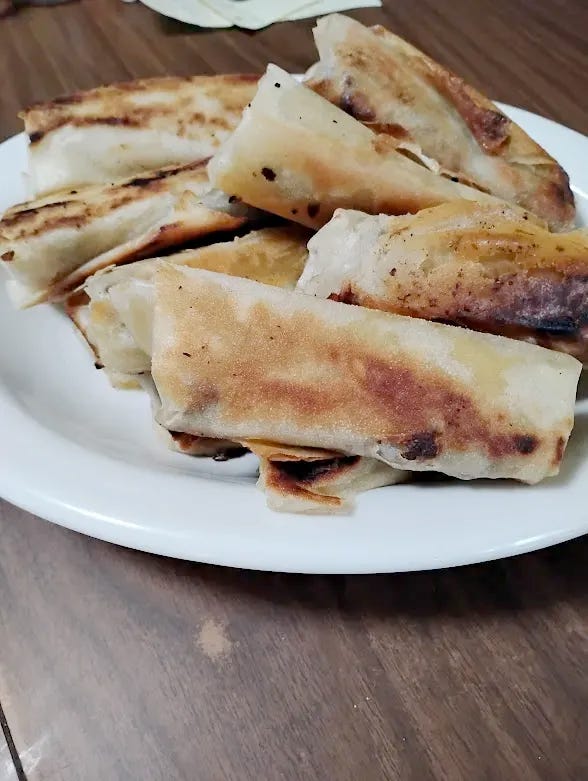
End of Book 3: The Eggroll Armistice.
That’s the war camp. Thank you for reading it with me.
Up next is Book 4, The Genie Back Guarantee. Desert city, marketplace, and a genie with a return policy.
New here? Moon Over Marisol is my completed 18-book fantasy comedy series about a 900-year-old witch, a sarcastic cat, and a truly unreasonable amount of cosmic debt. Book 3 is the one where she stops a war with her mama’s eggrolls. If you want to start from the beginning, Book 1 is The Ghost Town Forest.
📚 Grab the full 18-book bundle (and get your name in the Eternal Registry): [LINK] 💬 Questions, thoughts, favorite eggroll filling? Hit reply. I read every one.
Much Love,
Dennis
No posts
Comments
Nothing yet. Say the first thing.
Sign in to join the conversation.