
Kalpa is Sanskrit for a duration of time described by the image of a bird that flies once every hundred years over the peak of Mount Everest with a piece of silk in her claws: the length of time it would take the silk to wear down the mountain completely is said to be one Kalpa… In Buddhist cosmology each universe exists for a cycle of four Kalpas: the empty, the becoming, the abiding, and the decaying.1
…
The silk was torn. Frayed at the edges. Rolled messily into a ball. My mother carried the silk clot across the pavement to the basil, growing out of a sandbag raised bed.
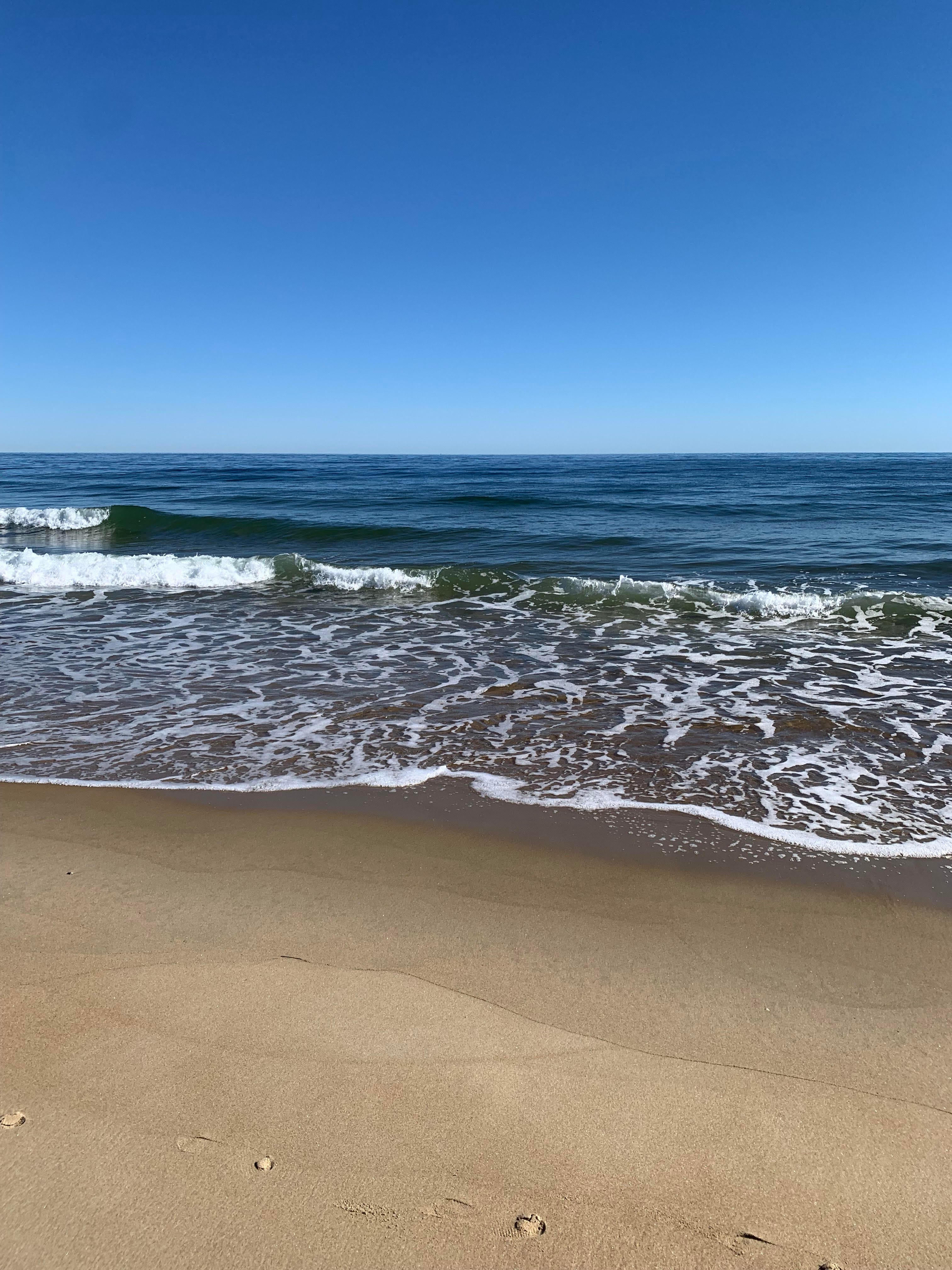
As we age, I try to cement these images of my mother. She’s got purple silver green blue eyes. The color of when an ocean wave strikes the sand and the water recedes. Can’t really say what’s happening there but I imagine that the presence of water illuminates the latent sparkles in the sand. Like how a wet rock shines but a dry rock doesn't. After a wave, the sand that’s been touched is darker, like a shadow of time instead of form. A sense of merging. The water is a mirror, the affected sand is a mirror, the water’s foam is not. The foam is like a matte shell.
But yeah her eyes have the quality of the darkened sand. Her voice has got the same quality: affected, reactive, my world. The meaning is not in the words.
I’ve always been curious about who my mother is. When she walks over to the basil, her hands seem to be sensing the air, as if she were wading through it. Thin shoulders, hair always braided. Arbiter of silliness & many emotions. She rarely fully laughs but when she speaks she’s often on the cusp of laughter and will preface her sentences with a quick “okay.” And then clarify, and then redirect, and the silly, bright laughter is quick and light as when sea mist touches your skin. Sometimes she talks like that. In these moments it’s as if she’s having a dialogue with a being from another realm named Absurdity. She is in alignment with Absurdity, they understand one another. And this Absurdity who she knows is big, as big as all time. She and A are looking down at everything like eagles do, so far away that the contours of the land look like a map, but they wouldn’t even think to call it that.
Motherhood - not solipsistically but from the location where I stand in my mother’s garden - motherhood, I mean I’m speaking specifically about my own mother - Hongzhi Zhengjue spoke of her better:
Where emptiness is empty it contains all of existence, where existence exists it joins the single emptiness… the merging of sameness and difference becomes the entire creation’s mother.
Becoming is the second Kalpa. It’s hard to make sense of a kalpa-length of time, as it’s hard to imagine my mother’s life before I was born. All of history is hard like that. When I first met my mother, my first memory of meeting her, I kissed her many times on the cheek until she laughed lightly as she does. Incredible that we sometimes have the opportunity to kiss our mothers.
My mother, in her garden, unrolled her ripped-up silk cloth. Red maple leaves around her, brown oak. She lays the silk gently onto the basil. The basil, she says, and I can see, did very well this year. For basil loves a drought. This summer was a kalpa-length of beautiful, rainless days. It’s hard to understand that that’s horrifying, until you see of course that the pond, with the swan, is gone.
She placed the silk on the basil because the frost was tomorrow. Rather, the coming frost explains a cloth but does not explain the silk. The silk, though precious, was what she had.
She placed the silk across all the basil’s perfect, unbolted crowns. Then, she lifted up what she had just laid down. She explained that the silk was a curtain from my childhood home. The silk covered a window. The silky light that moved into her bedroom, I remember it so well. I remember her lying down. Lying beside her in the daytime. Make up a story, she’d command me. Make up a story and keep it to yourself.
The story then, in my uncreative mind, was always just a portrait of the light in her room. Sometimes it was spring and the window would be open a crack. The cold air moved the silk. It was all bright, a great story.
My mother lifted the silk curtain just from one side. The basil peeked out — the face of a bride. She looked at me then, after looking at the basil, and she said:
Isn’t it beautiful?
Cultivating the Empty Field, The Silent Illumination of Zen Master Hongzhi, Translated by Taigen Leighton with Yi Wu, 1991.
No posts
Comments
Nothing yet. Say the first thing.
Sign in to join the conversation.