
China has been stuck in deflation since late 2024. The consensus suggests it is persistent.
However, inflation has accelerated since last summer. And we believe China may have shifted from a one-sided deflation regime to a two-sided inflation distribution, where upside risks are now non-trivial. Analysts and markets are yet to adjust.
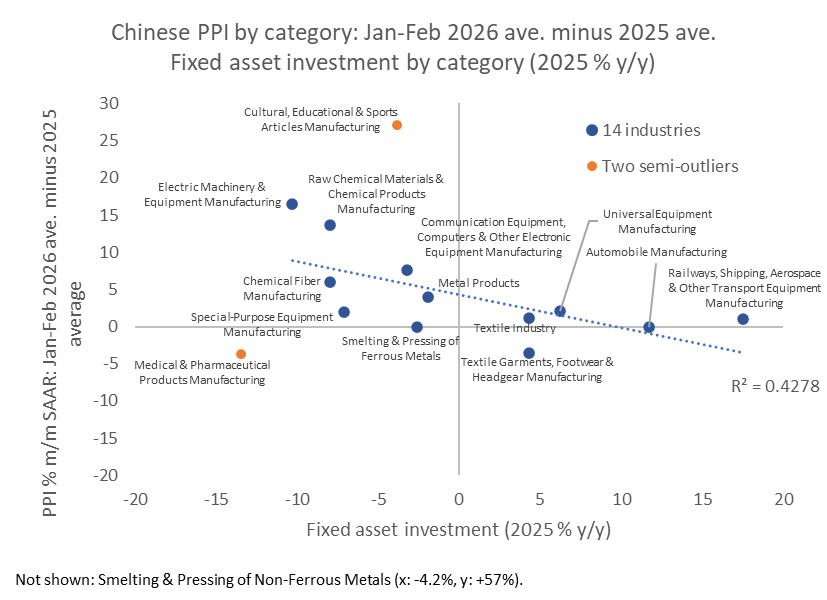
We view the government’s “anti-involution” campaign, which targets overcapacity and price competition, as a key driver. Fixed asset investment has declined sharply since last summer, while industrial production has remained stable, implying a reduction in excess capacity. Consistent with this, sectors with the largest declines in investment have also seen the largest price increases, pointing to a shift in pricing from clearing excess supply toward costs and margins.
If durable, China’s reflation will have global repercussions, most directly via export prices, even if the precise impact is difficult to quantify. This contrasts with the common view outside China that US tariffs will lead to excess supply being dumped into other markets, putting downward pressure on global prices. What's more, proximity to China might not matter much for products where prices are set globally, such as metals and semiconductors.
China’s GDP deflator has been negative since Q3-2024 in q/q terms. Chinese core inflation has also been among the lowest in Asia, even though inflation in the region is rather well-behaved. Arguably, there is a consensus that China’s economy is in the midst of stubborn deflation, something that has indeed been a fair characterisation for much of the past few years.
But inflation bottomed out last summer (for PPI) or in the fall of 2024 (for CPI). It would be premature to conclude that China has escaped the deflationary regime that it’s been stuck in for the past few years. But the gradual increase in core CPI and the fact that price pressures have broadened to manufacturing PPI should be taken seriously and should widen the range of ‘live’ inflation scenarios for China.
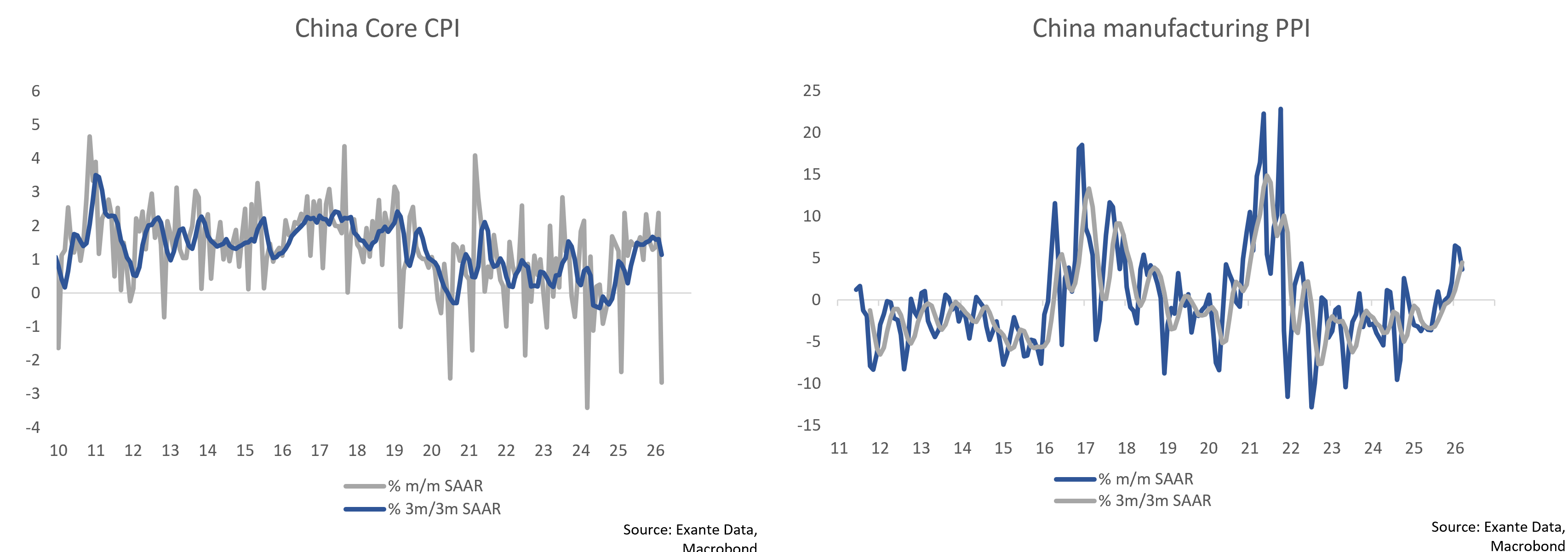
The March inflation reading was, admittedly, weaker. But we think it is too early to abandon the reflation hypothesis for a few reasons.
First, survey data, including those for March, all imply that price pressures are increasing. Part of that is likely related to higher energy prices. But the pickup in prices is also seen in, for example, services and construction PMIs, which are less energy-intensive than manufacturing.
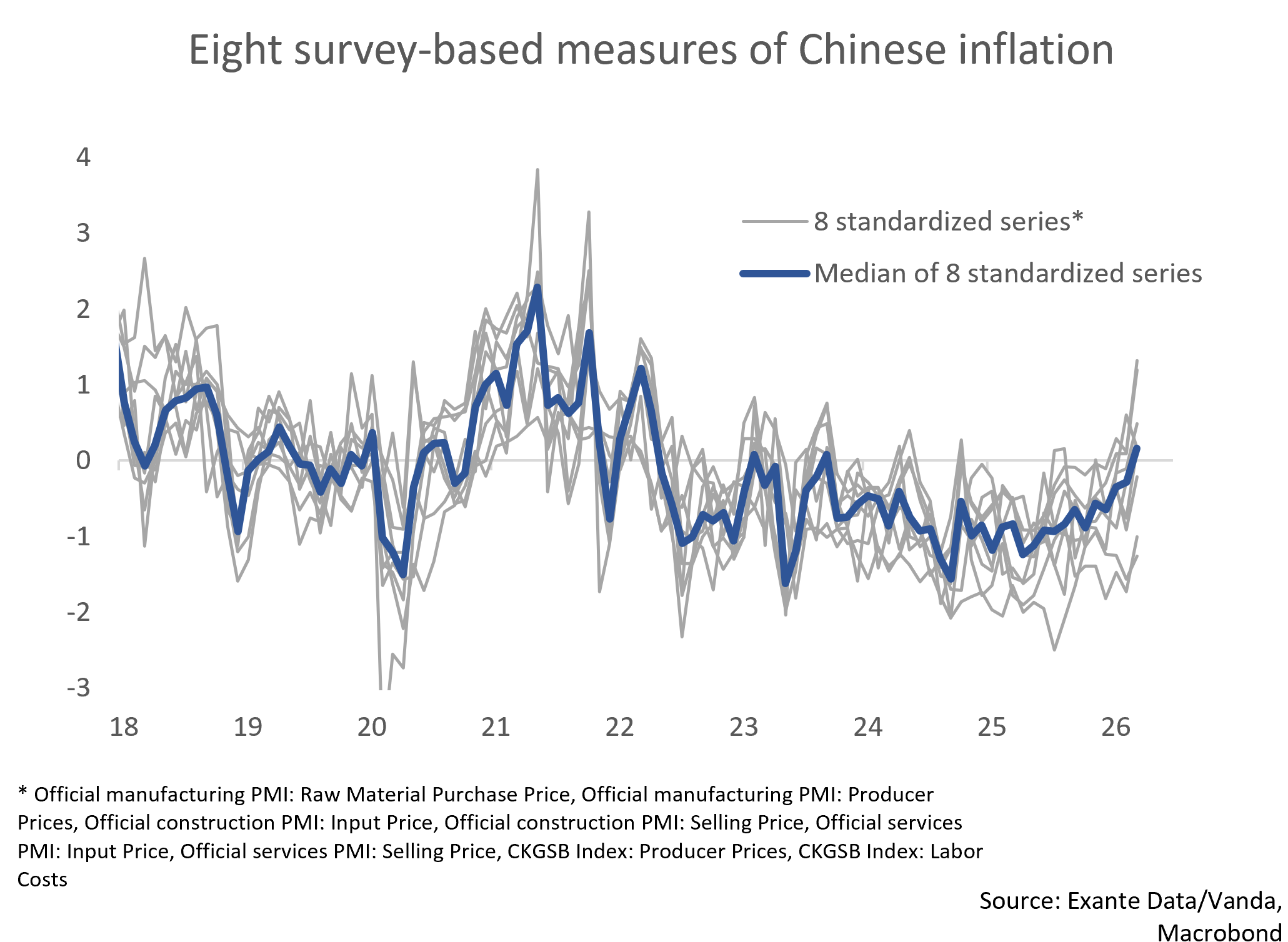
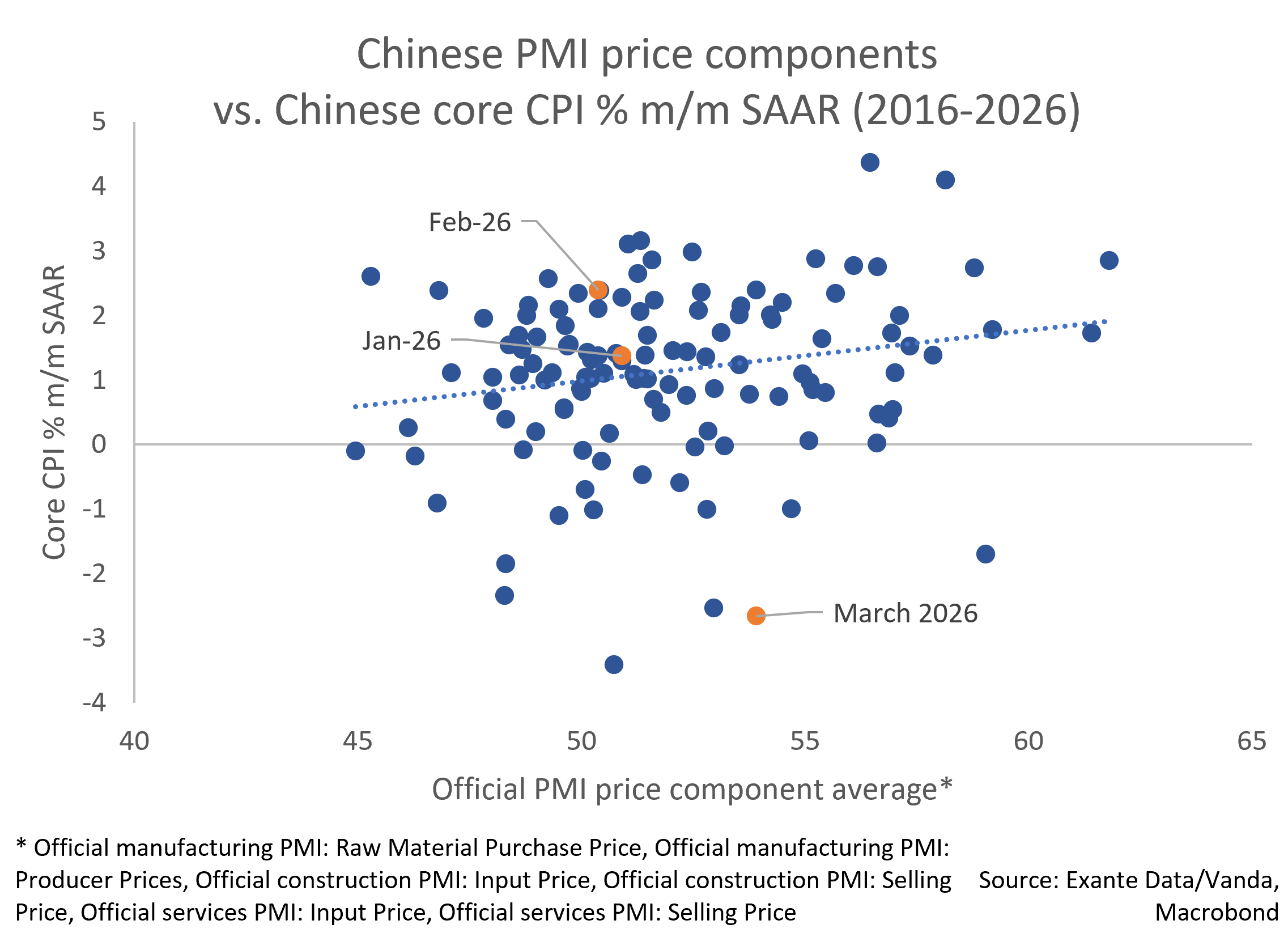
The correspondence between inflation and the survey-based measures of prices isn’t perfect month to month. But there is a relationship, and the March print looks highly unusual.
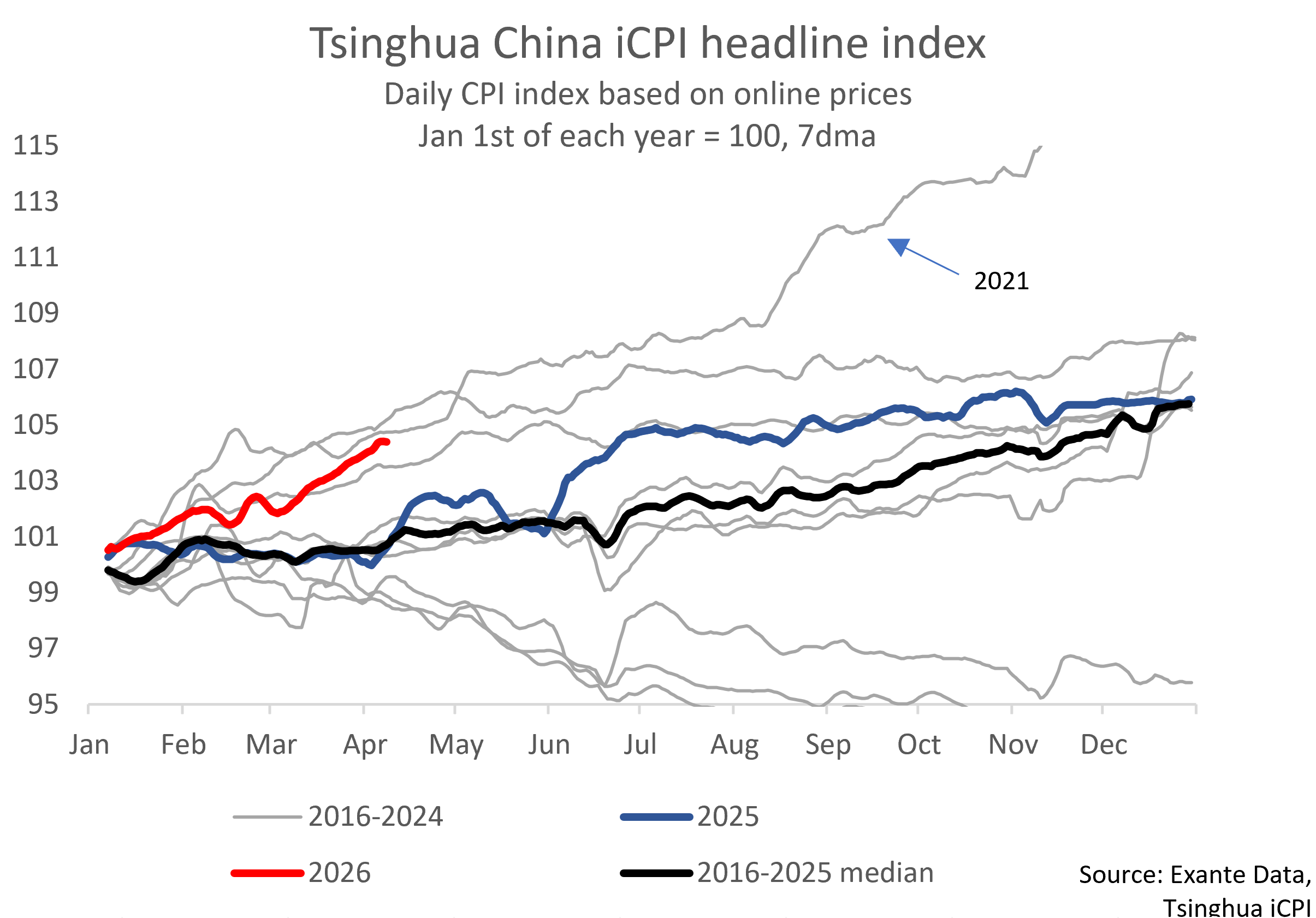
What’s more, a high-frequency proxy of online prices in China also looks stronger than normal so far this year, and there are no signs of a decline or slowdown recently. The chart below shows a metric developed at Tsinghua University, a leading Chinese university.
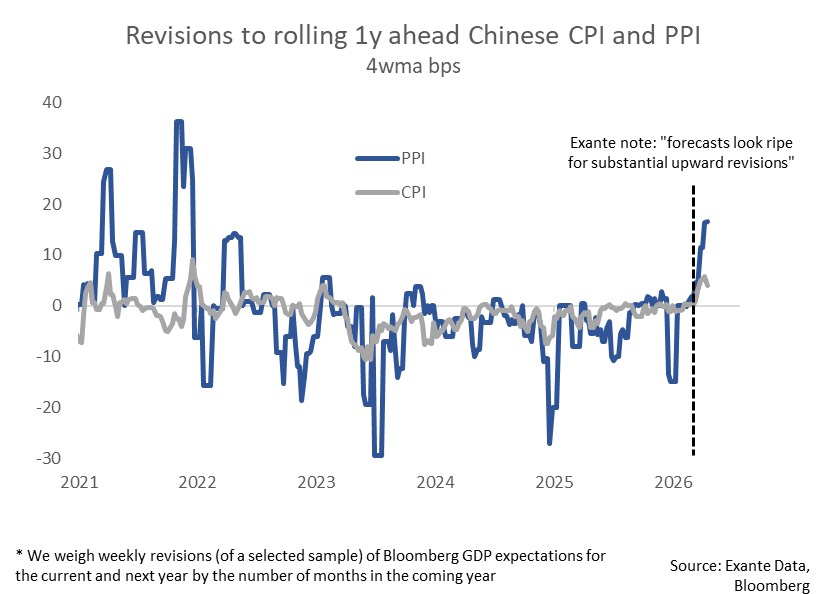
In addition, since this analysis was first shared with clients of Exante Data, forecasts of inflation in China have been revised up. Though the size of upward revisions remains small, it is now the largest in multiple years, nonetheless.
Chinese authorities launched their “anti-involution” campaign in July 2025. The campaign aims to reduce overcapacity and, thereby, help solve deflation and pressure on firms’ profits. Fixed asset investment has declined rather sharply since the campaign was launched (though it began to ease before the campaign got going, likely driven by real estate), and coincides with when inflation bottomed out.
The anti-involution campaign contributed to the slowdown in investment during H2-2025, though there has been a normalization in investment during Q1-2026. The normalisation in Q1 raises the question of whether the anti-involution campaign has become less forceful in 2026. The decline in H2-2025 can still help us understand the pickup in inflation, however, and, as there is a multi-quarter lag between investment and inflation, also give us some indication about future developments.
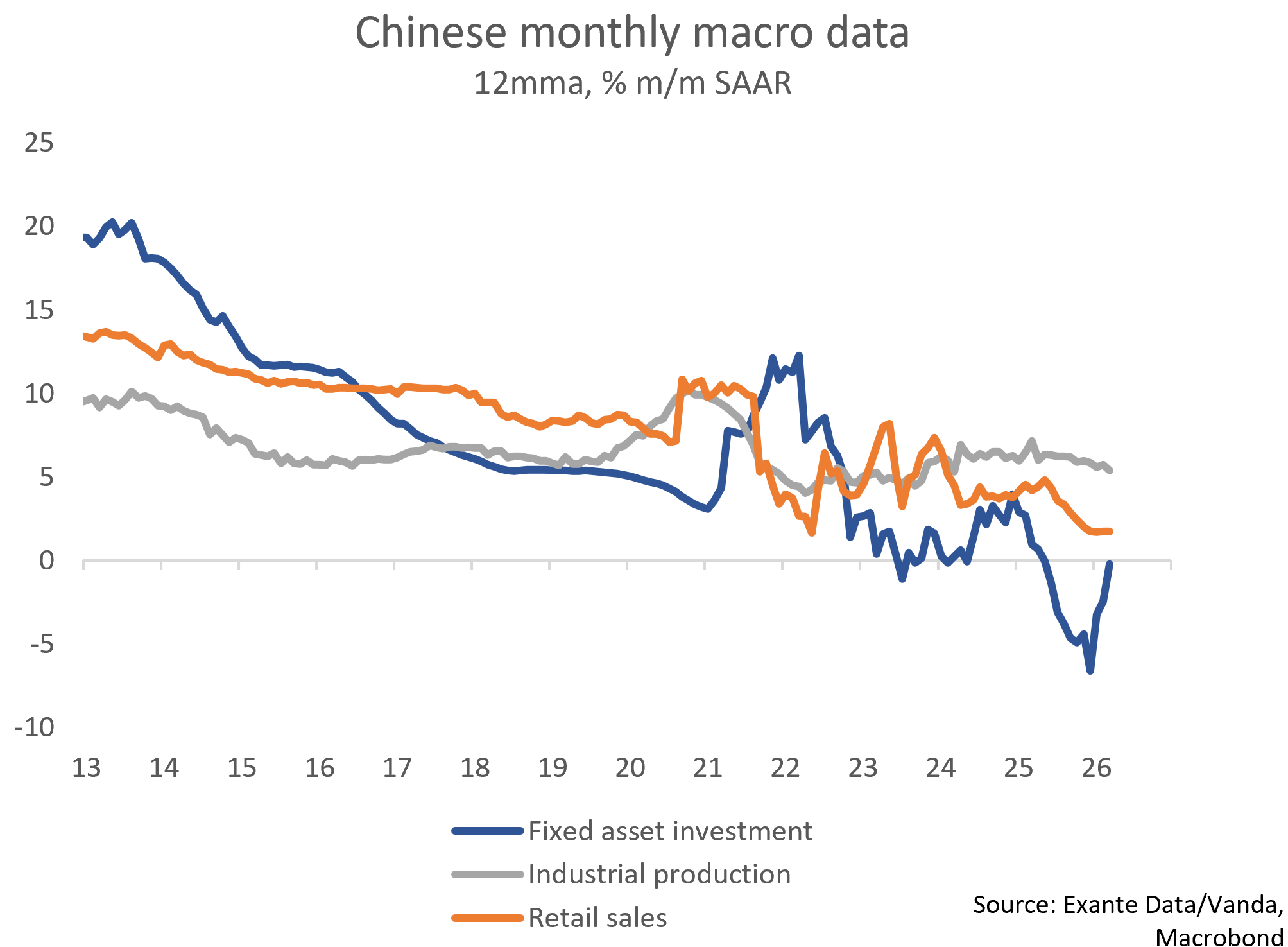
The slowdown in investment matters as growth in industrial production has remained stable, implying that excess capacity has likely declined. Price-setting may therefore have begun shifting from clearing surplus supply to reflecting costs and margins. The mechanism is therefore:
anti-involution -> lower investment but stable industrial production -> reduced excess capacity -> pricing shifts -> higher manufacturing PPI.
To gain confidence in the idea that the anti-involution campaign has contributed to a) the decline in fixed asset investment and, thereby, b) the increase in manufacturing PPI, we examined the correlation between industry-level investment trends in 2025 and PPI in Jan-Feb 2026. Except for a few outliers, there is a respectable relationship (R2 = 0.43) between investment and PPI: the industries that saw the largest declines in investment in 2025 are also those that have seen the largest increases in PPI in Jan-Feb 2026. This makes us rather confident in the hypothesized mechanism: the anti-involution campaign -> decline in fixed asset investment -> decline in excess capacity -> increase in manufacturing PPI.
We have also speculated whether global commodity or semiconductor prices might have contributed to the pickup in Chinese core CPI and manufacturing PPI.
The first thing to note is that global energy prices were rather stable during H2 and the first two months of 2026, which is when Chinese inflation picked up. Energy prices have surged recently, and should add pressure to headline inflation going ahead. But it cannot account for the recent increase in inflation in China.
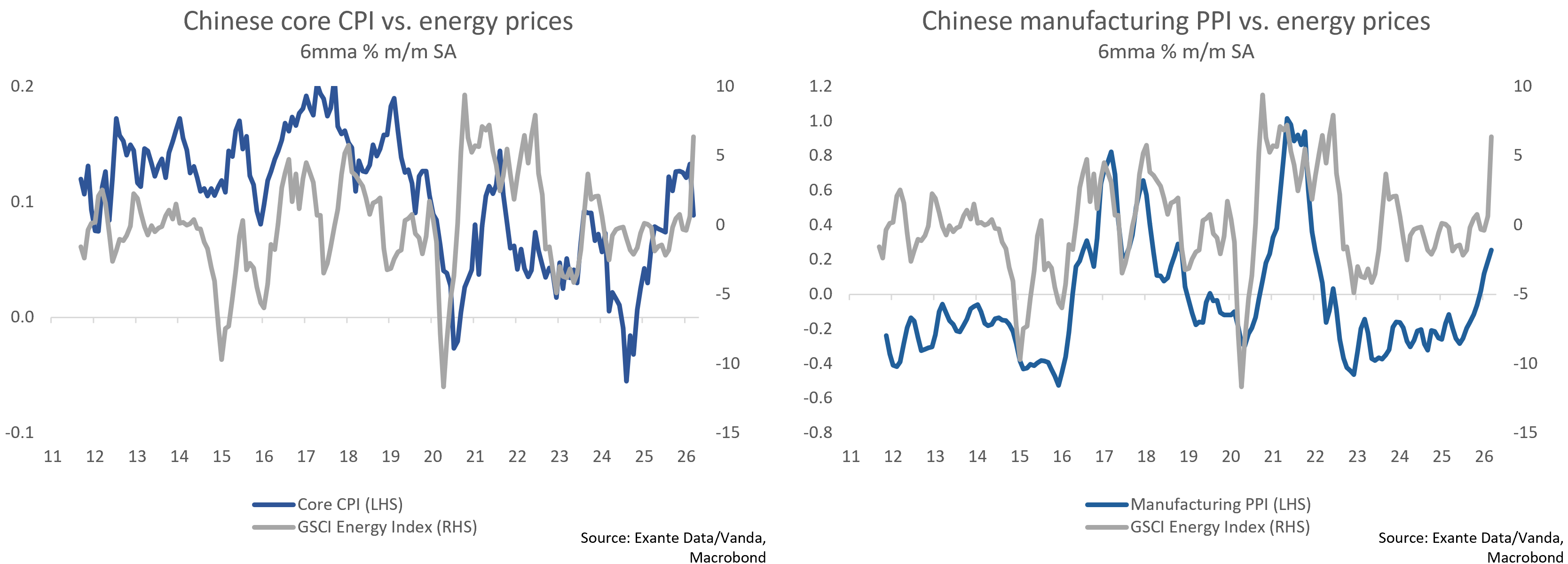
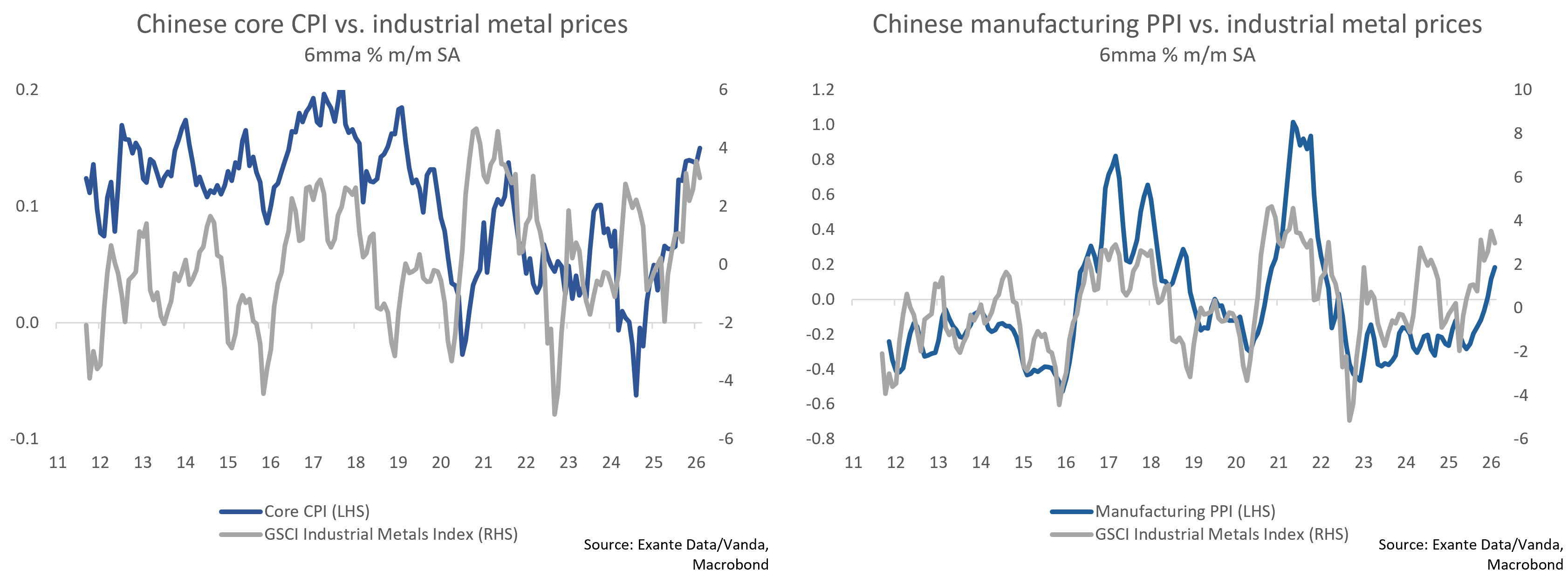
There appears to be a stronger correlation between the upswing in Chinese inflation and industrial metals prices. The onset and scale of increase in core CPI lines up well with the increase in metals prices, though these two series aren’t normally that closely linked (see the charts below).
China is the major consumer of industrial metals globally, accounting for over 50% of total global demand. This means that metal prices are much less of an exogenous variable than for most other economies. As such, it might be more accurate to say that the run-up in Chinese inflation since last summer has correlated with metal prices, though we can’t say it caused it.
What’s more, the link between metals prices and the upswing in Chinese inflation doesn’t seem separate from the “anti-involution” argument, as the metals industry has, in fact, been a target of the anti-involution campaign. And there has indeed been a slowdown in investment in the metal industries.
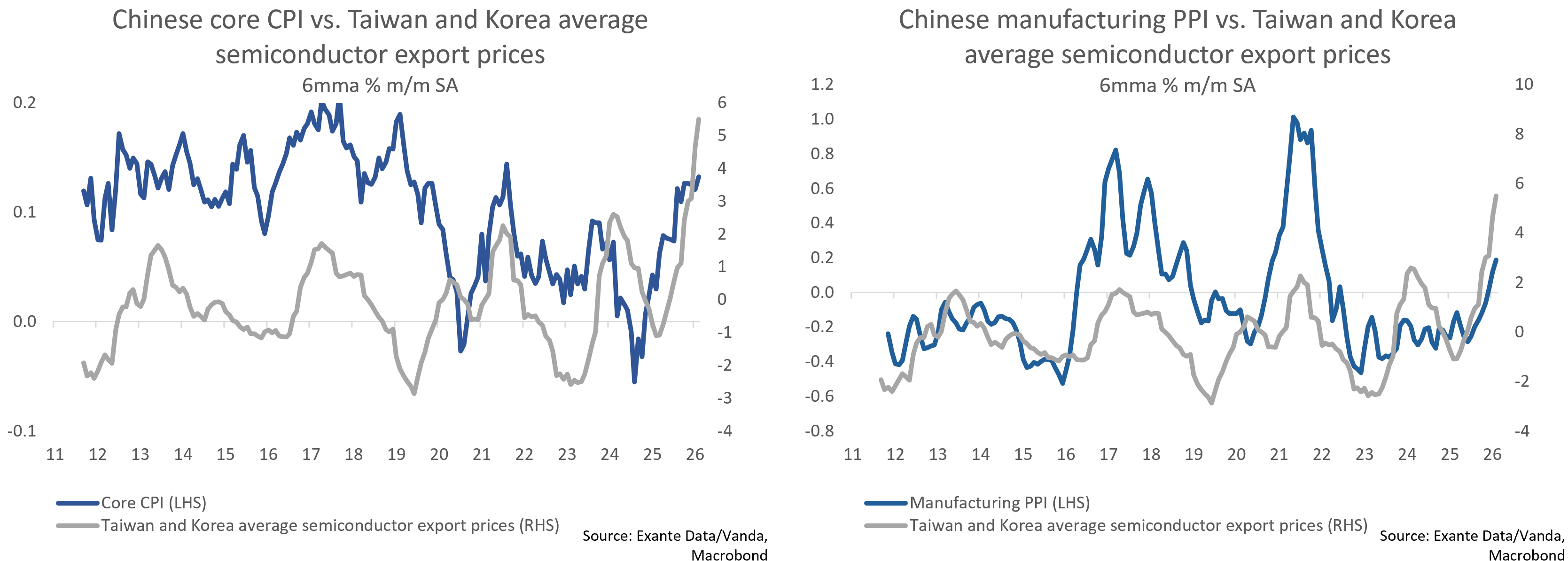
There is also some degree of correlation between global chip prices, here proxied using Korean and Taiwanese export prices, and Chinese inflation. China’s role in global chip production is smaller than its role in metals, and chips, therefore, seem unlikely to be affected by the anti-involution campaign. Chinese demand is still likely to be a major driver of global chip dynamics; half of global semiconductor sales in the last year have taken place in China (though this is in volume terms and doesn’t distinguish between how advanced chips are).
The above is an excerpt from a longer note sent to clients of Exante Data that also analyses the outlook for Chinese inflation and considers the implications for interest rates.
The content in this piece is partly based on proprietary analysis that Exante Data does for institutional clients as part of its full macro strategy and flow analytics services. The content offered here differs significantly from Exante Data’s full service and is less technical as it aims to provide a more medium-term policy relevant perspective. The opinions and analytics expressed in this piece are those of the author alone and may not be those of Exante Data Inc. or Exante Advisors LLC. The content of this piece and the opinions expressed herein are independent of any work Exante Data Inc. or Exante Advisors LLC does and communicates to its clients.
Exante Advisors, LLC & Exante Data, Inc. Disclaimer
Exante Data delivers proprietary data and innovative analytics to investors globally. The vision of exante data is to improve markets strategy via new technologies. We provide reasoned answers to the most difficult markets questions, before the consensus.
This communication is provided for your informational purposes only. In making any investment decision, you must rely on your own examination of the securities and the terms of the offering. The contents of this communication does not constitute legal, tax, investment or other advice, or a recommendation to purchase or sell any particular security. Exante Advisors, LLC, Exante Data, Inc. and their affiliates (together, “Exante”) do not warrant that information provided herein is correct, accurate, timely, error-free, or otherwise reliable. EXANTE HEREBY DISCLAIMS ANY WARRANTIES, EXPRESS OR IMPLIED.
Exante Data is a trading name of Vanda Research Limited which is an appointed representative of Messels Limited which is authorised and regulated by the Financial Conduct Authority.
No posts
Comments
Nothing yet. Say the first thing.
Sign in to join the conversation.