
Establishment sold ‘End of History’ narrative after USSR collapsed
History didn’t end but was led into a new confrontation
War always serves routes & resources or greater ideological goals
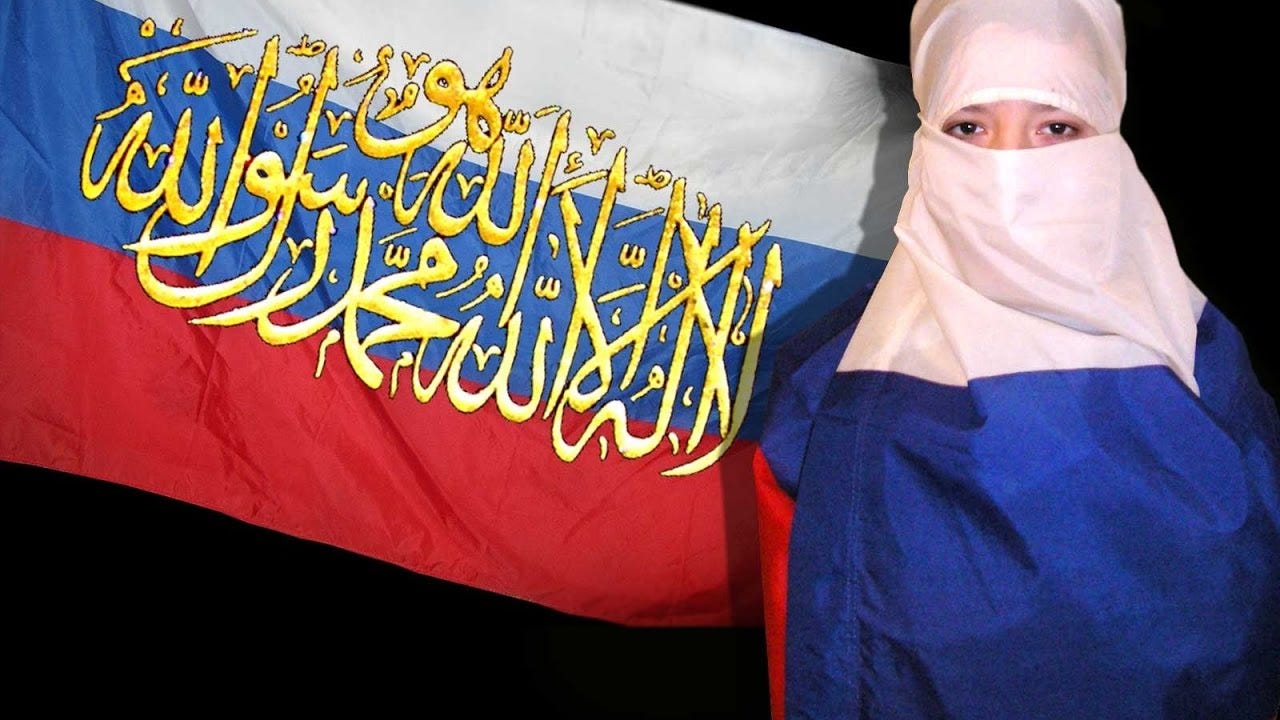
Europe is being shaped to fear a new Muslim invasion
While believing that Russia is the greater threat
Double-dip war but whose hand in the cookie jar?
Related:
Random Duels With Probability - Or demoralisation, from Aldous Huxley and HG Wells, to Yuri Bezmenov (Feb 20, 2023)
Eurasia note #85: The Vladimir Putin-Tucker Carlson Interview - Probing, insightful but key questions missed (Feb 09, 2024)
Globalists Push For War And Degrowth - Politicians offered this line or the firing line (Jul 19, 2024)
(3,200 words or a quarter hour of your company)
Aug 24, 2026
History had ended, the political philosopher Francis Fukuyama declared in 1992, after the triumph of Western liberalism over the Soviet Union, which had dissolved the year before. This was the terminus in humanity’s ideological evolution.
Even though wars would continue, there was no viable competitor to democracy allied to capitalism, and as the Cold War had ended so had the age of grand ideological conflicts.
Many, at the time, agreed.
The two world wars had emerged, so we were taught at school, from entangling alliances and often secret guarantees. These had little to do with national interest and no reason to trigger tens of millions of deaths. Establishment historians settled on buffoonish “stumbling” into war against “mad” enemies.
On this logic there was no reason to fear a repeat. The demise of the USSR removed the justification that the USA had seen in so many proxy wars (the domino theory in Asia, for example).
What Fukuyama did not see — because no historian will advance in academia by holding unorthodox views — is that war has been manufactured. Partly to profit the banks and the arms industry, partly to advance strategic objectives such as the control of routes and resources, partly for grand ideological objectives like the League of Nations and, when that failed, the United Nations, and partly to generate what president Barack Obama called in his famous slogan, “hope and change” — or more accurately, desparation and change.
Major General Smedley Butler described it almost a century ago. [1]
In the book Hidden History: The Secret Origins of the First World War, Gerry Docherty and James MacGregor made the case that the Commission for Relief in Belgium was really a way to channel supplies to Germany to prolong the war. They show how the committee was almost entirely composed of bankers. [2]
In 1954, Norman Dodd, chief investigator of the Reece Committee, reported that the trustees of the Carnegie Endowment (founded by the Scottish-American steel magnate) had tried to involve the U.S. in WW1 and to make sure that the conflict did not end too soon. [3]
In order to spark a war, you need an enemy. Then you need resentment, driven by either envy or fear.
No, governments do not prioritise saving their population from war. As for the United Nations, its bloody record shows that it does not either.
When they want to take us to war they use of the technique described by Herman Goering to American psychologist Gustave Gilbert at the Nuremberg Trials (published in Gilbert’s 1947 book Nuremberg Diary):
“Voice or no voice, the people can always be brought to the bidding of the leaders. That is easy. All you have to do is tell them they are being attacked and denounce the pacifists for lack of patriotism and exposing the country to danger. It works the same way in any country.”
U.S. Secretary of State James Baker won the agreement of Soviet leader Mikhail Gorbachev with a promise ruling out NATO expansion — “not one inch eastward.” [4]
Why war at this moment?
The kindling could be what the French call a “low level civil war” in their country due to uncontrolled immigration.
One wonders if the promotion of war with Russia is a distraction. After all, the Russians are not “over here.” They can’t even make it through Ukraine. Millions who aren’t remotely Russian have no trouble traipsing through Europe and are literally landing on the beaches — almost exclusively single men of military age.
Think in terms of push and pull. What’s to gain and to lose?
What problems, real and distraction, would push governments to consider war as an option, instead of avoiding it at all cost.
Evidence: look at Europe’s governments. Are they doing their best to avoid war or by their rhetoric and actions egging it on?
Comments
Nothing yet. Say the first thing.
Sign in to join the conversation.