
Three reputation hits landed over the past few days.
Two took a mulligan. One held.
Then he reported on his pizza diet.
Why it matters: The delete is visible. The decision-making that led to it usually is not.
That is where we should be looking. Not just at whether the company pulled the ad, removed the product, or kept the album cover, but at what the response tells us about the people and process behind it.
Was the original decision simply wrong?
Did the backlash expose something bigger?
Or was the decision defensible enough to hold?
Before you touch the delete button, you need to know which situation you are in.
The cases:
Good Goodmade a very Bad Bad ad.
Good Good Golf posted a 15-second ad for its co-branded Callaway Quantum driver. In it, co-founder (you read that right) Garrett Clark charges toward Good Good contributor Alexis Miestowski, shoves her to the ground, stands over her, and says, “Do not touch my new driver.”
The video was deleted late Friday. Good Good apologized the following afternoon.
The statement said:
“We posted a video to our channels that ultimately depicted actions that are not aligned with our values as a brand. We have since taken that content down, and sincerely apologize. Good Good has always stood for making the game of golf more inclusive to all, and we will continue to ensure that is our mission going forward.” (AP)

Target sold a kids’ costume that critics said echoed minstrel imagery. Pulled. Apologized. There is no evidence that the costume was deliberately designed to evoke racist imagery. That is not a defense of the result. It is the reason the internal-review question matters.
Target said:
“As a company, we know we got this wrong, and we are deeply sorry. The costume is offensive and should never have been part of our assortment.” (Newsweek)
No kidding.
But Target also said something more important:
“Removing the costume is an important first step, and the company is looking closely at how this happened and what needs to change to ensure this won’t happen again.” (Newsweek)
That may be the most honest crisis sentence of the week.
Benny Blanco was accused of Latino cosplay over an album cover. Blanco did not delete the cover. He did not postpone the release. He did not apologize. The album came out on schedule on August 14 with the artwork intact. But NEWSFLASH (posted three hours ago) 🚨 People Magazine reporting an important update.
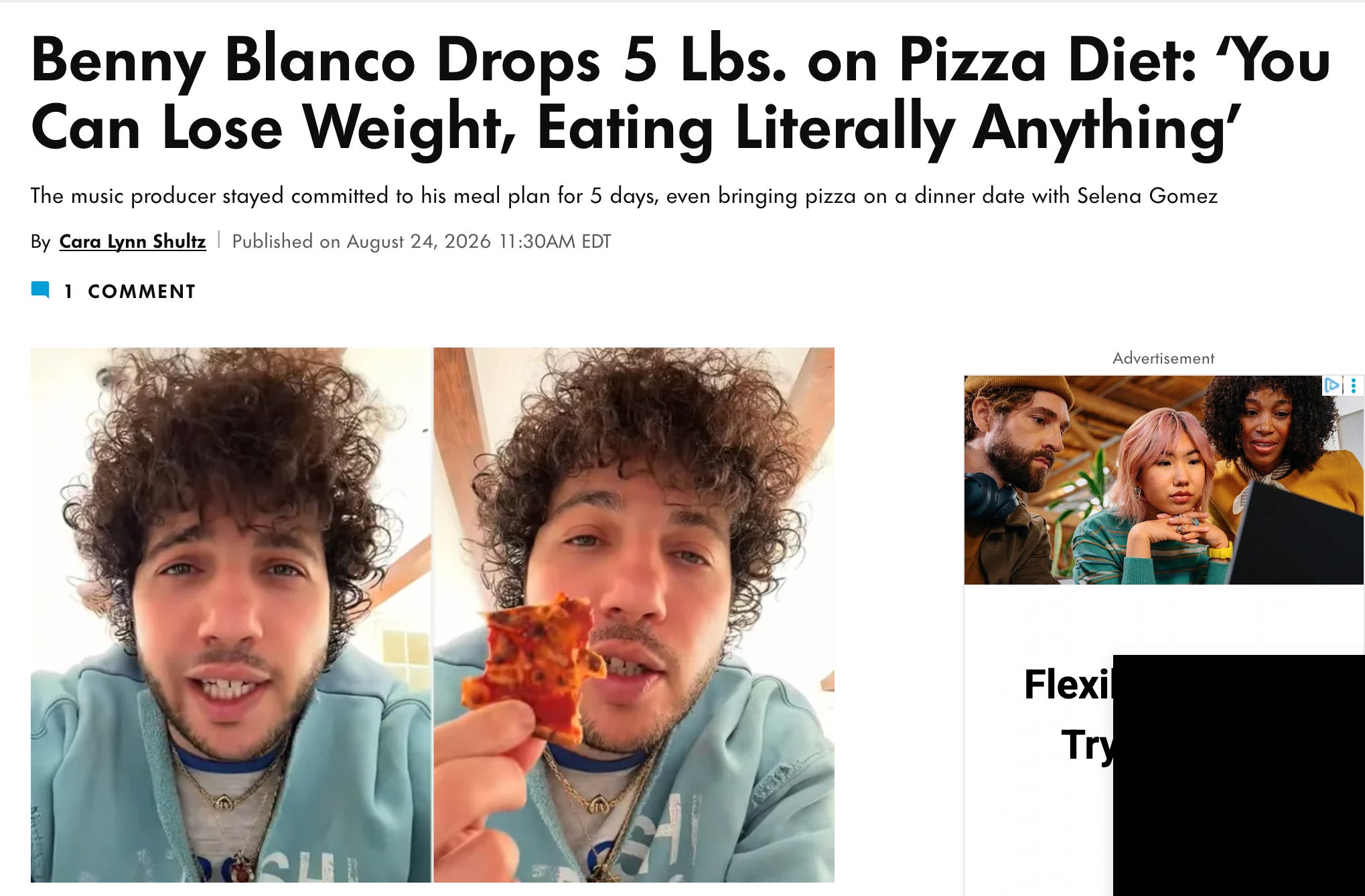
Was the pizza story planted as crisis cover?
There is no evidence of that.
The simpler explanation is that Blanco has an established food-content lane and a book to sell.
But it functions like cover.
The read: Everyone will tell you the two who deleted were right, and the one who held is asking for it.
That’s way too simple.
Deleting is not deciding.
Deciding is what happened before the ad was shared; the costume went on the shelf, and the album cover design was in the “what if we did this look” stage.
Sometimes the delete is the tell that it was a part of something bigger. Maybe it’s just the modern golf culture run amok. Maybe the room was so focused on the horror genre that they lost the plot. However, an ad of a man shoving a woman isn’t a nuance problem. Someone approved it in a room. Deleting doesn’t answer how the ad got made.
Sometimes it should stop, because you were wrong. That’s Target. A kids’ product reading as a racial caricature has no defense. (I mean, really - how did this get past anyone at Target?) They pulled it, owned it, and moved on. Target told Newsweek: “As a company, we know we got this wrong, and we are deeply sorry. The costume is offensive and should never have been part of our assortment." No kidding.
And sometimes you hold, like Benny Blanco (Mr. Selena Gomez). That only works if you can defend all in without flinching. If you can, silence reads as conviction. But the pizza diet reads like he needed cover.
The move: Before you delete, apologize, defend, or distract, identify what kind of problem you have.
Wrong → pull it. Quickly.
Exposed → the delete won’t save you; the answer will. Craft an Indestructible PR response - own it, explain it, promise it.
Hold the line → never apologize for something you’d do again. Just be sure it actually is.
The bottom line: I’m a cynic. When I see another “What were they thinking?” crisis, I usually assume someone was thinking.
Let’s talk about all three this week. Join me for the live chat on Wednesday, 2pm ET
Comments
Nothing yet. Say the first thing.
Sign in to join the conversation.