
“The first draft of anything is shit.”
— Ernest Hemingway
I never thought I’d say that anything Hemingway wrote was deeply comforting, but as I sat at my desk writing the final 20K words of the first draft of my fourth book, this quote was.
It became, in fact, a sort of mantra as I wrote. It’s okay if it’s shit. It probably WILL be shit. Like shit, just get it out. Deal with the mess later.
I had been working on this draft for about a year, and I knew that there were issues. There were time jumps that needed to be dealt with; a side character had slowly wriggled her way forward to become (damn her) a main POV character. But part of why it took me so long to get this first draft out is that I kept tweaking things as I went. I’d notice an awkward sentence, and immediately decide it had to be changed (rather than highlighted to return to later, once the draft was done). Then I’d spend half an hour trying to rework it. Then I’d drift over to another chapter, notice that I had used the same phrase multiple times, and then decide that this, too, needed to be dealt with right then.
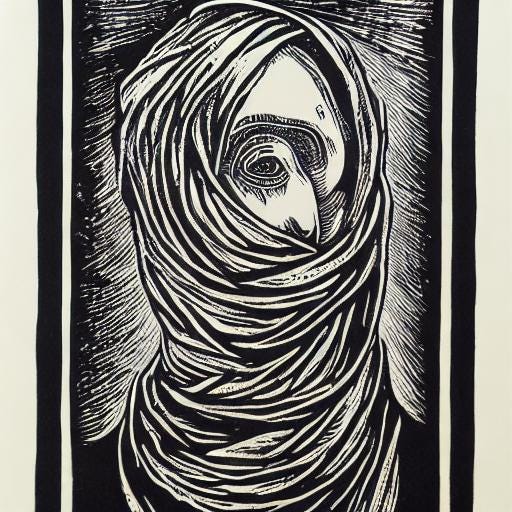
(I asked Substack’s AI image generator to create an picture for me of “a writer in despair.” Disturbing as the above result is, I can’t say it feels entirely inaccurate right now.)
Right now, that book is with my (incredible) beta readers. (Writers, if you don’t have people whose opinions you trust to look over these messy early drafts, I highly recommend you find some!) By the time I get it back, I hope to have enough distance from it that I can not only take their advice into account, but also notice issues in the draft myself with some objectivity. I suspect that—as with my other books—there will be bits that are just as good as I thought they were when I wrote them, bits that make me wonder what I was thinking when I wrote them, and whole swathes that I love with my whole heart, but which, in service to the larger story, will not make it into the next draft. An absolute slaughter of darlings.
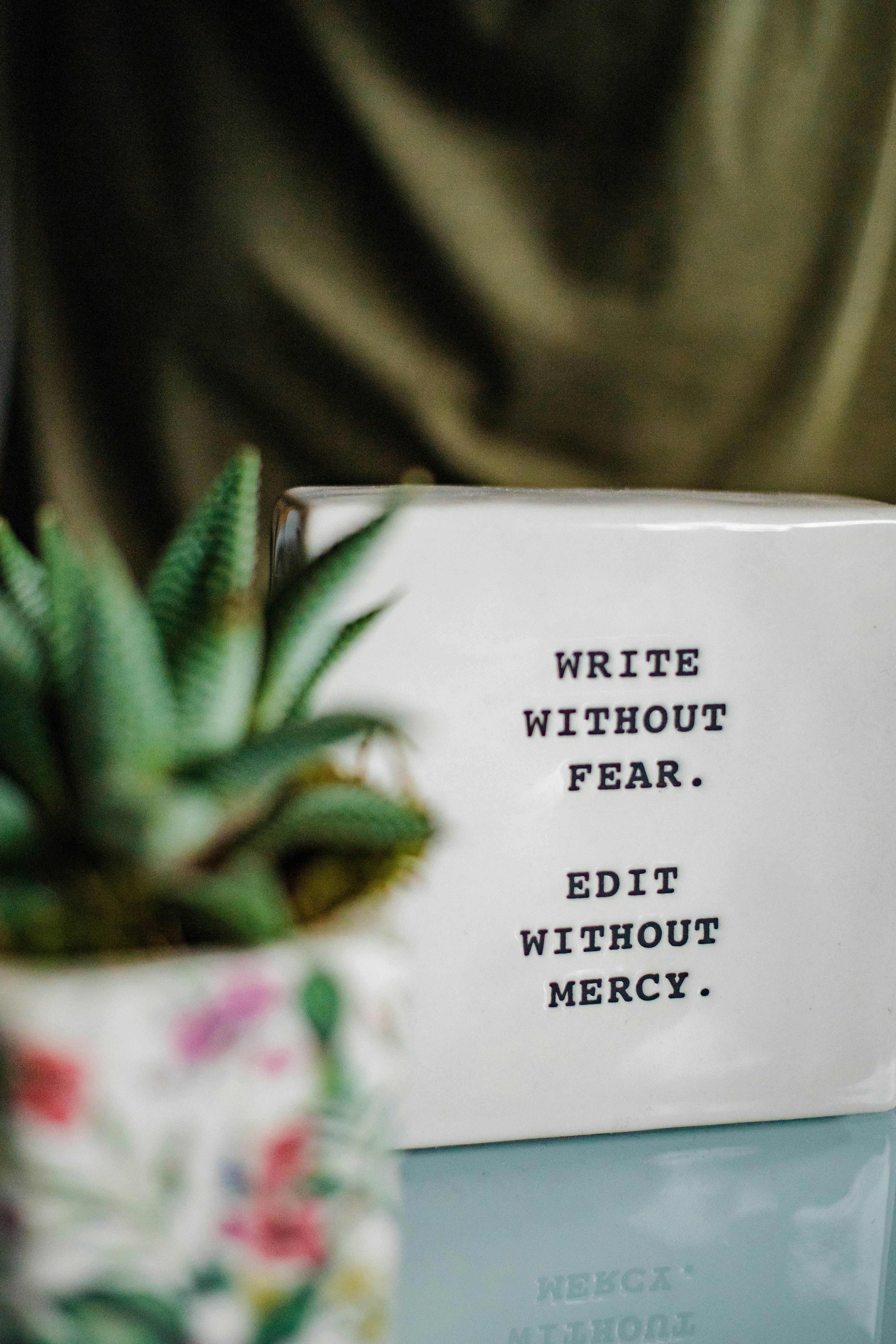
Before I managed to finish The Clergyman’s Wife, my first novel, I had a laptop full of half-completed novels, all of which I gave up on because I knew there was something wrong with them, but didn’t yet know that this is often part of the writing process—getting through to the end, teasing out what needs to be fixed, and then doing the usually messy, often frustrating, but ultimately satisfying work of actually fixing it.
The thing is—and clichéd as it may sound—writing means rewriting. And rewriting. And…
You get the point.
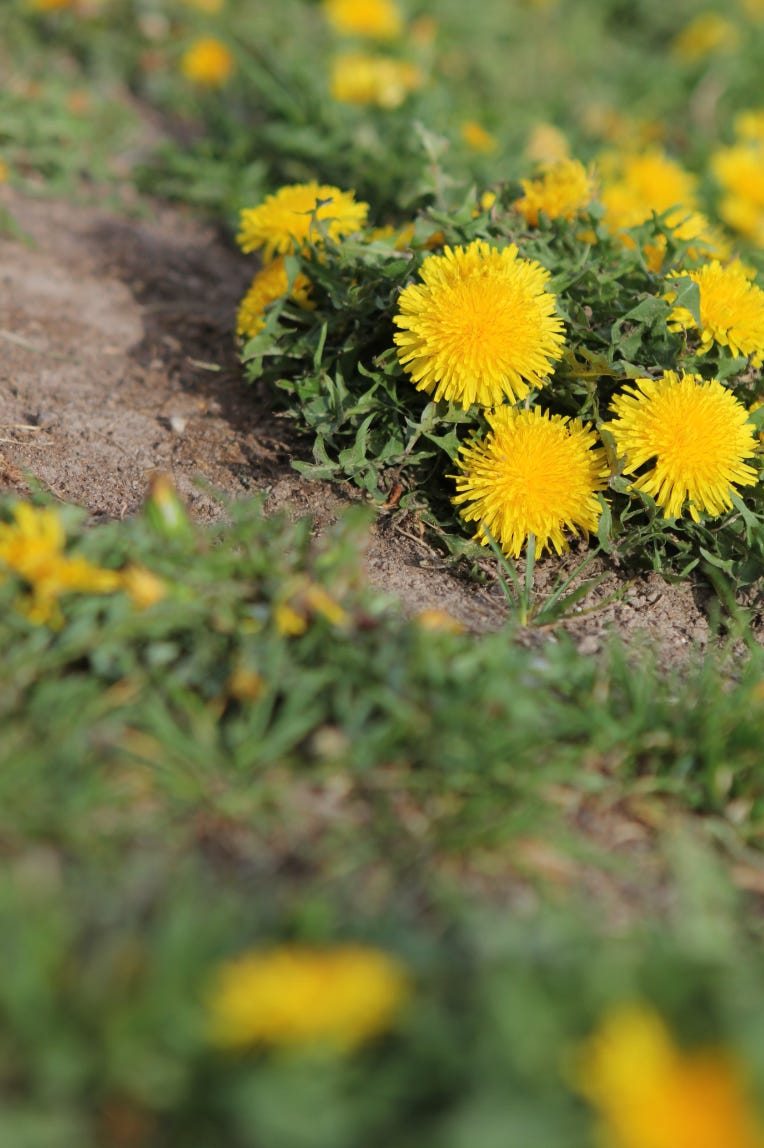
I had a follow-up meeting with an editing client (why yes, I do offer editing services!) Her memoir had a clear message—an important, beautiful message—but it was lost in the metaphorical weeds. She told me that it was such a relief, once we’d cleared those weeds away, to have them gone.
So, yes, I feel a bit like that horrifying AI-generated writer in despair, all my nebulous ideas for how to fix this book wrapped like strangling vines around my head and throat. But those ideas were born of things I’ve already written, and there’s another part of me—I guess the part that lives within most of us writers, which loves what we do enough to keep at it no matter how many rewrites it takes—that’s excited, in a couple of weeks, to dive back into the world I’ve come to enjoy so much, trying to make it richer than it was before.
And for any writers out there who are back where I once was, before I realized that the process, all of it, even the messy parts, is writing—keep going. Take a step back from your work when you need to—goodness knows it’s hard to see through the weeds when you’re deep in them—but come back to the story. Again, and again.
And again.
You’ll get there.
(So will I.)
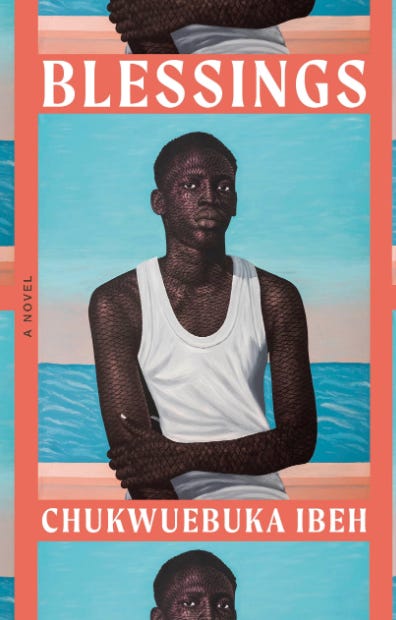
I picked up Blessings by Chukwuebuka Ibeh on a whim when I was at the library with my kids. It was on the “Hot Titles” shelf, which I usually avoid despite it calling to me like a siren, because you can only have the books for a short time, the late fees are not insignificant, and my TBR pile is always teetering. But we were going to be at the library for a while—my kids had their own books to find, and the play area to enjoy!—so I figured I could start it and see how fast I thought I’d be able to read it.
Well, after being at the library for an hour, I was already deep into this story, and couldn’t even begin to think of pulling myself out of it long enough to wait for the book to turn up on the regular New Fiction shelf. I brought it home, devoured it, and returned it to the library well before the Hot Titles deadline. Because not only is the story—about a young gay man growing up in Nigeria just before the Same-Sex Marriage Prohibition Act came into effect in 2014—compelling, Ibeh’s writing is gorgeous. This book made my heart hurt, and heal, and hurt again. It was truly beautiful.
No posts
Comments
Nothing yet. Say the first thing.
Sign in to join the conversation.