
A few weeks ago I finally read Claire Keegan’s acclaimed and (appropriately) small-but-mighty novel, Small Things Like These. At just 128 pages long, it was a quick read, but one that still, weeks later, lingers with me. When I was done, I sidled, as one does, over to Goodreads to see whether other readers felt the same way I did about the book: that despite its tight focus on one man’s experience over one Christmas holiday in a small Irish town, it was a powerful and universal story with a theme that runs deep as a taproot through humanity as a whole.
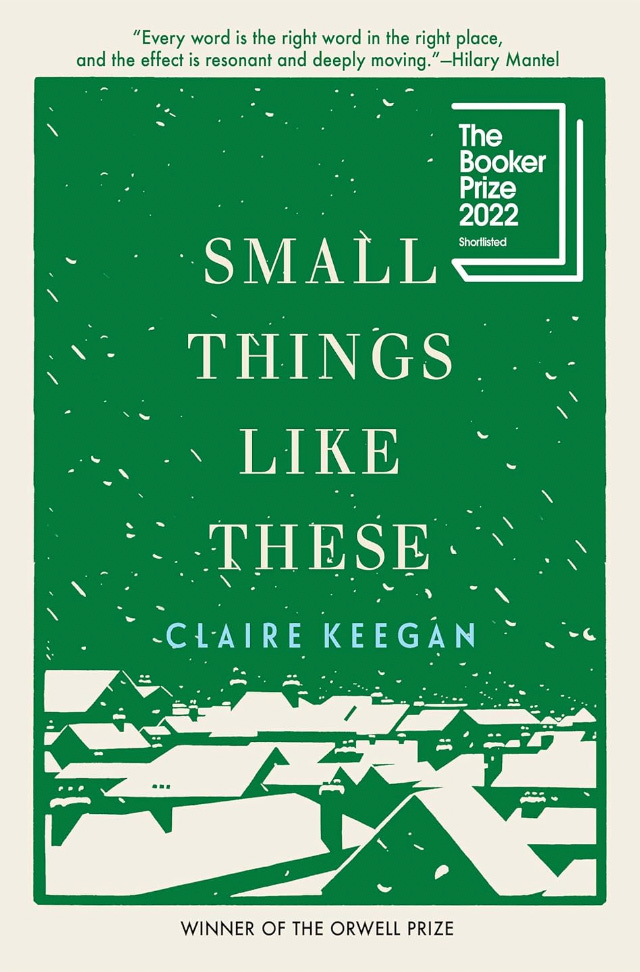
By and large, according to its Goodreads rating, most readers did love the book as much as I did. But not all books are for all readers, and I was curious about the one and two-star reviews. Some readers weren’t a fan of the slow pace of the story, or felt cheated by its short length, or took issue with the writing style. But it was the reviews that thought the book should not have been told by Bill Furlong—its protagonist—that really caught my attention and got me thinking.
And what I think is that not all books have to do All The Things.
On its surface, Small Things Like These is Furlong’s story—the story of a middle-aged man living with his wife and daughters in a small town in Ireland in the 1980s. He sells coal for a living and enjoys a degree of comfort, but he and his wife still have to be careful of their spending. We spend most of the book inside Furlong’s head, and—maybe because I’m roughly the same age as he is, and frequently very tired, and trying to find moments of connection with my husband and kids and friends in days that too often feel consumed with work—his head was a pretty relatable place to be. He thinks about money; he thinks about his childhood; he wonders if the grinding monotony of keeping food on the table and the lamps lit is really all there is to life.
And then one day, while delivering a load of coal to the convent, he stumbles upon something he isn’t meant to have seen: a young woman, locked away and weeping for the baby who has been taken from her.
The girl, it becomes clear, is one of many such women and girls in Ireland at this and earlier points in history. “Fallen” women—prostitutes, unmarried mothers, women who had been through the criminal justice system, and even girls who simply didn’t fit into society’s social norms—who were confined to Roman Catholic institutions known as the Magdalen laundries and used as free labor, their children taken from them.
And this was the focus of some of the book’s unfavorable reviews: rather than telling this story from the perspective of one of the women confined to these institutions, the story is told from the perspective of someone who—though he is Catholic himself and sends his daughters to the nuns’ school—is not really affected by what’s happening behind the convent’s closed doors. He is a middle-aged white man in a time and place when that was, in so many ways, the easiest of bodies to wear.
Except, Furlong—for all his sex and relative privilege—is affected. And not just because his own mother was unmarried when she had him.
The thing is, this story isn’t really about the Magdalen laundries. It’s not even about Bill Furlong, for all that we have an intimate view behind the bones of his skull for most of it. Rather, it’s about the ways in which we are all affected when faced with a sudden and unexpected glimpse of another’s suffering. It’s about the choices these glimpses force us to make, and how those choices affect us and the meaning we find—or make—in our own lives.
Furlong’s choice is the fulcrum upon which Small Things Like These rests—will he or will he not choose to intervene? Like most of us, he is neither wealthy nor powerful; he doesn’t have the resources to help all the suffering people in this world. And if he tries to help this girl, he risks social ruin, not only for himself but for his wife and daughters, whose well-being he keenly feels is his responsibility. The Catholic church looms, huge, over his small community; to question it means questioning the very edifice upon which his society stands.
The story of the women who suffered in the Magdalen laundries of course should be (and, indeed, has been) told. And of course, we absolutely need stories from diverse perspectives, and sometimes there is one perspective from which a story can be more appropriately told than another, or important details that, if omitted, make the book less rich or nuanced. But this story, I think, could only be told from the perspective of an outsider, someone not actively being harmed, because it’s often only those of us who are outside whatever terrible thing is happening who even have a choice about helping those who are suffering.
Not all stories have to take every single perspective into account, or explore the full breadth of every scenario. It all depends on the specific story a writer is trying to tell.
Bill Furlong could be any of us, and what he witnessed could be anything, from an injured bird to a starving child, and the story would, at its heart, be the same.
Really, this is a book of universal truths: how easy it is to look away when we see something terrible; how unsettled we become when we realize that institutions we loved and even trusted to guide us are pulpy with rot. It’s about how—as Keegan puts it—the “small things” we do, “when added up, amount to a life.”
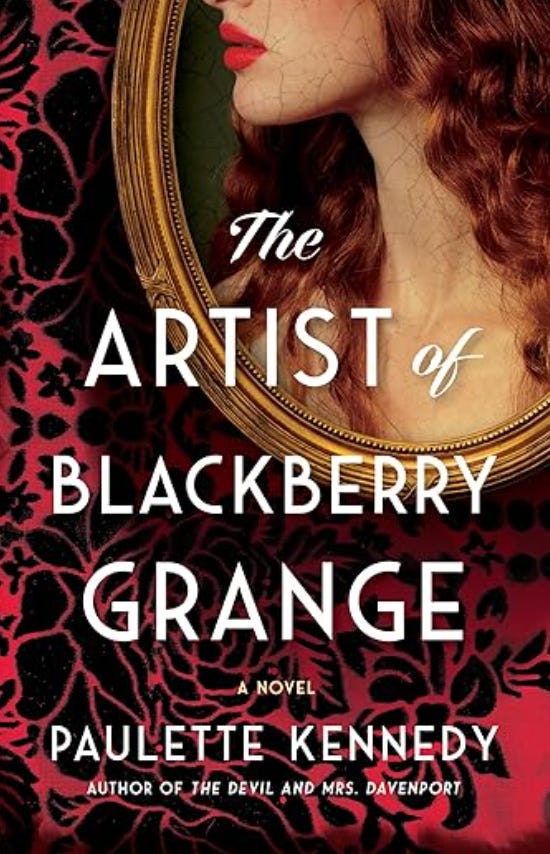
I’m lucky enough to have met Paulette Kennedy in person at the last North American Historical Novel Society conference, and she is as warm and lovely as you can imagine—and yet she also has the most incredible ability to weave some truly shiver-inducing Gothic fiction.
I’ve enjoyed all of Paulette’s books, so when she offered me the chance to read The Artist of Blackberry Grange ahead of publication (and during spooky season, no less!) I basically became a living grabby-hands meme. And the book didn’t disappoint: it has all the hallmarks of a classic Gothic page-turner, from the creaky old mansion filled with hidden rooms through which spirits wander, beckoning the living toward the past, to the long-held secrets in the protagonist’s family. It is also, for all its eerie trappings, a poignant and deeply relatable tale of caregiving and love and letting go.
The Artist of Blackberry Grange comes out March 25, 2025 (and is currently available for preorder!).
No posts
Comments
Nothing yet. Say the first thing.
Sign in to join the conversation.