
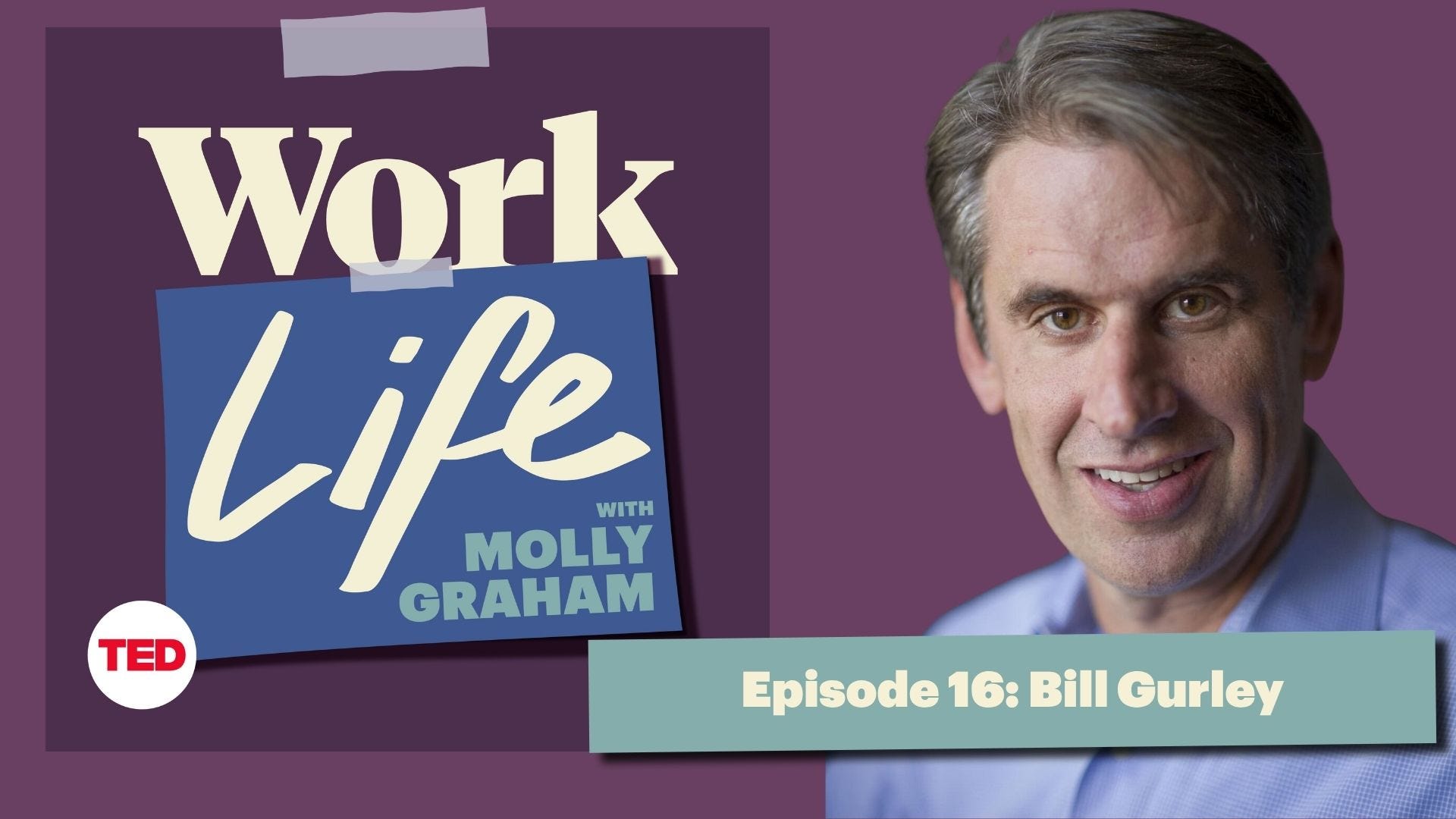
You can listen to the full WorkLife episode anywhere you get your podcasts or watch it on YouTube.
I’ll just say it: I kind of hate the word “mentor.” It’s picked up this almost mystical quality — like if you could just find the right one, every door would swing open. But when I look back at the relationships that actually shaped my career, almost none of them look like that. They look like friends; people on the same rung of the ladder who figured it out alongside me.
So I was thrilled to sit down with Bill Gurley for this week’s episode of the WorkLife podcast from TED. Bill spent over 20 years as an investor at Benchmark and most recently wrote Runnin’ Down a Dream, a book about building a career you actually love. And one of his core beliefs is something we almost never talk about: peers, not mentors, are one of the most powerful and overlooked forces behind great careers. Although nobody teaches it in school and most companies don’t encourage it, the people who do it well tend to rise together.
We got into how peer groups actually work, why vulnerability is the whole point, and how you’d start building one today if you had nothing.
1. Co-climbing beats climbing alone.
Bill has this phrase — co-climbing — and it reframed things for me. The idea is simple: find three or four people on the same rung as you, ideally outside your own company, and share everything to the center. He tells the story of a 17-year-old named Jimmy Donaldson who spent years on Skype with three other guys reverse-engineering YouTube, all of them sharing what worked. Jimmy is now MrBeast, the #1 account on YouTube with over 500 million subscribers and a growing media empire. As he put it — instead of 10,000 hours individually, they got 40,000 by combining efforts. My own version of this was a monthly breakfast with a dozen COO-types that ran for five years. I learned more there than from any book.
Listen to this episode of WorkLife
2. The magic is vulnerability — and that’s what peers unlock.
Here’s the thing you can do with a peer that’s almost impossible with a mentor: say “I have no idea how to do this. How are you doing it?” Bill’s point is that the fastest way to get smart is to admit when you don’t know something — and peers create the safety to actually do that. There’s a support and a vulnerability in sideways relationships that hierarchy just squeezes out. In one of my own communities, Glue Club, we talk about “level three” relationships — where people are willing to go past “what do you do?” and into “what’s the worst mistake you’ve ever made?”
3. Play the non-zero-sum game — give first, and root like hell.
I have this saying: life is a barter economy. You do things for people without expecting anything back, because you want a world full of people who are glad they know you. Bill lives this, even sending a note to a competitor when they had a win. “Wow, that’s impressive.” That’s it, and it compounds. He describes peers as increasing your “probability of luck” — the more people who know what you’re chasing, the more surreal, lucky-seeming doors tend to open. So once you’ve got your group, root for them the way you root for your favorite team. When someone gets promoted, be tickled pink. The whole group elevates itself when nobody’s secretly hoping the others stay behind.
Watch this episode of WorkLife
Here’s a sneak peek of the episode:
If this resonates with you, here are things you can do next:
Subscribe to Lessons to get new posts. I post at least 2X per month for all, and paid subscribers also get access to video courses and the full library of content.
Listen to the WorkLife podcast, where I talk to brilliant leaders and builders to untangle the messy, human side of work.
Follow me on LinkedIn, where I share more tools, thoughts, and a little of the day-to-day chaos.
And if you’re a leader looking for a community of peers to lean on and learn from, come find out more about Glue Club over here.
Comments
Nothing yet. Say the first thing.
Sign in to join the conversation.