
Summer in Japan is a double-edged sword. On one hand: the heat. Once the rainy season ends, it is sweltering, near unbearably hot. The humidity climbs, leaving you sweaty as soon as you walk out of your house. But on the other hand, the Summer here is magical. Even if you’ve never been, I suspect some images come to mind: fireworks, lanterns! The sounds of cicadas! Swimming in the ocean! Drinking ramune under wind chimes!
Summer in Japan also brings one of my favorite parts of the culture to the forefront: festivals. I live next to a shrine, which gives me a front-row seat to some of it. But if you happen to be here in the Summer, you’ll likely just wander into them. It’s a special, wondrous experience: one minute, you’re walking around Tokyo, when suddenly you hear the beat of drums. You follow the sound, and before long you’re face to face with dozens of people in elaborate garb, chanting or cheering or dancing or marching or any of the above.
This year’s felt a bit light on festivals so far, though I guess we’re just getting into the meat of the season now (and the rainy season stretched so long). I wrote about this not too long ago, but last year, I happened to wander into Kanda Sai, where mikoshi from several different shrines are paraded through the streets of (understandably) Kanda. I made a handful of photographs of the festivities, and then one of the participants came over and handed me his coat, and told me to help out. Before I knew it I had the mikoshi on my shoulder, surrounded by strangers who had welcomed a foreigner into their midst. That ranks not only as one of the most moving experiences of my time in Japan, but in my life as a whole.
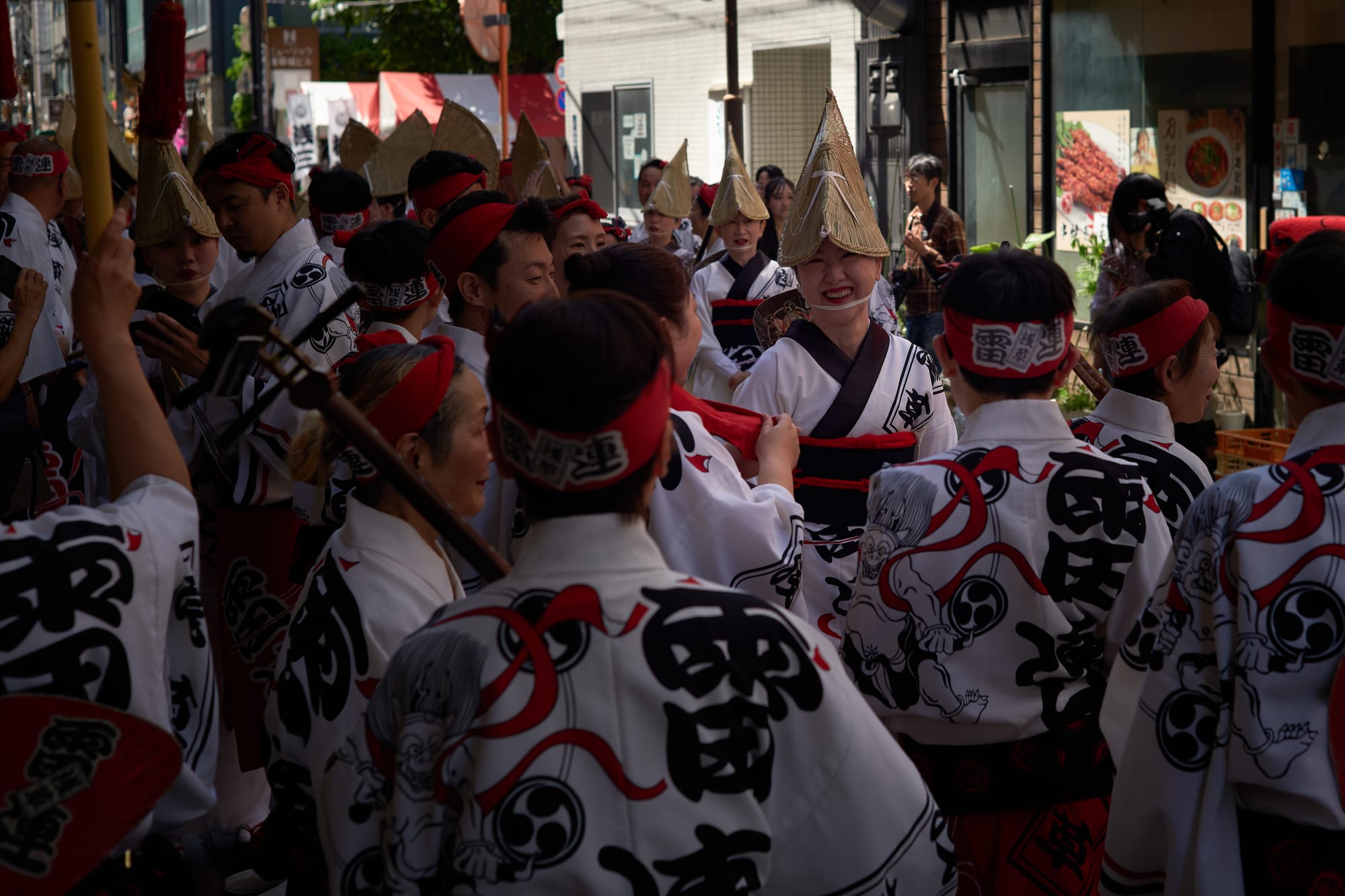
Most of my festival experiences so far this year came in May. On a photowalk with John Sypal and Mitsugu Onishi, we took a short break, the group splitting up to take a rest. After stopping for a coffee, I walked out onto the streets of shitamachi, and once again heard the echoing, now-familiar sound of drums. I followed the steady beat under the train tracks, where I found dozens of people in traditional clothing, led by women preparing to perform Awa Odori, a traditional ritual dance.
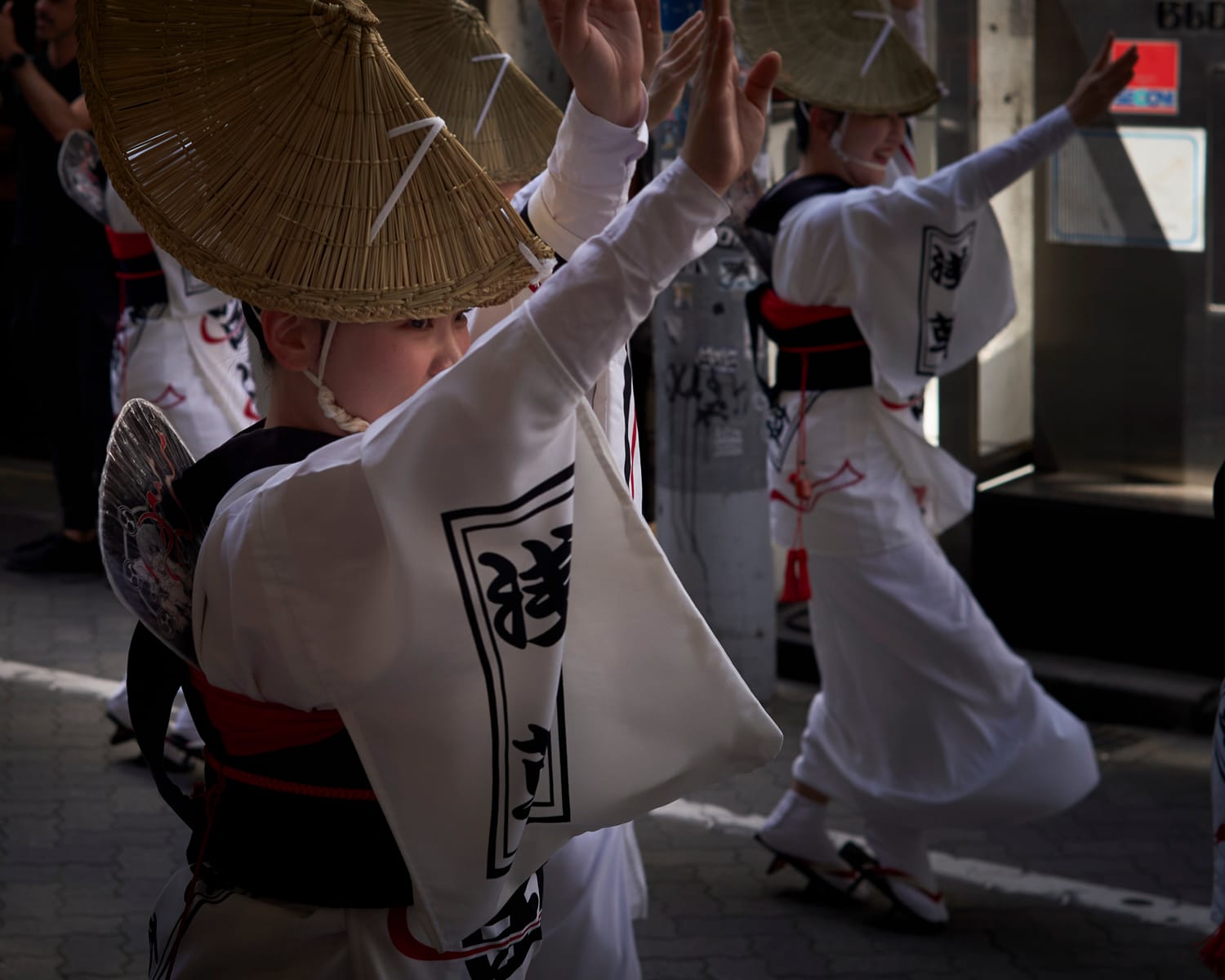
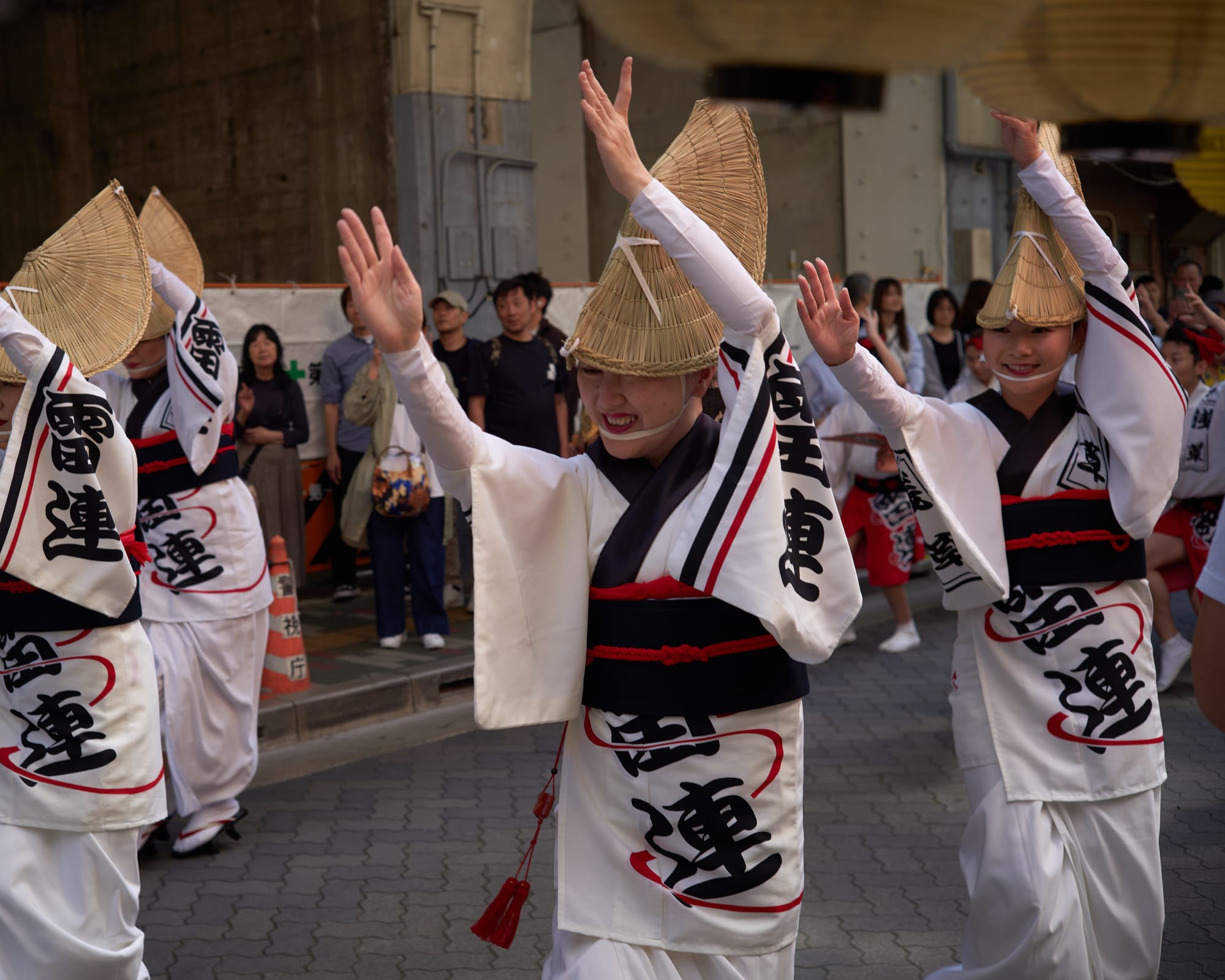
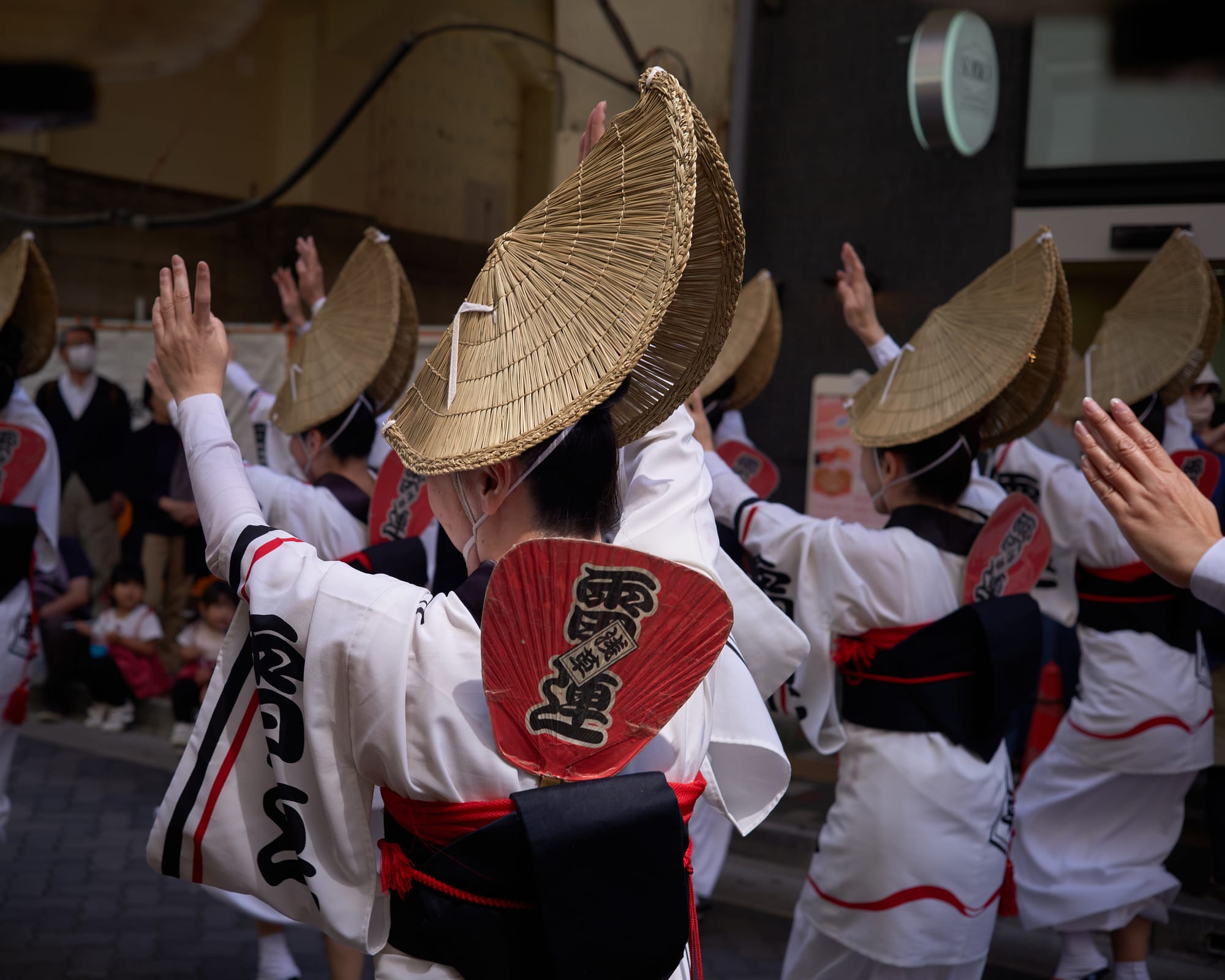
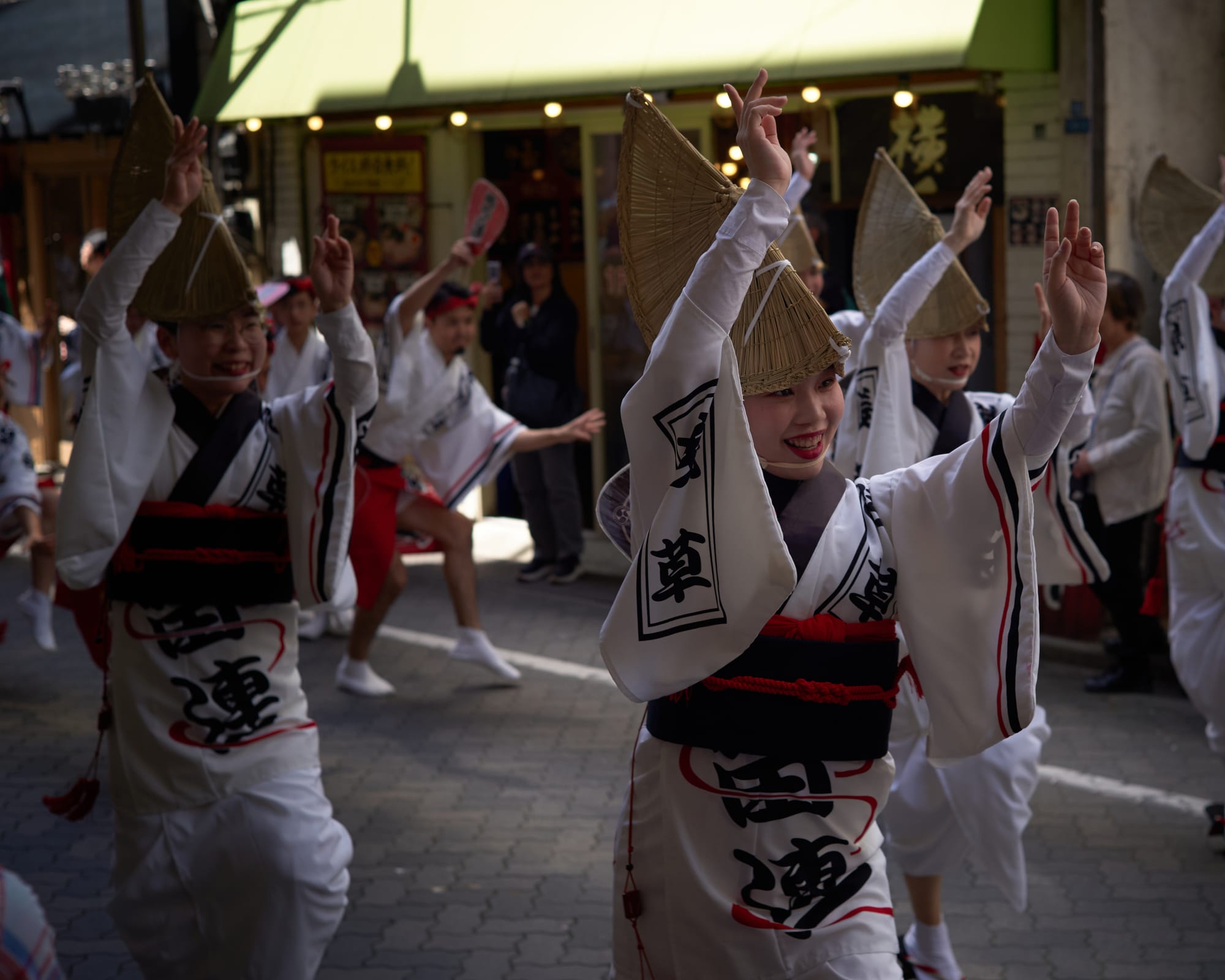
Leica M10-P & Minolta M-Rokkor 40mm f/2
I captured a few frames, the performers wound like springs, before ducking to the other side of the street just before it started, hoping to get a closer view. I tucked myself under the lanterns of an izakaya (you can see these creeping into a few of the frames above), where one of the shop’s employees was also waiting for it to start. We chatted for a bit, and he kindly explained to me the basics of the festival, the dance—and then it started. I captured a handful more photos, but once again, I was enthralled just getting to be there (so much so, I was late to meet up once the break ended; apologies to the rest of the group!)
There’s something truly magical about wandering into a festival, finding one by happenstance, but for many, you have to and should seek them out. The disappearance of traditional festivals as the Japanese countryside continues to depopulate is a well-known phenomenon.
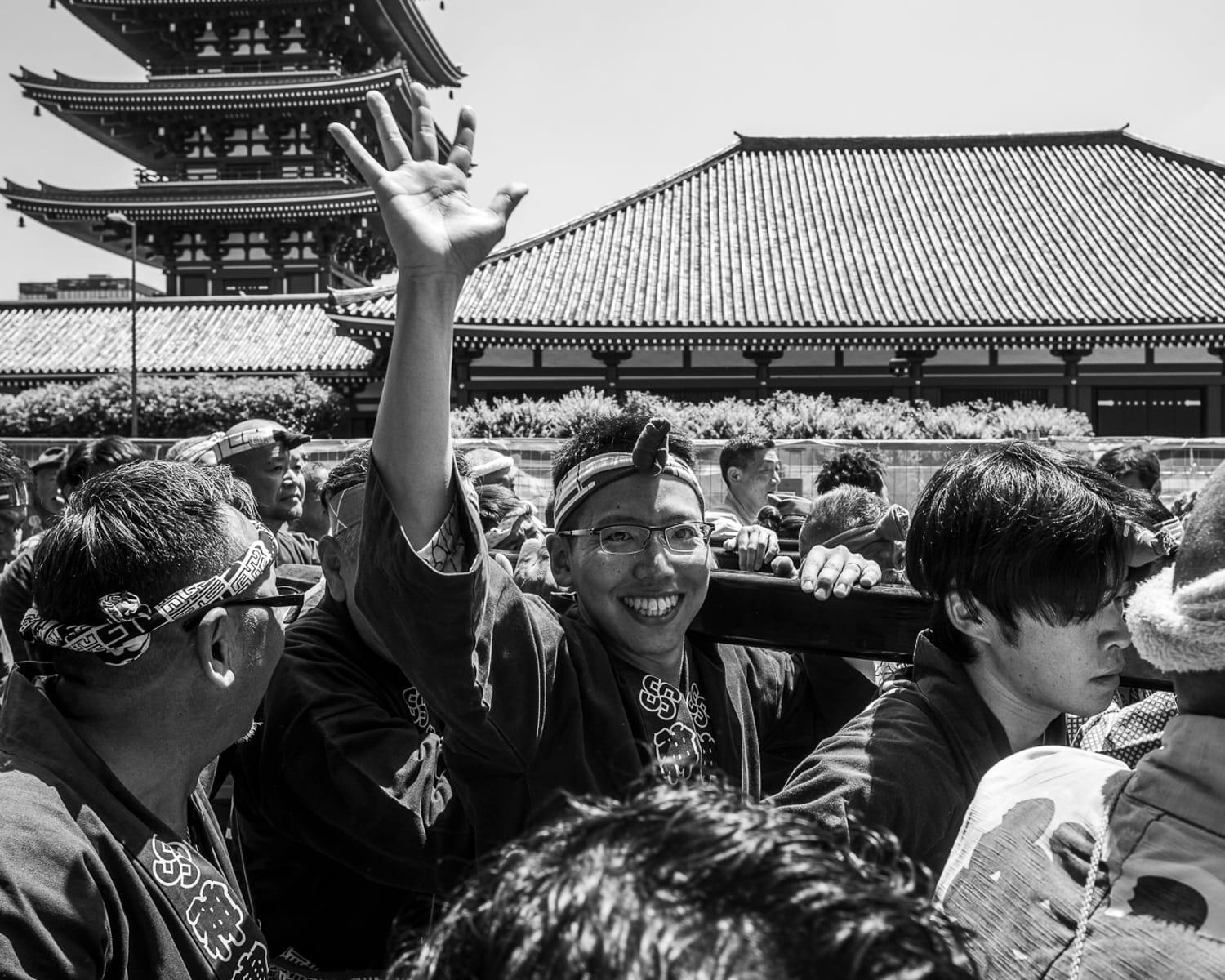
Luckily no such issue with the biggest Tokyo festivals. I made sure to go to this year’s Sanja Sai, one of the most unique festivals in Tokyo: it’s a Shinto festival honoring three Buddhists, where the main activity takes place at Senso-Ji in Asakusa (Tokyo’s oldest Buddhist temple). The “Sanja” of the name means three shrines, and it involves three mikoshi being carried around the temple, and much cheering. The energy at these festivals is incredible, and impossible to describe.
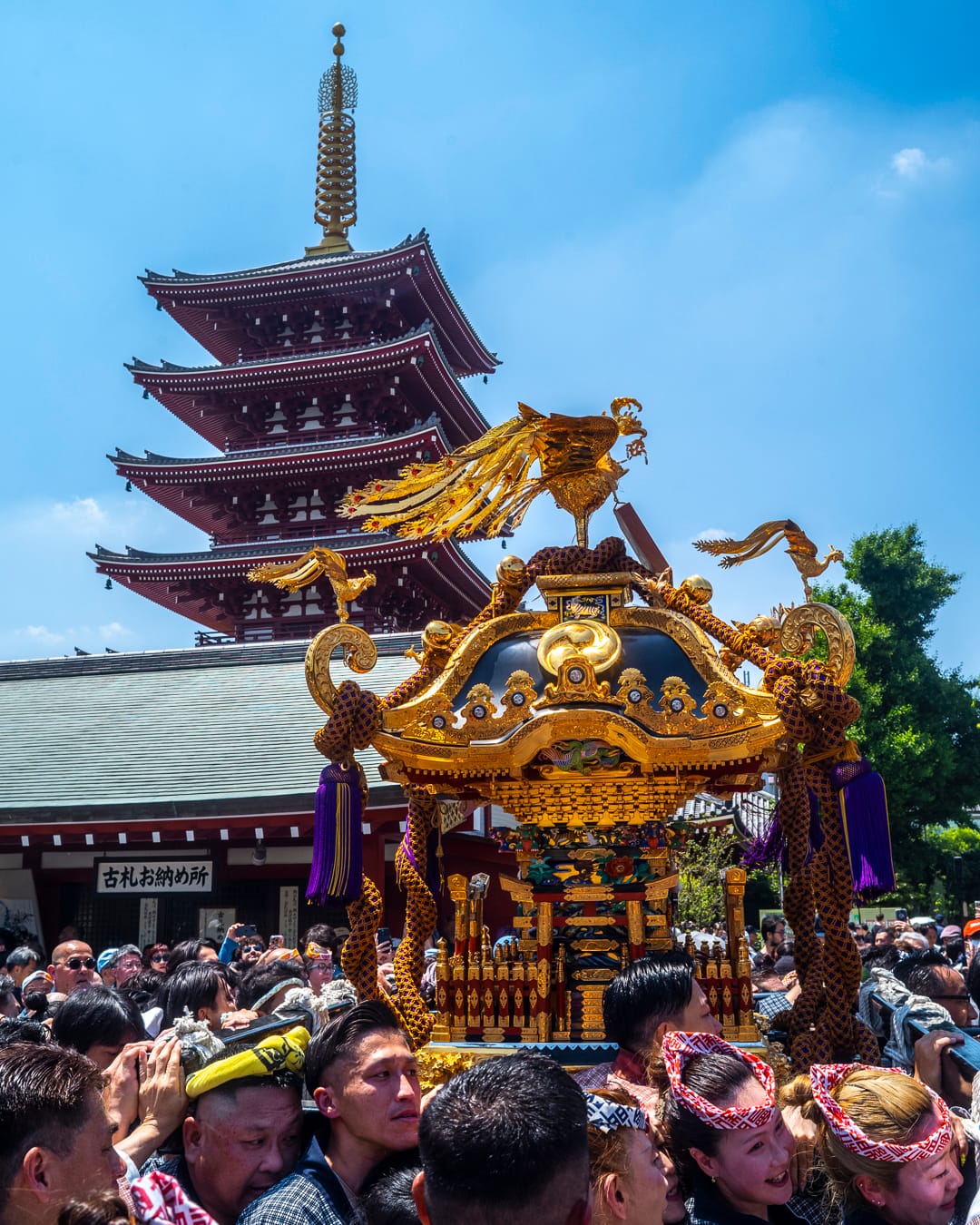
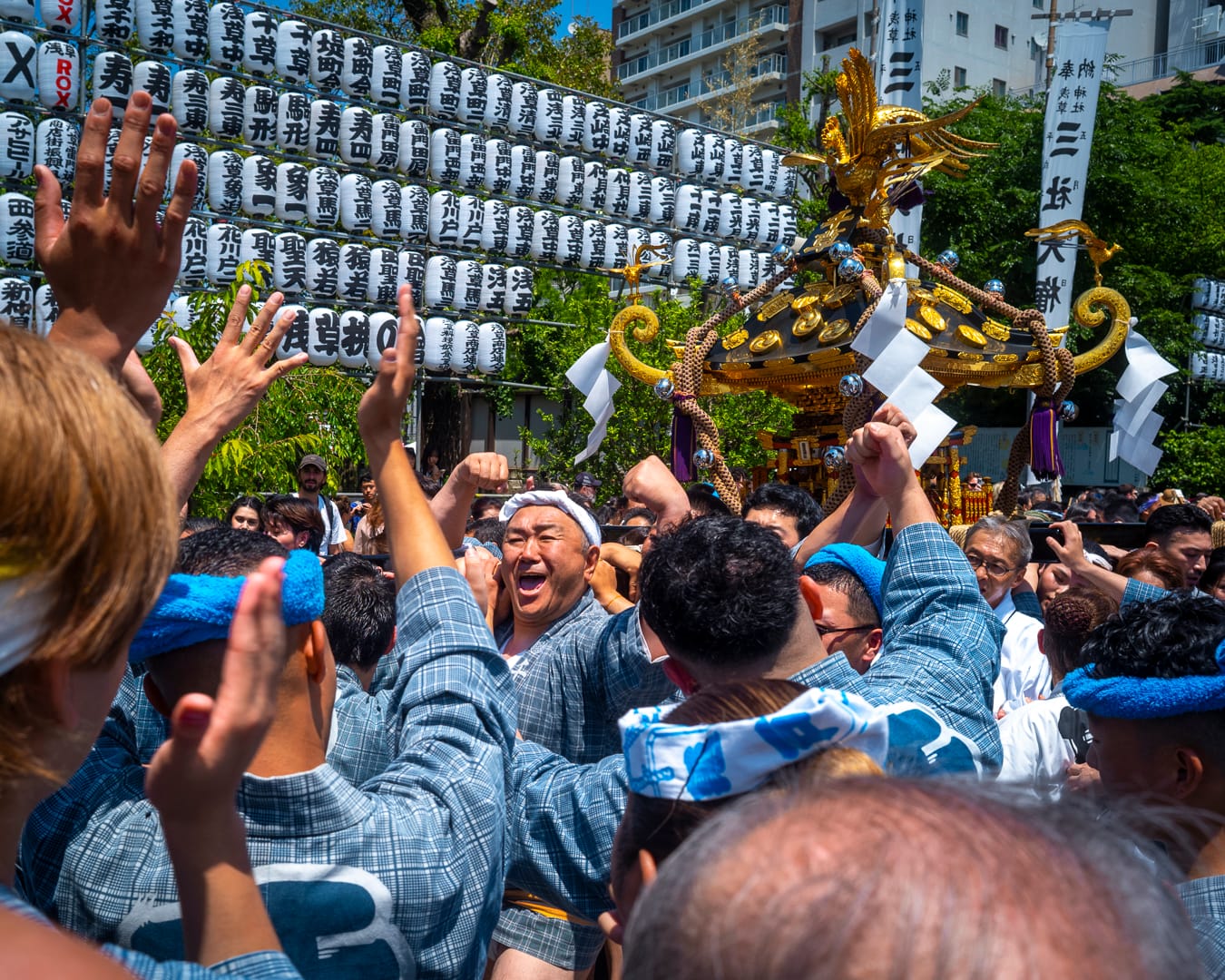
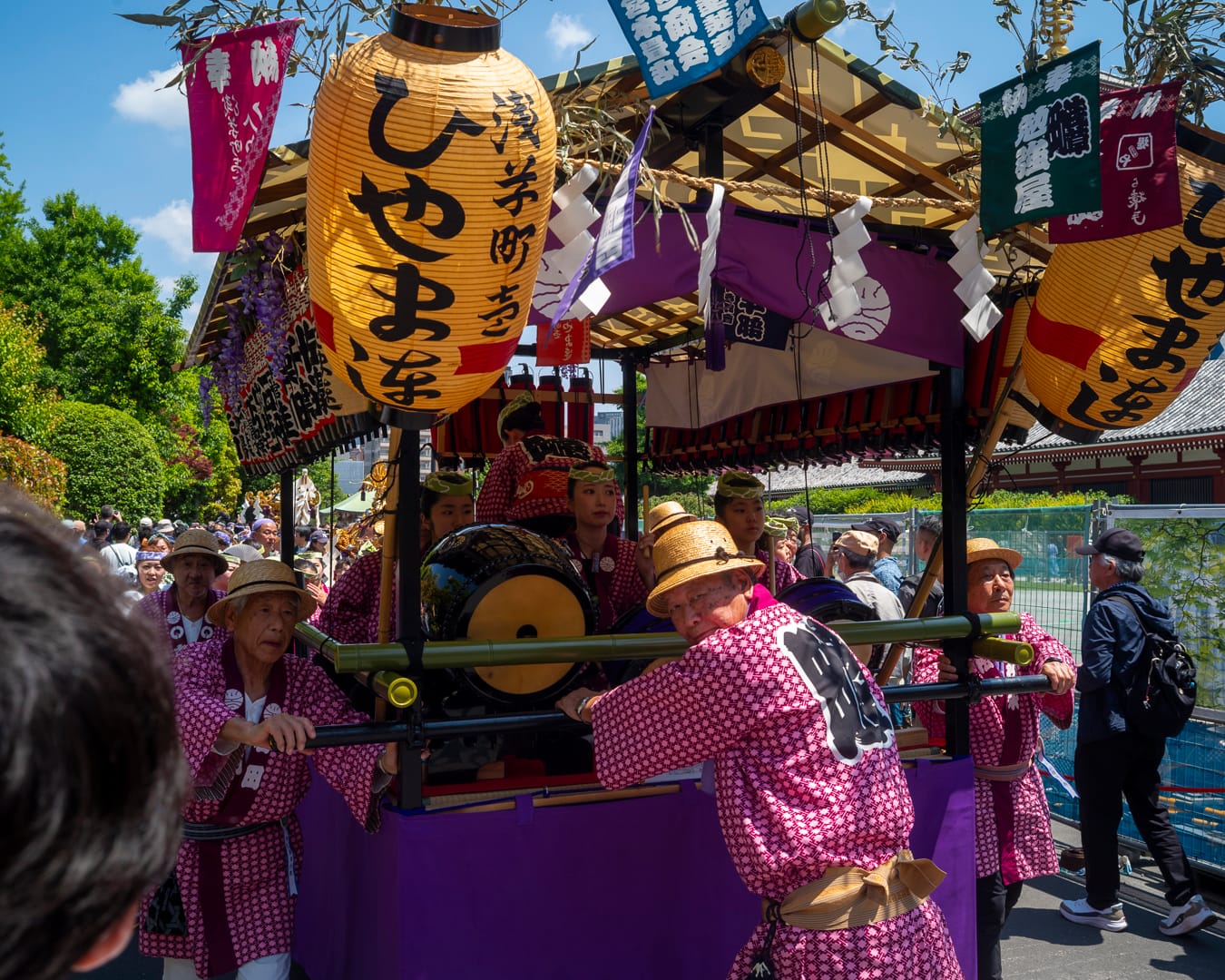
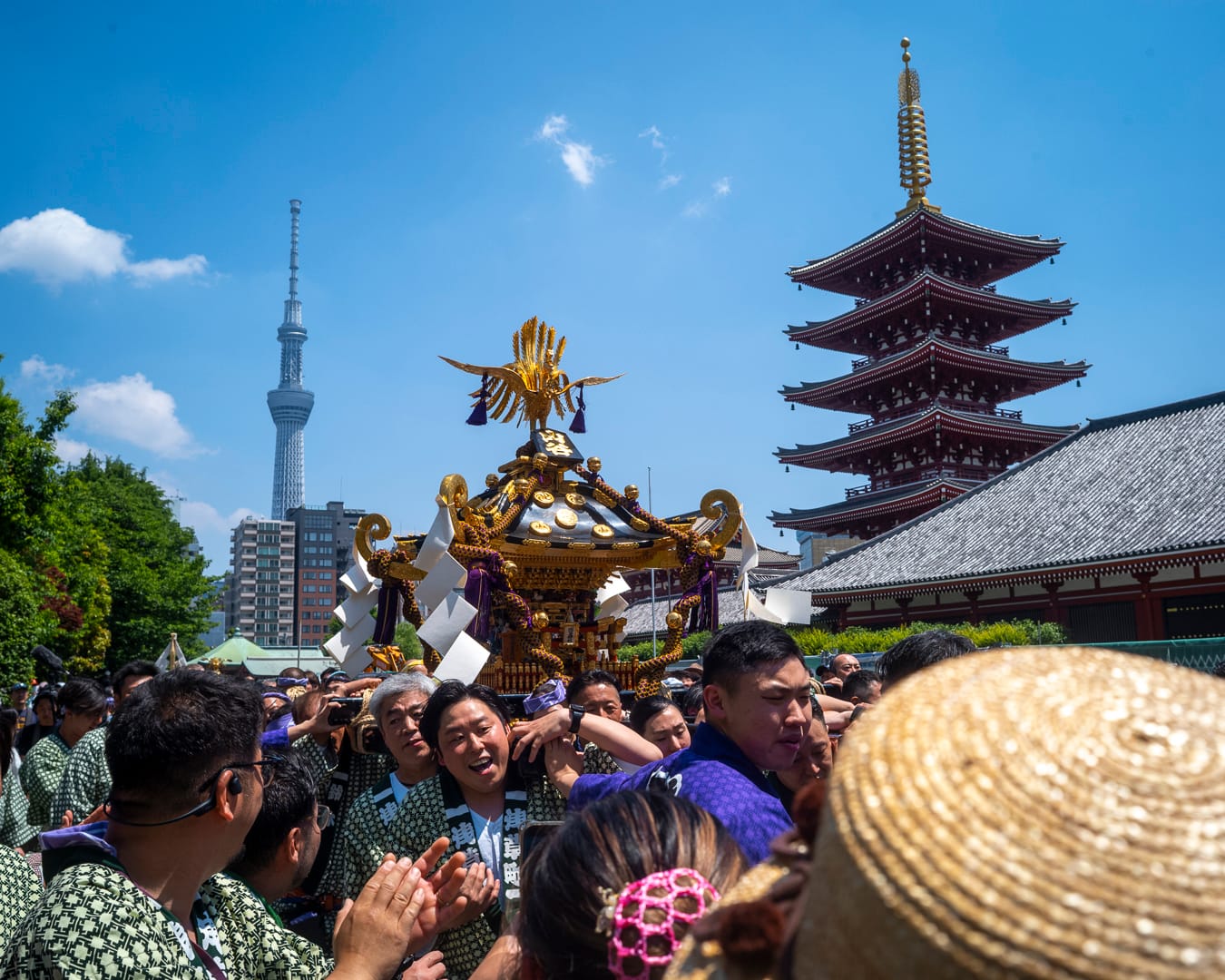
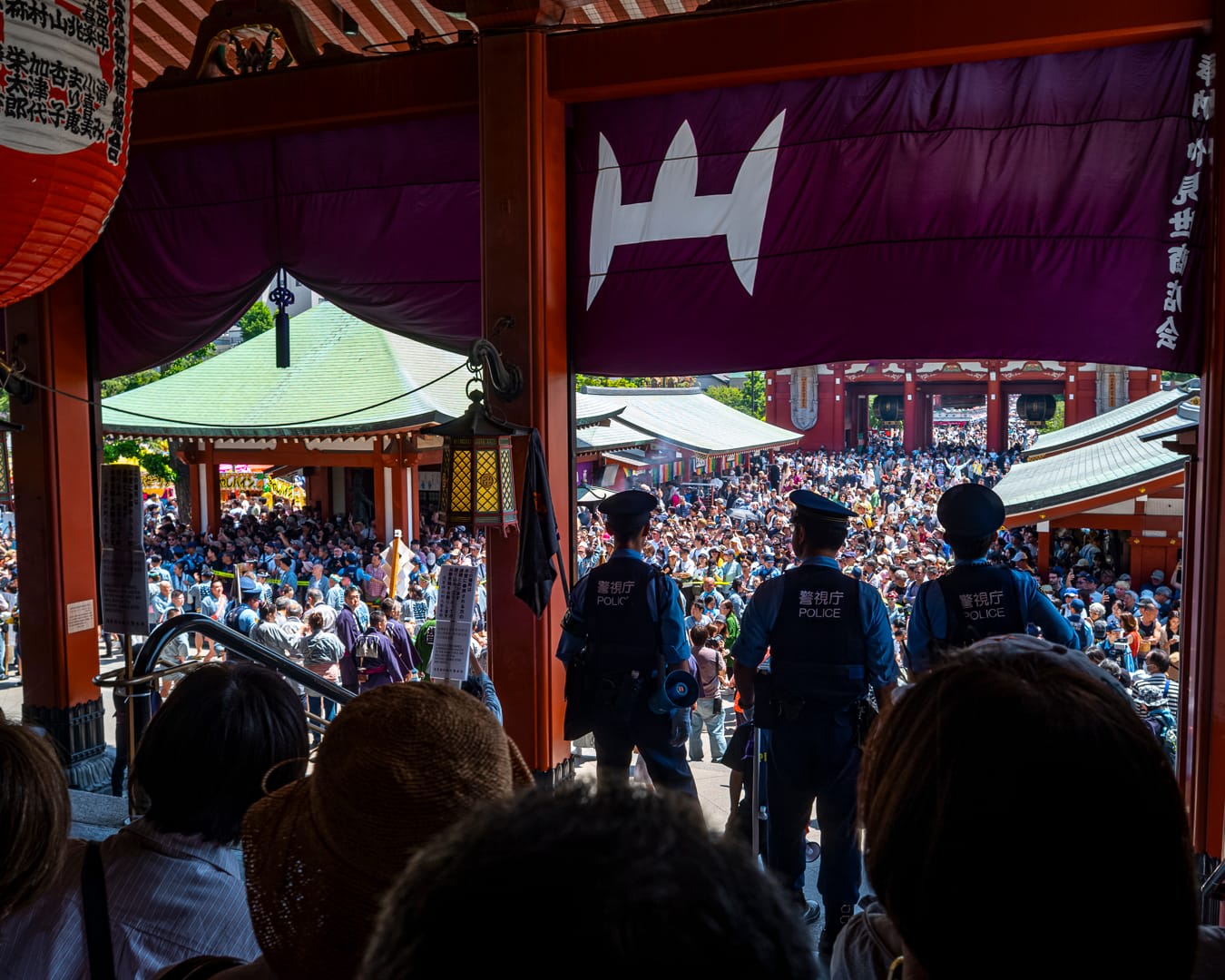
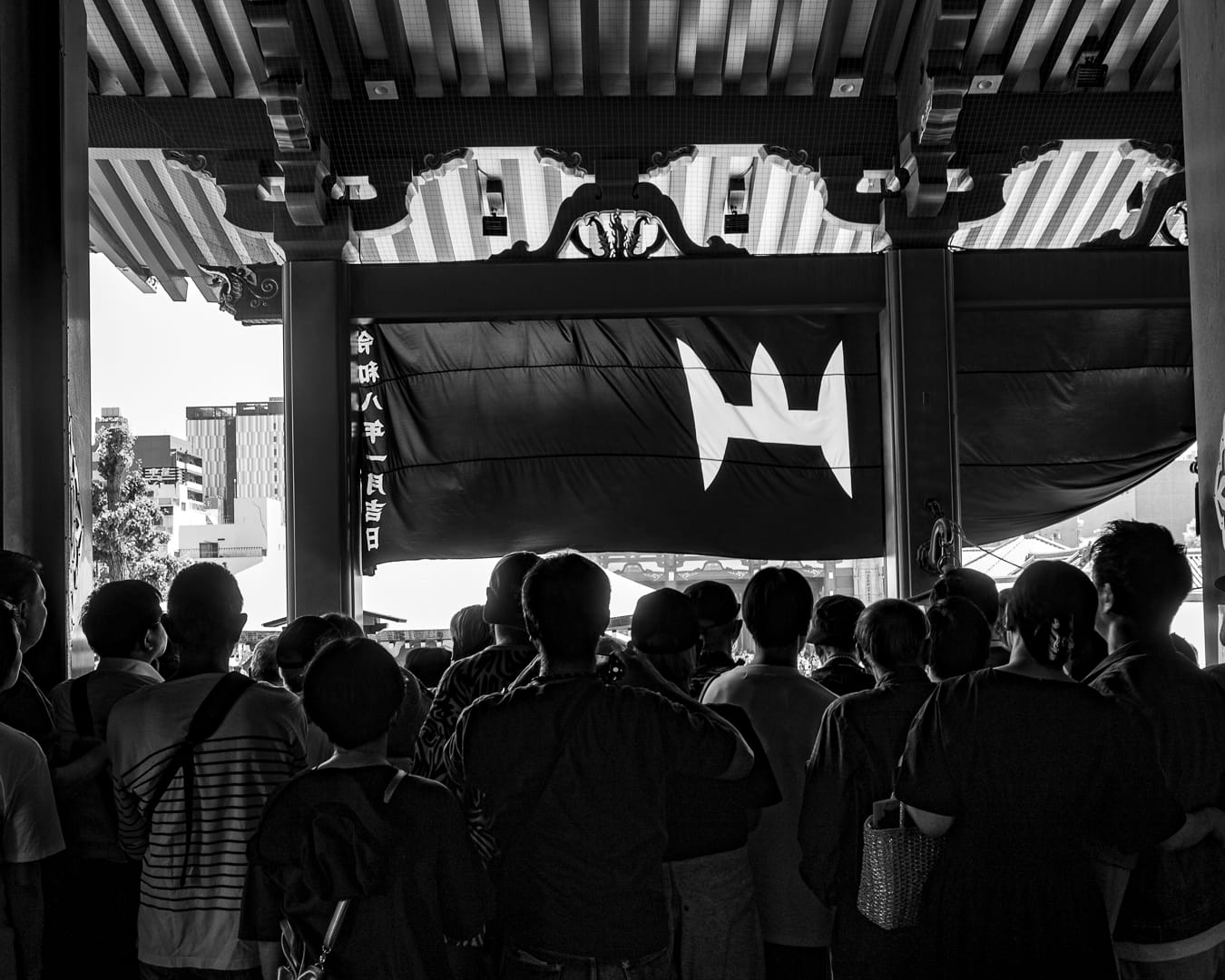
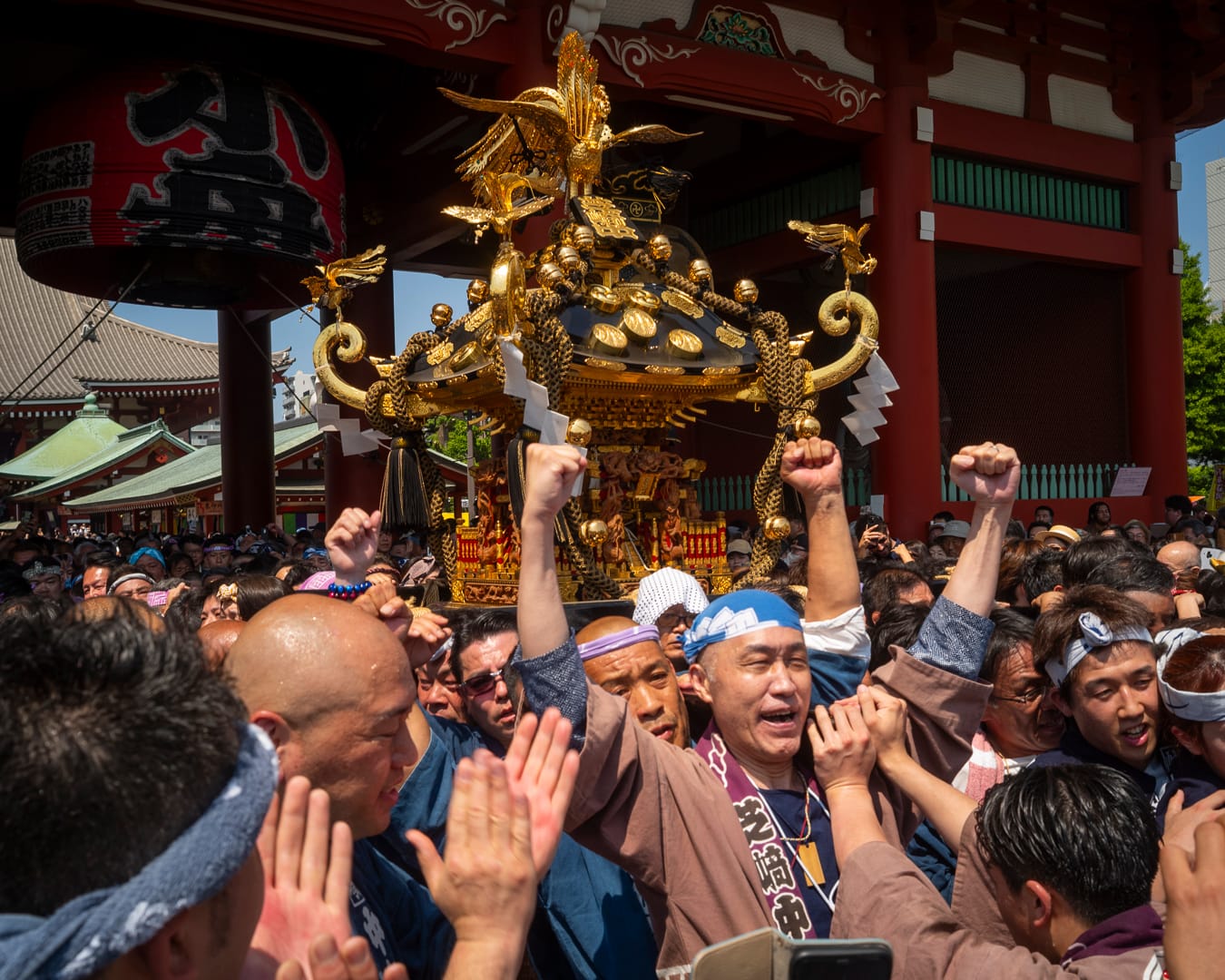
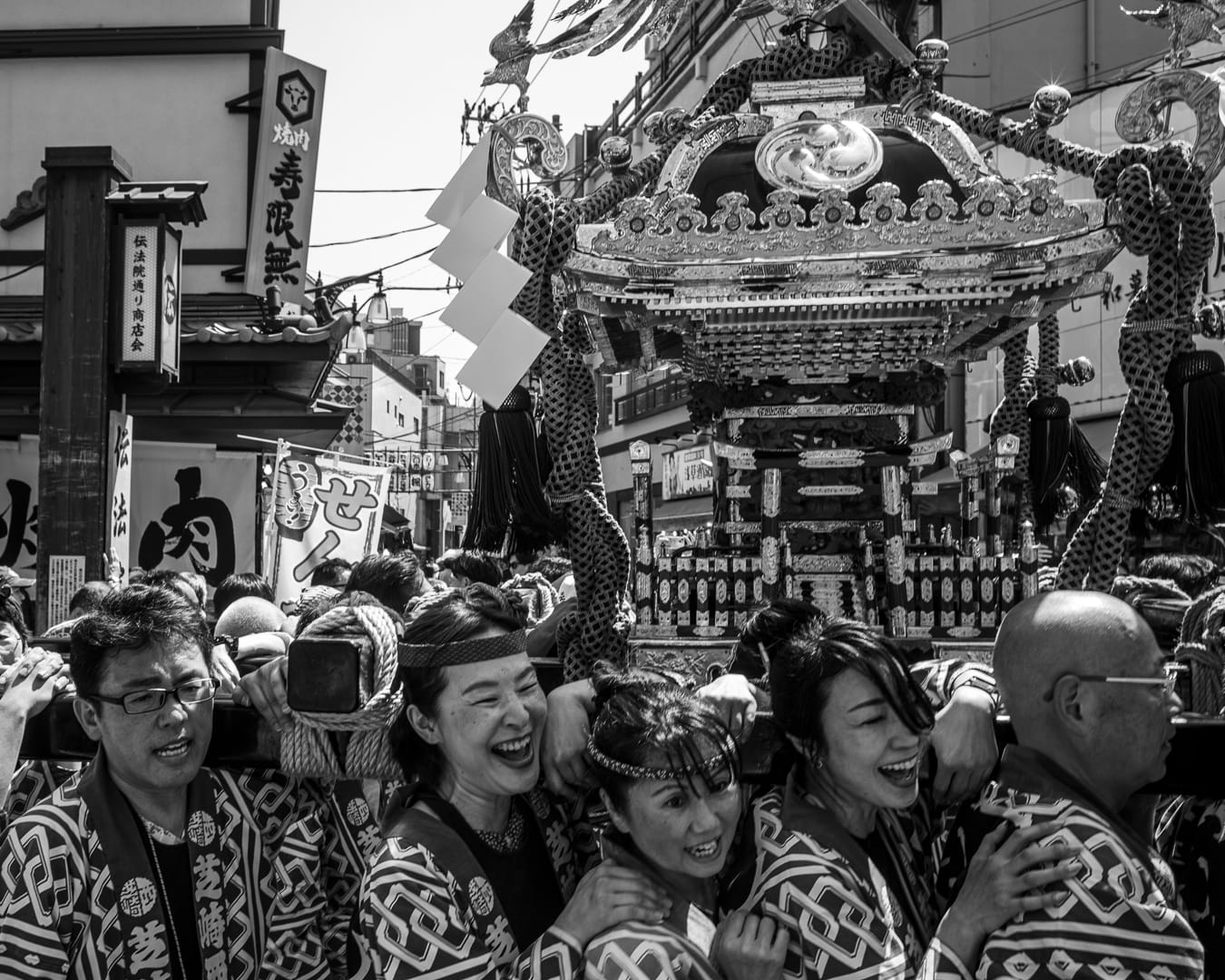
Leica M10-P & Minolta M-Rokkor 40mm f/2
I’m not sure exactly why, but I always find this deeply moving. Perhaps it’s just the passion of the participants; the communal spirit in coming together, working together to celebrate some unified thing; ceremony, ritual: something that’s altogether absent from American life and consciousness.
Usually, before too long I find myself wiping away tears, caught up in the humanity of it all. I imagine the hours of quiet practice in a gym somewhere. I think of the people doing a dance, participating in a ritual their Grandfather's Grandfather might've. I think about everyone simply choosing to gather, to be in the same space towards a communal celebration. Suffice to say, I find it profound.
After bumping into the Awa Odori on the photowalk, I tried to articulate some of these thoughts to Sypal, who later directed me towards an excerpt from Donald Richie:
The matsuri is no civic occasion. It is an eruption of raw, chaotic life into the measured, restricted, lifeless city existence. The watching foreigner feels a vitality, a nearness to nature and to natural man, which his own country seems long to have forgotten, except in its uglier manifestations: gangs, mobs, war.
Donald Richie may not be an uncomplicated figure, but his words here resonated with me. The vitality is present, though it's reductive to say all the passion is generated positively: I think some of the only actual fighting I've seen in Japan has been at festivals—as if the heat of the moment and zeal of the participants boiled over.
Around the time of that photowalk, I had just started reading Bertrand Russell’s A History of Western Philosophy (which I had to set aside in part of my focus towards the JLPT, and have recently picked up again). In it, he talks about the conflicting threads of the Bacchic and Orphic (I understand these as potential analogues to Nietzsche’s concepts of the Dionysian and Apollonian) underlining Greek culture. The Bacchic is the passionate, wild life, perhaps close to Sparta; the Orphic is the orderly, the restrained, epitomized by Athens. He has this to say:
[T]he Greeks, or at least a certain proportion of them, developed a [...] hankering after a more instinctive and passionate way of life than that sanctioned by current morals.
Much of what is greatest in human achievement involves some element of intoxication, some sweeping away of prudence by passion. Without the Bacchic element, life would be uninteresting; with it, it is dangerous.
But science, unadulterated, is not satisfying; men need also passion and art and religion. Science may set limits to knowledge, but should not set limits to imagination.
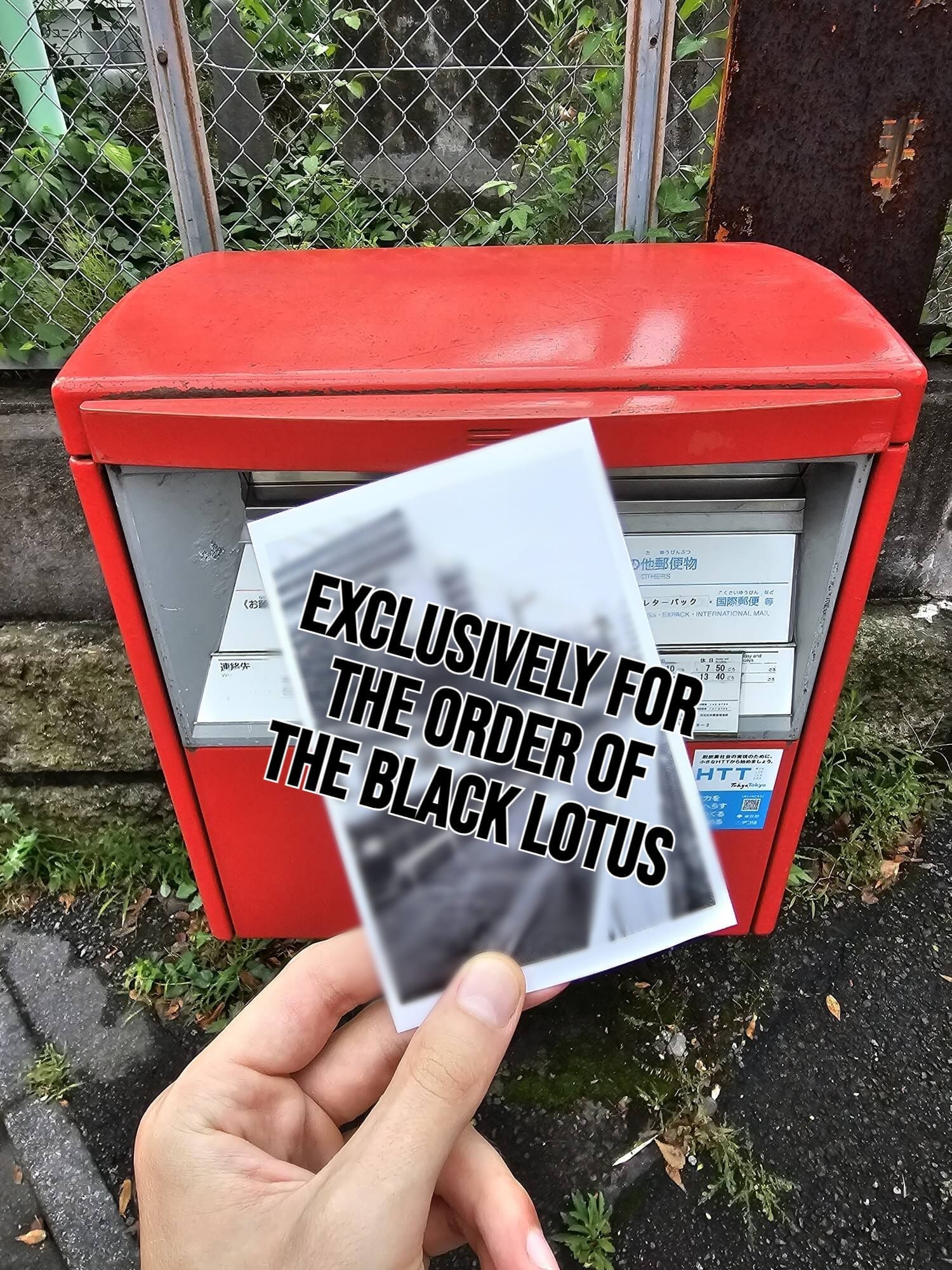
If you enjoyed this issue, consider joining my membership program, The Order of the Black Lotus. For the price of a cup of coffee in Tokyo ($3/month or $30/year), you not only support my writing and photography, but I’ll send you a handwritten, one-of-one postcard from me in Tokyo—a tangible piece of my journey, just for you. You’ll also get access to all exclusive posts, and an invitation to my private photography feed on Retro.
Joining is the most meaningful way to ensure this work continues, and I thank you for your support!
There’s such an odd connection between modern society, civic life, order—and the ecstatic, the almost primal that feels more connected to the natural world; the “raw, chaotic life” as Richie put it. America has set aside almost all aspects of chaotic life in favor of the order of society, though that's not so orderly anymore.
But even moreso, American culture has forsaken the ritual, the ceremony. For me, it goes beyond tradition: it's an infusion of wonder into the ordinary. These are events that take place in the public. Most Americans celebrate Thanksgiving, but it's expressly something that occurs in one's home. There aren't many occasions I can think of where Americans come together collectively for any reason. What comes to mind most right now is our own Summer festival: fireworks on 4th of July. But there's little wonder in that.
To me, there seems to be little sense of wonder in America these days, among all but the most religiously-devout (a category I can’t say I belong to). This is in spite of the natural splendor of America—one glance into one of the National Parks should convince the most staunch cynic there is still wonder in the world—but if it’s there, it’s certainly not felt as part of our daily lives.
These festivals I'm describing tend to be religious in nature (the mikoshi they carry house a god), but not always. In Japan, Summer may be the hot spot, but there's a festival or event for every season. You can't have Winter without doing hatsumode, the first shrine visit of the year, nor can you let Spring pass you by without going to see the sakura.
Wonder has been a focus of mine for years—see the site's motto listed on the homepage—but lately I find myself thinking more about the connection between the power and passion we call carry but often hide, and the order and society we collectively build. Japan is certainly an Orphic society—as anyone who's ever had to go to city hall here will readily attest—yet they find a way to exhibit the frenetic, ecstatic chaos that always sits below the surface, growing through like weeds in asphalt.
These are large concepts I'm just barely grasping, but it's the humanity felt at these events that make them so special. I feel so honored to have had people take the time to explain to me what was happening, to answer my curiosity, let alone to allow me to participate. But this sort of energy goes beyond words; I think it's clear from the photographs. It's a passion that's immediately felt, and I hope it's this passion will keep them going forever on. For now, I'm just thrilled to be able to be a part of it. No promises I'll remain dry-eyed, though.
Leica M10-P & Minolta M-Rokkor 40mm f/2
Comments
Nothing yet. Say the first thing.
Sign in to join the conversation.