
Harriet Nembhard is the president of Harvey Mudd College, one of the country’s most prestigious STEM colleges. She is the fourth generation of educators in her family, a lineage that began with her great-grandmother in 1906. Throughout her career, Harriet has overseen the education of generations of college students, a responsibility that has shaped her vision for what ambition, and a more human society, can look and feel like.
These days, you’ll find Harriet on the Harvey Mudd campus in her M.M.LaFleur looks paired with her signature Chuck Taylors, equally at home with her students, her administrators, and the board. We sat down with her to talk about the mentor who set her on this path, how she thinks about her daily uniform, and how she’s encouraging her students to pursue a full life in and outside the classroom.
I’ll start with a mentor: my high school science teacher Mrs. Justus, who was such an important early influence. She kept the science seminar lab open after school for a small group of us on her own time and dime, though I didn’t realize that until years later. She affirmed and encouraged my interest in science, and when I got my white lab coat, that was everything. I ended up winning Arizona’s statewide high school science fair in my junior year. With that accomplishment, and knowing about my broader interests in business and engineering, Mrs. Justus recommended I apply to Claremont McKenna College (CMC). I was admitted and started my college journey at the age of 16.
The Claremont Colleges are a consortium of five undergraduate liberal arts colleges and two graduate institutions, each founded for a distinct purpose. CMC was founded shortly after WWII to educate students in business, government, finance, and international relations. Harvey Mudd College was founded amid the Cold War and space race to educate students in science and engineering. Students enroll in one college and can take courses at any of the others.
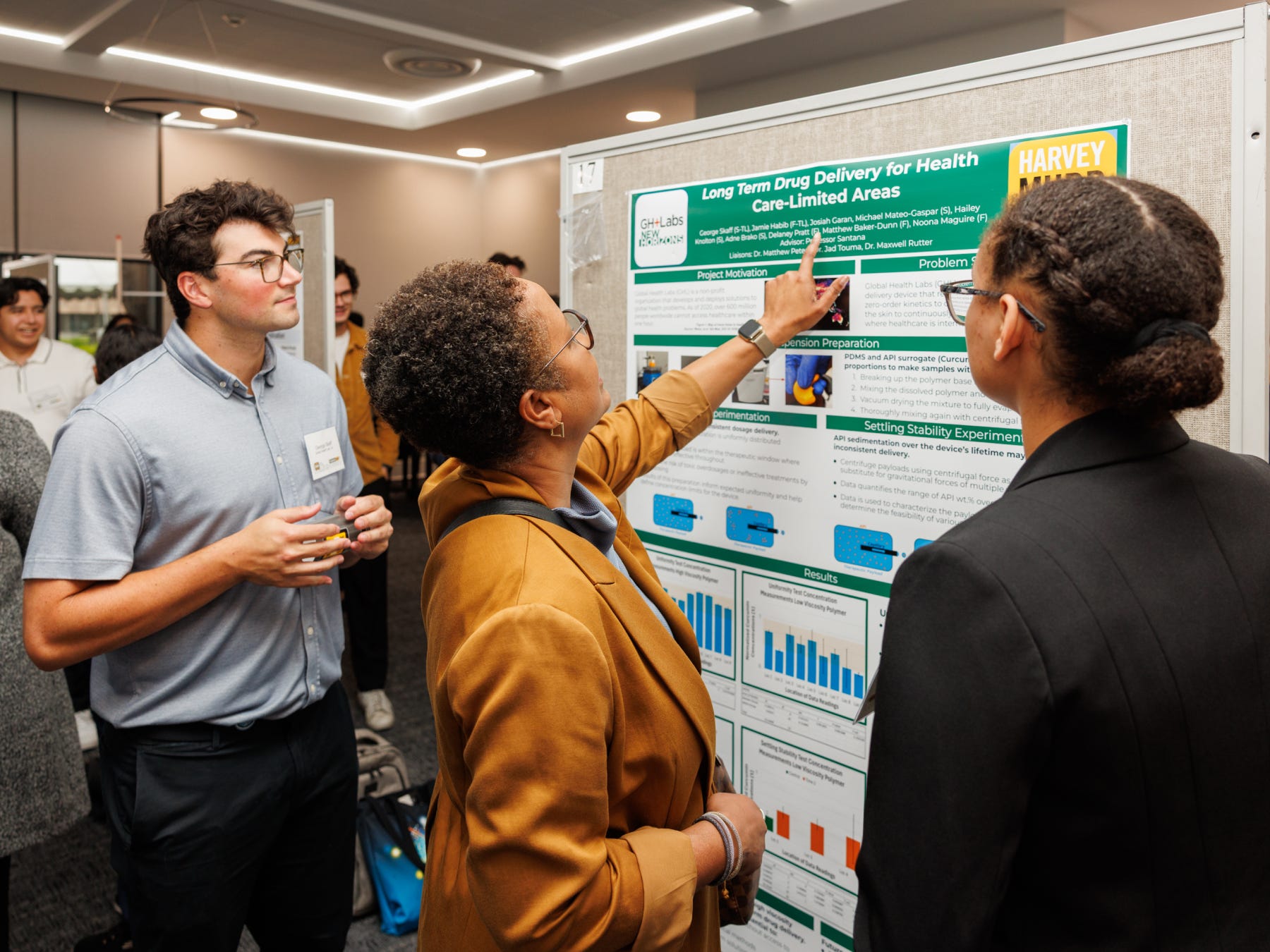
After graduating from CMC and Arizona State University, I worked in manufacturing and logistics then earned a PhD in industrial and operations engineering from the University of Michigan and became a professor in that field. I spent most of my faculty career at Penn State University and later became dean of engineering at the University of Iowa. I also served on CMC’s Board of Trustees, which was a master class in higher education leadership.
Forty years after my mother dropped me off in Claremont, I’m back where my college journey began, now as president of Harvey Mudd. Returning to focus on undergraduate STEM education has been incredibly life-giving these past three years and has offered me a chance to reflect on the little girl Mrs. Justus mentored. My mom and Mrs. Justus, both of whom have passed away, have been on my heart lately.
There’s a Maya Angelou poem called “Grandmothers“ that I think about a lot. It includes the line: “I go forth along, and stand as ten thousand.” In other words: I’m here as one, but I stand with the strength of many because the legacy of my family is with me.
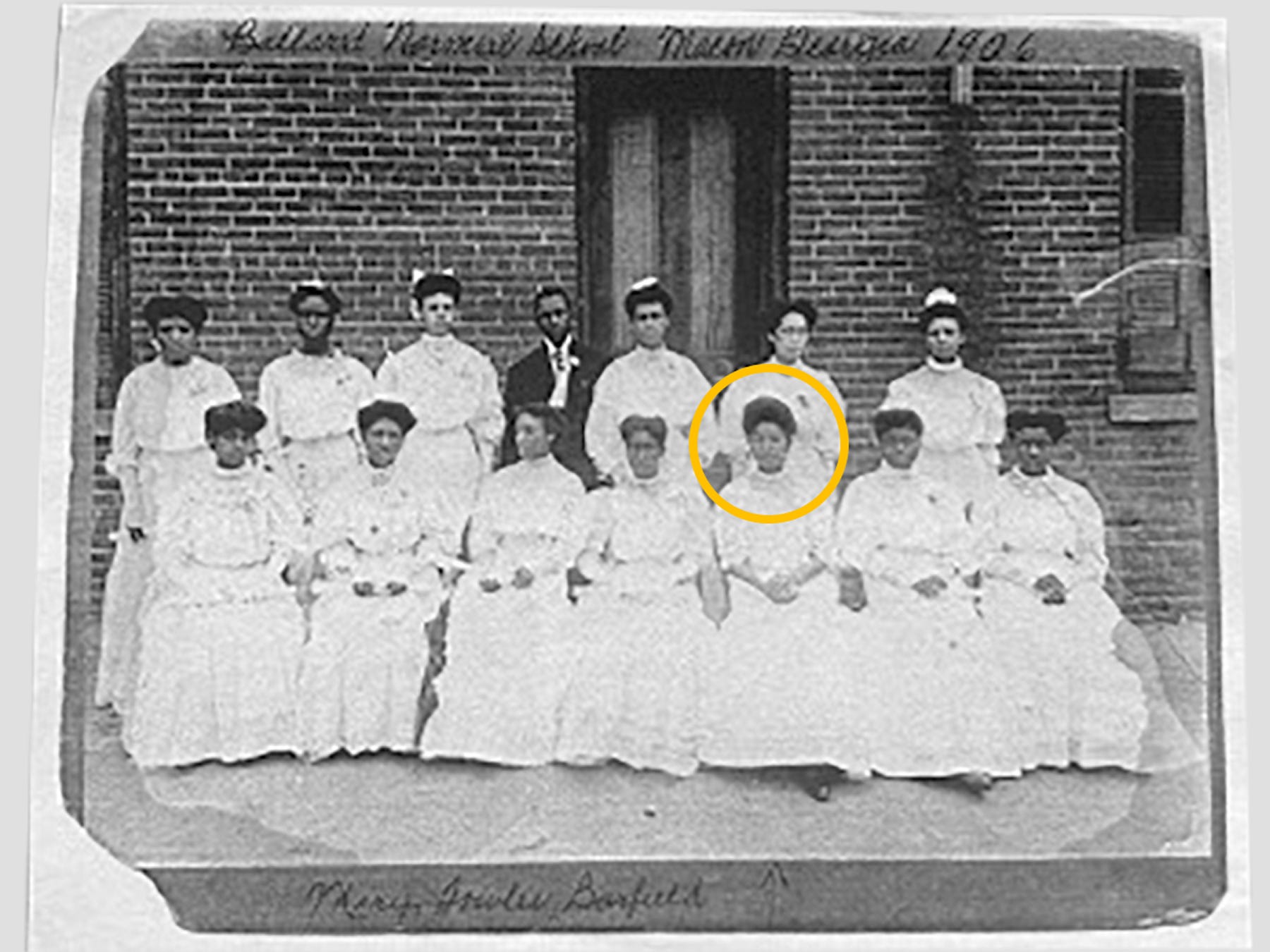
In 2006, one hundred years after my great-grandmother Mary started teaching in that one-room schoolhouse, I sat down with my grandmother Harriet, who I’m named for, and put together a photo essay, “A Century of Educators: The Legacy of Mary Lou Towles Barfield.” Looking through pictures of Mary’s graduating class, women in formal dresses even in the classroom, and I kept thinking about what she started at a time when it was so unlikely.
I also want to give credit to the men in my family; across both sides, education is what we have always done: my brother has a doctorate, my father was an adjunct professor, my uncle chaired a university finance department, and my grandfather was a high school principal.
That photo essay became the embodiment of the angels on my shoulder that go into every room with me. I feel both an absolute privilege and responsibility for what education means for the next generation. That lineage gives me energy every single day.
My first piece was from the summer I started as president. I bought the Moreland jacket first in black, paired with gold Chucks, since our school colors are black and gold. As a professor, I always dressed a little more casually in summer. When I arrived here, I wondered: can I still wear my Chucks as president? I decided to just try it. It’s really worked–my team even gifted me a pair of gold sparkly Chuck high-tops as an inauguration present.
I’ll be honest: paying nearly $300 for a jacket felt like a big jump. But I told myself, I’m a college president now! If I want a quality jacket, I deserve to invest in one. Being an engineer, I was immediately impressed by the performance of the OrigamiTech fabric: you throw it in the machine, take it right out, and it travels perfectly. I said to myself, This is brilliant science. I’ll take five more. Now I have six colors of the Moreland, and it’s become the backbone of my daily leadership uniform. It’s beautiful, lightweight—which is perfect for California’s weather, and the zipper pockets hold my phone.
Now hardly a day goes by that I’m not wearing something from M.M.LaFleur. I just love that I can get dressed in the morning with zero fuss and don’t have to worry about my outfit over the course of the day.
I think about how I pair the Moreland jacket with my gold Chucks similarly to how I show up as president each day for my community of “nerds” as I affectionately refer to us. It’s essential that I am my authentic, nerdy engineer self wherever I go, and the clothes I wear are a part of that. On campus, people often comment on which gold sneakers I have on. Students know that I’m approachable and that my sleeves are rolled up: I’m ready to be in the work with them. Authenticity creates accessibility, and accessibility builds trust. Being a leader doesn’t mean being distant.
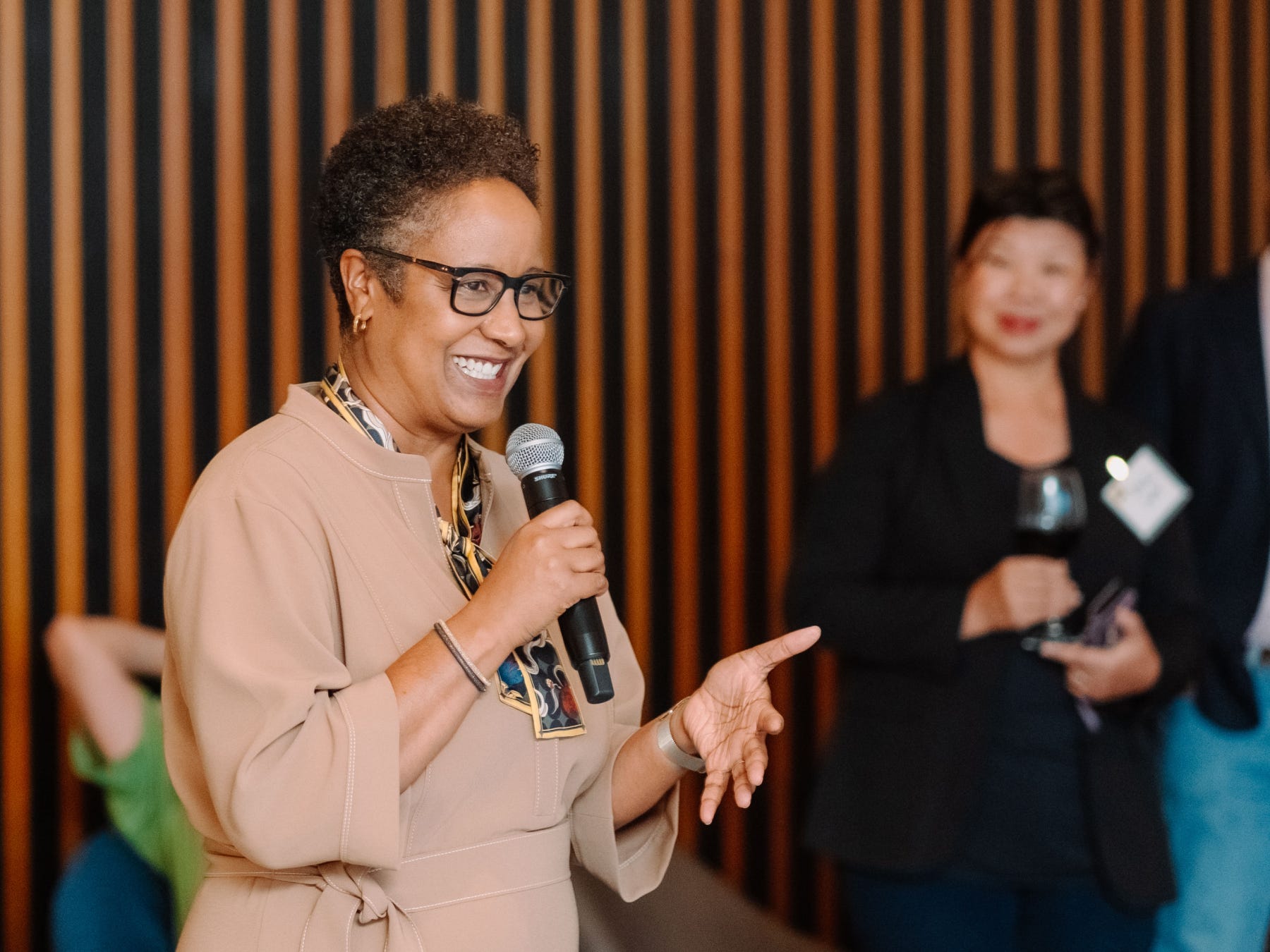
With trustees, that same groundedness signals that I’m anchored in our mission and focused on what actually matters. When I’m wearing M.M., it’s not just about wearing a nice item of clothing: it’s the reliability of the stitching, the durability of the fabric. No single piece of the garment works in isolation. I approach presidential leadership in the exact same way. I’m saying, we work together as a connected community.
In my family, education was always central. My grandmother had me reading by age three. People often ask me, Harriet, how do you get so much done? I tell them: it’s not magic, it’s time on task, it’s practicing, it’s planning your work and working your plan – all principles that my grandmother and mother taught me. I’ve worked hard, but that’s come with support, training, purpose, and opportunities to explore things that matter.
At the same time, as I prepare for a retreat with my team, I’ve been thinking a lot about the mental health challenges across higher education today. A place like Harvey Mudd is intentionally rigorous, but burnout is not a badge of honor. You have to work hard, but the tradeoff cannot be an inattention to well-being.
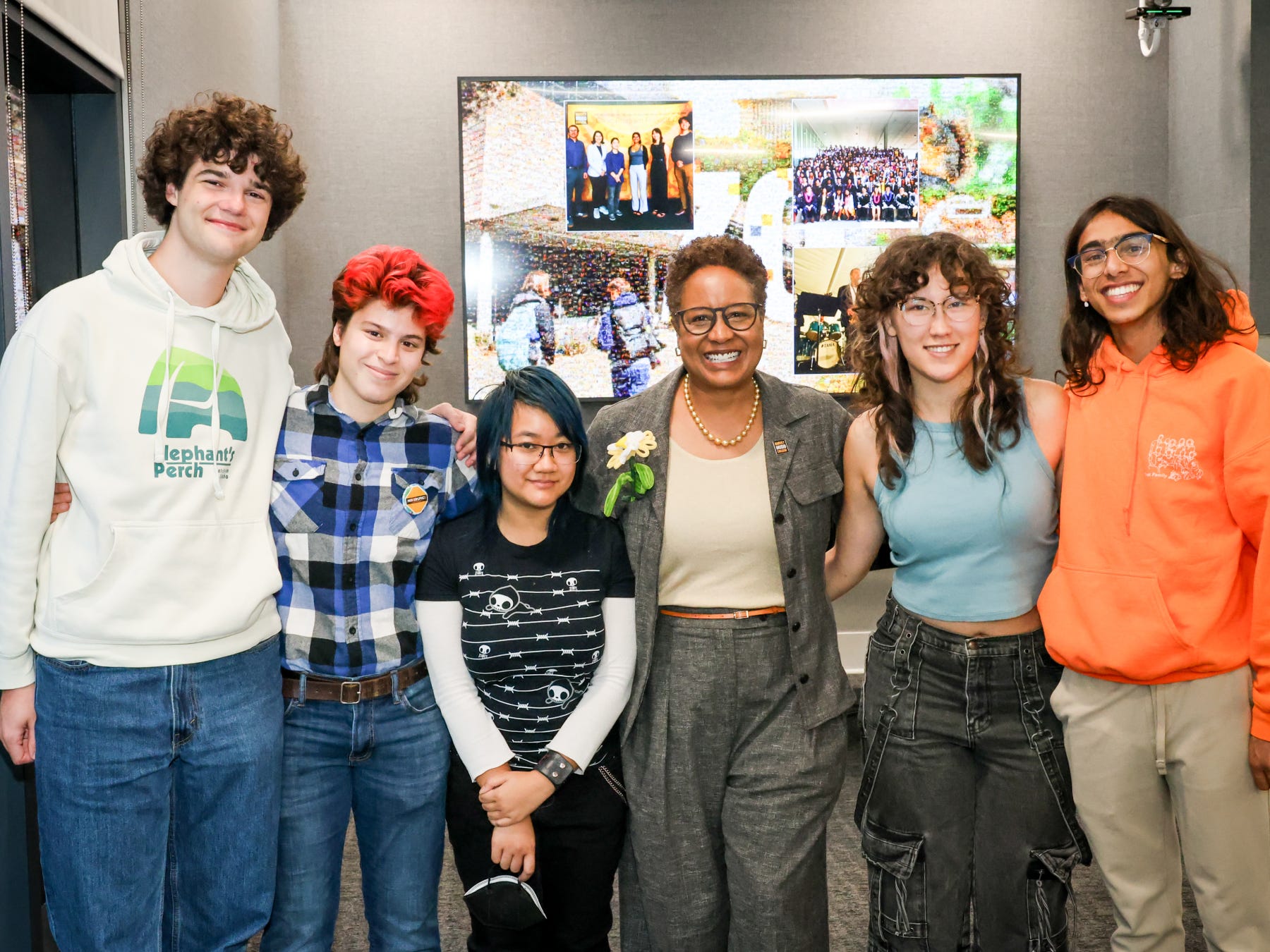
To me, success is not about a list of individual achievements; it’s an impact orientation toward building an institution, and a sector, that outlasts any one of us. Mine is a quieter kind of ambition, but a much more sustainable one, with a fierceness and seriousness to it.
My own path in STEM was clear early on – I was asking systems engineering questions before I even knew the term existed. But I know many students enter college still searching, and that exploration is a healthy part of the journey.
When students feel uncertain, I encourage them to look back at the questions that drove them from the time they were eight or nine years old. The key is to listen closely to your core curiosities and build a framework of empowered learning that helps you unfold into who you are meant to be.
Being ”good at STEM” is our baseline – our students master complex theory, challenging formulas, and the technical depth. That technical excellence is essential.
“Good at life” is where real leadership happens. It means developing relational intelligence and the ability to collaborate across differences–skills that are even more vital now that algorithms can handle routine technical tasks. What humans bring is human intelligence: the ability to have difficult conversations in a way that upholds everyone’s dignity, including your own. At Harvey Mudd, our mission underscores understanding the impact of our work on society: not just can we build this, but should we?
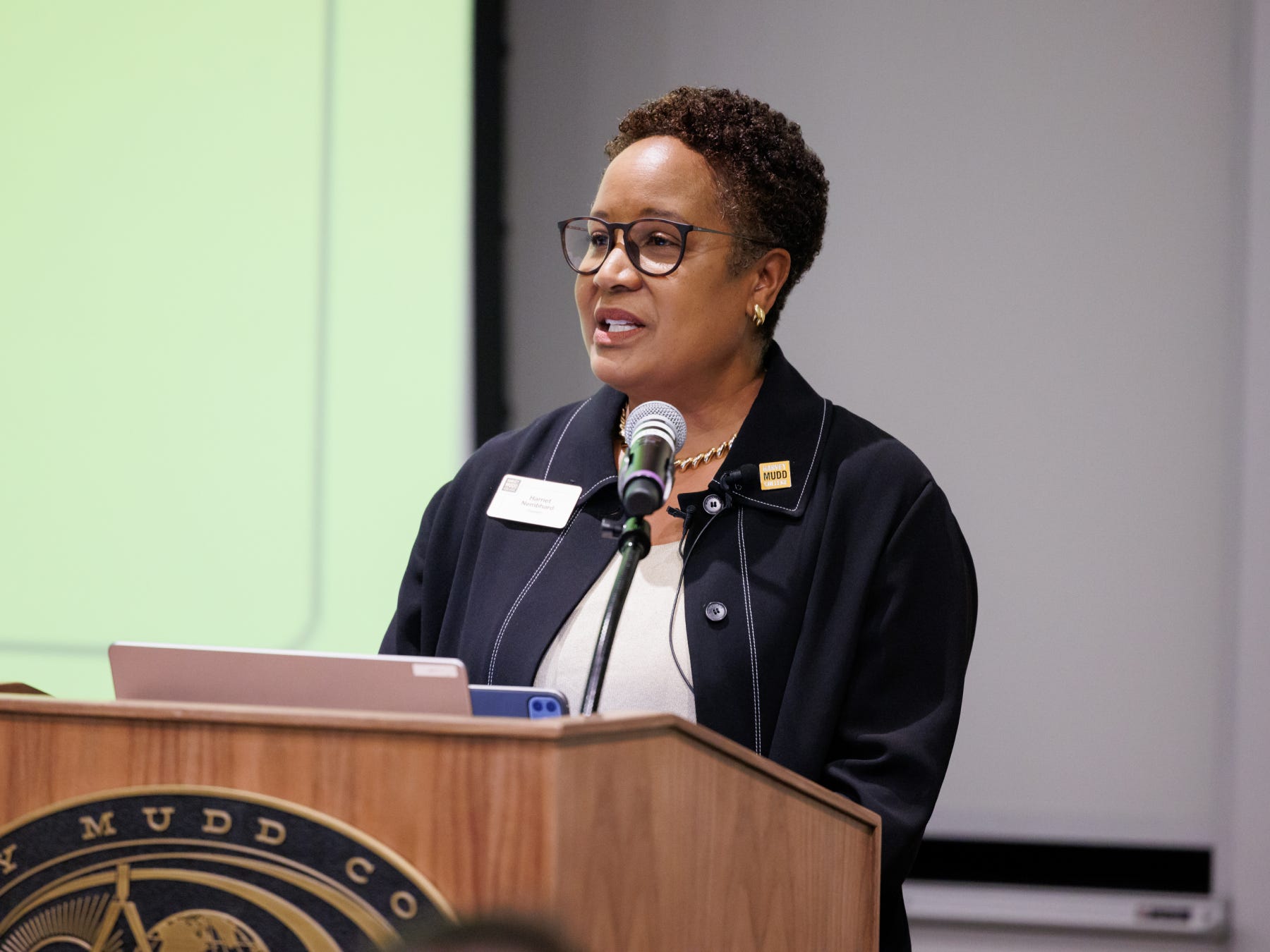
Being good at life also means practicing resilience. Failure happens; it doesn’t mean you are a failure. How you navigate failure while maintaining your dignity and sense of self-worth is what I hope all of my students carry with them, because these things are not just important for leadership. They’re important for building a truly happy life. I want this next generation to live joyously, and to be both remarkable citizens as well as lovely human beings.
Ever since teaching a course on the intersection of engineering, art, and democracy as part of our programming around America’s 250th anniversary, I’ve been pondering the concept of independence versus interdependence. It’s what drew me to American Indigenous Democracy: A Call for Interdependence, which explores how the Haudenosaunee [also known as the Iroquois Confederacy] set up their system of government. It was a democracy, but it was centered on interdependence.
We talk about personal ambition: you’re going to build your empire, your company, your school. Yes, okay but where is the interdependence? How do we hold our society, which is so incredibly fragile, together in big and small ways?
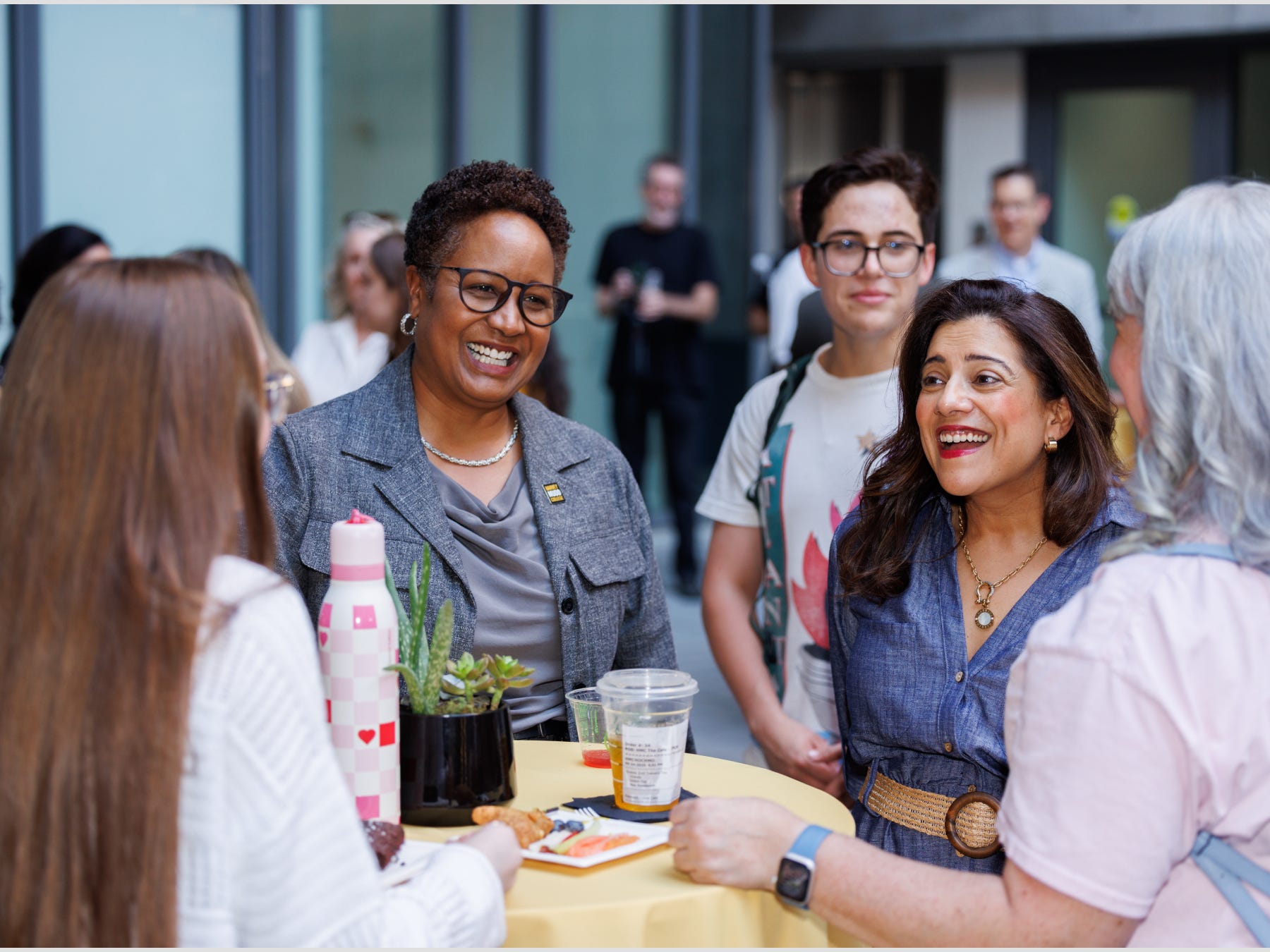
The Haudenosaunee’s Great Law of Peace put women, care, and reciprocity at the center of everything. Reframing female ambition through that lens shifts the focus from simple acquisition to stewardship—caring for future generations, while honoring those who came before us. The Haudenosaunee recognized women as having an inherent responsibility for the rules and relationships that govern Mother Earth. Asserting women’s leadership and authority in this way feels both radical and intuitive. That’s the vision I want to hold up.
All photos via Harriet Nembhard and Harvey Mudd College.

Email brand@mmlafleur.com with your 2-3 sentences about your story or M.M. connection, and we’ll get back to you.
No posts
Comments
Nothing yet. Say the first thing.
Sign in to join the conversation.