
One of the best things about having a guitar shop in the heart of Seattle is getting to engage with our hometown heroes, and in a city that has no shortage of prominent guitar slingers, Death Cab for Cutie looms large. So when they rang to let us know that Ben Gibbard’s Fender Mustangs needed new homes via the Guitar Bar, we were quick to jump on board, especially being an Offset Fender fanclub since our founding days in a Ballard neighborhood garage.
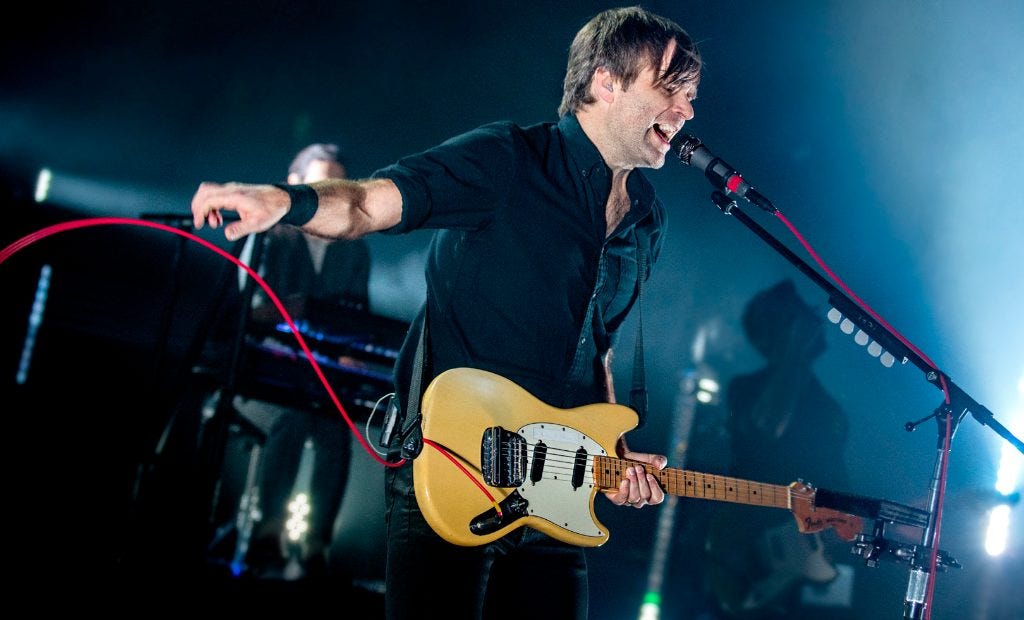
If you’ve seen Death Cab or the Postal Service live in the last decade+, you inevitably saw Gibbard with a Fender Mustang in hand. They’ve been his go-to since the early 2010s, when a friend happened to include an early ‘70s Sunburst ‘Stang in a trade. Gibbard, who had previously favored a Japanese-made Fender Bullet model, is a big maple fretboard guy, and found himself quickly drawn to Leo Fender’s premier “student” model.
That one Mustang quickly turned into a full touring suite of them, first used across The Postal Service’s 2013 touring cycle and then quickly becoming a mainstay of Death Cab’s stable. Ever the utilitarian, even the Mustang’s stock configuration of switches and knobs proved unnecessary, and Gibbard had the guitars stripped to their bare essentials: no pickup selector switches and no Tone knob, with vibrato units converted to stoptails and all internals shielded and sweat-proofed.
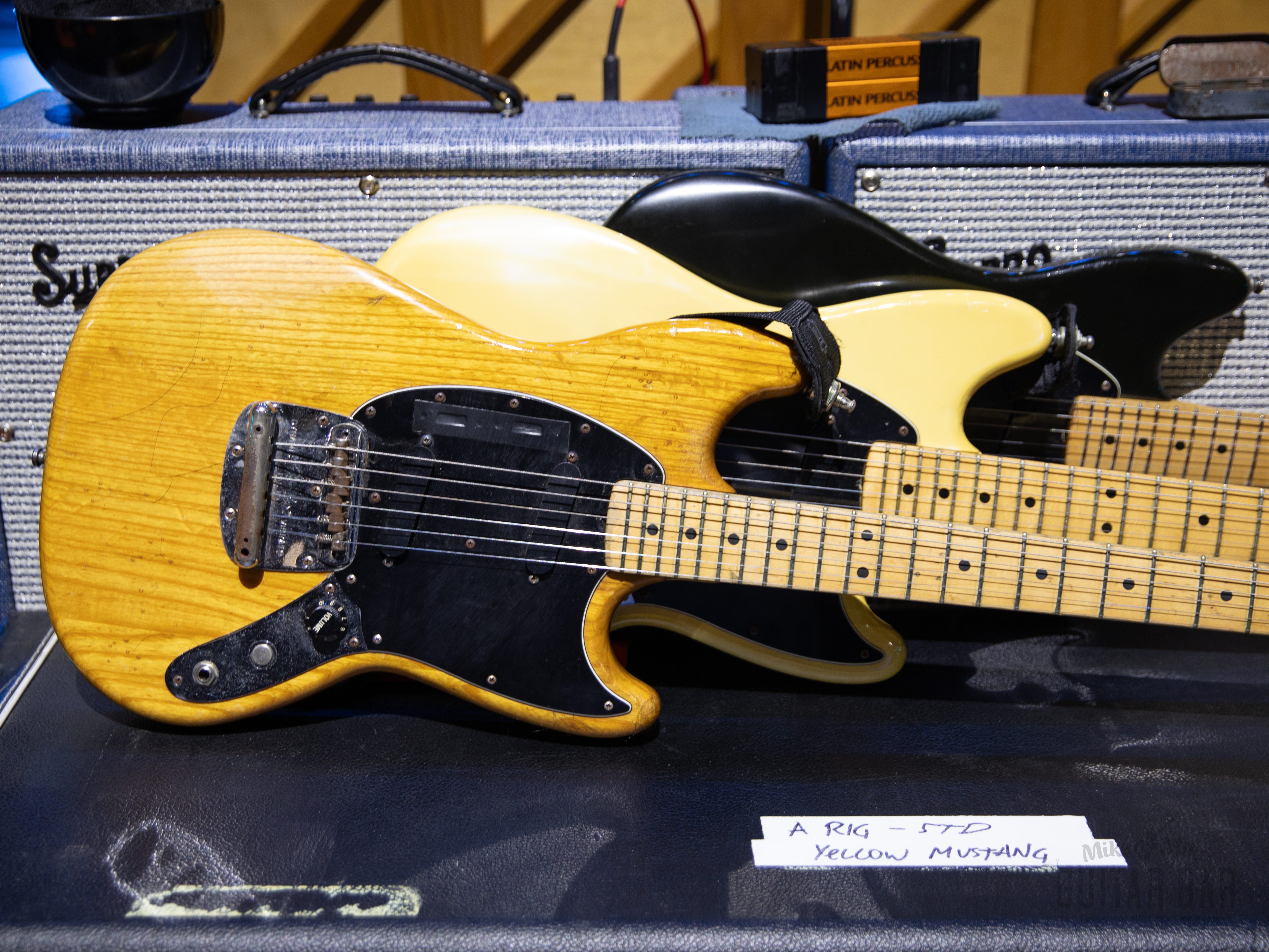
With three Mustangs dedicated to USA touring (the A rig) and three dedicated to touring abroad (the B rig), plus one additional guitar left unmodified for home use, the Mustang has been a constant companion for Ben Gibbard, further cemented by a collaboration with Fender on a signature edition of the model in 2021, incorporating many of his favorite mods.

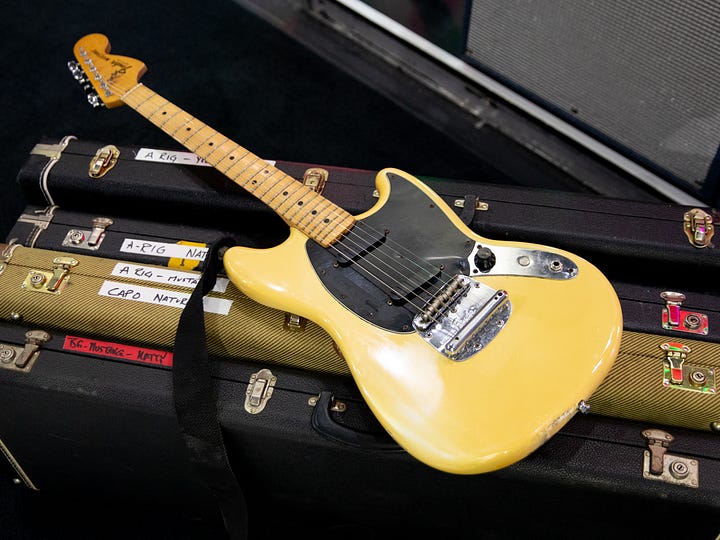
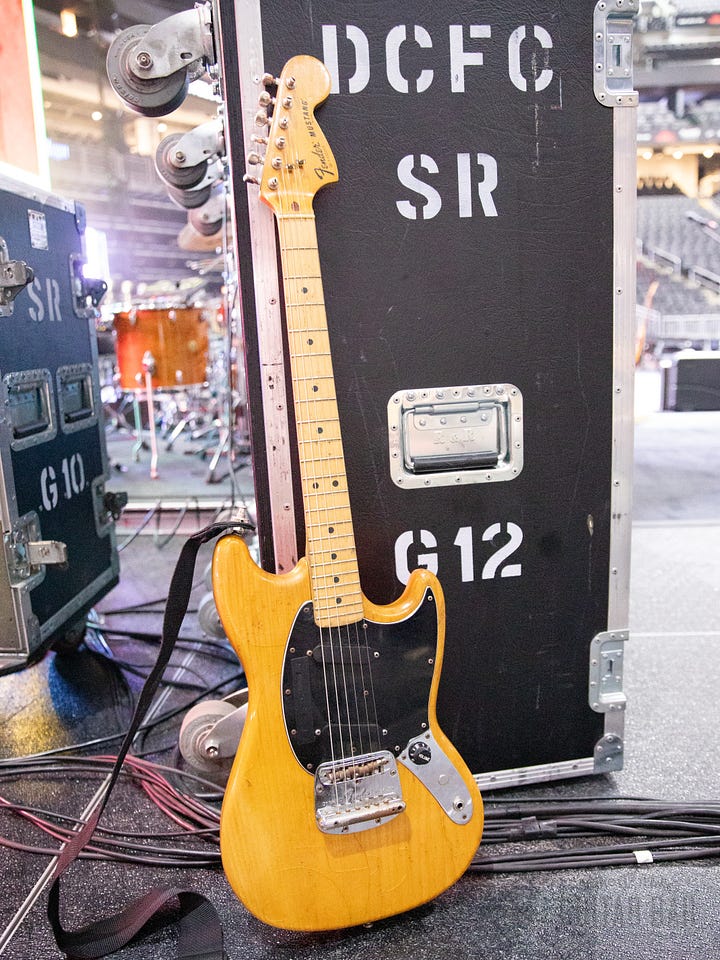
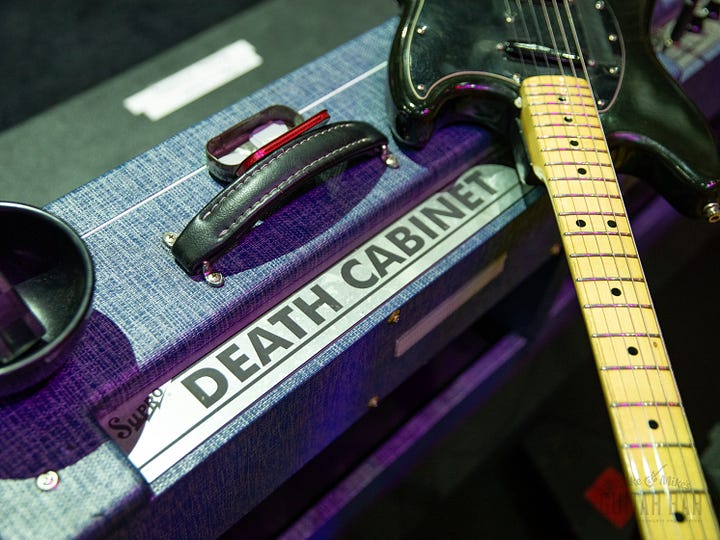
And with all of these Mustangs in-hand here at Guitar Bar and ready to be released back into the wild, we connected with Gibbard’s guitar tech, Erik Bulakowski, to guide us through the evolution of these modifications. Credit where credit’s due: Erik was quick to point out these mods were a “cascade of ideas and problem solving from Ben’s techs” past and present, with many of these foundational adjustments made by Jim Vincent, Gibbard’s tech in 2013. Further tweaking from techs Jeremy Nielson, Bobby Parker and (for the last few years) Erik Bulakowski brings us up to the present day.
Let’s jump right in and break down the specific mods done to each of these Mustangs, the rationale behind them, and their overall impact on tone and playability.
AMPUTATIONS
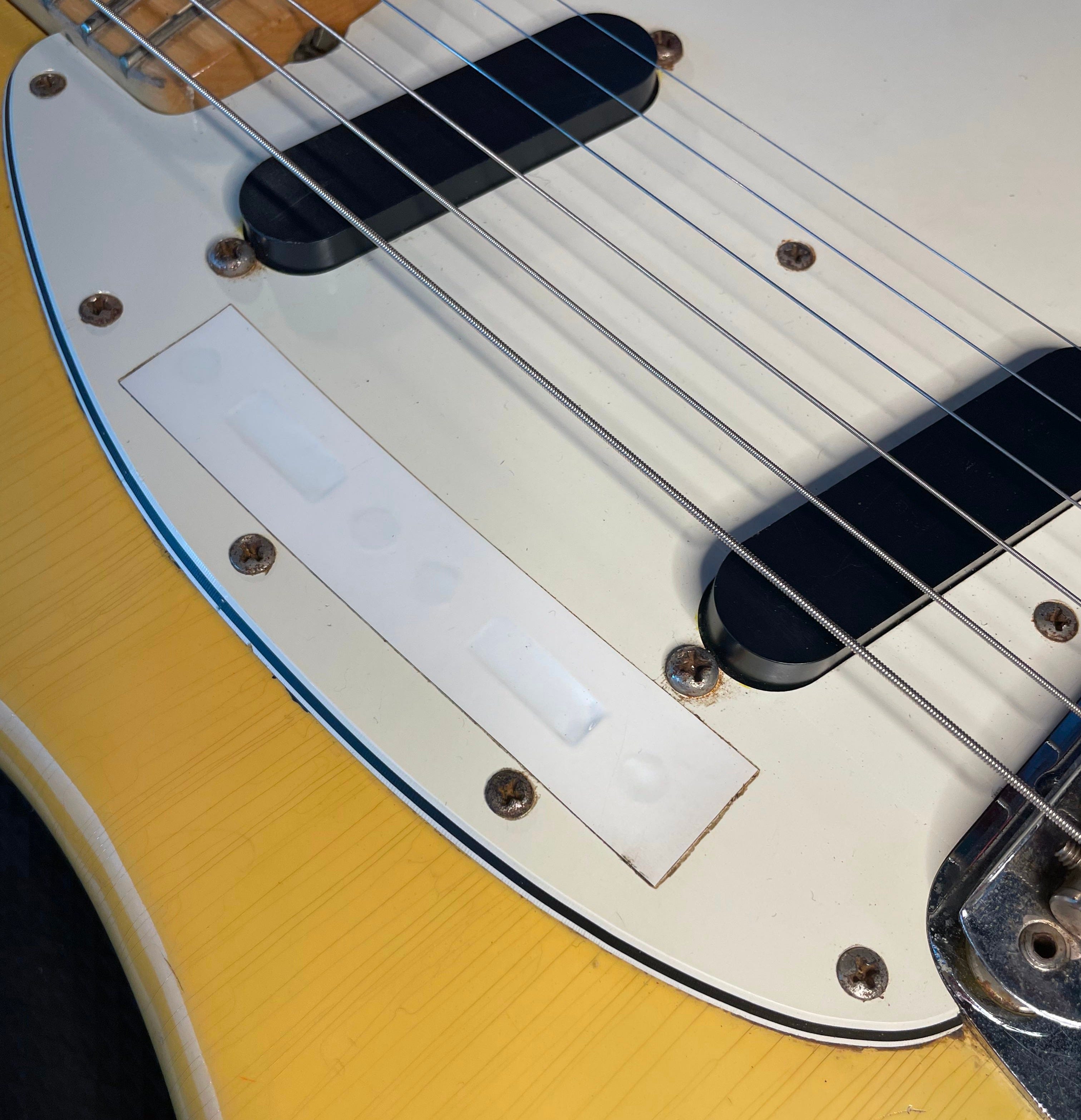
Arguably the defining feature of the Mustang (apart from its slightly smaller form factor and scale length) is the pair of Pickup On/Off/On switches mounted on the bass side of the pickguard. Aside from being visually distinctive, these switches also enable the Mustang’s signature out-of-phase honk when they’re both either at their innermost or outermost positions.
Not coincidentally, Gibbard’s tech at the time the Mustang was adopted as his go-to git was Jim Vincent, who had previously worked with Kurt Cobain. Jim noted that, “with KC we shaved the switches flush or just under the pickguard. Ben’s Mustangs we removed them altogether”.
According to Gibbard, the switches did nothing for him but get in the way of his strumming and “shred” his hand. Instead of dodging them, Vincent just got rid of them, modding the harness so the pickups were permanently wired to both be on (in phase).
VIBRATO CONVERSION
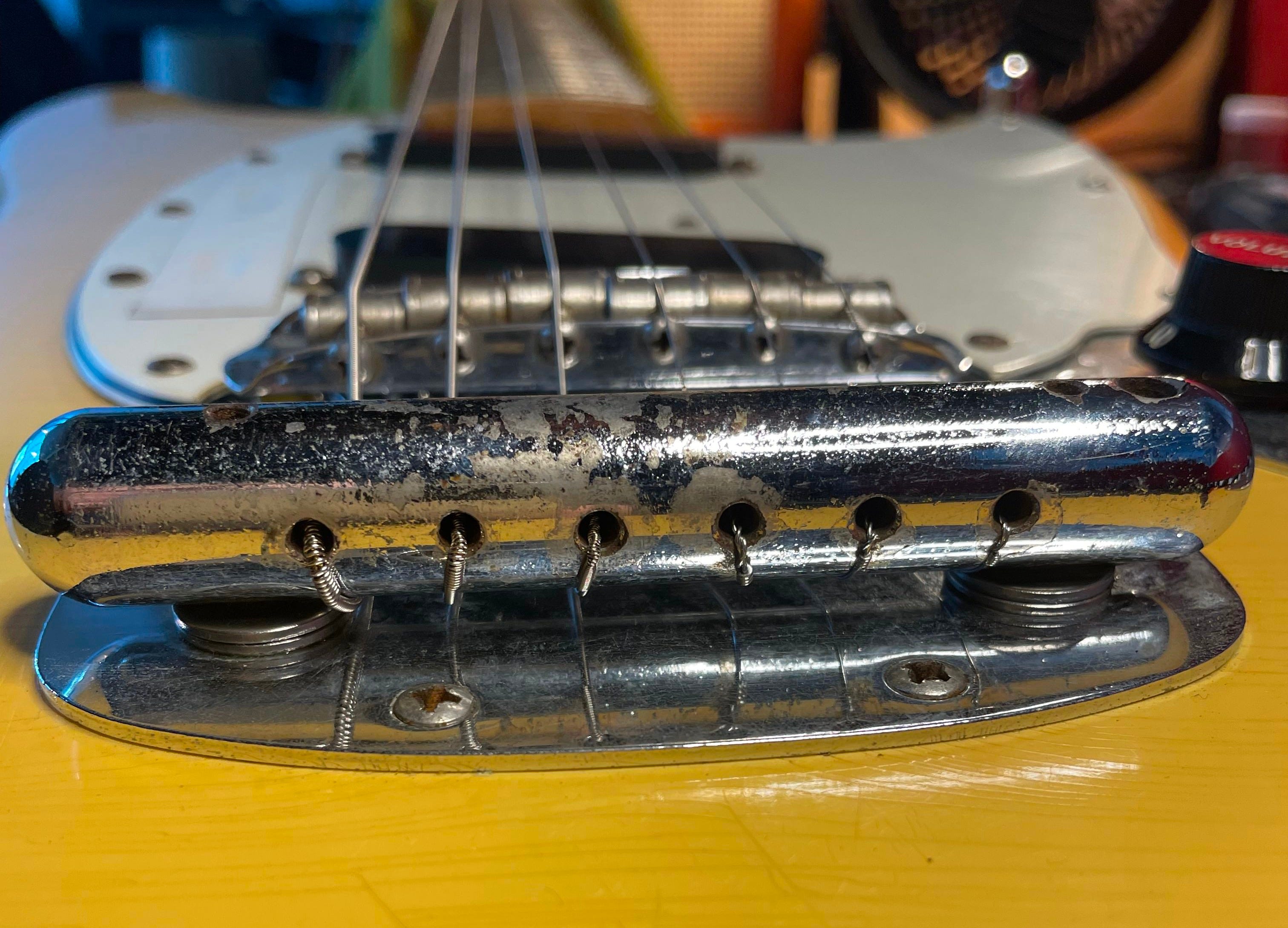
The Mustang’s Dynamic Vibrato was one of Leo Fender’s final innovations during his time at Fender, prized for its immediacy and responsive feel, ideal for surfy warbles and shimmers. Not everyone’s a fan, though: Kurt also hated the vibratos on his Mustangs (and called Leo Fender “a dork” for coming up with the design), and blocked them to improve tuning stability.

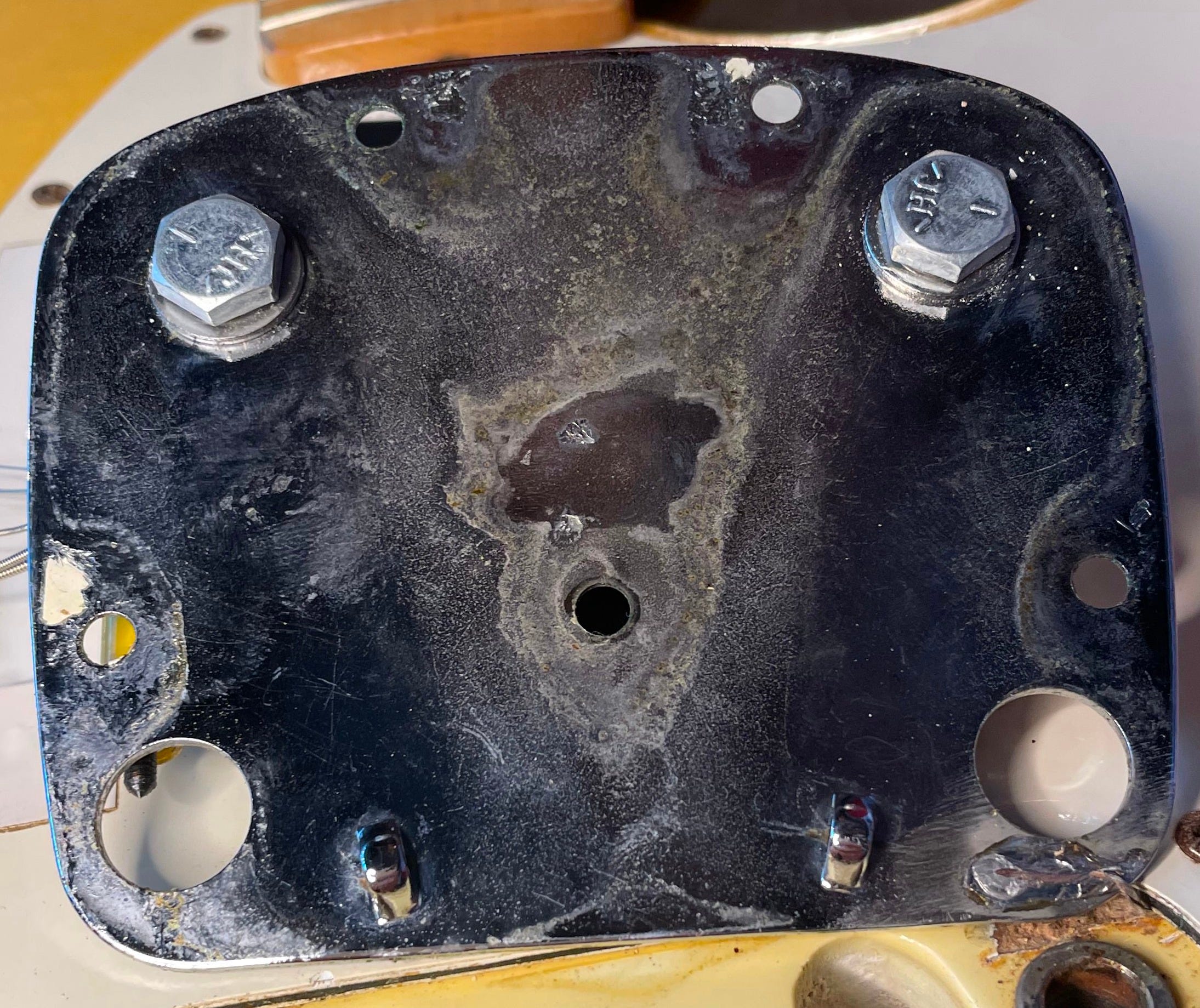
Gibbard has the same thing done to his vibratos: a couple nuts and washers are installed to block the travel of the “cigar” (the string retainer bar).
GOOD TONE (IS SO HARD TO FIND)
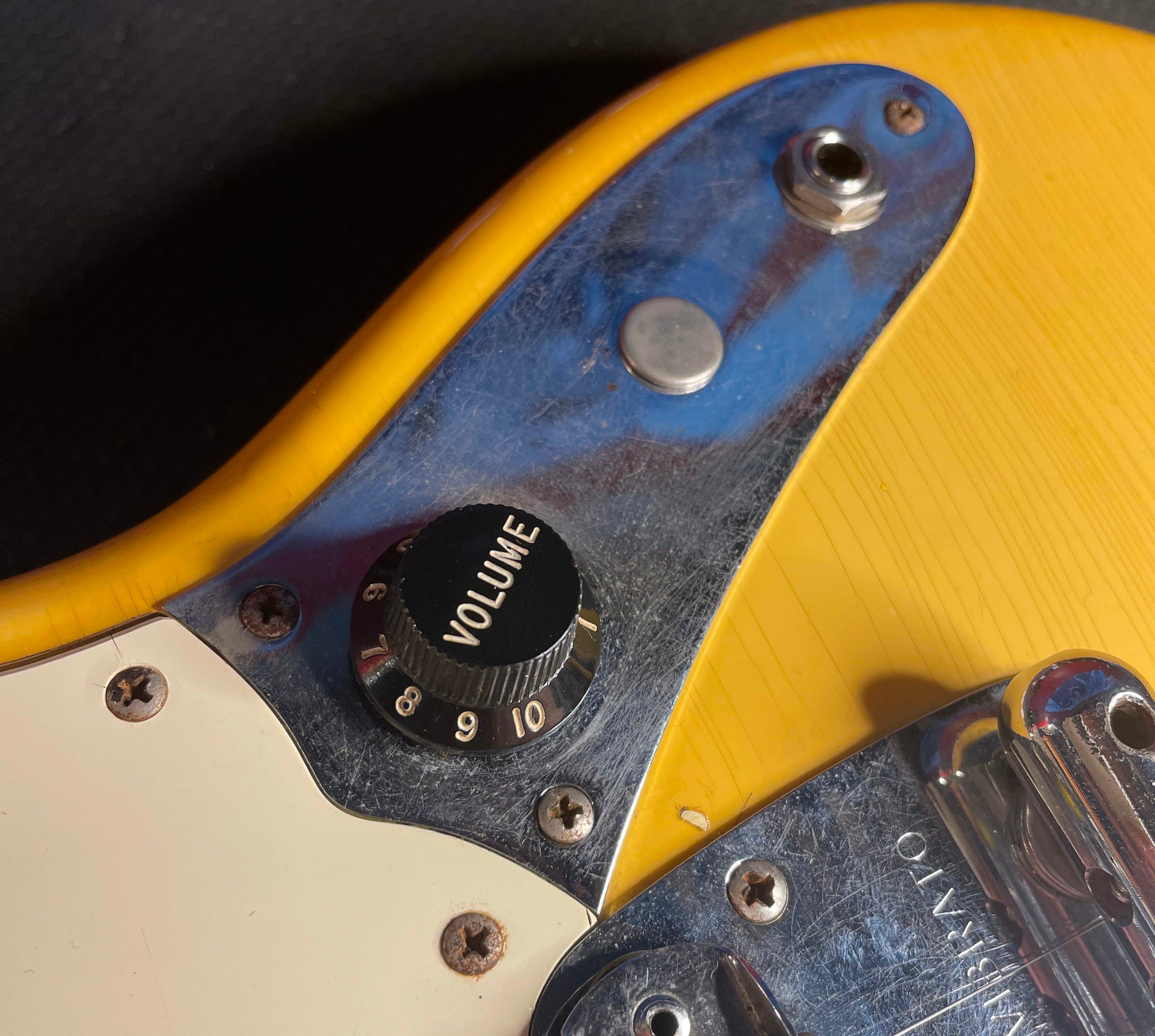
The next thing to go is the Tone knob. Like many guitarists, Gibbard favors an “always on 10” approach when it comes to his Tone control; no surprise, considering his bright, articulate sound, which is usually quite clean. As Bulakowski puts it: “if he moved [the knob], it was by accident.”
So, they take the Tone pot straight out, which both removes that potential for any accidental roll-offs and allows a little more high-end content to reach the amp - a win-win.
Once again, though, just leaving a hole in the control plate would look a little strange, so it’s capped for a cleaner look.
POTENTIOMETERS, PICKUPS & GOOP
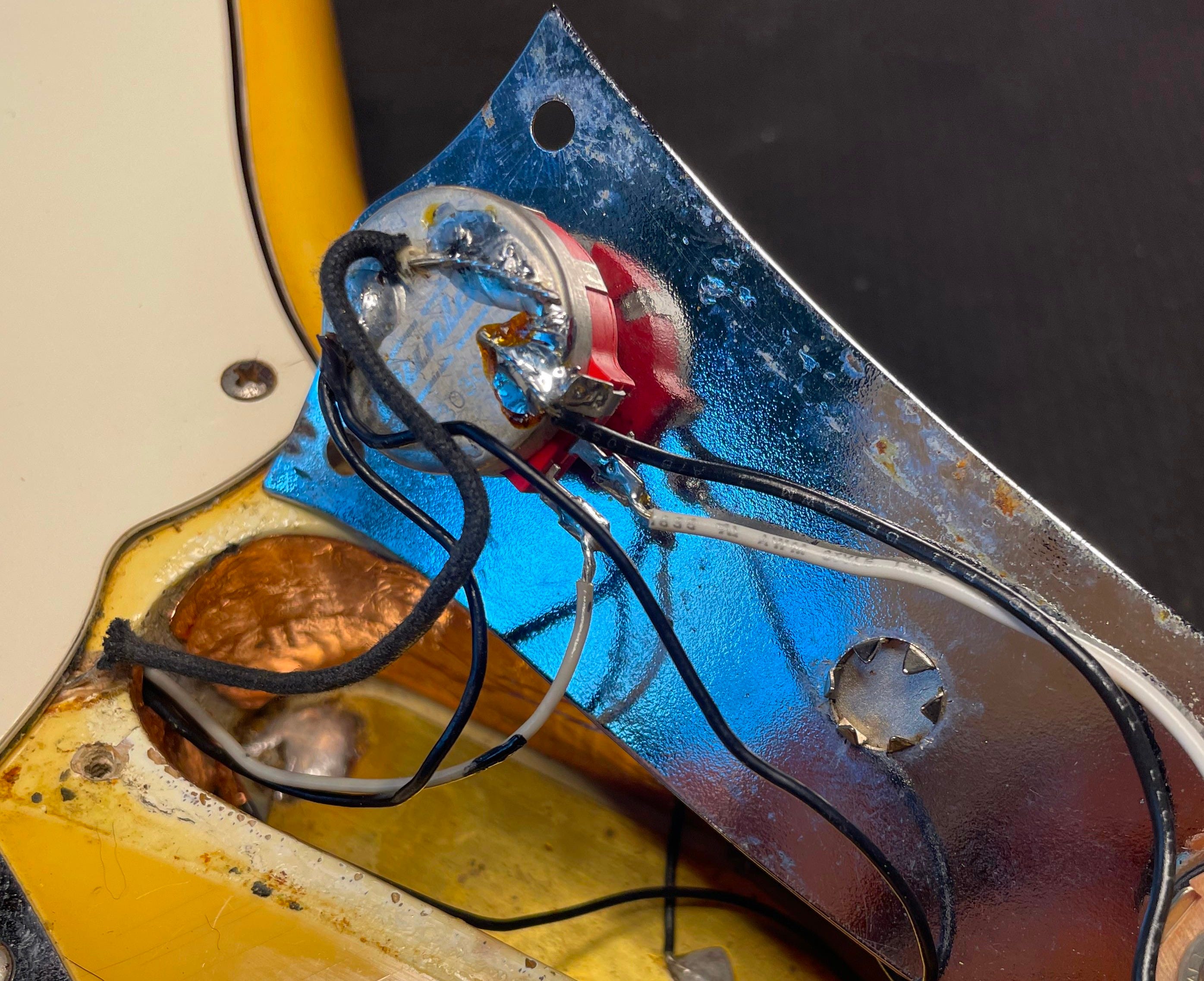
Look, we obviously love keeping vintage guitars stock here at the Guitar Bar when it’s practical, but a pesky potentiometer can sometimes cause issues, particularly when subjected to the rigors of touring.
When it comes to potentiometer swaps, the go-to move is a Dunlop Super Pot. The rationale is twofold: first, they’re sealed, which makes them as close to tour and sweat-proof as a pot can be, and second, they have a great sweep and overall resistance, perfect for volume swells, a reoccurring feature in Gibbard’s playing.
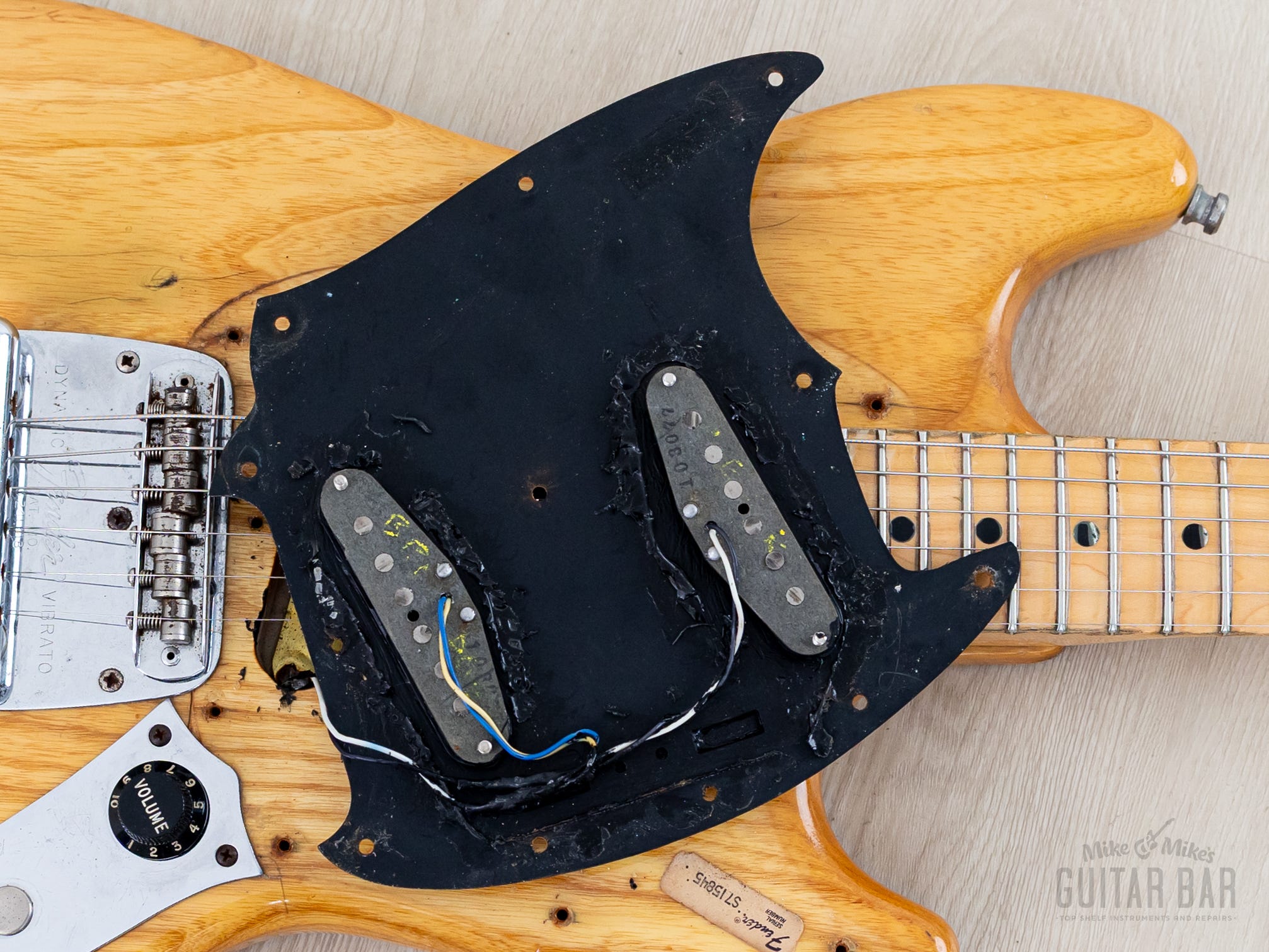
Further sweat-proofing is present under the pickguards which are liberally “gooped” (liquid tape) around the pickups so that no corrosion can penetrate the coils, which in most cases are still the original gray bobbin pickups. The only exception is the Black-finished Mustang from the B Rig, which sports a pair of the same pickups as Gibbard’s signature Fender model.
FRETS
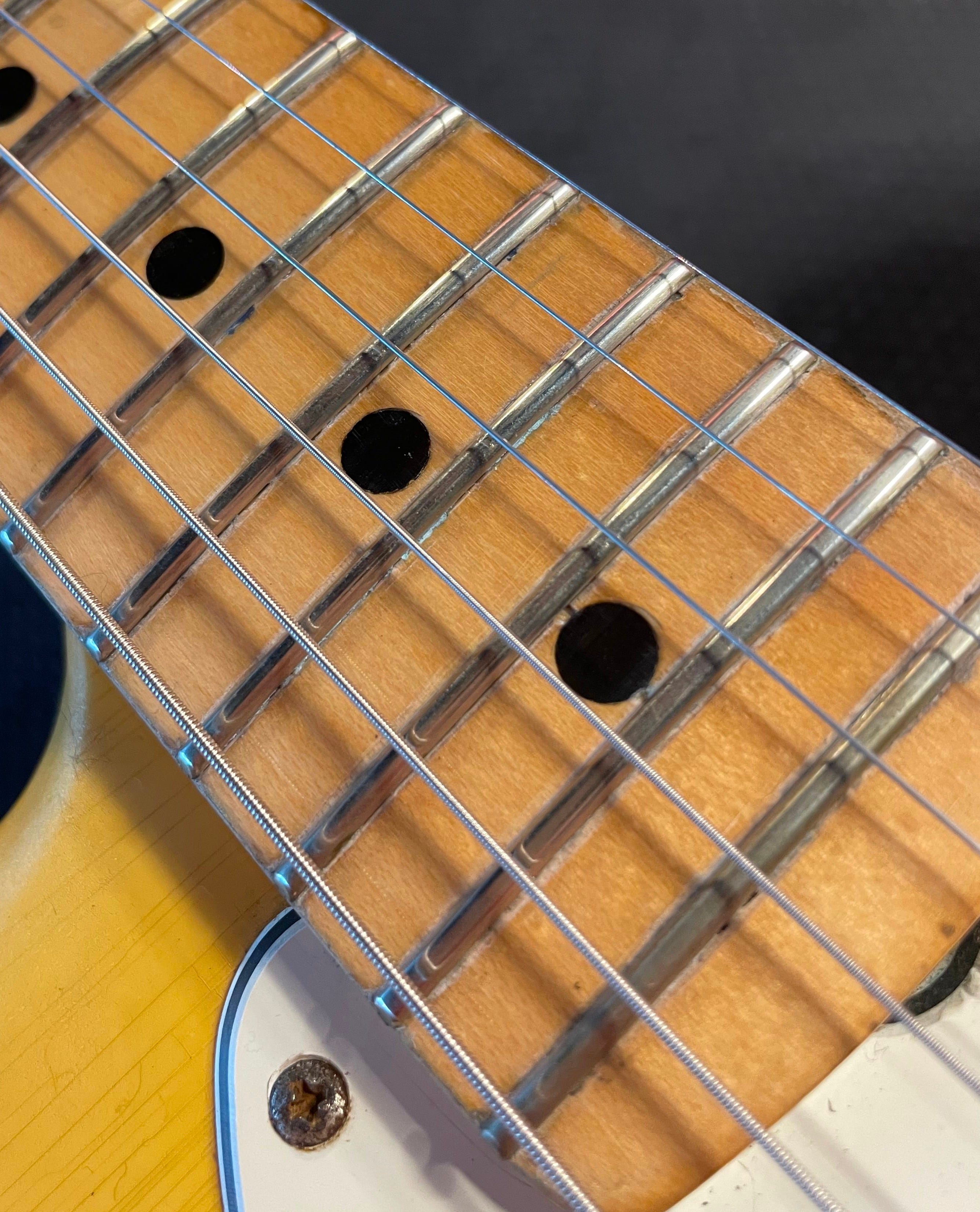
Almost all of Gibbard’s Mustangs have been refretted with medium or medium jumbo fretwire; Gibbard has used larger frets as far back as his original Fender Bullet, which at some point was kitted out with fully jumbo fretwire. Gibbard’s extensive usage of capos leads to grooves and divots developing with surprising speed, to the point where Bulakowski has to level and dress the frets of every guitar once every year or two, depending on usage/touring schedule.
Combined, the above modifications result in a hyper-functional, no-frills setup, ideal for Gibbard’s playing style. Our thanks to Ben Gibbard for trusting us shepherd his Mustangs along to new homes, and to Erik Bulakowski for his time and intel.
-S. J. Feehan
No posts
Comments
Nothing yet. Say the first thing.
Sign in to join the conversation.