
Dear Reader,
I recently rediscovered the below journal entry from the final leg of my journey with Patrycja Dołowy retracing Paulina’s wartime path in 2019. On our very last weekend, we traveled from the outskirts of Warsaw up north, near the northeastern border of Poland, following Paulina’s retreat with a German army squadron with whom she had been forcibly employed as a translator and housekeeper because she spoke German well.
The whole squadron was obliterated in a hexenkessel, a “cauldron of hell” where the Soviets surrounded and bombarded the Germans from all sides. The battle likely took place around Braniewo, near the current border of Poland and Lithuania. Paulina, in a medical ambulette, survived the attack, then convinced her German accompaniment to hang a white sheet and surrender. 500 Germans surrendered. Paulina was now free.
May 23-24, 2019

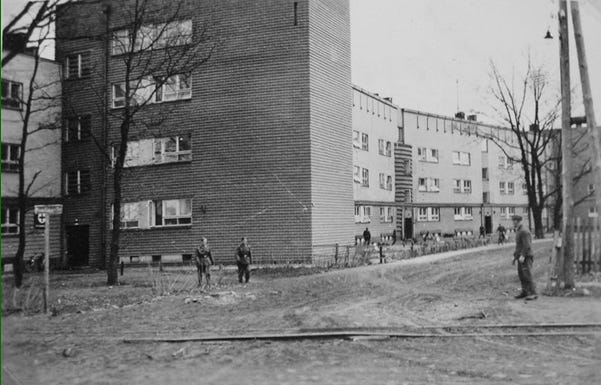
We left Warsaw a little after 2 pm. We drove first to Rembertow and visited the address of the building once commandeered as a German hospital, where we believe Paulina (passing as a Christian Pole) had been temporarily forced to work as a nurse. It was a large building—former military, now residential. We walked around, trying to find the entrance Paulina would have used. It was very close to the military barracks that are still functional, and it was unsettling to see soldiers in full army gear milling around—like ghosts from the past.
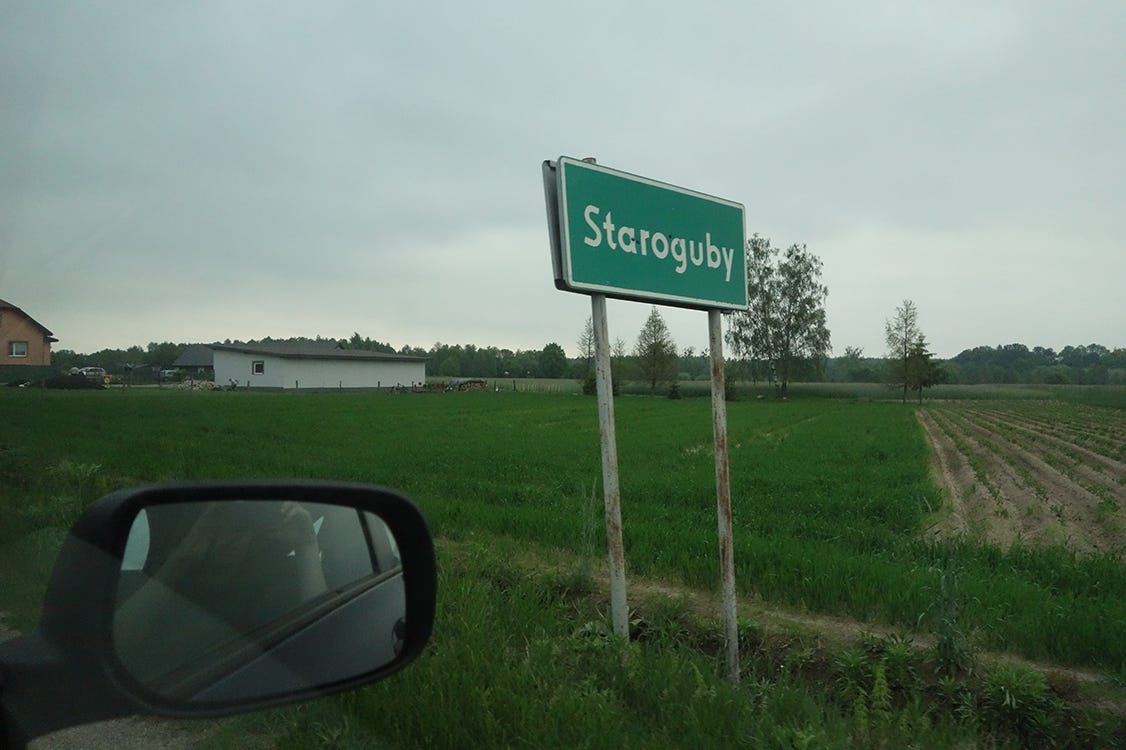
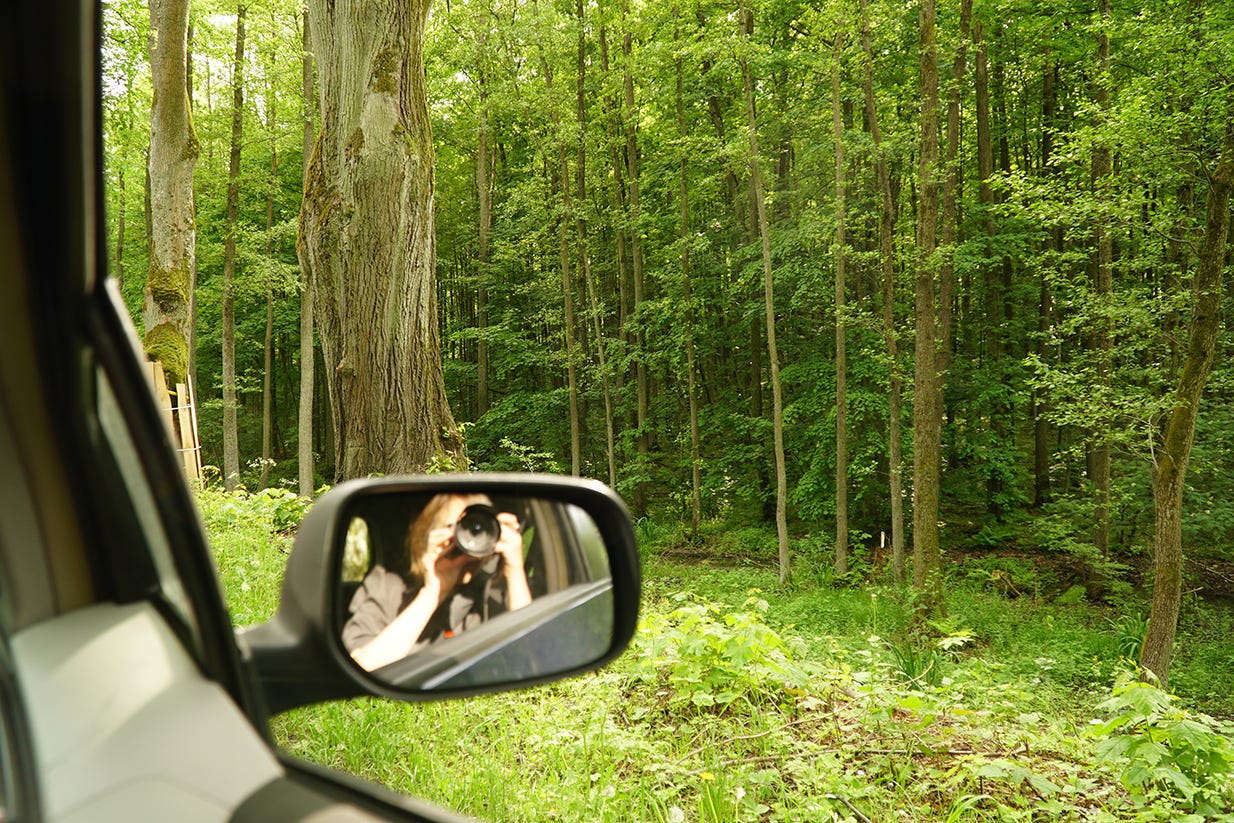
Back on the road, I thought about my experience of looking for my grandmother’s childhood home in southern Poland with my mother last year. Word of mouth led us to an empty field where a Jewish community once existed. Nothing left of the lives that had once been here. Not even a confirmation that this empty stretch of land had ever been anything than what it is now. I thought of this as we drove through the country, past stretches of beautiful meadow and forest that could have once contained whole worlds, now vanished without a trace. Patrycja and I tried to articulate the distinct feeling this awareness creates — a frustration, a repressed anger, a powerlessness against being able to undo what happened. We realized that so much of our experience together has been about facing different kinds of emptiness, that this is a major part of this story.
But from underneath that emptiness, stories find their way to the surface. Paulina’s appeared in a place of absence, asking us to fill in its holes. How is it that on this journey, we have managed to find, by way of accidents and coincidences, her vital possessions — physical evidence of her existence that we never dreamed possible… as if placed there for us to find?
What does one do when given the impossible thing they never believed they would find? How can we not take it as a sign? But if we take it as a sign, how can we continue to be sensible? I think this final leg of the journey has shown us that perhaps we cannot, we have lost our sense!
We have become suddenly superstitious, overly observant of every clue before us, seeing everything as a potential message from the dead.
We arrived at our hotel in Elbląg. Once a grand hotel, a palace… its glory days were long gone. The lights in our room wouldn’t turn on. When we informed the receptionist, she gave us a key to a different room rather than send someone to change the light bulb. We found this a bit strange. We went back to our room, and oddly now, the lights turned on. It frightened both of us. What if the light not working, then working, was a communication? Should we stay in this room? Or go?
We decided to check out the alternative room on the floor above. Walking through several long, dark corridors, we found the room in a very isolated location. Patrycja had true trepidation on her face. I asked, “Should we open the door?” She said, “No no no! Let’s get out of here!” and we rushed back to our original room. As we settled in, we noticed the walls were yellowed and a painting that hung was stained and waterlogged. It was a restless night. Patrycja fell asleep working at her laptop. She said she would not have been able to sleep otherwise. Of course, we laughed at ourselves. In our current heightened state, a crappy, rundown hotel became a potential site of horror.
Fortunately, the morning brought reason—the hotel was filled with students on a school trip and the breakfast room had a nice, standard, respectable breakfast. We laughed at ourselves even more.
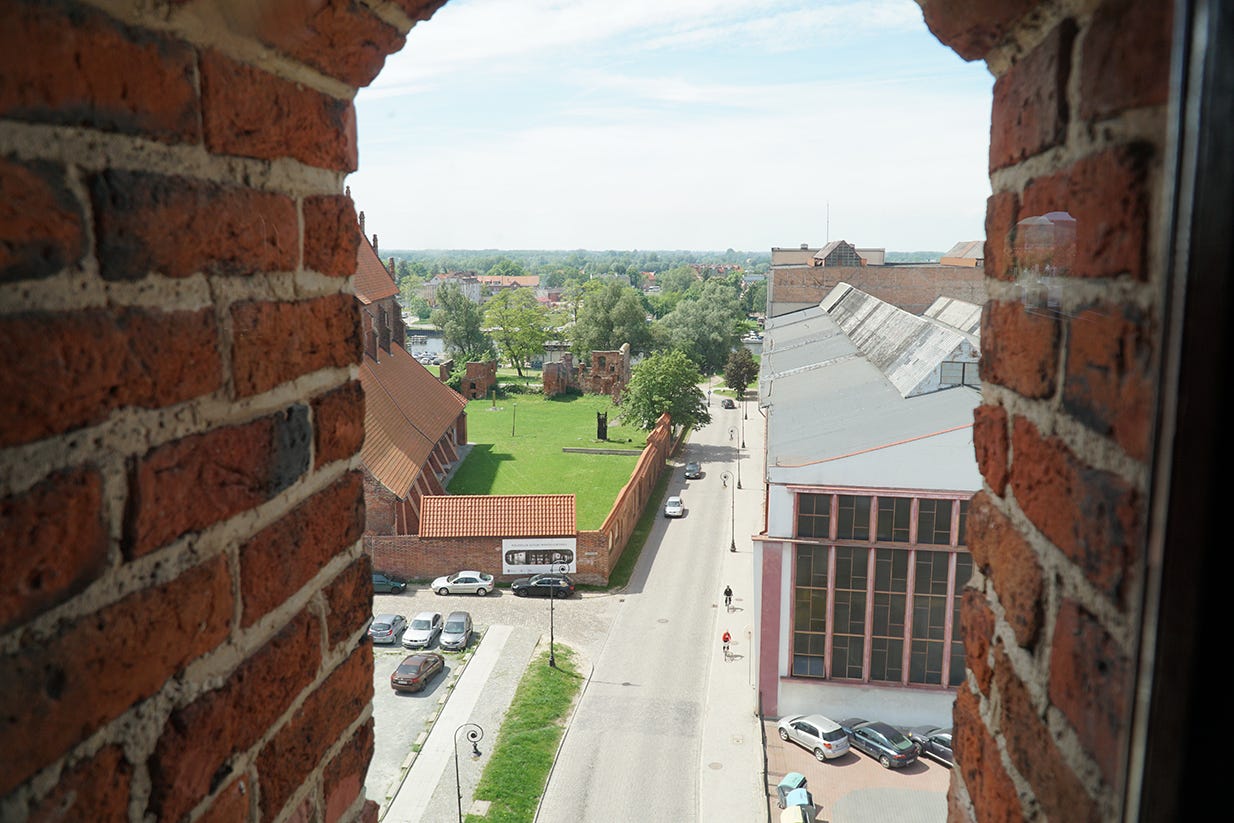
We walked around Elbląg, feeling further restored by the beautiful day— people sitting in cafes, enjoying themselves. Walking through the streets it was hard to imagine this whole town terrorized by battle, to imagine the total bloodshed that went on there. There was a tower that had been restored as part of a memorial, and we walked to the top and looked out over the city. The Germans must have staked this place out. Or the Soviets did.
We walked along the water and eventually back to the hotel wondering, what was the hotel used for during the war? This question brought us back to Paulina. On our way here, as we drove along the country roads the night before, we tried to imagine Paulina traveling this way in an army vehicle with a group of German soldiers retreating from inevitable defeat, and having to camp out and hide in some of these areas. How did she survive this experience? Was she so lucky to be unscathed and protected? What may have happened that she couldn’t mention in her testimony?
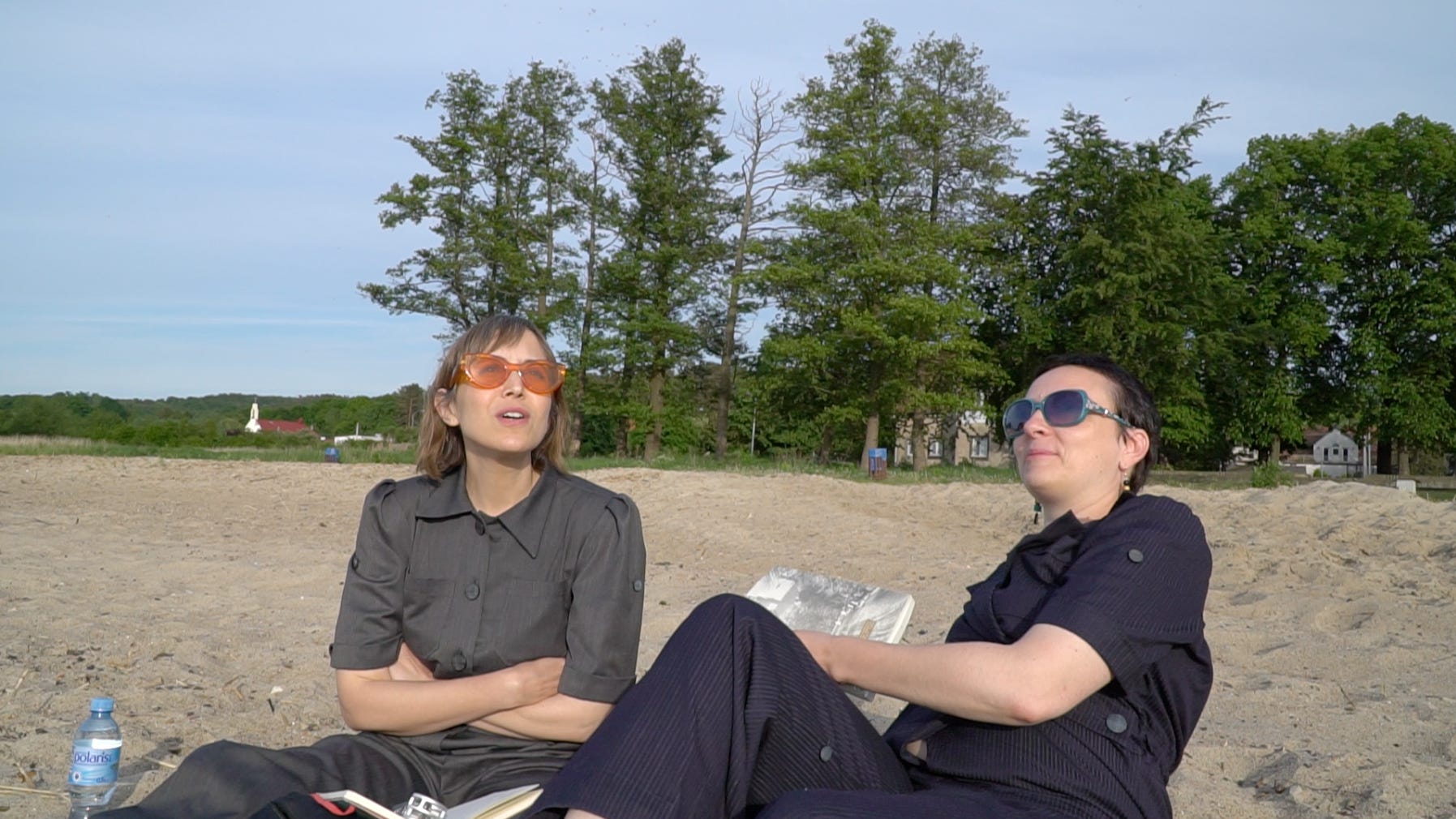
We drove to Frombork, a small town on the bay to sit on the beach and record ourselves as we brainstormed our next steps. We were visited by a stork. We eventually had to leave because a swarm of gnats wouldn’t leave us alone. We joked they were possessed by the restless spirits of the German soldiers who died there (we also kind of believed it).
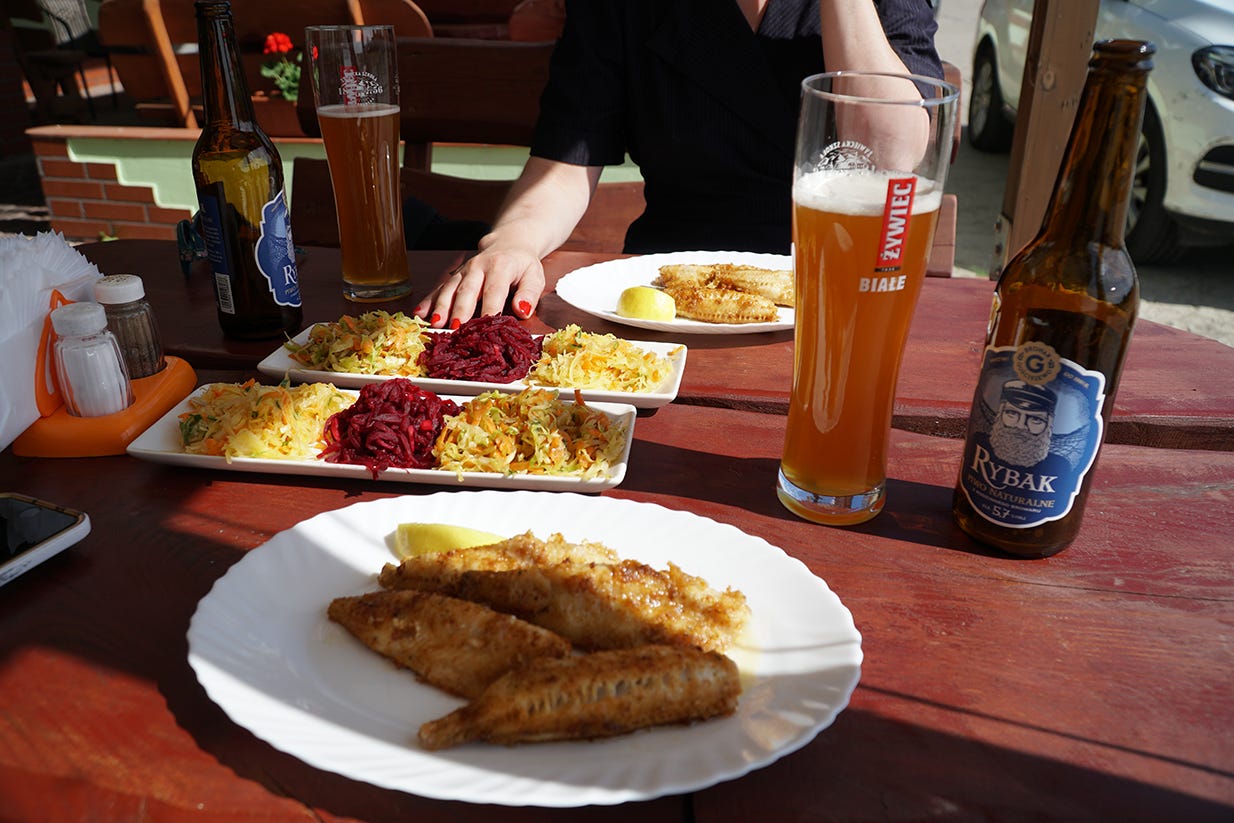
Before driving back, we had lunch at a fish restaurant on the water. We ordered fish filets and beer and ate peacefully with the sound of the breeze and the waves around us. A rare moment of pure enjoyment, without any agenda. A sweet sadness as we knew this was nearly the end. Soon, we would return to our ordinary lives.
This excerpt was edited and adapted from its original, longer form. I was working on the next issue about navigating between self and other, art and life when I reread the passage for the first time in years and was struck by its resonance and the amount of emotional space it covered.
In those moments, Patrycja and I fantasized that someday, when the urgent aspects of this project are resolved, we will make a narrative film about our time on the road: a comedy, rife with supernatural interventions, dreams, and buddy-film hijinks.
Paulina Day draws from the constellation of stories surrounding the ever-evolving PAULINA: a performance and film-in-process centered on a life-changing journey investigating the Holocaust testimony of Paulina Hirsch and its aftermath.
Thank you for reading this reflection inspired by caring for the stories of those who can no longer speak for themselves. This project focuses on the potential of each other’s stories to provide a vision of hope, possibility, and deeper understanding.
Comments
Nothing yet. Say the first thing.
Sign in to join the conversation.