
Dear reader,
If you checked out last month’s installment, The Other Woman — which focused on the relationship between Paulina and Nella, who recorded Paulina’s testimony — you may recall it ended with this cliffhanger:
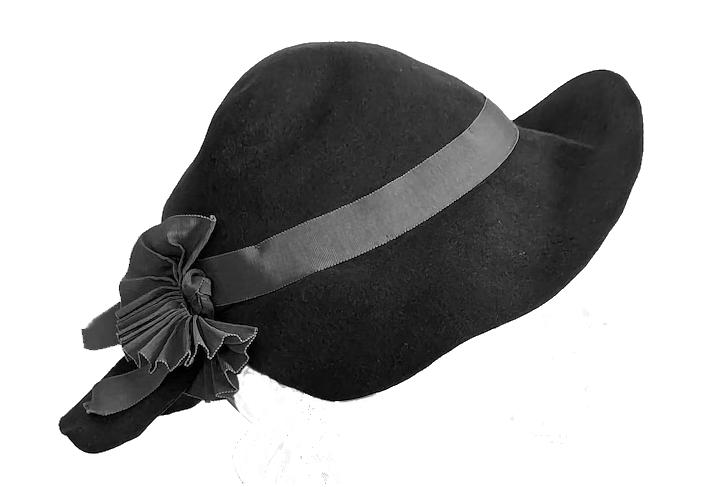
About a year into reading [Paulina's] testimony, a new detail was discovered by an artist/scholar helping decipher the text — That when Paulina escapes from the side exit of a courthouse in Lwów (now Lviv) onto the street... she leaves without her hat. Her hat? This was a sign. Something to grab onto that nodded to the present. The reference to a lost hat within Paulina’s ten-page survival account1 was surprising and curious — an outlier in the text. Why?
Paulina’s testimony is clinical — focused on hard facts. It’s written in the third person, with few pronouns, i.e., At the moment the war began, 9/1, in Siedlce. Then went by foot in the direction of the Bug River toward Czartorysk…
There is seemingly no trace of emotion or personal character in the text. And yet, there is the rare idiosyncrasy, the occasional minor clue that takes multiple readings and readers to notice:
She escaped through the side exit, onto the street, without her hat.
This added detail grants a glimpse of a real woman, alone in the streets in the middle of winter, running from danger, bareheaded and exposed.
A small act of resistance within the text.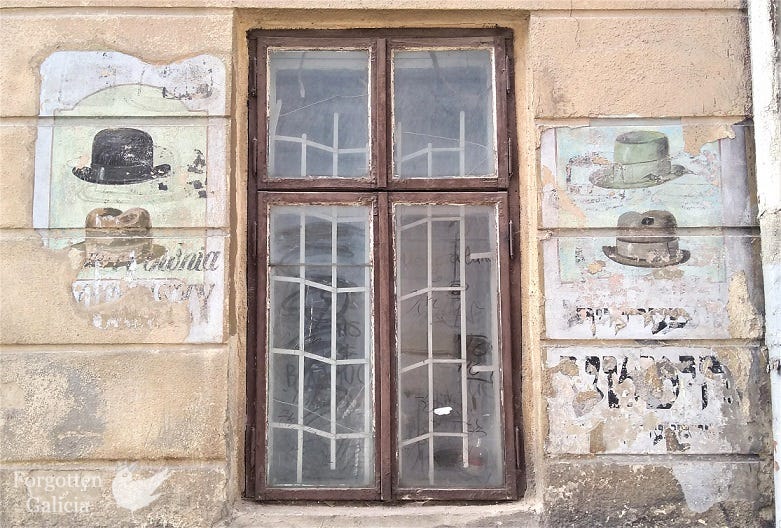
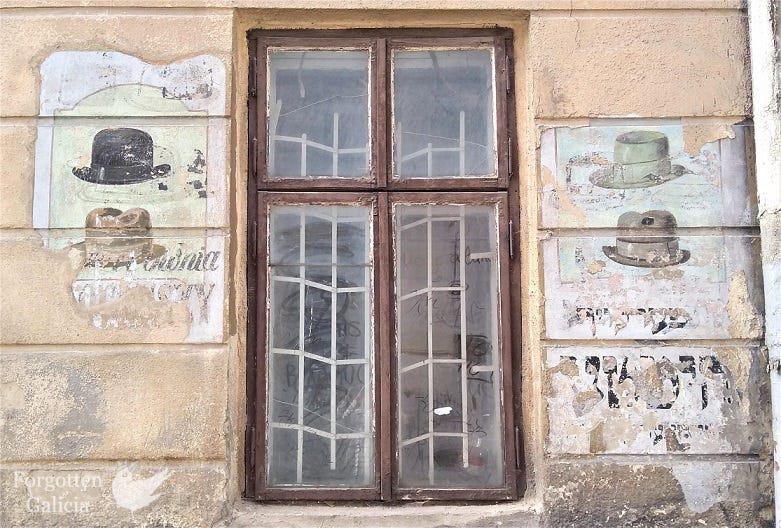
The traces of an old Polish and Yiddish sign for a hat shop in Lviv, Ukraine, formerly Lwów, Poland until 1939. Image: Forgotten Galicia But why was this seemingly minor incident — a woman’s separation from her hat — significant enough for Paulina to mention and for Nella to officially record into the annals of history?
The Polish word for “hat” used in the testimony — kapelusz — very specifically refers to a structured hat — the kind made by a milliner — as opposed to czapka, a cap (like a typical winter hat commonly worn today). So this wasn’t just about keeping her head warm.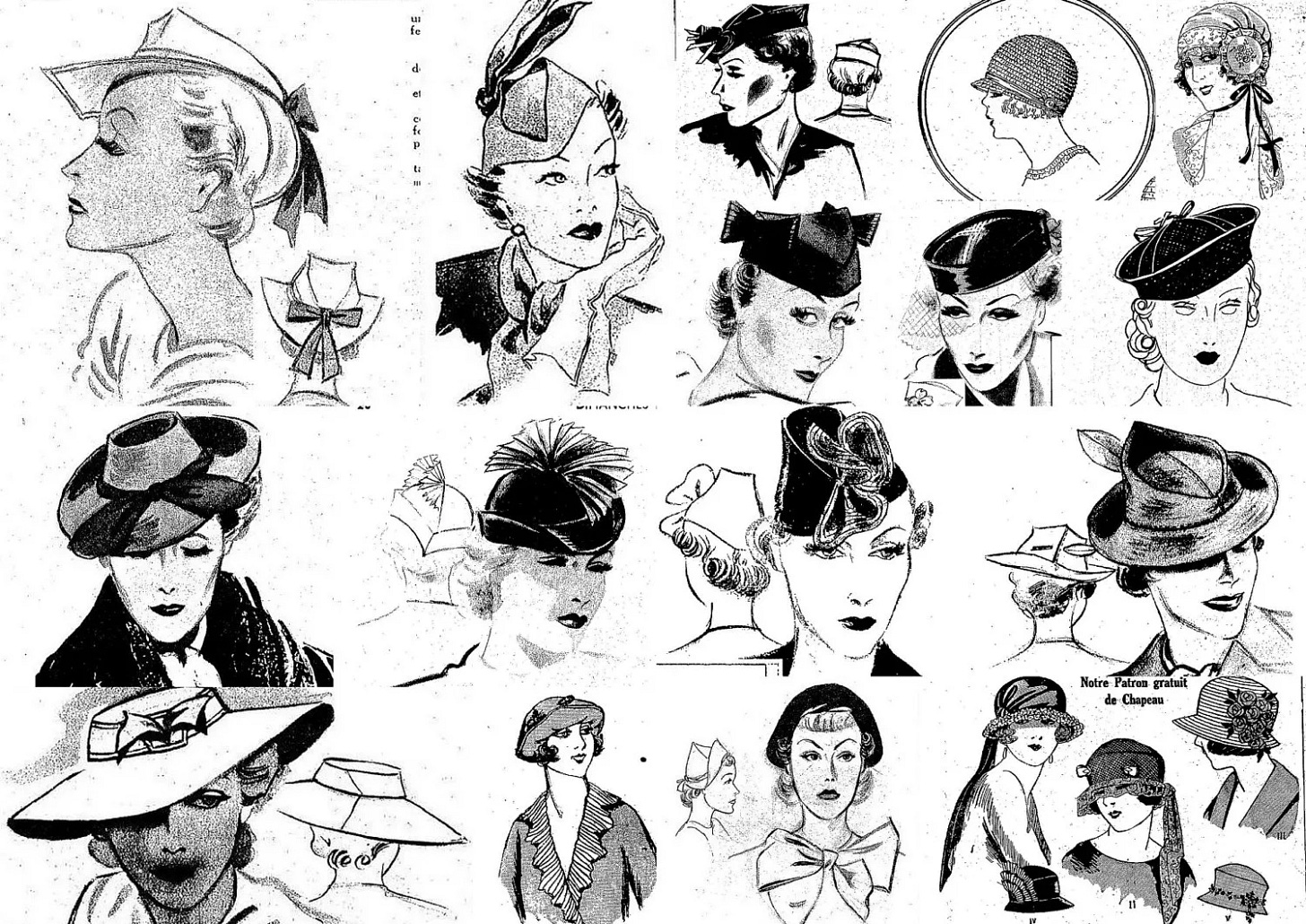
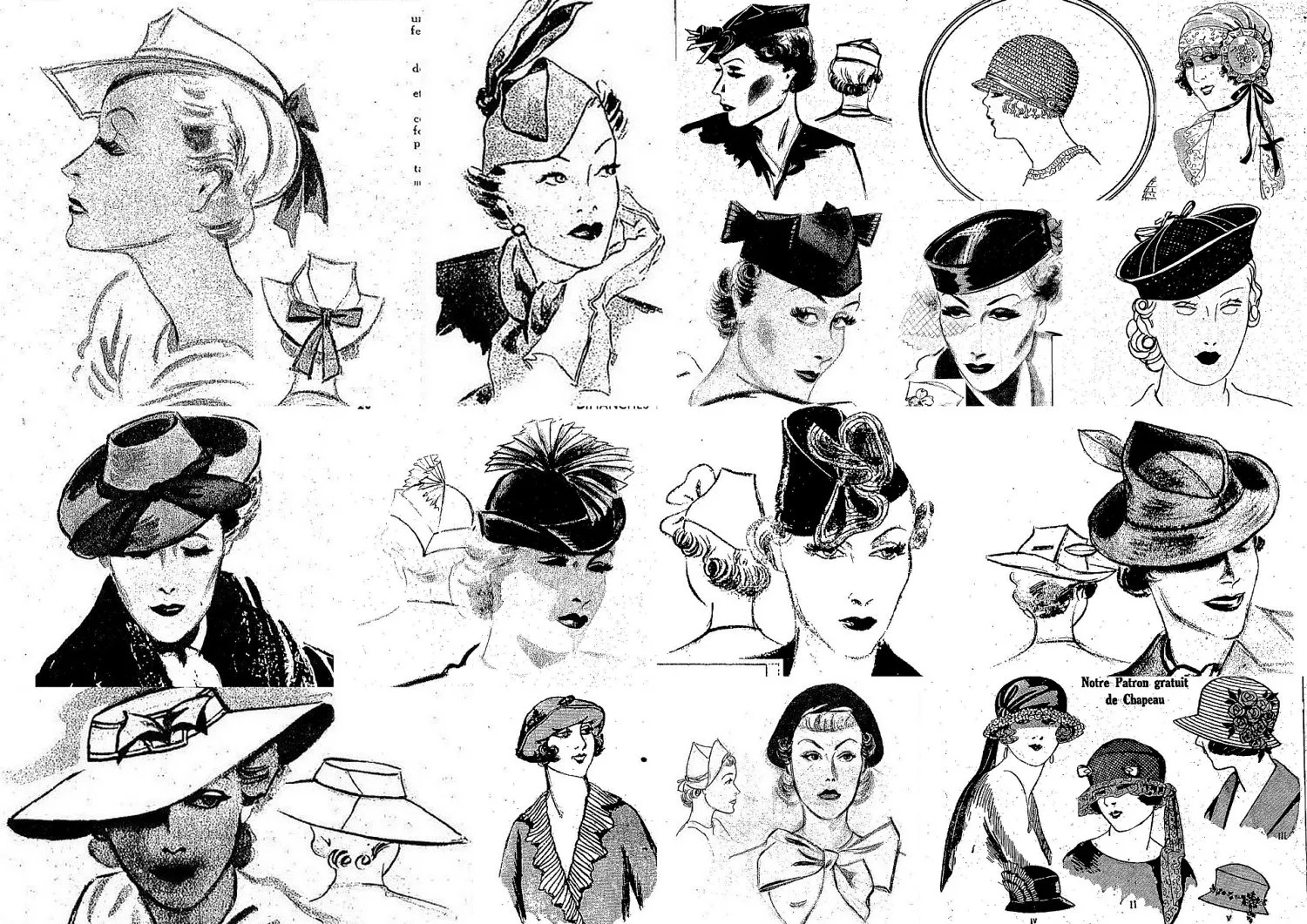
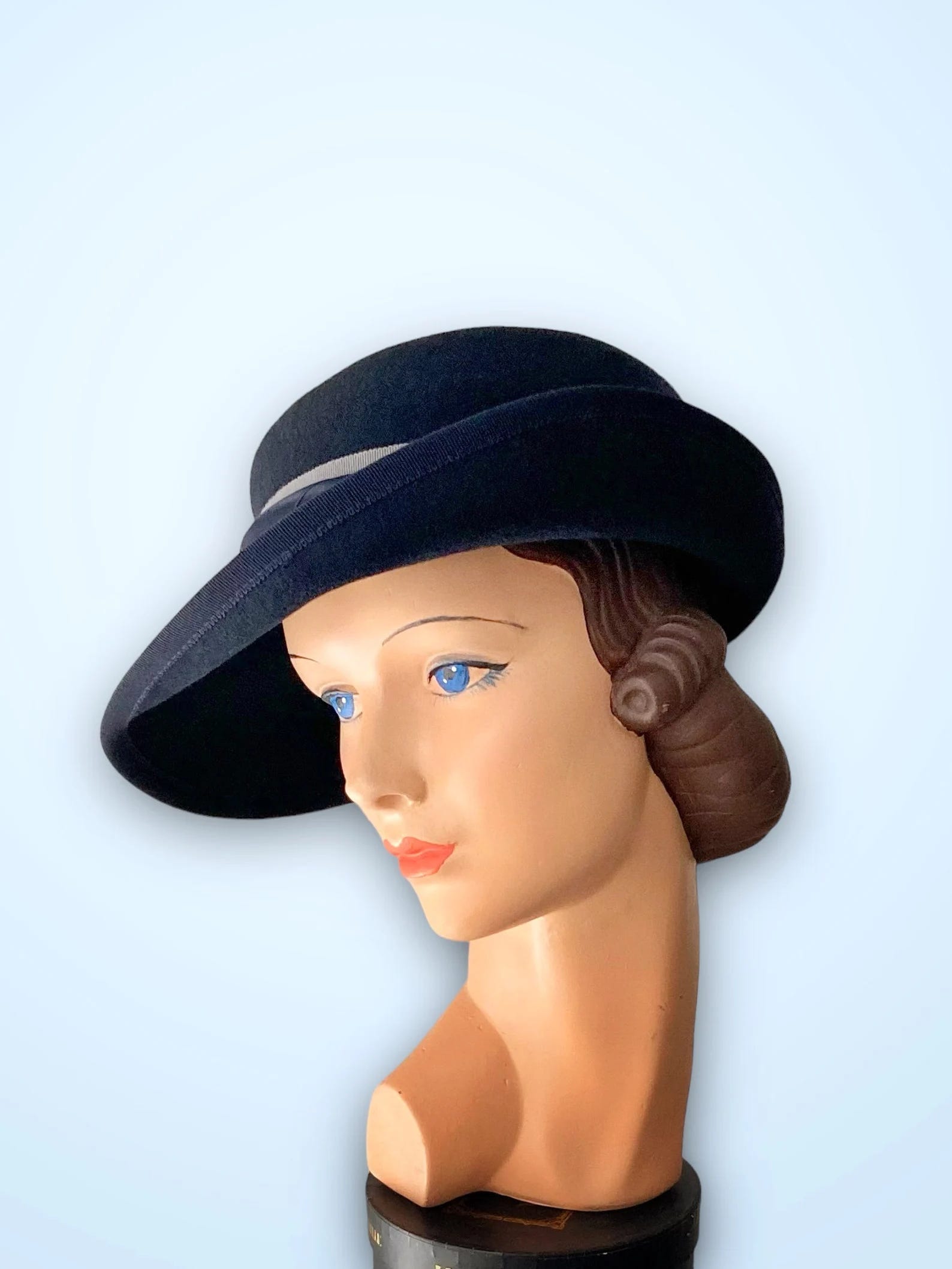
Late 30s/early 40s women’s hat styles It was an era when it was still considered highly improper for Western women of the middle or upper class to go out in public without a hat. Paulina, the wife of a barrister, very likely abided by this wardrobe doctrine.
At the time of the hat incident, Paulina had just experienced the arrest and loss of her husband, a prominent figure in the community. She lost her husband, then she lost her hat. Her hat connected her to the woman she had been, arguably, to a sense of dignity. It was a tangible, physical object of loss.
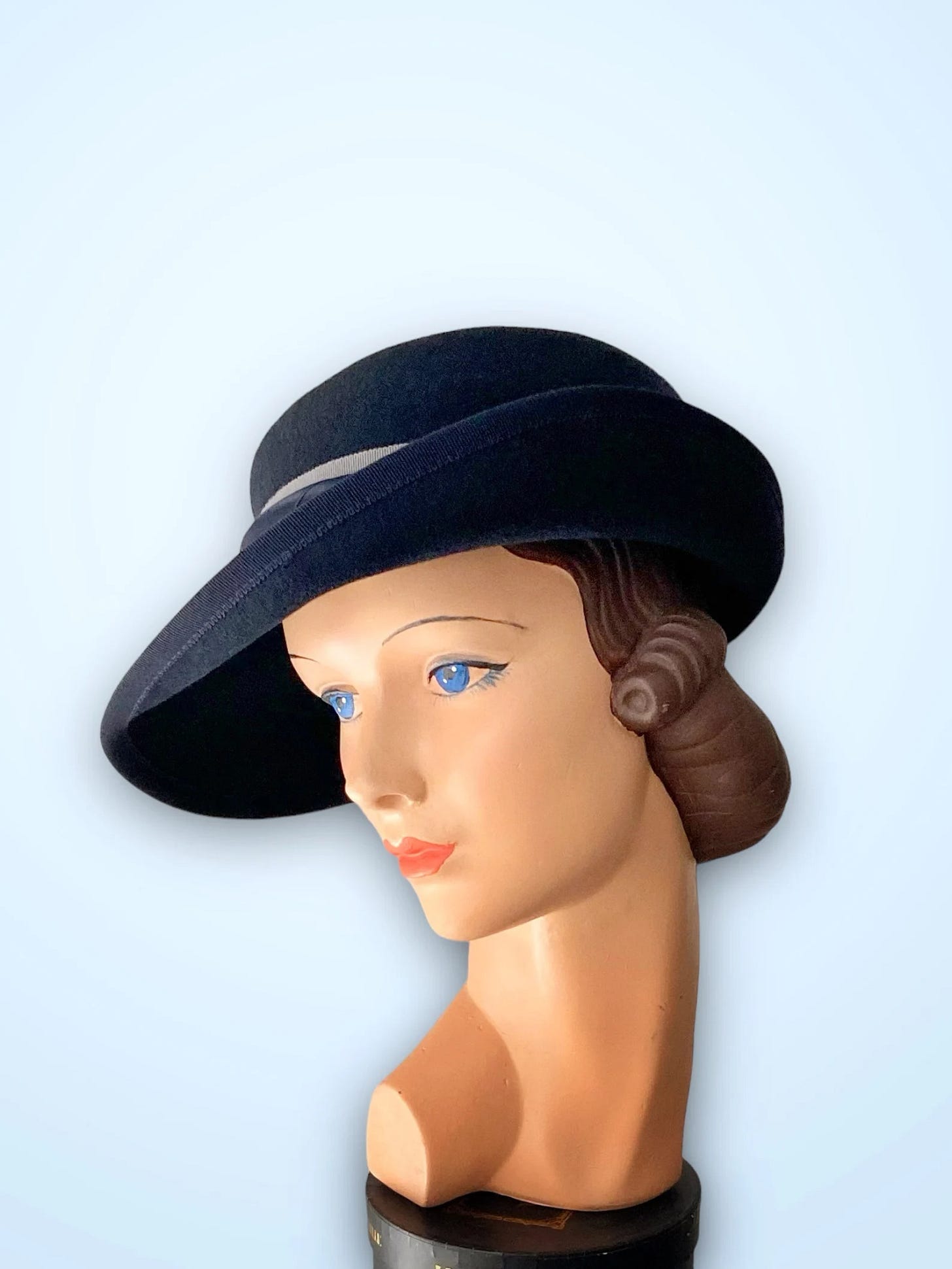
image: MeinWunderbaHutsalon The hat could have been a form of protection. Up until her husband’s arrest, Paulina had followed the rules and stayed out of trouble. But by 1942, the Nazis’ actions were gaining momentum and severity.2 Paulina had to pass as a non-Jewish Pole to survive outside of the ghettos and camps. The first time she was caught with counterfeit papers, she escaped in a frenzy, resulting in the loss of her hat. Both Paulina and Nella would have understood that at that time, for a woman to not call attention to herself, she needed to appear properly dressed, especially if navigating circumstances alone. When Paulina gave her testimony, the lost hat may have created a better understanding of the stakes of her situation.
A nod to the present. An offering to replace the irreplaceable. Paulina’s hat reference came to light as I was moving to Poland to work with Patrycja around Paulina’s story.3 It felt like a signal for us because we had bonded over a lost hat when we met. As we planned our 2019 journey following Paulina's wartime trajectory, we added an instructive to find or replace Paulina's hat.4 We would try to find the town hall/ courthouse in Lviv she had visited to acquire a housing permit under her false identity, and where she escaped a suspecting officer by slipping out the side exit. If the building was still there, might it have a lost and found containing a woman’s hat?
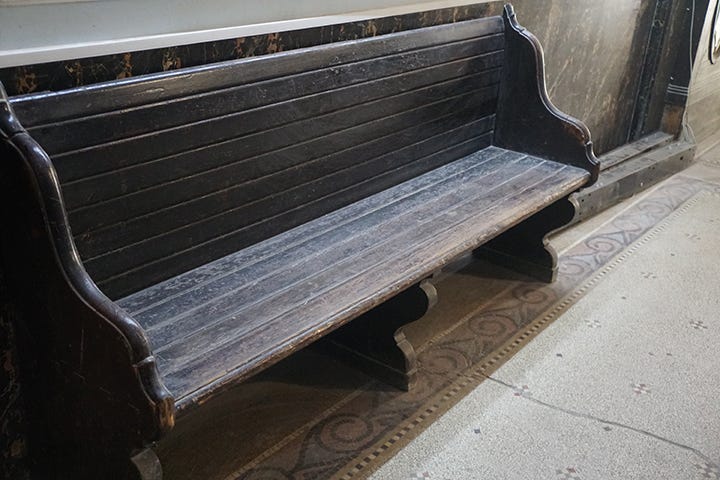
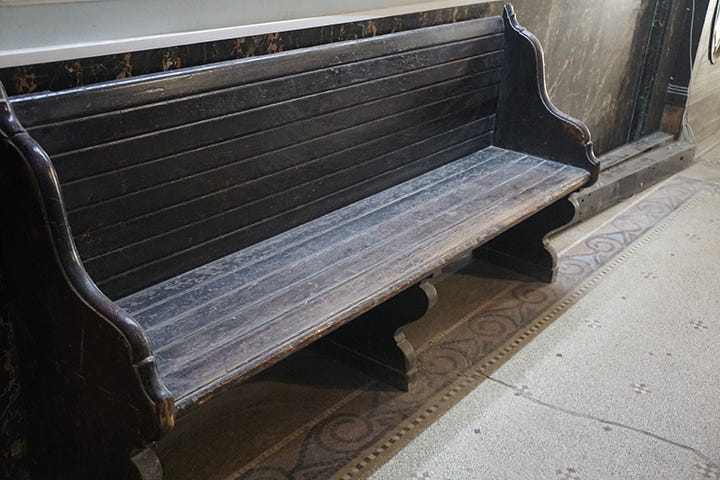
The bench next to the coatroom at the courthouse on Piekarska Street, Lviv. Many thanks to the kind manager for permission to photograph When we got to Lviv, a local Jewish historian, magically, helped us find the building. The coatroom (still containing the Polish sign, szatnia) with the side exit through which Paulina slipped out and the bench next to the coatroom where she could have sat and waited her turn while eyeing her escape route, remained to that day.
Alas, there was no lost and found. So we went to find and purchase a proper, local, handmade kapelusz. We found a shop filled with classic women’s hats and stayed for hours as I tried on every shape, color, and material while Patrycja observed and advised with a discerning eye. Eventually, the appropriate hat made itself known. It was the finest piece of clothing I ever bought. An investment in a commitment to a dream made real.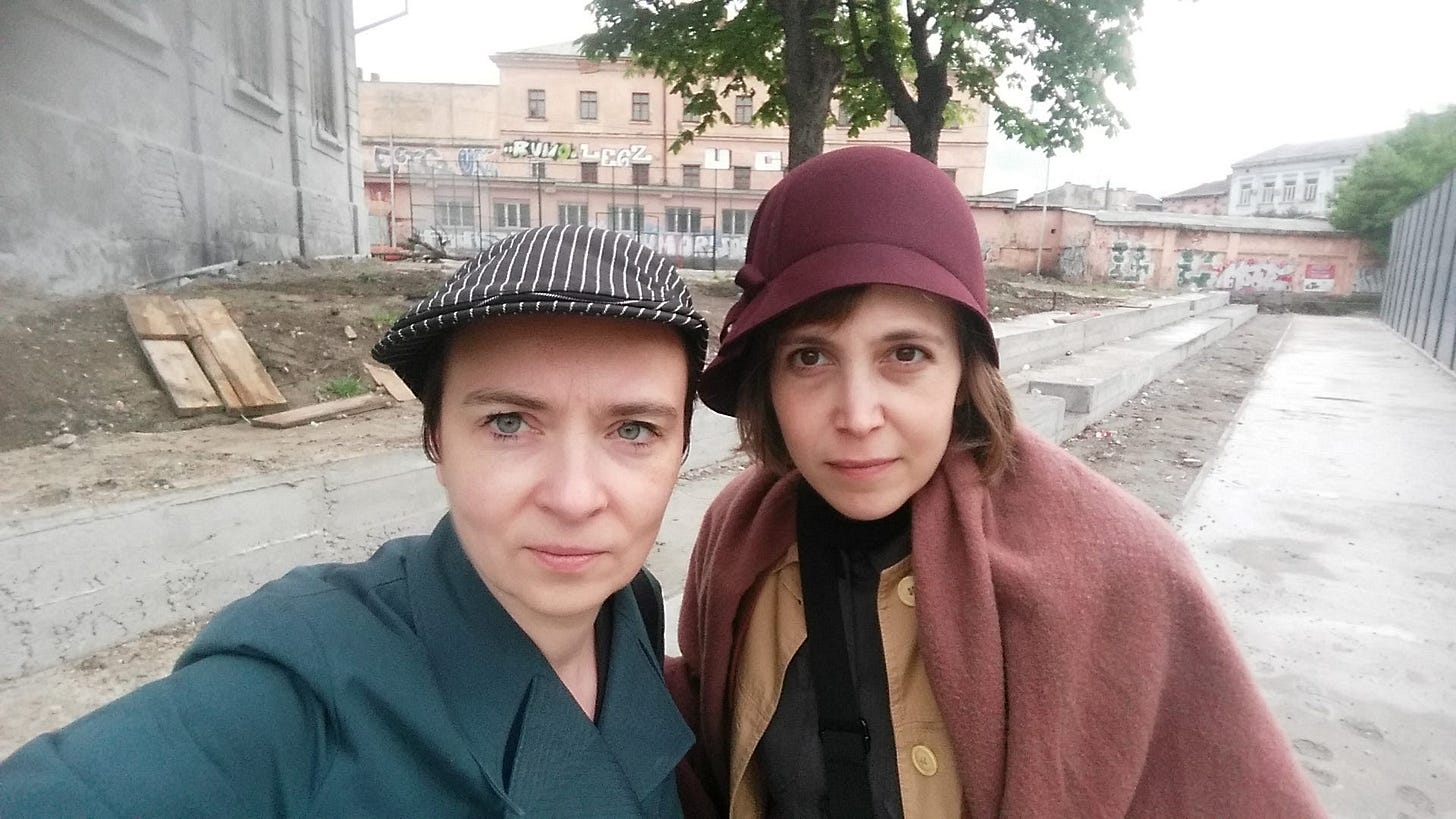
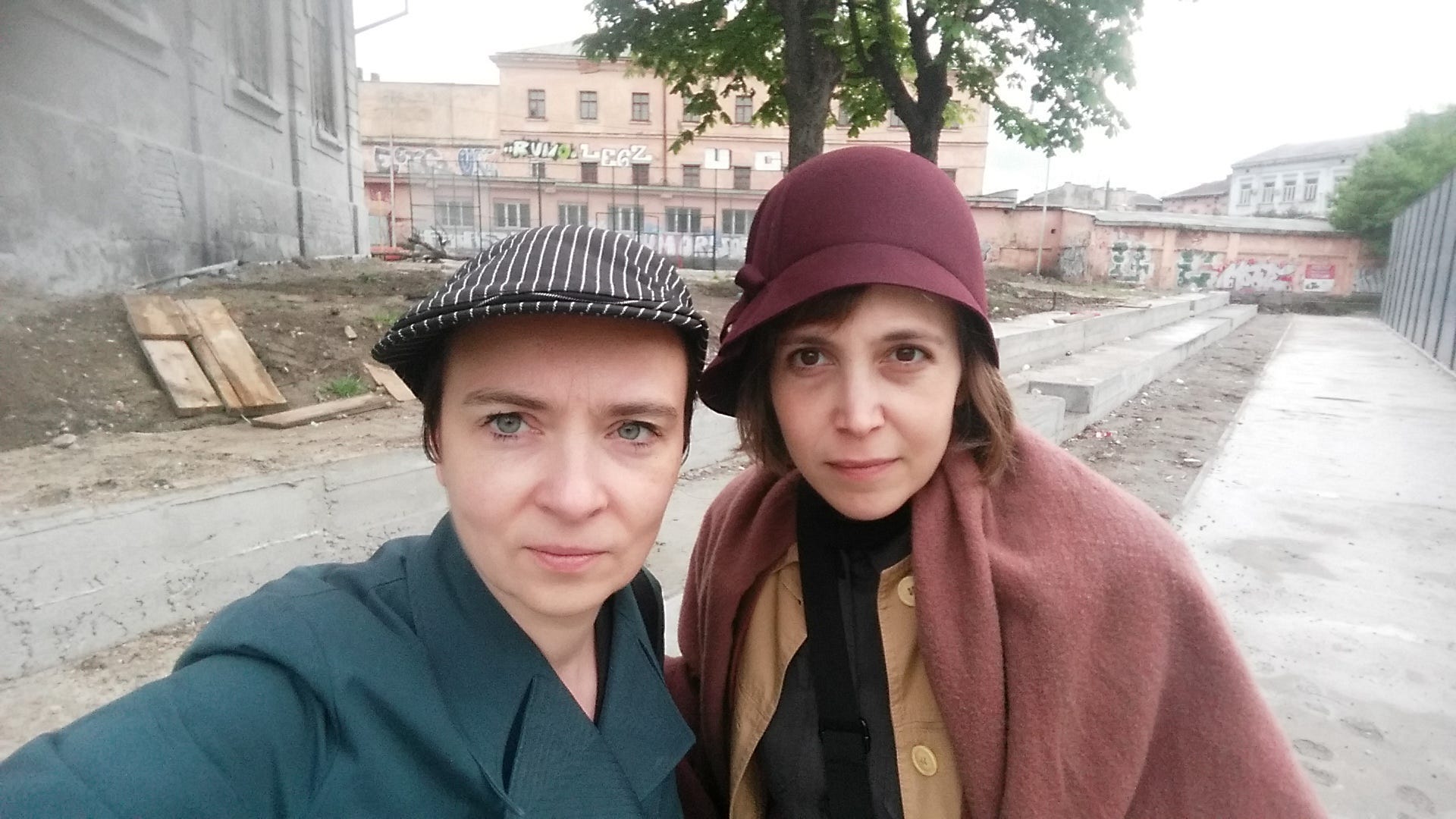
Patrycja with me in the courthouse of the former Sobieski School, Lviv, Ukraine. 2019
Epilogue: the lost lost hat
The Paulina project was conceived to create space and connection within a piece of immensely dark recent history. The use of invention and play encouraged a crossing between the real and the imagined, disarming those we encountered and ourselves to engage deeply with the story and each other. The journey following Paulina across borders and into the past occurred in 2019. As complicated as the subject of the Holocaust and its contemporary resonance was then, it is even more so now. Gripped by the urgency of present wars in Gaza and Ukraine, our adventures, our connection with Paulina in Lviv, the importance of replacing a lost hat, would not happen in the same way today. I hope we can continue to find space and pockets of joy in the stories we explore that help us create pathways back to each other.
Thank you.
Paulina Day draws from the constellation of stories surrounding the ever-evolving PAULINA: a performance and film-in-process centered on a life-changing journey investigating the Holocaust testimony of Paulina Hirsch and its aftermath.
My discovery of Paulina Hirsch’s testimony is explained in Issue #1. Her testimony is one of thousands collected by the Polish Jewish Historical Commission at the end of WWII, as part of an initiative to amass first-hand accounts. See https://www.jhi.pl/en/collections/archives
Comments
Nothing yet. Say the first thing.
Sign in to join the conversation.