
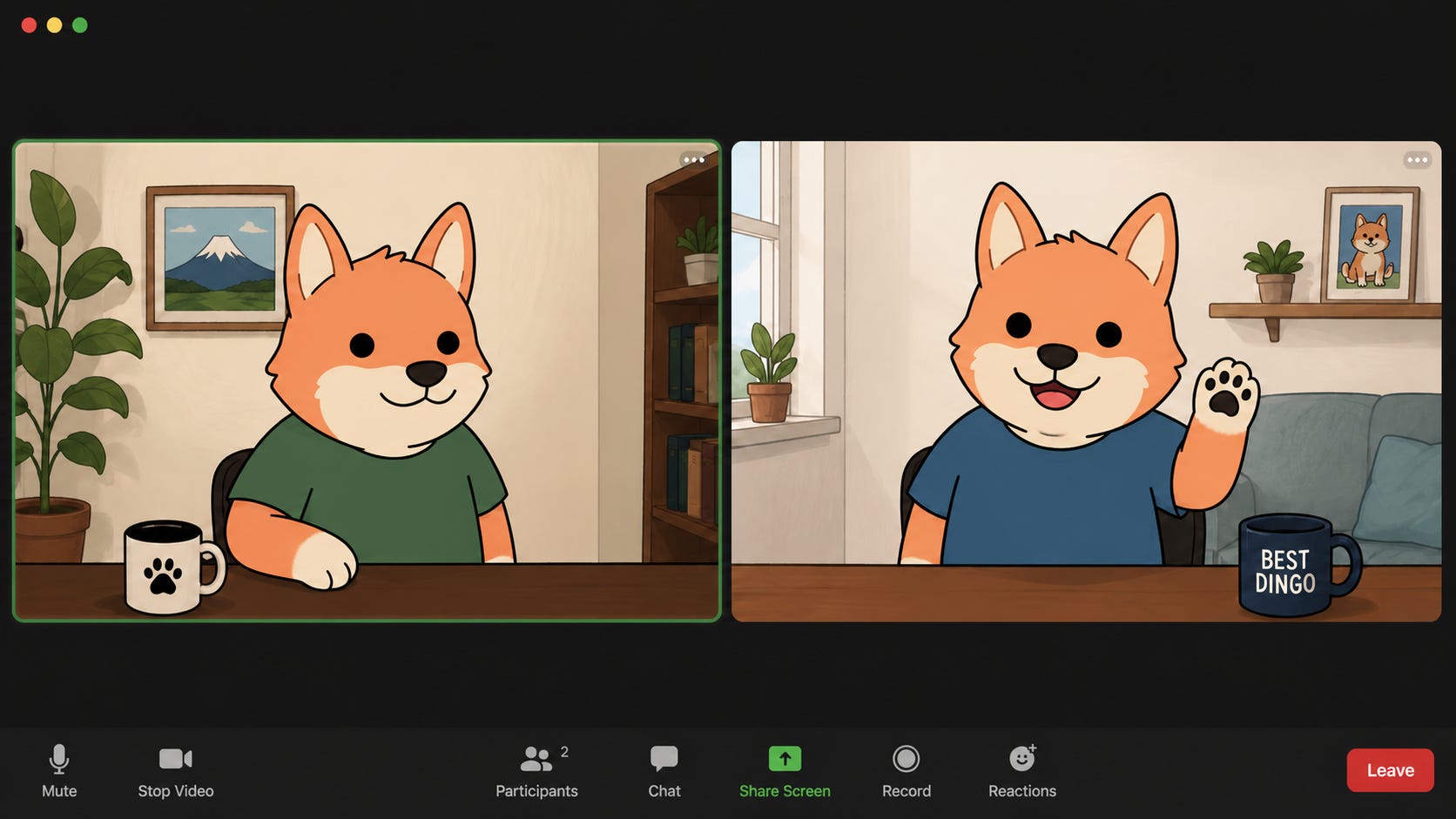

Most “research” inside startups is a survey sent out every few months.
All good? Still happy? Tell your friends about us?
At best it’s owned by a UX team that pumps out a slide deck twice a year and at worst it’s just some product manager looking for ideas to include in their Q3 planning.
This is not what good research looks like.
Under the stewardship of the inimitable Craig Fitzgerald, Yonder’s Head of Design, I was lucky enough to have a front row seat to what proper user research can do for an organisation.
This article is about how serious founders and marketing leaders conduct proper user research, how they use it as the foundation for everything, product decisions, ICP formation, positioning tests, campaigns and brand inspiration, and how to actually run that kind of research well.
Craig wrote a hugely successful guide to research, “How to build a killer product proposition with user research”, that’s been passed around the internet and read hundreds of thousands of times. He is the final boss of research‑led design and most of what I’m reflecting on here are his values and principles dressed up as my own.
Research doesn’t need to just be a product thing. Done well, the same research that shapes the kind of product proposition Craig talks about can also be used in your marketing team, and honestly all over your organisation.
But this is a marketing Substack, so we’ll focus on how research can give you confidence on your target customer, your messaging, your brand story, and even half your campaign ideas.
So read on, or don’t, and keep sending that quarterly NPS email.
Your call.
When teams tell me “we’ve done research”, it often means they’ve done a survey.
Which is technically true. In the same way Sebastian Sawe running a 1:59:30 marathon and you jogging round the park both count as “going for a run”.
Surveys can be helpful. They’re generally best for collecting basic information about your customers or quantifying things like Net Promoter Score.
But people who fill out surveys are inherently biased. They’ve opted in, which usually means they’re very happy, very unhappy, or really want a voucher. That’s true of all research to some extent, but at least on deep user research calls you can go far enough to find something useful.
Some companies don’t even send surveys. They’ve paid a research group £50,000 to pull together a market analysis report that they handed off to an intern, who stuck it into Claude and pasted some bullet points into a deck.
Neither is great.
I won’t pretend I always prioritised research. When you’re busy, speaking to customers falls down the list. But every time I was stuck in a painful positioning or creative hole, talking to a few customers would have made all the difference. I’m writing this so you don’t have to learn that the hard way.
Most people in a company, marketing included, consume research as a static artefact. A deck of charts and quotes, totally detached from the conversations that produced them. Just as removing engineers from the people they’re building for results in worse products, removing marketers from them results in worse marketing.
User research calls give you all the stuff the survey strips out. The follow‑up questions. How they scroll your website. What they read back to you. The in‑between small talk about what they’re doing at the weekend.
It’s all useful.
Most of the best research I’ve seen, including Craig’s work, follows a simple pattern.
Pick a question related to some problem you’re having, like:
“What job are people actually using our app for?”
“What brands do our customers associate us with?”
Then write down your best guess before you speak to anyone.
“Customers use our product to keep track of X and avoid Y.”
“Customers will say we remind them of X, Y and Z brands.”
That’s your hypothesis you should aim to prove or disprove in research. Next step.
Start with your own customers or people who look like the ones you want more of.
Reach out directly. Ask for 30 minutes and offer something small as a thank you, a voucher, a discount, a donation.
This doesn’t have to be “statistically significant” for all the data nerds out there. Five or six conversations are enough to see patterns. If you can’t learn anything useful from six, you won’t magically learn it from sixty.
Half an hour is more than enough if you don’t waste it.
First 5-10 minutes, just warm up. Ask about their role, their day, how they currently solve the problem you think you solve. Get into their world before you show them anything.
Next 20 minutes, go deep on the problem and your product. Show them a mockup, a prototype, a campaign idea, or your current marketing site. Or stay in their workflow and talk through where something like you would fit.
Depending on what it is you’re testing, the questions you ask might be different, but here are a few starters:
“How would you describe this to a friend?”
Great for seeing how your product proposition is landing.“What brands does this remind you of?”
One of my favourites to test your brand positioning.“What would you expect this to do for you?”
Gets you out of your head and into theirs.
At Yonder, when we were trying to solve positioning for new products, we’d show people rough website designs and ask exactly those questions.
If they stared at the screen for a while then said “I’m not sure”, that told us the concept wasn’t landing. If they looked at it and said “Oh, it’s a bit like Monzo but with travel rewards”, that told us we’d landed where we wanted.
One person leads the interview. The other takes notes and watches for patterns. That way the interviewer can actually listen instead of frantically trying to scribble down every word.
Take more notes than you think reasonable. Any minor thought or quote they said and jot it down. Better to have more than not enough.
Having different disciplines involved in research also means they’ll naturally hear different things. Product hears the friction. Marketing hears the language. Engineers can see exactly what bug is causing the problem.
It’s tempting to pick apart each interview as it happens, but it’s better to wait until you finish all of them.
After five or six interviews, sit down with the notes and synthesise them into one write‑up. Check the findings against your hypotheses.
✅ Hypothesis #1: Users could find our app on the app store and download it
✅ Hypothesis #2: Users could explain the app back to us after just seeing the sign‑up flow
❌ Hypothesis #3: Users were happy to, and could easily, connect their bank account
Great. There’s your learning. Now go away with your brilliant team and work out how to turn that red cross into a green check next time.
It might not be the product that needs to change. Change your hypothesis. Change your ICP. Change the homepage. If nothing you heard would change anything, either your questions were bad, you didn’t go deep enough or this wasn’t a real problem to begin with.
Craig’s article goes deeper into how to plan a study, write questions, and synthesise properly. It’s worth a read if you want more structure around that.
The reason I think of user research as “the foundation” is that a single well‑run project can feed half the decisions you’re stuck on.
You see what people are really using you for.
Maybe everyone uses your clever new feature for a completely different job than you expected. Maybe the thing you thought was a minor UX tweak is the moment they decide to stick around.
That tells you far more about what to build next than any internal scoring model.
You notice who lights up when they talk about your product and who sounds bored.
That’s your ICP. Not the persona you wrote in a workshop or the customer with the highest budgets.
Real people are usually messier than the slide. Interviews let you see the patterns, the triggers, the jobs they’re trying to get done.
The best copy lives in your transcripts.
“It’s like Monzo but with travel rewards.”
You’ll get lines like this all the time that you can use in creative, on your website, or as inspiration for your next big idea. You can basically build your messaging hierarchy from how people already think, using the language they use.
Interviews also tell you which stories to tell, which visuals make sense, which jokes you can make.
One research interview told me once that Amex “felt like their dad’s credit card” and we used that in our brand messaging a lot. You’ll hear rants you can turn into campaigns, throwaway lines you can turn into taglines, identity cues you can build whole platforms around.
Again, none of this required an extra project. It all came from the same six calls you had.
This is what I mean when I say research is the foundation. You do one small piece of work, properly, and it can solve a lot of problems you’ve been trying to tackle separately.
If you lead marketing in a product‑led company and you’re not in user research every month, you’re leaving a huge amount of customer insight on the table.
A good baseline is one focused project every month. Pick a question that matters, run six interviews, ship changes off the back of it.
Marketing should help define the questions. Be in the room when someone explores your website. Be the one asking “how would you describe this to a friend?”
Craig’s way of structuring research is a great template here, from clarifying assumptions through to testing propositions. Your job is to make sure those same studies also feed your ICP, your messaging and your brand, not just the roadmap.
It’s also way easier now than when we first started this.
You can record and transcribe the calls with one of the million transcription apps. Store them somewhere sensible. Then use Claude to search across them when you’re working on a new campaign or a strategy document.
You’re running out of excuses not to speak to customers properly.
Also I hear Craig is available for some design and research consulting. I’d highly recommend sending him a DM if you think you could benefit from better research.
My name is Tom. I’ve launched and grown products at some of the UK’s most loved consumer brands and I’m part of the founding team and VP Marketing at Yonder, a modern-day rewards card. Since starting at Yonder, I’ve written about all my marketing learnings along the way.
If you’re a senior marketer at a startup, this Substack is for you. I write about what actually works in startup marketing (and what definitely doesn’t) for marketers on the verge of breakdown.
Take my short reader survey so I can learn more about who reads this so I can write more useful stuff. I know you ask your customers to take surveys, so one won’t hurt you. Thanks in advance.
Here are some of my most popular reads:
Comments
Nothing yet. Say the first thing.
Sign in to join the conversation.