
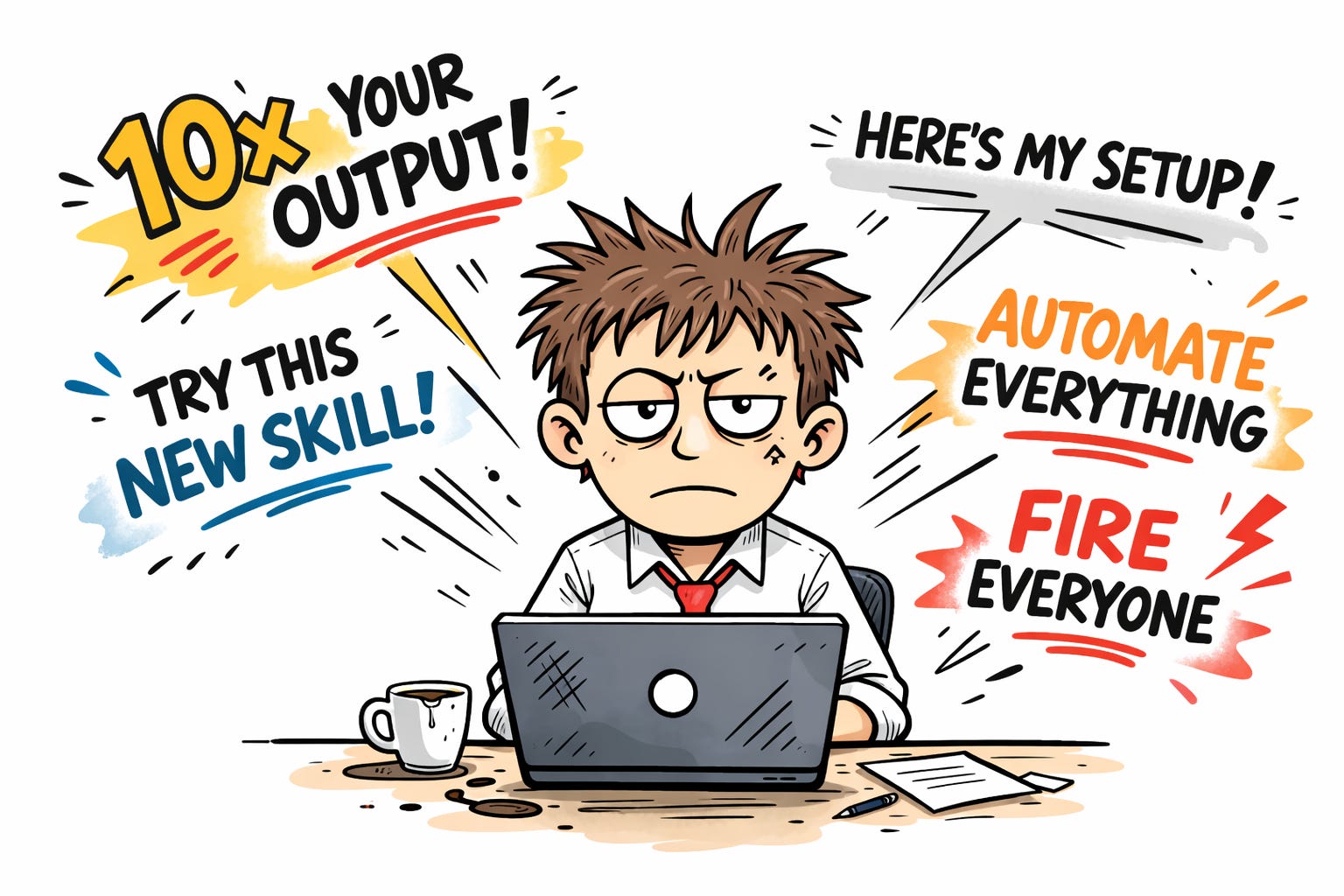
Oooft. Hasn’t LinkedIn been an absolute dumpster fire lately? Starting to wish I spent more time on my sabbatical looking at waterfalls or something.
SEO is dead. AI is replacing your entire team. If you’re not using Claude Code to 10x your output you’re already behind. Why are you so pathetic? The marketers who can’t code are finished. Look at this one Claude marketer who built their entire performance team on their own. Go and mow lawns for a living. Everything we knew about brand, performance, and customer acquisition is wrong. Are you getting fat?
I read all this crap, and honestly, it’s kinda funny. Because it’s the same stuff I’ve heard for the last ten years.
I don’t think much has changed actually. Certainly not in the ways that matter.
I’m done with the whole ‘marketing has changed forever’ over and over again thing. It’s boring.
Mid 2010s, Google changed its algorithm. Then social media killed organic reach. Then performance marketing killed off brand. Then TikTok killed everything. Now it’s AI. Have I missed anything?
Some new thing arrives, some clown on the internet announces everything you knew is worthless, a lot of people panic, and then it turns out the fundamentals are the same and the new thing either plugs into them or doesn’t.
So while the tools and tactics may have changed, I don’t think much else has. Here’s what still matters.
You need to know who your customer actually is. It’s crazy how many vibe‑coded Slack‑killer apps I see popping up that have no idea who might want to use their little thing.
Building a comically specific target customer is the absolute foundation of any marketing strategy. At Yonder ours was so specific it was as if we knew them personally.
What are they doing before they find you? What are they comparing you to? What do they need to believe before they’ll switch? How do they research products like yours? If you can’t answer these then another new marketing channel isn’t going to help you.
A real position is a specific, defensible claim about who your product is the obvious choice for and why. Not “now with AI.” That’s not a position.
Positioning is the process of landing your product or service in the right spot in someone’s mind. The right category, unlocking the right feeling and associations they have. That’s how they understand what it is you do and where you fit in their lives. Poorly positioning your product can kill your startup before it even gets going.
It’s slow, careful work that requires you to sit with your customer, your competitors, and your own product until something obvious emerges.
It took us about six months to get this right with Yonder. Perhaps a little too long in hindsight.
Good marketing strategy does two things. It captures the people who are ready to buy now (with good unit economics), or it builds value that makes acquisition cheaper in the future.
You may know this as brand and performance. Same thing. I call it Growth Now and Growth Later because it’s easier for a non-marketer to understand how they work together. It’s never been a choice between them. Real marketing strategies have a balanced plan that executes both well.
The brands that don’t understand this tend to find out why it matters around their Series B and hope a quick rebrand fixes the problem. I wrote more about this here:
Ironically, for startups that could never prioritise brand building, one of the last real differentiators left is the strength of their brand. Software is no longer your moat. Brand is inimitable. It lives in people’s heads. The associations you build and the memories you create are what give you a fighting chance. It’s always been important, but now more so than ever.
Would your customers know your ads from a competitor’s if you swapped the logos? Do people know what you stand for without being told? Can you raise your price without losing all your customers? Does all your growth stop when you turn off your Meta ads? When they open up their browser to look for a solution, are they searching your name?
I wrote more about the distinction between different kinds of brand-related terms here:
Four years of this newsletter and the message here is basically ‘do the basics.’ Sorry.
If the noise is making you anxious, ask yourself what specifically you’re worried about. If it’s that you don’t know how to use the tools, go learn. That’s the easy part.
But if underneath it there’s a quieter worry about whether you actually understand your customer, whether your positioning is clear, whether your brand is distinctive enough, or whether your product is meeting a real need in the market. That’s the more important question.
Clear positioning makes better AI-assisted copy. A sharp understanding of your customer makes for better creative briefs. A coherent strategy mapped to your customer journeys gives AI more focus and clarity. Without any of that, AI will just help you do everything poorly, faster.
The fundamentals haven’t changed. Which is either reassuring or a bit uncomfortable, depending on how solid yours are.
My name is Tom. I’ve launched and grown products at some of the UK’s most loved consumer brands and I’m part of the founding team and VP Marketing at Yonder, a modern-day rewards card. Since starting at Yonder, I’ve written about all my marketing learnings along the way.
If you’re a senior marketer at a startup, this Substack is for you. I write about what actually works in startup marketing (and what definitely doesn’t) for marketers on the verge of breakdown.
Take my short reader survey so I can learn more about who reads this so I can write more useful stuff. I know you ask your customers to take surveys, so one won’t hurt you. Thanks in advance.
Here are some of my most popular reads:
Comments
Nothing yet. Say the first thing.
Sign in to join the conversation.