
The timing feels appropriate for reconsidering the relationship between artists and galleries.
In the last year alone, the art world has watched a series of gallery contractions and closures. Even the largest operations have been reassessing their footprints. Just this week, reports emerged that Gagosian would close its Basel gallery and its Burlington Arcade location in London, continuing a period of retrenchment among some of the art market’s most powerful enterprises.
None of this means galleries are disappearing. Nor does it mean galleries are no longer important. But it does invite a broader historical question: how much of an artist’s success has ever depended entirely on galleries?
Art history suggests the answer is less than we often imagine.
Paul Gauguin is a useful example. Today he is remembered as a painter, but he was also a remarkably active self-promoter. When he returned from Tahiti, he was involved in nearly every aspect of presenting his work to the public. He organized exhibitions, rented spaces, cultivated writers and critics, published texts, built stretcher bars and frames, supervised display, and carefully shaped the mythology surrounding both himself and his paintings. Gauguin did not simply wait for the art world to discover him. He participated in constructing the conditions under which he would be seen.
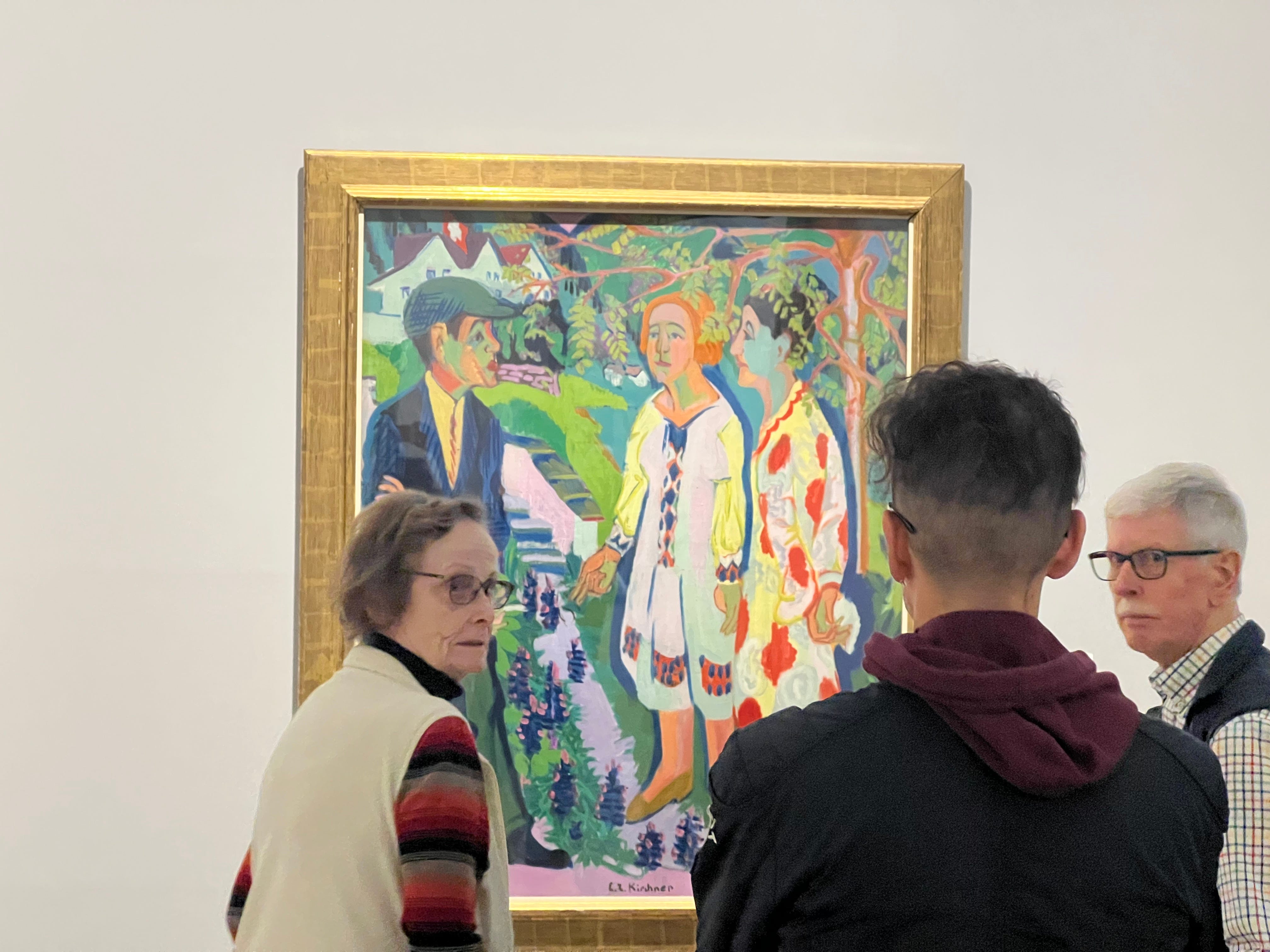
Ernst Ludwig Kirchner was equally determined to control how his work entered public consciousness. Recent exhibitions in Switzerland have again highlighted the extraordinary degree to which Kirchner involved himself in exhibition-making and self-presentation. He designed installations, organized displays, corresponded with critics, wrote extensively about art, and at times even reviewed his own exhibitions under pseudonyms, blurring the line between artist, curator, publicist, and critic. A century before social media, Kirchner understood that the framing of art could be nearly as consequential as the art itself.
The pattern continues into the postwar period.
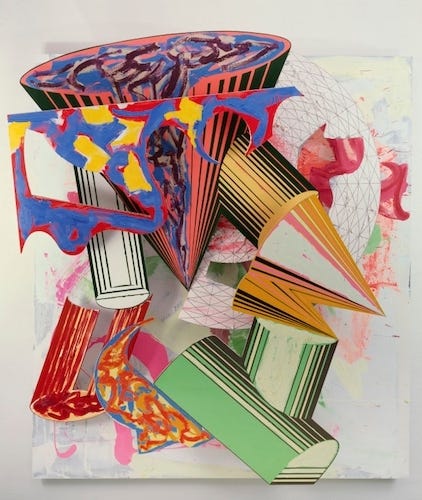
Frank Stella is often remembered as the artist of the Black Paintings or the monumental relief constructions that followed. Yet Stella was also unusually aware of the importance of intellectual positioning. His Charles Eliot Norton Lectures at Harvard, later published as Working Space, were not merely academic exercises. They established Stella as a major voice in debates about modernism, abstraction, and pictorial space. Through lectures, essays, interviews, and public appearances, Stella extended his influence far beyond the studio. The book became part of his artistic practice and helped define his public identity as a serious thinker as well as a painter.
Even Claude Monet, often romanticized as an artist concerned only with gardens and light, was deeply involved in shaping the circumstances of his own reception. He cultivated relationships with dealers, controlled exhibitions, managed access to his work, repeatedly met privately with collectors and carefully orchestrated how projects such as the Water Lilies would be funded and ultimately encountered by the public.
Seen from this perspective, the contemporary debate about whether artists need galleries begins to look strangely ahistorical.
For much of modern art history, artists were not merely makers of objects. They were organizers, publishers, lecturers, exhibition designers, networkers, propagandists, and entrepreneurs. They wrote manifestos. They cultivated critics. They designed catalogues. They arranged installations. They pursued patrons. They built audiences.
What may be changing today is not the artist’s role but the tools available.
The nineteenth-century artist had letters, salons, and journals. The twentieth-century artist had catalogues, lectures, magazines, and museums. The twenty-first-century artist has websites, newsletters, podcasts, social media, digital advertising, and direct communication with collectors.
The underlying question remains remarkably consistent across all three centuries:
Who controls the relationship between the artist and the audience?
At a moment when the gallery system appears to be entering another period of adjustment, it is worth remembering that many of the most successful artists in history never delegated that question entirely to anyone else.
No posts
Comments
Nothing yet. Say the first thing.
Sign in to join the conversation.