
Yesterday the House had to pass a funding bill to keep the government open. And the effort very nearly failed.
The problems started after the shooting death of Alex Pretti by Immigration and Customs Enforcement (ICE) officials in Minneapolis. Outraged Democrats in the Senate refused to vote for an appropriations package that contained funds for the Department of Homeland Security (DHS), which includes ICE. Without their support, DHS and many other agencies would have to shut down for lack of funding.
Democrats eventually agreed to full appropriations for all other unfunded agencies but only two weeks’ worth of funding for DHS while negotiating on ways to limit ICE’s activities. That new spending measure (technically, a Senate amendment to the existing funding bill) was then sent back to the House for its approval.
Whether the amendment would survive the House was far from clear. Many House Democrats thought that more needed to be done to rein in ICE, while some Republicans were upset that Democrats had been given any concessions at all. Other Republicans wanted to add a major voting reform bill, known as the SAVE Act, to the measure.
So what happened when the House met on Tuesday to pass the Senate amendment? First, it had to agree to a special rule that set the terms of debate for the amendment. And the chamber did so by an exceedingly narrow vote: 217 to 215, with all but one Republican (Tom Massie of Kentucky) voting in favor and every Democrat voting against.
The final tally suggested that Republicans were essentially unified in favor of the rule. But watching the (unusually exciting) vote unfold revealed more dissent within the GOP – and hinted at the last-minute efforts that majority party leaders sometimes have to employ to get things passed, especially when the minority party won’t help.
Here’s how it went down.
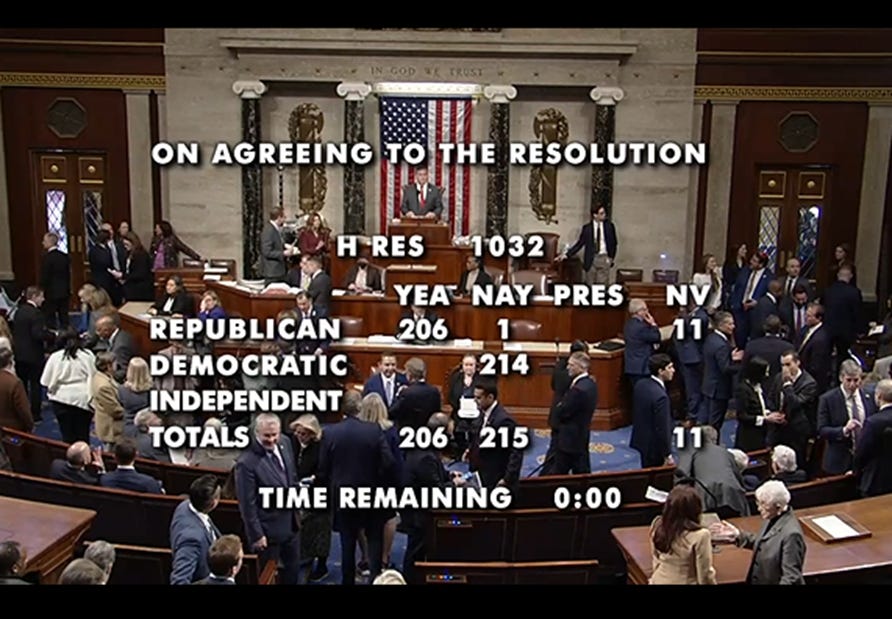
1. First, Democrats voted “nay” unanimously (with no defections or absences, which is no easy feat). This forced Republicans to pass the rule on their own. Democrats also smartly cast all their votes before all Republicans did. This put the onus any remaining Republican holdouts (in this case, the 11 who had not yet voted, or “NV”) to save the rule from being defeated.
At this point, with one Republican voting no (Massie), one more non-voting Republican could vote present or abstain, and the rule would still pass if all the others voted “yea.” If one more Republican voted against the rule, however, it would fail by a tie vote (216-216).
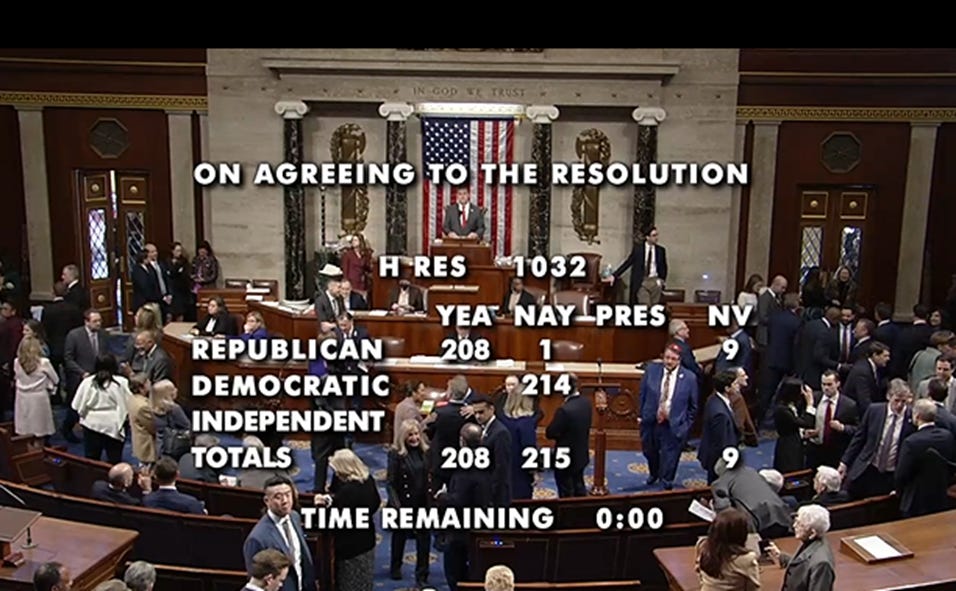
2. So far, so good for Republicans – two of the holdouts have voted for the rule. Nine to go.
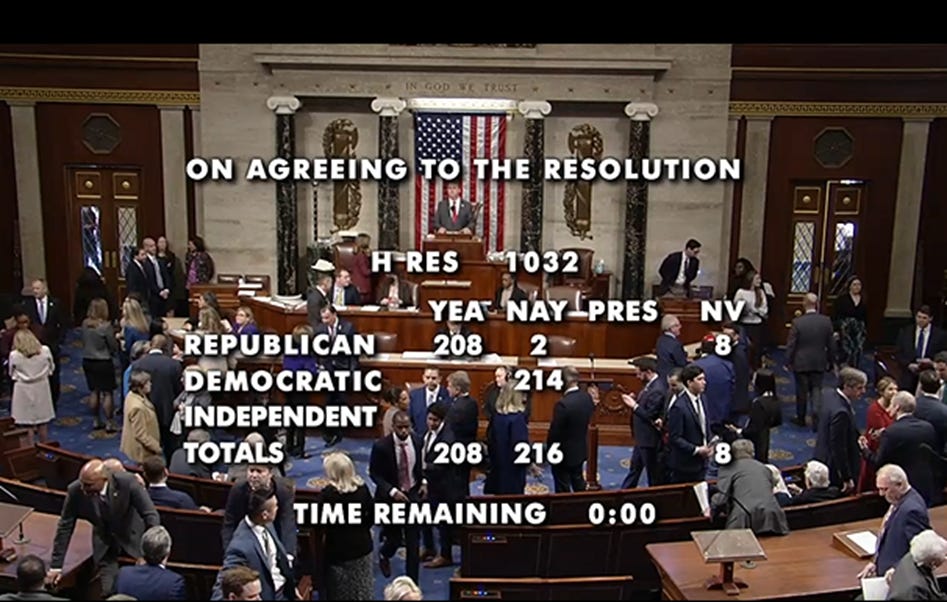
3. Uh oh! One of the holdouts has just voted “nay.” This, we soon learned, was John Rose of Tennessee, one of the Republicans who wanted the SAVE Act attached to the spending measure, and who sought a commitment from Senate GOP leaders to bring the Act to a vote in their chamber. Now the rule will fail unless the eight non-voting Republicans vote for it and one Republican (or Democrat) switches from “nay” to “yea.”
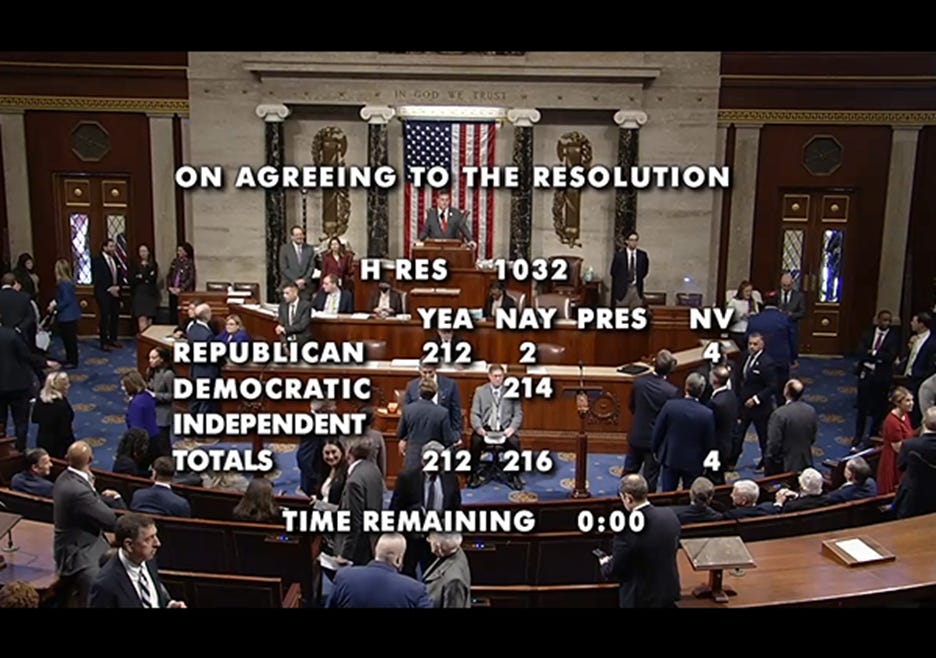
4. After a few more minutes, four additional Republicans have voted “yea,” but no opponents have switched their vote. The tally stays like this for quite a while. Presumably, negotiations are ongoing between GOP leaders and one or both of the “nay” voters. (Apparently, Rose was in discussions with Senate Majority Leader John Thune about the SAVE Act.)
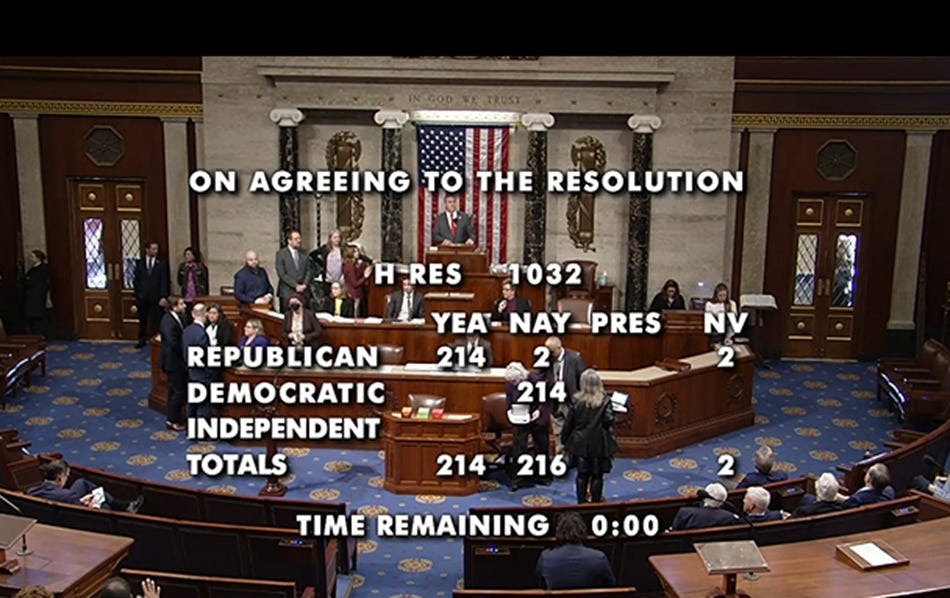
5. Finally, we see some movement: two of the GOP non-voting holdouts have voted in favor of the rule. It could be that Republican leaders are trying to isolate the remaining four Republicans who haven’t voted for it – particularly the two “nay” votes who, remember, are key to whether the rule can be saved.
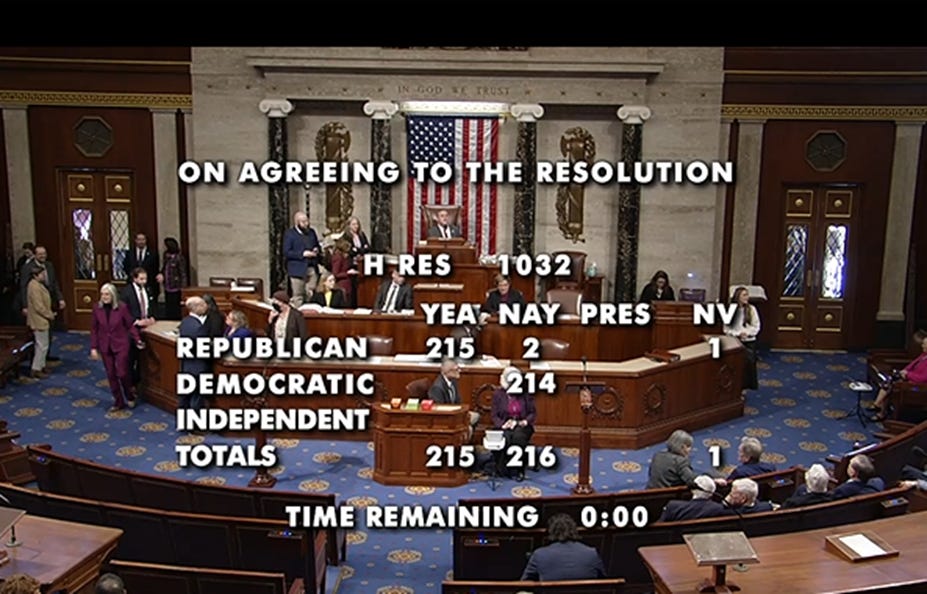
6. Forty minutes have now passed since the (five minute!) vote was called, and one of the two remaining non-voting Republicans has finally cast a ballot in favor of the rule. Momentum, such as it is, continues to be on the “yea” side of the ledger. But Republicans still need one of the two “nay” voters to switch. Will it happen?
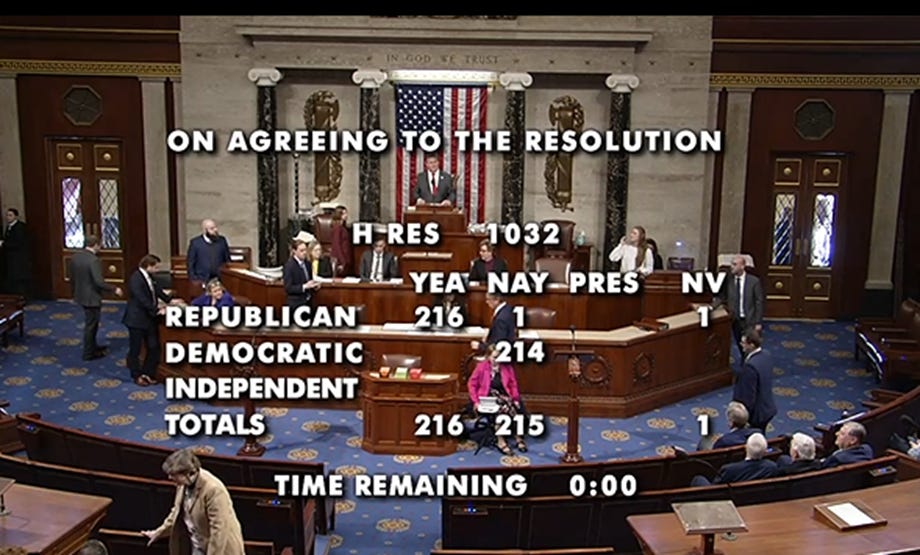
7. Success! After close to an hour of voting time, Rep. Rose flips from voting “nay” to voting “yea.” For good measure, the other Republican who had not yet voted then casts a ballot in favor. The final vote: 217 to 215.
In the end, Republicans could record a win. (The Senate amendment itself would also pass narrowly, with more defections in both parties.) But watching the vote on the rule unfold underscores how challenging it can be, and has been, for the Republican Conference to build majorities, sometimes requiring last-minute labor.
It also reminds us that how lawmakers ultimately vote on a measure can hide their true preferences. In this case, it appears there were about a dozen Republicans who were unhappy with the spending compromise, and they chose to show it by initially (if not ultimately) casting a “nay” vote, or not voting at all, on the special rule. Only after GOP leaders kept the voting clock open to buy time for additional negotiations were those lawmakers satisfied (or intimidated?) enough to vote with their party — even if they remained unhappy with the final outcome.
No posts
Comments
Nothing yet. Say the first thing.
Sign in to join the conversation.