
For investors whose market experience began with the post-pandemic rally, the idea of waiting patiently for long-term returns may seem counterintuitive. After enjoying bumper gains—particularly in mid- and small-cap funds—many are now grappling with muted market performance amid global uncertainty and sustained foreign selling.
Foreign institutional investors have sold nearly $30 billion worth of Indian equities so far. Yet there is a silver lining. The large-cap stocks, which have borne much of that selling pressure, are now trading closer to their 10-year average valuations and at a discount to many mid- and small-cap peers.
Why does that matter? Large-cap companies typically offer stronger balance sheets, deeper liquidity and greater earnings visibility—qualities that can provide stability when markets turn volatile. In the current environment, they can serve as an important anchor in a diversified portfolio.
In this story, Jash Kriplani explains why large-caps deserve a place in your portfolio and explores the different ways to gain exposure—from index funds to flexi-cap funds—while striking the right balance between growth and stability.
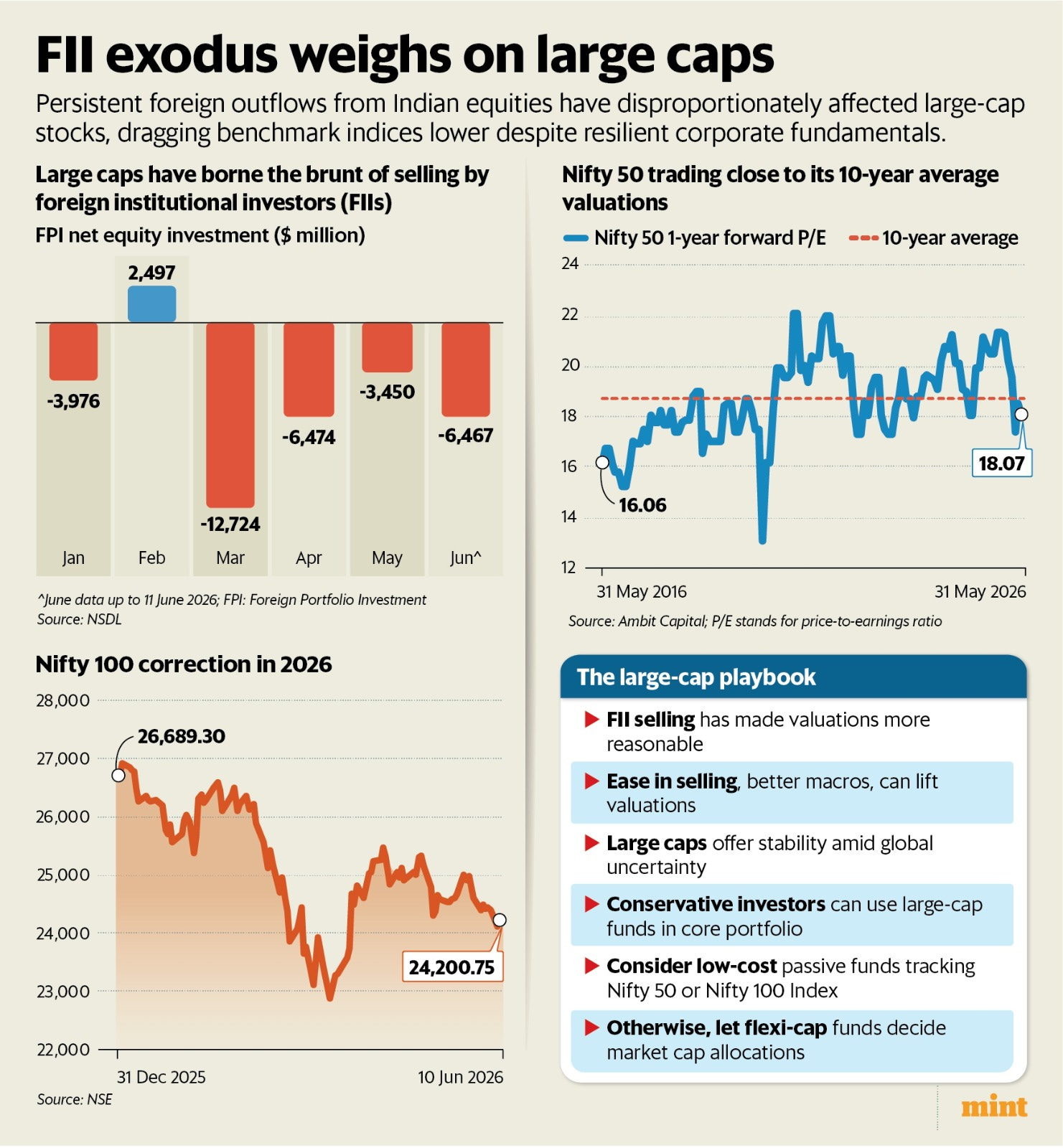
On a similar note, Shyam Sekhar, founder of ithought Financial Consulting, argues that while mid- and small-cap stocks can deliver outsized returns during periods of rapid economic expansion, investors should not overlook the relative safety of large-caps when growth slows. Such positioning can also offer protection against global shocks that may disproportionately affect smaller companies.
Sekhar argues that a combination of slowing growth and rising inflation could pressure markets and trigger large-scale redemptions. In such a scenario, liquidity could become a decisive factor, tilting investor preference toward large-caps because of the value they offer.
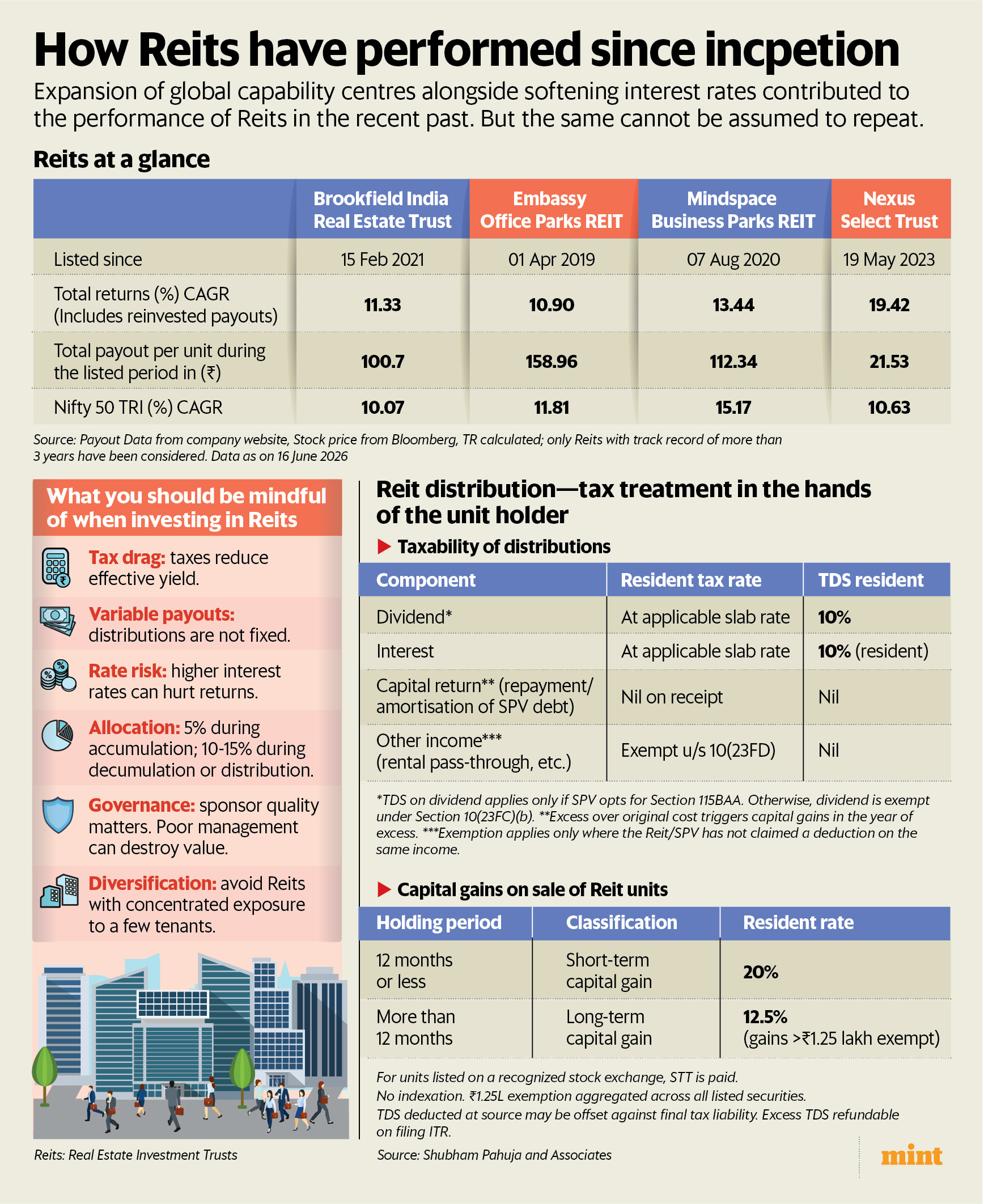
Against a backdrop of subdued equity returns, REITs (real estate investment trusts) are attracting growing investor interest. A REIT functions much like a mutual fund, pooling money to own and manage rent-generating commercial properties such as offices, malls and warehouses.
Though still a relatively small segment of the market, REITs have outperformed equities over the past year. The gains have been supported by rising demand for commercial real estate from global capability centres and expectations of lower interest rates, which make Reit yields more attractive.
That performance, however, needs to be viewed in the context of broader economic environment. Shoaib Zaman examines these trends, including the tax treatment of REIT payouts, and explores how the asset class can fit into a diversified portfolio.
To attract foreign capital and support the rupee, the Reserve Bank of India recently introduced a special swap facility that absorbs banks’ hedging costs on fresh dollar deposits. The move has prompted several banks to raise FCNR deposit rates to 6-7.1% for three- to five-year tenors.
The higher rates have made FCNR deposits particularly attractive for NRIs, writes Shipra Singh. Earlier, the gap between US term-deposit rates and FCNR(B) rates was typically 25-50 basis points. Today, that differential has widened to roughly 200-300 basis points, significantly boosting their appeal.
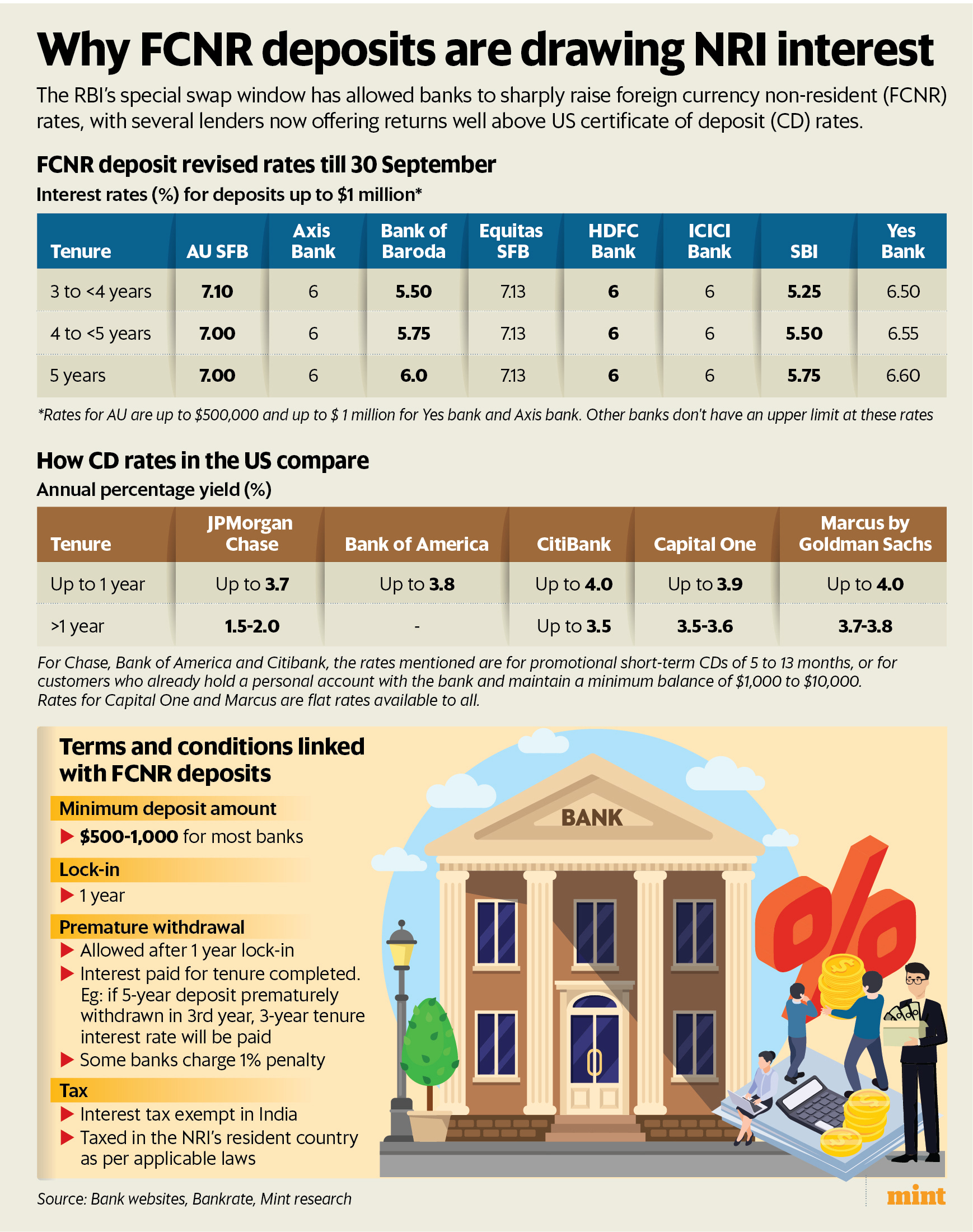
FCNR deposits also shield investors from rupee depreciation, as both principal and interest are held and repaid in foreign currency. While the opportunity is compelling, experts caution against using leverage to enhance returns, given the associated borrowing and interest-rate risks.
For home-loan borrowers, Aprajita Sharma highlights a lesser-known way to reduce interest costs through an overdraft-linked home loan facility. The feature allows borrowers to park surplus funds in an overdraft account while retaining access to the money when needed. The parked amount effectively reduces the outstanding loan balance, lowering interest costs.
Although such loans may carry slightly higher interest rates, they can still reduce overall borrowing costs when used efficiently. The structure works best for borrowers who consistently maintain surplus funds and make limited withdrawals.

This week, Ann Jacob examines the growing popularity of fintech apps offering free portfolio reviews and analysis tools to retail investors. While convenient, these apps often function as customer-acquisition tools. Investors should remember portfolio performance is only one part of the picture. Asset allocation, tax implications and suitability matter just as much, yet are often overlooked in these quick assessments.
And finally, in this week’s Money Guru, Jash Kriplani spoke with Rahul Singh, chief investment officer (equities) at Tata Mutual Fund.
The conversation comes as Indian markets navigate global uncertainty, persistent foreign outflows and the growing impact of AI-led disruption. Against that backdrop, Singh highlighted two key priorities for investors: maintain a disciplined asset-allocation strategy, and within equities focus on core categories such as flexi-cap, multi-cap, and large-and-mid-cap funds rather than chasing thematic or sectoral bets.
That’s all from the Mint Money team this week. Until next time!
Deepti Bhaskaran is editor, Mint Money, with two decades of experience as a personal finance journalist. Her work reflects a strong focus on financial literacy, consumer protection and practical money management. She can found at deepti.bhaskaran@livemint.com.
No posts
Comments
Nothing yet. Say the first thing.
Sign in to join the conversation.